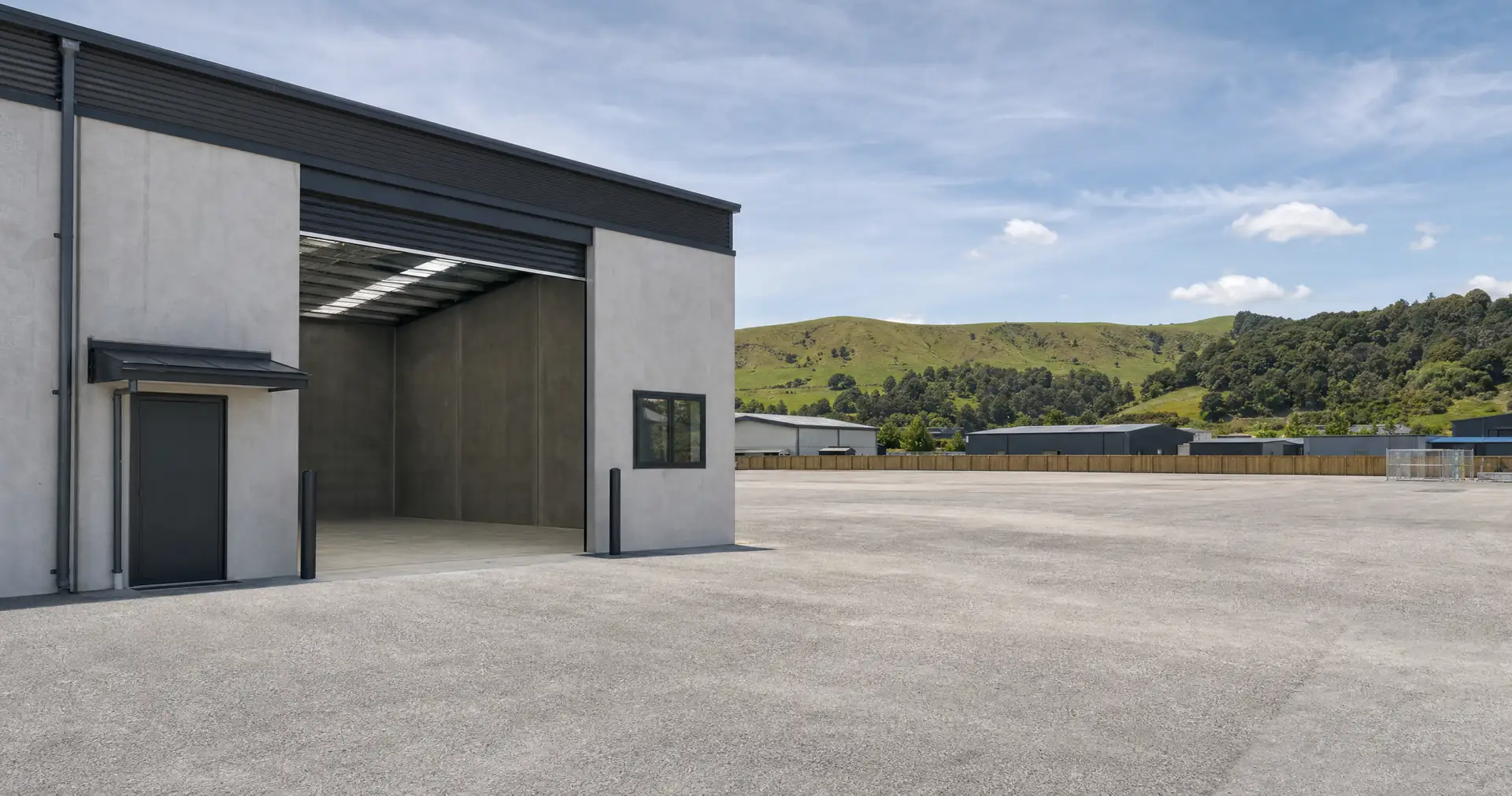
Auckland holds the largest concentration of NZ business borrowers, from CBD professional services to South Auckland manufacturing. Indicative loan bands, lender access notes, and a free calculator sit on this page so the maths can be tested before any conversation with a lender.
What Auckland business borrowing typically looks like.
→Largest NZ borrowing market Stats NZ figures attribute roughly 38% of national GDP to the Auckland region, and lender activity follows the same concentration.
→Larger average loan size commercial property, fit-out, and fleet pricing all sit at the top of the NZ band, so Auckland applications commonly run higher than equivalent regional briefs.
→Every major lender represented locally ANZ, ASB, BNZ, Westpac, and Kiwibank all run CBD business banking teams; Prospa, BizCap, and Heartland are headquartered in the city.
→Industry mix is broad CBD professional services, South Auckland manufacturing, North Shore tech and retail, and West Auckland construction together cover most of the Tier C industry pages on this site.
→Indicative only figures shown on this page are bands observed across NZ applications in 2026 and are not a quote or offer of credit.
The landscape
Auckland concentrates NZ business lending in one region.
Auckland is the largest single source of NZ business loan applications by volume. Stats NZ population estimates put the Auckland region near 1.7 million residents, and the most recent Stats NZ regional GDP release attributes roughly 38% of national GDP to the region.
The borrowing footprint follows the same shape. Every major bank runs a CBD business banking team. Alternative lenders Prospa, BizCap, and Heartland Bank all hold their NZ head offices in the city. Broker density is the highest in the country, with concentrations in the CBD, Newmarket, Takapuna, and Albany office parks.
Average loan amounts in Auckland run materially above the national median, partly because commercial property, fit-out costs, and fleet pricing all sit at the top of the NZ band. The practical implication is that the same brief (a 60-cover restaurant fit-out, a three-vehicle tradie fleet refresh, a 1,200 sqm warehouse lease bond) commonly costs 15% to 30% more in Auckland than in Christchurch or Tauranga.
Auckland population
~1.7M
Share of NZ GDP
~38%
Dominant industries
Services, retail, logistics
Typical loan band
$30K to $750K+
Industry mix
Dominant Auckland industries and how they typically borrow.
Auckland is not one industry; it is several layered across the region. Each sub-segment carries its own typical loan structure and amount band.
CBD professional services
Legal, accounting, financial services, consulting, and professional services concentrated in the CBD core (Britomart, Wynyard Quarter, Viaduct) and in Newmarket. Borrowing tends to be working-capital-led: practice fit-out, partnership buy-ins, technology refresh. Loan bands commonly $50K to $400K.
·Common purposes: fit-out, working capital, partner buy-in
·Typical band: $50K to $400K
Retail and hospitality
Retail spread across Ponsonby, Newmarket, Takapuna, Sylvia Park, and Westfield Albany; hospitality concentrated in the CBD, Britomart, Ponsonby, Mount Eden, and Takapuna. Fit-out and equipment finance dominate. Loan bands commonly $40K to $500K, with restaurants and bars pushing the upper end.
·Common purposes: fit-out, kitchen equipment, lease bond
·Typical band: $40K to $500K
Transport and logistics
Port-adjacent operators (Ports of Auckland, Auckland Airport freight precinct) run container, line-haul, and last-mile fleets. Concentrations in Penrose, Onehunga, Wiri, and around Auckland Airport at Mangere. Capex-heavy: prime movers, trailers, vans. Loan bands commonly $80K to $750K+.
·Common purposes: truck and trailer, fleet refresh, working capital
·Typical band: $80K to $750K+
South Auckland manufacturing
Manukau, Wiri, East Tamaki, and Penrose host the largest concentration of NZ light manufacturing and food production. Equipment-heavy capex (CNC machines, packaging lines, refrigeration). Stats NZ regional industry data places manufacturing as a leading employer across South Auckland. Loan bands commonly $100K to $1M+.
·Common purposes: plant equipment, factory fit-out, working capital
·Typical band: $100K to $1M+
Construction and trades
West Auckland (Henderson, Massey, Kumeu) and Albany host high concentrations of residential builders, electrical contractors, and plumbing operators. Master Builders and LBP licensing common. Vehicle and tool finance dominate the smaller end; progress-claim working capital dominates the larger end. Loan bands commonly $30K to $500K.
·Common purposes: ute and tool finance, progress-claim working capital
·Typical band: $30K to $500K
Tech, franchise, and creative
North Shore (Albany, Takapuna) and the CBD fringe host SaaS, agency, and franchise head offices. Auckland holds the highest franchise concentration in NZ. Borrowing weighted to working capital, franchise establishment fees, and technology hardware. Loan bands commonly $25K to $300K.
·Common purposes: franchise establishment, working capital, technology
·Typical band: $25K to $300K
Common reasons
Why Auckland businesses typically borrow.
The reasons that drive Auckland applications cluster around four shapes: property-tied fit-outs, fleet capex, working-capital cycles, and growth or acquisition financing.
01
Fit-out and lease establishment
Auckland CBD and fringe-CBD commercial rents typically sit at the top of the NZ band. The combined cost of a new lease bond, base-build fit-out, and category-specific equipment commonly drives applications between $80K and $500K. Cafes, restaurants, professional services, and retail are the most fit-out-active categories.
02
Vehicle and fleet finance
Tradies refreshing utes, couriers refreshing vans, and freight operators refreshing prime movers generate the largest single category of Auckland applications by volume. Asset-secured chattel mortgage is the standard structure. Single-vehicle bands commonly $50K to $120K; multi-vehicle and prime-mover applications commonly $200K to $750K+.
03
Working capital and cash-flow smoothing
Trade payables, GST and provisional tax payment bunching, supplier deposits, and seasonal stock builds drive the most common working-capital reasons. Auckland operators with longer invoice cycles (commercial fit-out subcontractors, importers awaiting container clearance) typically lean on revolving lines rather than term loans.
04
Growth, acquisition, and second-site expansion
Auckland concentrates NZ acquisition and second-site activity. Common shapes include franchise unit purchase, second-cafe or second-clinic establishment, accounting practice partner buy-ins, and supplier or competitor business buy-outs. Larger applications commonly $200K to $1M+, often with property security on the table.
05
Equipment finance for plant and kitchen
South Auckland manufacturing and CBD hospitality together generate the bulk of NZ equipment finance volume. CNC machines, packaging lines, kitchen lines, refrigeration, and front-of-house technology are the most-financed categories. Chattel mortgage is the standard structure; finance lease and operating lease are common alternatives where cash-flow simplicity is prioritised.
06
Property-secured term loans
Auckland commercial property values support a deeper pool of property-secured term loans than any other NZ region. Owner-occupied premises (small workshops, professional offices, restaurant freeholds) commonly underpin lower-priced borrowing than equivalent unsecured applications. Major banks lead this segment.
Worked scenarios
Three Auckland borrower scenarios.
Three illustrative Auckland scenarios across different industries and suburbs, showing how operator track record and security shift the indicative offered rate. Figures are indicative only and not a quote or offer of credit.
Hospitality, cafe
Ponsonby cafe expansion
A Ponsonby cafe operator opening a second site in Mount Eden. Five-year lease secured on the new site. Total project $185K ex-GST: $55K kitchen kit (espresso machine and grinder upgrade, undercounter fridges, dishwasher), $130K shopfit and joinery.
Indicative structure on these assumptions: $55K chattel mortgage on equipment over 5 years at an indicative 11.5%, plus $130K unsecured fit-out term loan over 4 years at an indicative 14.5%. Combined weekly repayment near $920. The first cafe trading 7 years with $880K turnover supported the rate band offered. Final rate, fees, and approval depend on the lender assessment.
Indicative figures
Total project
$185,000
Equipment finance
$55K @ ~11.5%
Fit-out term loan
$130K @ ~14.5%
Combined weekly
~$920
Indicative GST claim
~$24,150
Manufacturing, plastics
East Tamaki manufacturer plant addition
An East Tamaki injection-moulding business adding two new presses and an ancillary chiller to support a new packaging contract. Total capex $480K ex-GST. Existing operation profitable across 11 years trading. Owner-occupied factory premises in Wiri.
Indicative structure on these assumptions: $480K chattel mortgage on the new plant over 7 years at an indicative 9.5% (longer term reflects asset life and the property-secured covenant alongside). Weekly repayment near $1,650. Trading history, tooled-up customer pipeline, and cross-collateral against the Wiri property tightened the rate band offered. Final rate, fees, and approval depend on the lender assessment.
Indicative figures
Total capex
$480,000
Term
7 years
Indicative rate
~9.5% p.a.
Weekly
~$1,650
Indicative GST claim
~$72,000
Tech, SaaS
Albany SaaS working capital
A 5-year-old Albany-based B2B SaaS business with $2.4M annualised recurring revenue raising a working-capital line to fund a quarter of accelerated sales hiring and AWS scaling, ahead of a new enterprise contract ramp. Three founders, no external equity to date.
Indicative structure on these assumptions: $200K revolving working-capital facility over 24 months at an indicative 13% on drawn balance. Director guarantee in place, no property security. Recurring revenue contracts and bank statements supported the application. Final rate, fees, drawdown structure, and approval depend on the lender assessment.
Indicative figures
Facility limit
$200,000
Term
24 months revolving
Indicative rate
~13% p.a. drawn
Security
Director guarantee
Use
Hiring + cloud spend
Lender access
Auckland lender presence: where the business banking centres sit.
Auckland holds the deepest lender presence in the country. ANZ, ASB, BNZ, Westpac, and Kiwibank all run dedicated business banking teams from CBD offices, with most of them carrying additional satellite presence in Newmarket, Takapuna, Manukau, and Albany. Major-bank relationship managers are typically the route for property-secured loans above $250K.
Alternative SME lenders concentrate in Auckland by NZ-headquarters choice. Prospa NZ, BizCap NZ, and Heartland Bank all hold their NZ head offices in the city. Avanti Finance runs out of Auckland with Hamilton support. Online application is the standard channel for the alternative segment, but face-to-face access is available in the city more readily than in any other NZ region.
Broker density is the highest in NZ. Industry-specific brokers (asset finance, hospitality, construction, transport) cluster in the Newmarket and Albany office parks, with smaller specialist firms across Takapuna and Henderson. Commercial finance brokers commonly run wider lender panels in Auckland than equivalent firms in smaller centres. Class information only on this page: the broker route is one of several routes a business may consider.
Auckland Council provides regional business support through Tataki Auckland Unlimited (the regional economic development agency), which publishes local economic data and runs growth-support programmes. The council does not lend, but its sector data is referenced in lender industry assessments for Auckland-specific applications.
Lenders to know
NZ lenders that fund Auckland businesses well.
Auckland is supported by every major NZ business lender, with the deepest concentration of alternative SME lenders and commercial finance brokers in the country. Editorial-only listing; commercial relationship with Prospa disclosed at /partner/.
Indicative bands only and not a quote or offer of credit. Editorial-only listing; the commercial relationship with Prospa is disclosed at /partner/.
The Auckland constraint
Commercial property cost is the single biggest local pricing pressure.
The most distinctive feature of Auckland business borrowing is the elevated commercial property and fit-out cost base. CBLI, JLL, and Colliers commercial market reports consistently show Auckland CBD prime office, retail, and industrial rents at the top of the NZ band. The flow-through to borrowing is direct: the same brief commonly costs 15% to 30% more in Auckland than in equivalent regional centres, which lifts both the loan amount and the asset-coverage ratio used in lender assessment.
A second feature is competition density. Auckland concentrates more competing operators per category than any other NZ region. The implication for lender posture is that operator differentiation (location quality, lease terms, trading history, owner experience) carries more weight than in smaller centres where category supply is thinner. Strong applications commonly tighten the offered band; thinner applications commonly widen it.
A third feature is cross-border supply chain exposure. Auckland is the primary import gateway for NZ business goods through Ports of Auckland and Auckland Airport. Importer working capital, container clearance bridging, and FX-exposed payable cycles are more common in Auckland than elsewhere. Working-capital lenders that understand this profile are concentrated in the city.
Indicative content only on this page. Final loan amounts, rates, fees, and approval decisions are made by the lender after assessment. The accountant is the right person to confirm the GST and depreciation treatment of any specific Auckland project.
Editor's note
“Auckland commercial property is the constraint, not the opportunity. The same SME borrowing $200K against a $2M Auckland warehouse pays a tighter rate than borrowing $200K unsecured for the same purpose, because the security position is the only thing that has gotten meaningfully better in the last decade.”
Reference for major-bank business lending presence.
FAQ
Business loans in Auckland, common questions answered
What size of business loan is typical for an Auckland borrower?
Auckland loan amounts commonly run higher than the national median because commercial property, fit-out, and fleet pricing all sit at the top of the NZ band. Indicative bands across this page show $30K to $750K-plus across most categories, with multi-vehicle fleets and South Auckland manufacturing pushing the upper end. Final amounts depend on the lender assessment of trading history, security, and purpose.
Which suburbs concentrate the most Auckland business borrowing?
Borrowing volume concentrates in CBD and fringe-CBD locations (Britomart, Wynyard Quarter, Newmarket, Ponsonby, Mount Eden) for hospitality and professional services, in South Auckland (Manukau, Wiri, East Tamaki, Penrose) for manufacturing and transport, and on the North Shore (Albany, Takapuna) for tech and franchise headquarters. Henderson, Massey, and Kumeu concentrate West Auckland construction trades.
How does Auckland fit-out cost compare with the rest of NZ?
Auckland CBD fit-out commonly runs 20% to 40% above regional NZ pricing for the same brief, and fringe-CBD or suburban Auckland fit-outs commonly run 15% to 25% above regional pricing. Drivers include higher contractor labour rates, longer consenting timelines, and elevated trades demand. The same 60-cover restaurant or 200 sqm retail fit-out brief therefore typically lifts the loan amount in Auckland relative to Christchurch or Tauranga.
Which lenders maintain the deepest Auckland presence?
Every major NZ bank (ANZ, ASB, BNZ, Westpac, Kiwibank) runs dedicated business banking teams in Auckland, generally from CBD offices with satellite coverage in Newmarket, Takapuna, Manukau, and Albany. NZ-headquartered alternative SME lenders Prospa, BizCap, and Heartland Bank all hold their head offices in the city. Broker density is the highest in NZ.
Are alternative SME lenders more accessible in Auckland than elsewhere?
Online application is the standard channel for alternative SME lenders nationwide, so the lending posture is broadly the same across regions. The practical difference in Auckland is that face-to-face access, sales team presence, and credit-team responsiveness are commonly stronger than in other NZ centres because most of these lenders are headquartered locally. Class information only.
Do Auckland Council or Tataki Auckland Unlimited offer business loans?
Auckland Council and Tataki Auckland Unlimited do not lend. Tataki Auckland Unlimited is the regional economic development agency and runs growth-support programmes, sector data publications, and event support. Lending is the role of NZ banks and alternative SME lenders. Class information only on this page; the council and agency are referenced for sector context, not as funding sources.
How does the Auckland industry mix compare with Wellington or Christchurch?
Auckland is the only NZ region with material exposure across financial services, retail, hospitality, professional services, transport and logistics, manufacturing, construction, and tech in roughly comparable weights. Wellington concentrates more heavily in government services and tech; Christchurch concentrates more in manufacturing, agriculture-adjacent services, and construction. The implication for lenders is that Auckland applications commonly carry less industry concentration risk.
What does GST treatment look like for a typical Auckland fit-out?
GST is typically claimable in the next GST return after settlement on a chattel-mortgaged or owned fit-out asset where the business is GST-registered, subject to the accountant's confirmation on the specific business position. For example, a $185K fit-out spread between equipment and shopfit commonly carries an indicative GST claim near $24,000 to $25,000 in the next return. The accountant is the right person to confirm the timing and treatment.
How does Auckland commercial property security affect loan pricing?
Property-secured borrowing in Auckland commonly prices at indicative bands materially below unsecured lending for the same business, because the commercial property base supports a deeper asset coverage ratio than most other NZ regions. Owner-occupied workshops, professional offices, restaurant freeholds, and small commercial buildings are all common security types. Final rate and approval depend on the lender assessment.
Are there Auckland-specific compliance requirements that affect borrowing?
Borrowing eligibility is set by the lender, not by the council. Auckland-specific items that commonly feature in lender assessments include Auckland Council building consent timelines (which affect fit-out drawdown schedules), Ports of Auckland and Auckland Airport access requirements for transport operators, and the Auckland Unitary Plan zoning checks for owner-occupied premises. Indicative content only; legal and accountant input is the right route for any specific compliance question.
Indicative content only. Not personalised financial advice.
A business loan is a commitment that runs for months or years, and repayments come out of the same operating cash flow as everything else. Before committing, it is worth modelling the weekly and monthly cost against the business's working-capital position, which is what this site is built to help with. Borrowing at a level that stays comfortable through a quiet quarter, not just a strong one, is widely regarded as the safer frame.
What this site is
A calculator and information tool. Not a lender, not a broker, not a registered financial adviser. Nothing here is personalised financial advice.
What the figures show
Modelled estimates based on the inputs you enter. Not a quote. Not an offer of credit. Not a guarantee of approval, rate, or fees.
What the lender decides
Final rates, fees, and approval are set by the lender after a CCCFA-appropriate assessment of the applicant's circumstances and credit decision.
Commercial disclosure
Businessloans.org.nz earns a commission from Prospa when a visitor applies through this site and their application is approved. The commission is paid by Prospa, not by the borrower, and it does not influence the rate Prospa offers. Full disclosure on the partner page.
Tax, GST, and accountant framing
Tax-treatment statements (GST claim timing, interest deductibility, depreciation rates) are general in nature and subject to your accountant's confirmation on the specific business position. For material amounts, professional advice from a registered financial adviser or chartered accountant is widely regarded as the safer frame.