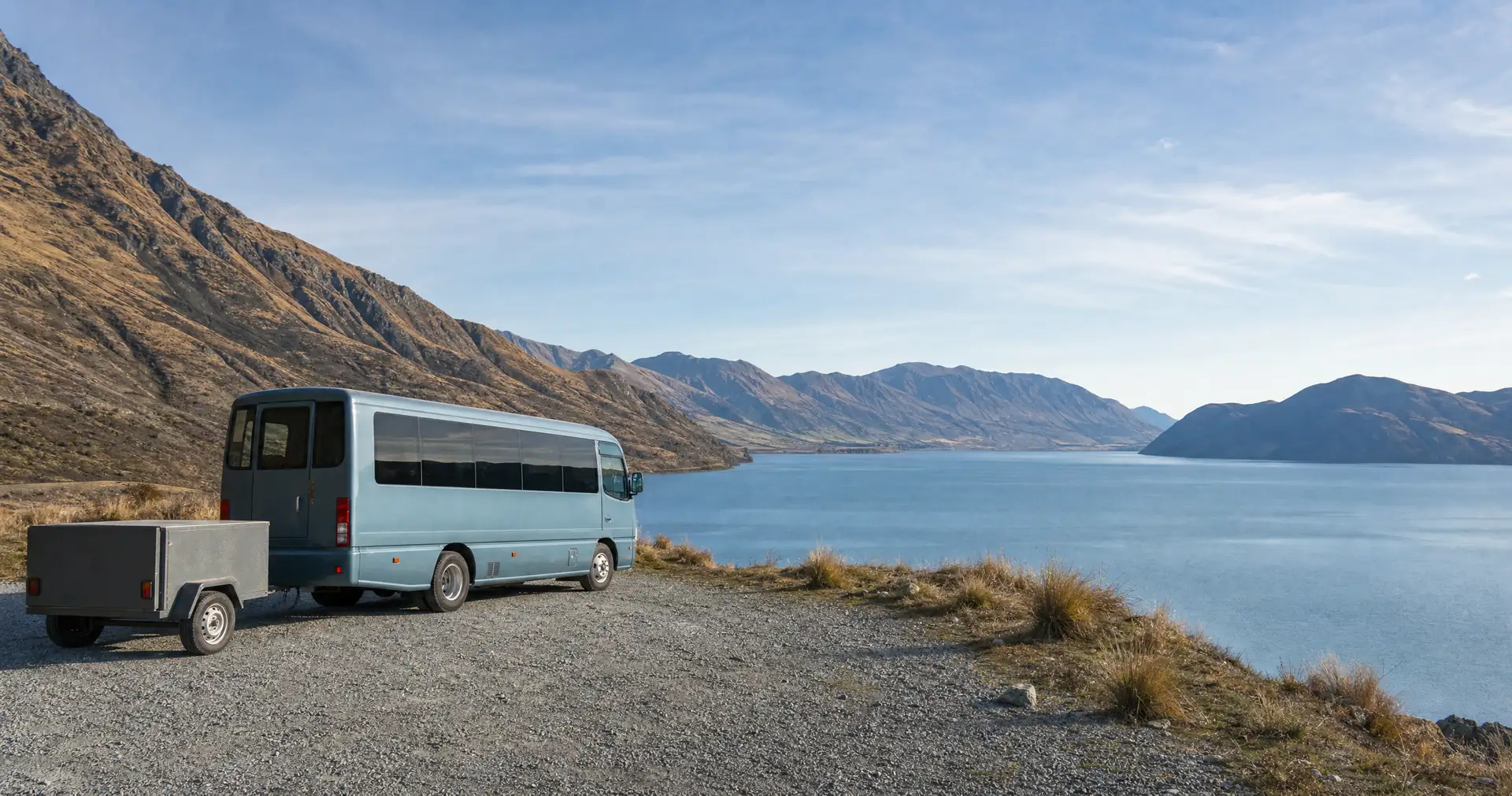
Tourism operators borrow against a pronounced seasonality curve: visitor peaks in Queenstown, Rotorua, and the Bay of Islands shape the cash-flow profile, while fleet, accommodation refurbishment, and adventure equipment shape the capex. Lenders commonly structure repayments to step with the season.
What you need to know about tourism finance in NZ.
→Seasonality is the defining issue lenders that understand tourism structure step-up / step-down repayments across the visitor cycle.
→Fleet and watercraft drive capex tour vans, mini-coaches, jet boats, kayaks, and aircraft commonly financed via chattel mortgage on 5 to 7-year terms.
→Regional concentration shapes lender appetite Queenstown, Rotorua, and the Bay of Islands operators carry the strongest visitor data and tightest indicative pricing.
→Operator track record matters lenders typically want trading history covering at least one full peak-and-shoulder cycle before unsecured options open up.
The landscape
A seasonally weighted, regionally concentrated finance segment.
Tourism is one of New Zealand's most internationally exposed small-business segments. According to MBIE Tourism Evidence and Insights and Stats NZ Tourism Satellite Account data, the sector contributes a material share of national export earnings and concentrates in a handful of regions: Queenstown-Lakes, Rotorua, Auckland, the Bay of Islands, and Fiordland among them. The finance footprint follows the same regional shape.
The structures that fit tourism most cleanly are asset finance against fleet and watercraft, a working-capital line of credit to bridge the off-season trough, and a term loan for fit-outs, acquisitions, or building extensions. Lenders that play in this space include Heartland Bank, UDC Finance, Avanti Finance, Prospa, the major banks for property-secured operators, and a small number of tourism-aware brokers.
Lender posture on tourism is shaped by the visitor cycle. The 2020 to 2022 international border closure left a long memory across NZ tourism credit, and many lenders still ask for verified domestic vs international visitor mix. Operators with strong domestic and Australian visitor exposure commonly attract a slightly tighter rate band than those concentrated on long-haul international markets.
Tour van fleet finance
$60K to $400K
Accommodation refurbishment
$80K to $600K
Off-season working capital
$25K to $150K
Charter boat / aircraft
$200K to $2M+
Sub-segments
How NZ tourism operators borrow, by sub-segment.
Tourism is not one segment; it is several. Each sub-segment has its own typical loan amounts, common purposes, and regulatory framing.
Tour and transport operators
Fleet-led capex. Mini-coaches, tour vans, 4WD shuttles. Common purposes: fleet refresh, additional vehicles for peak season, livery and fit-out. Chattel-mortgaged on 5 to 7-year terms with COF and PSL compliance built into the application.
·Loan amount: $60K to $400K
·Term: 5 to 7 years
Accommodation operators
Lodges, motels, holiday parks, and boutique accommodation. Capex tied to room refurbishment, kitchen and laundry equipment, energy upgrades. Term-loan or commercial-mortgage backed where property is owner-occupied.
·Loan amount: $80K to $600K
·Term: 5 to 15 years
Adventure and activity operators
Jet boat, white-water rafting, bungy, zipline, kayak, and guided-walking operators. Equipment-heavy with safety-critical kit (helmets, harnesses, watercraft) on shorter replacement cycles. AdventureMark or similar safety audits feed the application.
·Loan amount: $40K to $500K
·Term: 3 to 7 years
Charter and marine
Bay of Islands, Marlborough Sounds, Hauraki Gulf, Fiordland charter operators. Vessel finance on extended terms with marine-specialist surveyors and Maritime NZ certification feeding the lender review.
·Loan amount: $200K to $2M+
·Term: 7 to 15 years
Helicopter and aviation
Heli-hike, scenic flight, and ski-tour operators. Specialist aviation finance against airframe and turbine engines. CAA Part 135 compliance is a precondition. Larger amounts than most other sub-segments.
·Loan amount: $500K to $5M+
·Term: 7 to 12 years
Inbound tour wholesalers
Asset-light, working-capital intensive. Funds tied up in pre-paid supplier deposits and FIT bookings. Line of credit and invoice finance commonly fit better than term loans.
·Loan amount: $50K to $500K
·Term: revolving / 1 to 3 years
Common reasons
What NZ tourism businesses borrow for.
The bulk of NZ tourism lending volume falls into six common purposes. Each has a typical structure that fits.
Fleet and watercraft purchase
Tour vans, mini-coaches, 4WD shuttles, jet boats, kayaks. Chattel mortgage with the asset as security. GST commonly claimable upfront, subject to the accountant's confirmation.
Accommodation refurbishment
Room refresh, bathroom upgrades, energy retrofit (heat pumps, double glazing). Term loan or commercial mortgage where owner-occupied premises support the larger ticket size.
Off-season working capital
Bridging the May to August trough for many alpine and beach operators. Line of credit or seasonal loan with repayments stepped to peak-season cash flow.
Capacity expansion for peak
Extra fleet, additional guides, expanded kitchen capacity ahead of the December to February peak. Often a mix of asset finance and short-term working capital.
Acquisition of an existing operator
Buying a going concern (often with established Tourism NZ marketing presence and i-SITE listings). Vendor finance commonly part of the structure. Verified visitor numbers drive the lender review.
Compliance and safety upgrades
AdventureMark audits, Maritime NZ vessel certification, CAA Part 135 ramp checks, MBIE accommodation accreditation. Equipment replacement driven by audit findings is commonly debt-funded.
Eligibility quirks
What tourism lenders ask that other industries don't.
Beyond the standard NZBN, trading history, and turnover questions, NZ tourism lenders commonly ask about visitor mix, safety certification, seasonality, and lease or DOC concession stability.
Verified visitor mix
Lenders commonly ask for the split between domestic, Australian, and long-haul international visitors. Concentration on a single long-haul market is widely seen as a higher-risk profile.
Safety certification status
AdventureMark, Maritime NZ, CAA Part 135, or NZ tourism quality programmes. Lapsed certification typically stops a tourism application; current certification supports it.
DOC concession or lease
Operators using public conservation land (Milford Track, Tongariro, Abel Tasman) require a DOC concession. Lenders typically want loan term to fit inside the remaining concession period.
Seasonal repayment shaping
Specialist tourism lenders structure repayments to step up across the December to February peak and step down across the off-season. Generic lenders typically average across 12 months instead.
Capex by sub-segment and region
Indicative tourism finance bands by NZ region.
Queenstown, Rotorua, and the Bay of Islands carry the highest fleet and refurbishment cost profiles, reflecting both visitor volume and supplier pricing. The bands below are observed across NZ tourism finance applications in 2026.
Sub-segment
Queenstown / Wanaka
Rotorua
Bay of Islands
Other regions
Tour van (single, premium fit)
$110K to $190K
$95K to $160K
$95K to $160K
$80K to $140K
Mini-coach fleet (3 to 5 vehicles)
$400K to $1.2M
$320K to $900K
$300K to $850K
$250K to $750K
Motel / lodge refurbishment (10 to 20 rooms)
$220K to $600K
$160K to $480K
$160K to $480K
$120K to $400K
Adventure activity equipment refresh
$60K to $250K
$50K to $200K
$50K to $200K
$40K to $160K
Charter boat (8 to 12 metres)
$280K to $900K
n/a
$240K to $750K
$200K to $650K
Holiday park renewal
$180K to $500K
$160K to $450K
$140K to $420K
$120K to $380K
Indicative bands only. Actual cost depends on supplier, build specification, and vehicle or vessel age. Premium operators can run materially higher.
Worked scenarios
Three NZ tourism finance scenarios.
Real-world structures across alpine activity, geothermal accommodation, and Bay of Islands marine operators, illustrating how regional concentration and operator track record shift the offered rate.
Tour and transport
Queenstown fleet refresh
A Queenstown-based scenic tour operator with 7 years trading history refreshing two ageing mini-coaches. New fleet $260K ex-GST. Existing operation runs Skippers Canyon and Glenorchy day tours with verified domestic and Australian visitor exposure.
Structure: $260K chattel mortgage at indicative 11% across 6 years (asset life aligned to expected vehicle replacement). Operator's clean trading history and AdventureMark certification tightened the rate band. Weekly indicative ~$1,015. GST claim of around $39,000 typically claimable in the next return, subject to the accountant's confirmation.
Indicative figures
Asset value
$260,000
Term
6 years
Indicative rate
11% p.a.
Weekly indicative
~$1,015
GST claim (indicative)
~$39,000
Accommodation
Rotorua geothermal lodge refurbishment
A Rotorua-based 14-room geothermal lodge upgrading bathrooms, adding heat-pump systems to all rooms, and refreshing common areas. Total project $320K ex-GST. Operator owns the property freehold.
Structure: $200K commercial mortgage top-up at indicative 8% over 12 years (owner-occupied premises) plus $120K unsecured term loan at indicative 13% over 5 years for fixtures and fittings. Combined indicative weekly ~$1,015. The freehold position materially tightened the property-mortgage portion.
Indicative figures
Total project
$320,000
Property top-up
$200K @ 8%
Fixtures term loan
$120K @ 13%
Combined weekly
~$1,015
Term
12 / 5 years
Marine charter
Bay of Islands charter vessel
A Paihia-based charter operator acquiring an additional 11-metre catamaran for dolphin and Hole in the Rock cruises. Vessel cost $480K ex-GST. Existing single-vessel operation trading 4 years with verified seasonal turnover.
Structure: $480K specialist marine finance at indicative 10.5% over 10 years, secured against the vessel and supported by Maritime NZ survey certification. Indicative weekly ~$1,425. Seasonal repayment shaping with step-up across December to April and step-down across June to September.
Indicative figures
Vessel cost
$480,000
Term
10 years
Indicative rate
10.5% p.a.
Weekly indicative
~$1,425
Seasonal shaping
Yes
Structure × purpose
Which loan structure fits which tourism purpose.
No single structure suits every tourism purpose. The matrix below maps the four common structures to the most common purposes.
Feature
Asset / chattel mortgage
Term loan
Line of credit
Commercial mortgage
Fleet (vans, coaches, 4WDs)
Best fit
Possible (smaller tickets)
No
No
Watercraft and vessels
Best fit (specialist marine)
Marginal
No
No
Accommodation refurbishment
Equipment portion only
Best fit (unsecured)
No
Best fit if owner-occupied
Off-season working capital
No
Marginal (term too long)
Best fit
No
Acquisition of operator
Asset portion
Best fit (with vendor finance)
No
If property included
Safety equipment refresh
Best fit
Possible
No (purpose mismatch)
No
Regulatory framing
Tourism-specific regulatory and tax items lenders weigh.
Tourism applications carry a regulatory layer most other industries do not. Adventure activity operators are required to be registered under the Health and Safety at Work (Adventure Activities) Regulations 2016 and audited by an approved safety auditor, commonly AdventureMark. Lenders typically ask for current registration before disbursing on equipment finance. Maritime NZ certification covers the charter sub-segment under the Maritime Transport Act 1994, with vessel survey and operator certification feeding the lender review. Aviation operators sit under CAA Part 135 (small aircraft) or Part 121 (larger aircraft), with specialist aviation finance the typical structure.
Operators using public conservation land require a Department of Conservation concession. The concession period commonly runs 5 to 10 years and is renegotiated at expiry. Lenders typically want loan term to fit inside the remaining concession period plus any contracted renewal options. Loss or non-renewal of a DOC concession is widely treated as a material adverse change in tourism credit reviews.
IRD depreciation rates relevant to tourism vary by asset category. Motor vehicles depreciate at 30% diminishing value (commonly), commercial vessels at lower rates depending on category, aircraft at category-specific rates. Building improvements typically depreciate at 0% (since 2011) but fit-outs and chattels separated from building structure can depreciate independently. The accountant's confirmation is the standard last step on the depreciation schedule and the diminishing-value vs straight-line election. GST on fleet and equipment purchases is typically claimable in the next return after settlement under chattel mortgage, subject to the accountant's confirmation that the operator is GST-registered and the asset qualifies.
Fringe benefit tax (FBT) commonly applies where tourism vehicles are also used by directors or employees for private purposes. Tour vans dedicated to commercial use typically sit outside FBT, but mixed-use vehicles trigger FBT under IRD rules. The accountant's confirmation is the standard last step on FBT exposure. Personal Property Securities Register (PPSR) registration on financed assets is standard practice and lenders commonly require it as a settlement condition.
Lenders to know
NZ lenders that fund tourism well.
Tourism is supported by a mix of asset finance specialists (for fleet and watercraft), alternative SME lenders (for working capital and refurbishment), and the major banks (for property-secured larger projects).
Tourism-aware brokers exist in Queenstown, Auckland, and Christchurch, and commonly tighten the offered rate by knowing which lender fits each operator profile. Editorial-only listing; commercial relationship with Prospa disclosed at /partner/.
How do New Zealand tourism businesses commonly finance a fleet refresh?
A typical NZ tour-van fleet refresh runs $250,000 to $1.2 million depending on vehicle count and specification. Operators commonly fund this through chattel mortgage against the new fleet, with terms of 5 to 7 years aligned to the expected replacement cycle. UDC Finance, Heartland Bank, and the major-bank asset finance arms are the typical lenders. PPSR registration on each financed vehicle is standard practice, subject to the lender's settlement requirements.
How does seasonality affect a tourism loan application?
Most NZ tourism lenders ask for monthly turnover figures across at least 12 months and ideally 24 months, rather than averaging the year, because the seasonality matters. A summer-trading operator in Queenstown or a winter-trading operator in Ruapehu is assessed against its peak-quarter cash flow and its quietest-quarter cash flow separately. Specialist lenders commonly structure repayments to step up or down across the seasonal cycle.
What eligibility questions do tourism lenders ask that other industries do not?
Beyond the standard NZBN, trading history, and turnover questions, NZ tourism lenders commonly ask about the visitor mix (domestic, Australian, long-haul international), safety certification status (AdventureMark, Maritime NZ, CAA Part 135), DOC concession or lease term, and seasonal cash-flow shape. Acquisition financing also asks about verified visitor numbers and the prior owner's reason for selling.
Can a brand-new NZ tourism operator get an unsecured loan?
Unsecured loans for a brand-new tourism operator with no trading history are difficult to obtain in the NZ market. The seasonality combined with no track record typically pushes lenders toward a secured structure (chattel mortgage on assets, property security, or a director's guarantee). Established operators with at least one full peak-and-shoulder cycle of trading history can often access unsecured working capital products.
What rate range applies to NZ tourism finance in 2026?
Indicative rates on tourism finance commonly sit in the 7% to 18% per annum band depending on structure and operator profile. Property-secured commercial mortgages for established accommodation operators sit at the lower end. Asset-secured chattel mortgages on fleet sit in the middle band. Unsecured working capital for newer operators sits at the upper end. Final rate is set by the lender after assessment.
Is GST claimable on a tour vehicle or vessel purchase?
A GST-registered tourism business can typically claim the GST component on a vehicle or vessel purchase as input tax in the relevant GST return, subject to the accountant's confirmation. Where the asset is acquired under chattel mortgage, the full GST is typically claimable upfront. Where it is acquired under finance lease, GST is typically claimed across the rental payments. The structure choice affects cash-flow timing more than total cost.
How does a DOC concession affect tourism finance?
Operators using public conservation land (Milford Track, Tongariro Crossing, Abel Tasman, and many others) require a Department of Conservation concession. Concession periods commonly run 5 to 10 years. Lenders typically want the loan term to fit inside the remaining concession period plus any contracted renewal options. Loss or non-renewal of a DOC concession is widely treated as a material adverse change in tourism credit reviews.
What deposit do NZ tourism lenders typically require?
For fleet and vessel finance, deposits commonly run 0% to 30% of the asset value depending on lender, operator profile, and asset condition. New operators with no trading history often face deposit requirements of 20% or more. Established operators with multi-year trading history can commonly access zero-deposit asset finance on standard fleet categories, subject to the lender's credit assessment.
Can I refinance my tourism loan to a better rate after trading?
Often yes, particularly after 12 to 24 months of clean trading and repayments where the financial profile has strengthened post-pandemic visitor recovery. Refinancing is commonly used to consolidate multiple tourism loans (fleet + working capital + refurbishment) into a single facility, or to move from alternative-lender pricing to major-bank pricing. Early-repayment fees on the original loan are the main consideration.
How does adventure activity registration affect finance?
Adventure activity operators are required to be registered under the Health and Safety at Work (Adventure Activities) Regulations 2016 and audited by an approved safety auditor such as AdventureMark. Lenders typically ask for current registration evidence before disbursing on equipment finance. Lapsed registration commonly stops a tourism application; current registration supports it.
Are seasonal step-up repayments available on tourism loans?
Specialist tourism lenders commonly structure repayments to step up across the December to February peak and step down across the June to August off-season for many operators. Generic SME lenders typically average across 12 months instead, which can put pressure on off-season cash flow. The structure choice is widely viewed as one of the strongest practical advantages of using a tourism-aware lender.
How does the post-2020 border closure shape current lender posture?
The 2020 to 2022 international border closure left a long memory across NZ tourism credit. Many lenders still ask for verified domestic and Australian visitor mix in addition to long-haul international exposure. Operators with strong domestic and trans-Tasman visitor profiles commonly attract a slightly tighter rate band than those concentrated on long-haul international markets. Lender posture is widely observed to be cautious but improving.
Can a tourism business use invoice finance against inbound bookings?
Inbound tour wholesalers and B2B operators with FIT bookings on credit terms commonly use invoice finance against confirmed bookings. The structure advances a portion of the invoice value (commonly 70% to 85%) and releases the balance on payment. This suits the asset-light, working-capital-heavy profile of wholesale tourism better than a term loan would, subject to the lender's credit assessment.
Indicative content only. Not personalised financial advice.
A business loan is a commitment that runs for months or years, and repayments come out of the same operating cash flow as everything else. Before committing, it is worth modelling the weekly and monthly cost against the business's working-capital position, which is what this site is built to help with. Borrowing at a level that stays comfortable through a quiet quarter, not just a strong one, is widely regarded as the safer frame.
What this site is
A calculator and information tool. Not a lender, not a broker, not a registered financial adviser. Nothing here is personalised financial advice.
What the figures show
Modelled estimates based on the inputs you enter. Not a quote. Not an offer of credit. Not a guarantee of approval, rate, or fees.
What the lender decides
Final rates, fees, and approval are set by the lender after a CCCFA-appropriate assessment of the applicant's circumstances and credit decision.
Commercial disclosure
Businessloans.org.nz earns a commission from Prospa when a visitor applies through this site and their application is approved. The commission is paid by Prospa, not by the borrower, and it does not influence the rate Prospa offers. Full disclosure on the partner page.
Tax, GST, and accountant framing
Tax-treatment statements (GST claim timing, interest deductibility, depreciation rates) are general in nature and subject to your accountant's confirmation on the specific business position. For material amounts, professional advice from a registered financial adviser or chartered accountant is widely regarded as the safer frame.