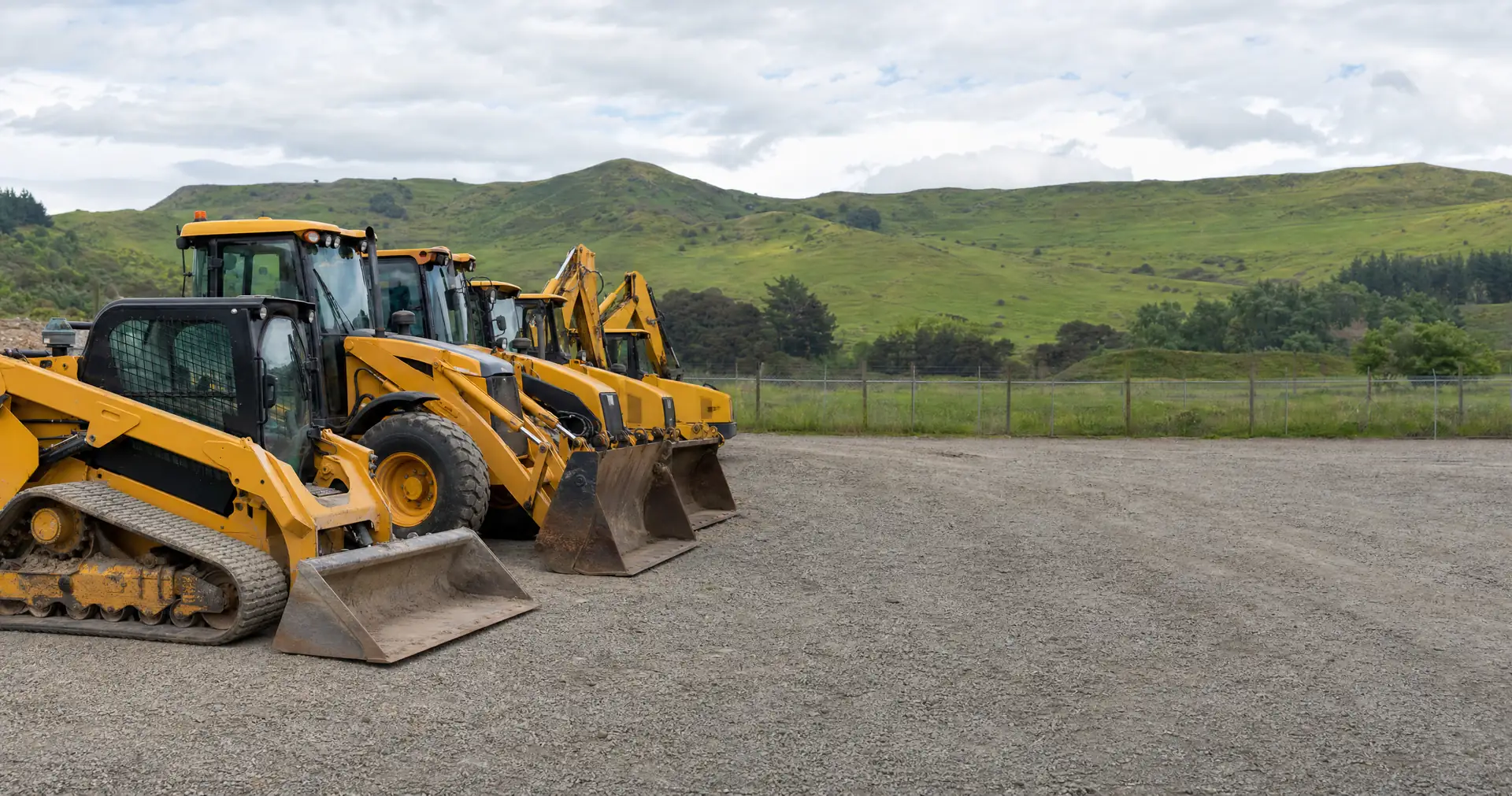
Buy equipment for productive use across the asset life.
Funding plant, machinery, kitchen fit-out, and shop-floor equipment for NZ businesses. The structures (chattel mortgage, hire purchase, lease, term loan), indicative weekly costs, and three borrower scenarios.
→Asset finance usually fits chattel mortgage, hire purchase, or lease are the dominant structures because the asset secures the loan.
→Indicative 8% to 16% p.a. across most NZ equipment finance. Major banks and asset-finance specialists compete in the lower band.
→GST treatment varies chattel mortgage allows upfront GST claim; finance lease and operating lease have different timing, subject to the accountant's confirmation.
→Match term to asset life kitchen equipment 3 to 5 years, machinery 5 to 7 years, fit-out aligned to lease term.
What it is
Funding the productive asset across its useful life.
Equipment finance is borrowing used to fund the purchase of business plant, machinery, kitchen equipment, shop fit-out, computer hardware, or any other long-life productive asset. The structure-of-choice for most equipment purchases in NZ is asset finance because the asset itself acts as security and the structure attracts mainstream rate bands.
Where the asset is unconventional, second-hand from a private seller, or the borrower prefers an unsecured route, a short-term or medium-term unsecured loan is the alternative, with rates typically 3 to 8 percentage points above the asset-finance band. NZ businesses commonly use UDC Finance, Heartland Bank, Avanti Finance, MTF Finance, and the major-bank asset-finance arms.
The structure choice is typically driven by three factors, which are GST recovery timing, the depreciation versus rental treatment under the IRD framework, subject to the accountant's confirmation, and the balance-sheet impact under the lessee or owner classification. The accountant conversation usually settles which sits cleanest for the specific trading position.
Typical amount
$10K to $1M+
Term
1 to 7 years
Security
Often the asset itself
Rate band
8% to 16% indicative
Common scenarios
When NZ businesses borrow to buy equipment.
01
Hospitality kitchen fit-out or upgrade
A new cafe or restaurant fit-out (combi oven, dishwasher, fridges, prep benches) typically running $80K to $250K. A chattel mortgage or finance lease across 3 to 5 years typically matches the kitchen-equipment depreciation cycle, subject to the accountant's confirmation.
02
Construction or trades plant
A builder or earthmoving contractor buying a digger, scissor lift, or scaffolding inventory. PPSR-secured asset finance through UDC, Heartland, or specialist lenders fits.
03
Manufacturing machinery
CNC, packaging line, food processing equipment. Often $100K to $500K. Asset finance through specialist lenders at indicative 9% to 13%.
04
Commercial vehicle or fleet
Vans, utes, light trucks for trades and services. Vehicle finance via MTF, UDC, Heartland, or major-bank asset-finance arms.
05
Tech and IT refresh
Computer, server, POS, or AV upgrade. Lease structures dominate this category because the asset depreciates fast.
06
Salon, gym, or specialist fit-out
Specialist trade equipment (salon chairs, gym equipment, dental chairs, veterinary kit). Asset finance with PPSR registration; lease commonly chosen where equipment turns over inside 5 years.
Structures
Three structures that fit equipment in NZ.
Chattel mortgage
The business owns the asset from day one; the lender registers a security interest on PPSR. GST claimable in the next GST return.
The lender owns the asset until final payment; ownership transfers on settlement. Structurally similar to chattel mortgage with slightly different accounting and GST treatment.
·Rate band: 9% to 14%
·Suits: Vehicles, machinery, traditional plant
Finance or operating lease
The lender owns the asset; the business rents it. Operating leases keep the asset off the balance sheet; finance leases bring it on.
·Rate band: 9% to 16% effective
·Suits: Tech, fast-turn equipment, fleet
Decision matrix
Which structure fits which equipment scenario.
Feature
Chattel mortgage
Hire purchase
Finance lease
Operating lease
Long-life machinery (5 to 7 yr)
Best fit
Best fit
Works
Marginal
Hospitality kitchen fit-out
Best fit
Best fit
Best fit
Works
Commercial vehicle or fleet
Best fit
Best fit
Works
Best fit
Tech and IT refresh
Works
Works
Best fit
Best fit
Specialist or one-off equipment
Best fit
Works
Marginal
Marginal
Off-balance-sheet preference
No
No
Marginal
Best fit
Upfront GST claim preference
Best fit
Works
No
No
Worked scenarios
Three NZ equipment-finance scenarios.
Hospitality
Wellington cafe, kitchen fit-out
A Cuba Street cafe owner upgrading the back-of-house: combi oven, two-deck commercial dishwasher, prep fridges, stainless benches. Total ex-GST cost $120,000.
The structure was a chattel mortgage at indicative 11% p.a. across 5 years. The cafe claims $18,000 GST in the next GST return. Weekly repayment runs around $600.
Indicative figures
Asset cost (ex-GST)
$120,000
Term
5 years
Indicative rate
11% p.a.
Weekly
~$600
GST claim
$18,000
Construction
Auckland builder, scissor lift and scaffolding
A Mt Wellington commercial builder buying a scissor lift ($55K ex-GST) and modular scaffolding inventory ($35K ex-GST). Total $90,000 ex-GST.
The structure was a chattel mortgage at indicative 9.5% p.a. across 5 years. The builder claims $13,500 GST in the next GST return. Weekly repayment runs around $440.
Indicative figures
Asset cost (ex-GST)
$90,000
Term
5 years
Indicative rate
9.5% p.a.
Weekly
~$440
GST claim
$13,500
Manufacturing
Christchurch manufacturer, CNC upgrade
A Sockburn-based engineering business replacing an aged CNC mill with a new 5-axis machine. Cost $280,000 ex-GST.
The structure was a hire purchase at indicative 10% p.a. across 7 years. Weekly repayment runs around $1,080. The asset is owned by the lender during the term.
Late or missed scheduled payments commonly trigger a lender check-in within the first cycle. NZ lenders commonly work with the borrower on a payment plan.
What happens:Late fees apply ($20 to $100 per missed payment). Credit-file marks accumulate. Continued non-payment escalates to formal default review and PPSR enforcement.
PPSR repossession
After 60 to 90 days arrears and PPSR enforcement notice, the lender can repossess the asset. The asset is realised through trade auction or wholesale sale.
What happens:Asset is removed from the business. Trading is materially disrupted. Any shortfall is pursued under the personal guarantee.
Insolvency or liquidation
Where the business fails, the asset-finance lender ranks ahead of unsecured creditors for the asset value via PPSR.
What happens:Asset is realised by the lender. PG enforcement creates personal liability for any shortfall. Personal credit files mark for 5 years.
Default on equipment finance is uncommon in our experience among established borrowers. NZ asset-finance lenders typically prefer payment plans and term extensions over repossession.
Eligibility
What lenders assess on an equipment purchase.
An equipment purchase is one of the more straightforward things to fund in New Zealand, because the asset itself does most of the security work. The assessment is correspondingly lighter than it would be for the same amount unsecured.
A firm supplier quote on letterhead is the first requirement, identifying the asset by make, model, year and serial or VIN where applicable, with the GST-inclusive and ex-GST figures set out. Lenders fund against that document rather than against a verbal price, and funds commonly pay the supplier directly rather than reaching the business account.
The asset class then determines the loan-to-value ratio. Equipment with a deep New Zealand resale market, such as light commercial vehicles and mainstream agricultural plant, commonly attracts up to 100% funding on new and 80% to 95% on used. Specialist machinery with a thin resale market drops to 60% to 80% and prices higher, because the lender models a lower recovery.
Trading history matters less here than on unsecured lending. Six to twelve months is a common minimum with specialist lenders, against the two years a bank would want, and a young business with a good asset commonly assesses better than an older one without.
Comprehensive insurance with the lender noted as an interested party is a settlement condition on vehicles and mobile plant, and the premium is worth quoting before committing rather than after approval.
Common pitfalls
Five things that catch New Zealand businesses here.
None of these appear in a rate comparison, and each is common enough to be worth naming before an application rather than after one.
A term longer than the asset
Stretching IT equipment to five years or used plant to seven leaves the business paying for something it has already replaced. Matching the term to the working life costs more weekly and less in total.
Comparing rate without fees
Establishment fees, PPSR registration and monthly account fees vary widely between NZ lenders. Two indicative 11% offers can differ materially once the fee schedule is read.
Missing the GST timing
The treatment differs between a chattel mortgage and a lease, and on a $150,000 purchase the difference is roughly $22,500 arriving in the next return or spread across the rentals, subject to the accountant's confirmation.
Insurance quoted after approval
Comprehensive cover with the lender noted is commonly a settlement condition, and the premium is part of the real weekly cost of the equipment rather than an extra.
Financing to the maximum LVR
A zero-deposit loan on fast-depreciating equipment puts the balance above the resale value for much of the early term, which is the gap that turns a repossession into a shortfall.
Worked example
A Whangarei joinery replacing a panel saw.
The existing saw is 16 years old and the cut tolerance has drifted enough that the shop is remaking roughly one kitchen door in twenty. At an indicative $180 of materials and labour per remake across around 400 doors a month, that is a measurable cost rather than an irritation.
A replacement beam saw at $96,000 plus GST, funded on a chattel mortgage at an indicative 10.5% across 5 years with a 10% deposit, carries a weekly repayment near $470 on these assumptions.
Against roughly $3,600 a month of remake cost the machine removes, the repayment is covered with room left over, and that comparison is the one worth running before the rate comparison. The GST component of around $14,400 is typically claimable in the next return where the business is GST-registered, subject to the accountant confirming the treatment.
The lender registered a security interest on the PPSR over the saw and took a director guarantee. Because a beam saw has a thinner New Zealand resale market than a work vehicle, the LVR came in at 90% rather than the 100% a ute would have attracted.
Indicative figures
Asset price (ex GST)
$96,000
Deposit
$9,600 (10%)
Amount financed
$86,400
Indicative rate
10.5% p.a.
Term
5 years
Indicative weekly
~$470
Remake cost removed
~$3,600 a month
Indicative only, based on the assumptions stated above and excluding establishment and account fees. Actual rate, LVR and term are set by the lender after assessment.
Before the quote
Two questions worth answering before the finance conversation.
The first is what the equipment removes rather than what it adds. A machine that eliminates a measurable cost, whether that is rework, hire charges, overtime or subcontracting, has a repayment source that can be pointed at. A machine bought on general capability improvement may still be the right purchase, and it is a harder one to structure a term around. The second is how long the equipment will genuinely earn. Matching the loan term to the working life keeps the repayment and the asset roughly in step, and it is the difference between owning something useful at the end of the term and still paying for something already replaced.
Buy or lease
Owning the equipment, or paying for the use of it.
Buy it
Chattel mortgage and hire purchase.
The business ends the term holding the equipment, and whatever it is worth then belongs to the business. On plant with a long working life, that residual is commonly a meaningful contribution toward the next purchase.
Under a chattel mortgage the GST-registered business is treated as the owner and the GST component is typically claimable in the next return, subject to the accountant confirming the treatment. On a $120,000 purchase that is roughly $18,000 of timing benefit.
The exposure is residual-value risk. Where the technology dates faster than expected, or the resale market for that class of machine softens, the business carries the difference rather than the lender.
Lease it
Finance lease and operating lease.
An operating lease is a rental. The equipment goes back at the end of the term, the residual-value risk sat with the lessor throughout, and the monthly figure is predictable from the outset.
That suits equipment that dates quickly, which in practice means IT hardware, diagnostic and imaging equipment, and anything where a five-year-old unit is materially less capable than a new one. It also keeps the commitment off the asset register, which some businesses prefer.
Return conditions are the part to read before signing rather than after. Fair wear and tear is defined in the agreement, and equipment that has worked hard for four years can attract end-of-term charges that were not in the comparison when the monthly figures were set side by side.
New or used
What changes when the equipment is second-hand.
Used equipment is funded routinely in New Zealand and is the larger volume segment in several asset classes, particularly vehicles and agricultural plant. The terms differ from new in three ways worth knowing before the purchase is agreed.
The loan-to-value ratio drops. Where new equipment in a liquid class attracts up to 100% funding, the same class second-hand commonly runs 70% to 90%, so a deposit is more often required rather than optional.
Lenders cap total asset age at the end of the loan term rather than at purchase. A machine with a 15-year cap that is already eight years old will generally only attract a term of around seven, which raises the weekly repayment even where the price is lower.
Condition verification becomes part of the process. On higher-value used plant, lenders commonly want an inspection or a valuation, and a private sale between unrelated parties is treated differently from a dealer purchase because there is no supplier invoice on letterhead to fund against.
The arithmetic still commonly favours used. A machine at roughly 60% of new price on a shorter term at a slightly higher rate commonly produces a lower total cost of ownership, and it is a comparison worth running with real figures rather than assuming either way.
Before ordering
Two things that hold up an otherwise straightforward application.
The first is a quote that is not fundable. Lenders need a firm supplier quote on letterhead identifying the equipment by make, model, year and serial number where applicable, with ex-GST and GST-inclusive figures. A pro-forma without those details, or an emailed price with no letterhead, commonly sends the application back a step. The second is a deposit already paid to the supplier. Where a business has paid a deposit before arranging finance, some lenders will not fund the balance because they cannot register a clean security interest over an asset partly paid for outside the facility. Arranging the finance approval before committing money to the supplier avoids both, and an approval in principle is generally valid for long enough to negotiate the purchase without pressure. Where a deposit has already been paid, saying so at application rather than at settlement gives the lender the chance to structure around it instead of declining late in the process.
Delivery and commissioning
The gap between settlement and the equipment earning.
Loan terms generally start at settlement, and settlement is generally when the supplier is paid rather than when the equipment is producing. On imported machinery, specialist plant or anything requiring installation and commissioning, that gap can run several months, and the business is servicing the facility throughout it. Lead times of three to six months are ordinary on commercial kitchen equipment and industrial machinery in the New Zealand market, and site preparation, three-phase power, consenting and operator training can each add further. Two things address it: asking the lender whether the first repayment can be deferred until commissioning, which several will accommodate on a documented lead time, and building the gap into the cash-flow forecast rather than discovering it in month two.
Equipment finance is borrowing used to fund the purchase of business plant, machinery, kitchen equipment, shop fit-out, computer hardware, or any other long-life productive asset. The dominant structures in NZ are chattel mortgage, hire purchase, and finance or operating lease.
How much can I borrow for equipment in NZ?
Indicative amounts run $10,000 to over $1,000,000 across the NZ asset-finance market. UDC Finance, Heartland Bank, and the major-bank asset-finance arms compete for the larger end.
What rates apply to equipment finance?
Indicative rates run 8% to 16% per annum across NZ equipment finance. Major banks and established asset-finance specialists price the lower band on clean applications with new equipment.
Should I choose chattel mortgage or finance lease?
Borrowers prioritising upfront GST recovery and ownership of the asset commonly choose chattel mortgage; borrowers prioritising the rental tax treatment and balance-sheet simplicity sometimes choose finance lease. The accountant is the right person to confirm.
Can I claim GST on equipment finance?
On a chattel mortgage, the GST on the equipment cost is typically claimable in the next GST return where the business is GST-registered, subject to the accountant's confirmation. On a finance or operating lease, GST is treated inside the rental.
What term is right for equipment finance?
Common terms run 1 to 7 years, ideally matched to the productive life of the asset. Hospitality kitchen equipment 3 to 5 years; manufacturing machinery 5 to 7 years; commercial vehicles 3 to 5 years.
Is interest on equipment finance tax-deductible?
Interest on equipment finance used for business purposes is generally deductible against business income in New Zealand, subject to the accountant's confirmation.
What documents are needed for an equipment finance application?
Standard documents are NZBN, business owner ID, last 6 months of business bank statements, the supplier invoice or quote, and equipment details.
Can a brand-new business get equipment finance?
First-year businesses face a harder application because trading history has not been demonstrated. Specialist asset-finance lenders sometimes write equipment finance for new businesses where the borrower has substantial industry experience.
What happens if I default on equipment finance?
On default, the lender enforces the PPSR security after the statutory notice period. The asset is repossessed and sold; proceeds apply to the loan balance, sale costs, and fees. Any shortfall is pursued under the personal guarantee.
Can I refinance existing equipment finance to a better rate?
Often yes, particularly after 12 to 24 months of clean repayments where the trading history has improved. Early-repayment fees on the existing loan are the main consideration.
Is unsecured equipment-purpose lending available in NZ?
Yes, several alternative lenders write unsecured short-term loans for equipment purposes. Rates are typically 3 to 8 percentage points above the asset-secured equivalent.
Indicative content only. Not personalised financial advice.
A business loan is a commitment that runs for months or years, and repayments come out of the same operating cash flow as everything else. Before committing, it is worth modelling the weekly and monthly cost against the business's working-capital position, which is what this site is built to help with. Borrowing at a level that stays comfortable through a quiet quarter, not just a strong one, is widely regarded as the safer frame.
What this site is
A calculator and information tool. Not a lender, not a broker, not a registered financial adviser. Nothing here is personalised financial advice.
What the figures show
Modelled estimates based on the inputs you enter. Not a quote. Not an offer of credit. Not a guarantee of approval, rate, or fees.
What the lender decides
Final rates, fees, and approval are set by the lender after a CCCFA-appropriate assessment of the applicant's circumstances and credit decision.
Commercial disclosure
Businessloans.org.nz earns a commission from Prospa when a visitor applies through this site and their application is approved. The commission is paid by Prospa, not by the borrower, and it does not influence the rate Prospa offers. Full disclosure on the partner page.
Tax, GST, and accountant framing
Tax-treatment statements (GST claim timing, interest deductibility, depreciation rates) are general in nature and subject to your accountant's confirmation on the specific business position. For material amounts, professional advice from a registered financial adviser or chartered accountant is widely regarded as the safer frame.