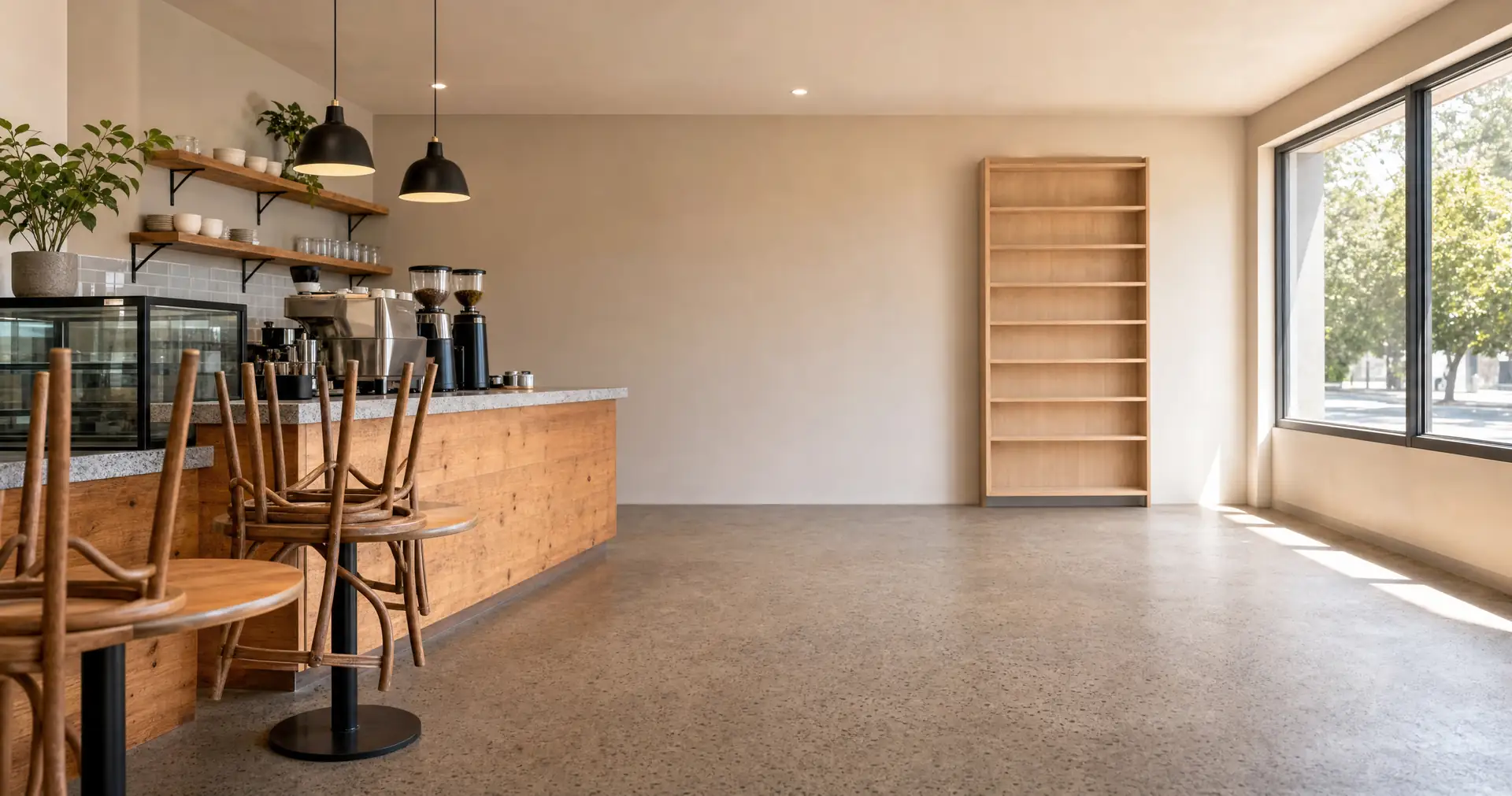
Business loans for New Zealand hospitality businesses.
Cafes, restaurants, bars, and breweries borrow differently than a typical NZ small business. Seasonality, fit-out cost, lease dynamics, equipment-heavy capex, liquor licensing, and IRD treatment all shape the structure and eligibility conversation.
What you need to know about hospitality finance in NZ.
→Fit-out is the biggest spend cafes $60-200K, restaurants $150-500K+, bars $80-400K. Lease-tied finance.
→Higher-risk industry lenders price for the failure rate. Operator experience and IRD compliance are the strongest mitigants.
→Equipment finance is the cheapest tier asset-secured kitchen kit prices below unsecured fit-out funding.
→Seasonality matters specialist hospo lenders structure repayments to step with the season; generic lenders average across 12 months.
The landscape
One of the most finance-active small-business segments in NZ.
New Zealand hospitality is one of the most finance-active small-business segments in the country. The combination of high upfront fit-out cost, equipment-heavy operations, ingredient and stock cycles, and pronounced seasonality means that few hospo businesses run debt-free.
The structures that fit hospitality most cleanly are equipment finance for the kitchen, asset finance for vehicles, a working-capital line of credit for the seasonal pressure, and a term loan for fit-outs and acquisitions. Lenders that play in this space include the major banks, Heartland Bank, Prospa, Avanti Finance, and a handful of hospo-specific brokers.
Hospitality is widely viewed as a higher-risk segment by NZ lenders because of the first-18-month failure rate, seasonality, and the difficulty of recovering value from a half-finished fit-out. The practical implication is a tighter lending posture: more deposit, more emphasis on operator experience, more weight on lease length and location.
Cafe fit-out
$60K to $200K
Restaurant fit-out
$150K to $500K+
Working capital
$15K to $100K
Equipment loan
$10K to $250K
Sub-segments
How NZ hospitality businesses borrow, by sub-segment.
Hospitality is not one segment; it is several. Each sub-segment has its own typical loan amounts, common purposes, and eligibility quirks.
Cafes
Most-financed hospo sub-segment by volume. Common purposes: fit-out ($60K to $200K), espresso machine and grinder upgrade ($15K to $40K), pre-summer working capital. Lease-secured term loans and chattel-mortgage equipment finance are standard.
·Loan amount: $40K to $200K
·Term: 3 to 5 years
Restaurants
Higher capex than cafes, longer payback. Fit-out commonly $150K to $500K+, with the kitchen line carrying most of the equipment cost. Larger applications often property-secured. Acquisition financing common (typically 30-50% deposit).
·Loan amount: $150K to $500K
·Term: 4 to 5 years
Bars and pubs
Lease-and-licence-driven. Liquor licence transfer, lease security, and bond requirements add eligibility complexity. Common purposes: bar fit-out, refrigeration, sound and AV, lease bond, mid-week working capital.
·Loan amount: $80K to $400K
·Term: 3 to 5 years
Breweries and producers
Equipment-heavy specialty. Brewery kit (mash tuns, fermenters, canning lines) commonly $100K to $700K+, financed via chattel mortgage. Distilleries, food producers, and bakeries follow a similar capex profile.
·Loan amount: $100K to $700K
·Term: 4 to 7 years
Common reasons
What NZ hospo businesses borrow for.
The bulk of NZ hospitality lending volume falls into six common purposes. Each has a typical structure that fits.
Fit-out and refurbishment
New shopfit, kitchen line, front-of-house joinery. Largest single spend most hospo businesses face. Term loan against personal property or chattel mortgage on equipment portion.
Kitchen equipment
Combi ovens, espresso machines, fridges, dishwashers, prep benches, hood-and-duct. Chattel mortgage on a 3-5 year term. GST claimed upfront commonly material to cash flow.
Stock and ingredients
Pre-summer stock build, peak-season inventory. Short-term loan or line of credit. Repaid out of the season.
Working capital and payroll
Bridging quiet weeks, smoothing the GST cycle, covering wages while waiting on event invoices. Line of credit suits the recurring pattern.
Expansion to a 2nd site
Capacity for proven demand. Larger amounts, often bank-led with property security. Existing trading history is the key approval lever.
Acquisition of an existing venue
Buying a going concern. Vendor finance commonly part of the structure. Trading data from the existing operation drives the lender confidence.
Eligibility quirks
What hospo lenders ask that other industries don't.
Beyond the standard NZBN, trading history, and turnover questions, NZ hospo lenders commonly ask about lease, operator experience, IRD compliance, and seasonality.
Lease length and security
A 5-year fit-out loan against a 3-year lease is a hard sell. Lenders typically want loan term to fit inside the remaining lease (plus any options).
Operator experience
First-time hospo operator + new concept is the highest-risk profile. Prior experience in the segment commonly tightens the indicative rate band.
GST and PAYE compliance
Lenders commonly ask for current IRD compliance evidence. Outstanding GST or PAYE arrears materially weaken the application or stop it.
Seasonality treatment
Specialist hospo lenders structure repayments to step up or down by season. Generic lenders typically average across 12 months instead.
Capex by sub-segment and region
Indicative fit-out and equipment costs by NZ region.
Auckland CBD and Wellington fit-out costs commonly run 20-40% above regional NZ pricing for the same brief. The bands below are observed across NZ hospo fit-outs in 2026.
Sub-segment
Auckland CBD
Wellington
Christchurch / regional
Small cafe (40 covers)
$80K to $160K
$70K to $140K
$60K to $110K
Mid cafe (60-80 covers)
$140K to $220K
$120K to $190K
$90K to $160K
Restaurant (60-100 covers)
$220K to $450K
$180K to $380K
$150K to $320K
Bar / gastropub
$180K to $400K
$150K to $350K
$120K to $280K
Brewery taproom
$300K to $700K
$250K to $600K
$200K to $500K
Quick-service / takeaway
$60K to $130K
$55K to $110K
$45K to $90K
Indicative bands only. Actual fit-out cost depends on building condition, brief complexity, and consenting timeline. Premium concepts can run materially higher.
Structure × purpose
Which loan structure fits which hospo purpose.
No single structure suits every hospitality purpose. The matrix below maps the four common structures to the six most common purposes.
Feature
Equipment finance
Term loan
Line of credit
Commercial mortgage
Kitchen equipment purchase
Best fit
Works (combined fit-out)
No (purpose mismatch)
No
Full fit-out (incl joinery)
Equipment portion only
Best fit
No (size, term)
Possible if owned
Stock and ingredients
No
Marginal (term too long)
Best fit
No
Working capital, payroll
No
Marginal
Best fit
No
Acquire existing venue
Equipment portion
Best fit (with vendor finance)
No
If property included
Buy commercial premises
No
Marginal (size)
No
Best fit
How it works
A typical hospo finance application.
Hospo applications carry a documentation premium over generic SME applications because lenders need confidence in the lease, operator, and concept. Established operators with trading history move faster.
01
Day 1 to 3
Define the scope and structure
A typical hospo loan application combines multiple structures: equipment finance on the kitchen line, a term loan on the fit-out and joinery, and a small line of credit for opening working capital. Defining these components upfront tightens the application.
Documents commonly required
·Project brief and concept overview
·Itemised quote breakdown by structure
02
Day 1 to 7
Submit application with hospo-specific documents
Beyond the standard SME application pack, hospo lenders ask for the lease (or heads of agreement), the operator CV showing prior hospitality experience, the menu and price points, and a 12-month forecast.
Documents commonly required
·NZBN, business owner ID
·Last 6 months business bank statements
·Lease or heads of agreement
·Operator CV
·Concept brief and menu
·12-month financial forecast
·IRD compliance certificate (PAYE, GST)
03
Day 5 to 14
Lender assessment and offer
Lenders assess against three things: the operator (experience, prior trading), the concept (brief, location, market), and the numbers (forecast vs typical sub-segment benchmarks). Offers commonly come back with conditions: shorter term, larger deposit, additional security, or staged drawdowns tied to fit-out milestones.
04
Week 2 onward
Settle, drawdown, fit-out
Equipment finance settles directly to the supplier. Fit-out term loans commonly drawn in stages tied to milestones (deposit on contractor signing, progress payment on rough-in, balance on completion). The line of credit opens before the venue trades to fund opening stock and pre-launch payroll.
A hospo broker who knows the segment commonly tightens the rate band and reduces the documentation cycle by 30-50% versus a direct application to a generic SME lender.
Worked scenarios
Three NZ hospitality finance scenarios.
Real-world structures across cafe, restaurant, and brewery applications, illustrating how the regional cost profile and operator experience shift the offered rate.
Cafe
Wellington cafe second site
A Cuba Street cafe operator opening their second site in Newtown. New 6-year lease secured. Total project $120K ex-GST: $40K kitchen kit, $80K shopfit and joinery.
Structure: $40K chattel mortgage on equipment (5 years at 11.5%) + $80K unsecured term loan on the fit-out (4 years at 14.5%). Combined weekly ~$605. Operator track record (first cafe trading 6 years, $720K turnover) tightened both rate bands.
Indicative figures
Total project
$120,000
Equipment finance
$40K @ 11.5%
Fit-out term loan
$80K @ 14.5%
Combined weekly
~$605
GST claim
~$15,650
Restaurant
Auckland CBD restaurant fit-out
A new Italian restaurant in Britomart. 80-cover venue, full kitchen line including wood-fired oven. Total project $380K ex-GST. Operator owns the equity site as well.
Structure: $150K chattel mortgage on kitchen + $230K commercial mortgage on the property fit-out portion at 8.5% (owner-occupied). Restaurant-specific lender; operator has 12 years front-of-house experience. Combined weekly ~$1,650.
Indicative figures
Total project
$380,000
Equipment finance
$150K @ 11%
Property mortgage
$230K @ 8.5%
Combined weekly
~$1,650
Term
5 / 15 years
Brewery
Christchurch craft brewery expansion
A 4-year-old craft brewery doubling capacity: new 30-hectolitre fermenters, canning line, expanded cold storage. Total $420K ex-GST. Existing brewery profitable.
Structure: $420K chattel mortgage at indicative 10.5% across 7 years (longer term reflects asset life). Brewery operator with strong trading history and NZ Beer Awards profile tightened the rate. Weekly ~$1,395.
Indicative figures
Asset value
$420,000
Term
7 years
Rate
10.5% p.a.
Weekly
~$1,395
GST claim
~$63,000
Tax and depreciation
IRD treatment for hospo equipment differs by category.
IRD depreciation rates vary by equipment category: commercial kitchen equipment commonly depreciates at 13% diminishing value; refrigeration at 13.5%; furniture and fittings at 13%; computer hardware faster at 30-40%; signage at 18%. The accountant's confirmation is the standard last step before signing on the tax treatment, including the diminishing-value vs straight-line election. GST is typically claimable upfront on chattel-mortgaged equipment in the next return after settlement, subject to the accountant's confirmation on the specific business position.
Lenders to know
NZ lenders that fund hospitality well.
Hospitality is supported by a mix of asset finance specialists (for kitchen equipment), alternative SME lenders (for fit-out and working capital), and the major banks (for property-secured larger projects).
Specialist hospo brokers exist (e.g., Lendinghub Hospitality, Globalfin) and commonly tighten the offered rate by knowing which lender fits each operator profile. Editorial-only listing; commercial relationship with Prospa disclosed at /partner/.
How do New Zealand hospitality businesses commonly finance a fit-out?
A new cafe fit-out commonly runs $60,000 to $200,000 and a restaurant fit-out runs $150,000 to $500,000 or more depending on size, location, and brief. NZ hospo operators commonly fund these through a secured term loan against personal property, a chattel-mortgage structure across the major equipment lines, or a combination of both. A 4 to 5-year term is the common range; the loan is typically structured to amortise over the kitchen-equipment depreciation cycle.
Is a hospitality business considered higher-risk by NZ lenders?
Hospitality is widely viewed as a higher-risk segment by NZ lenders because of the failure rate in the first 18 months, seasonality, and the difficulty of recovering value from a half-finished fit-out. The practical implication is a tighter lending posture: more deposit, more emphasis on the operator's prior experience, more weight on lease length and location, and more direct lender focus on weekly cash-flow projections than on a 12-month average.
What eligibility questions do hospo lenders ask that other industries don't?
Beyond the standard NZBN, trading history, and turnover questions, NZ hospo lenders commonly ask about the lease (length, rent review terms, tenant-improvement clauses), the operator's prior hospitality experience, the chef or head-of-kitchen continuity, the GST and PAYE compliance position, and the customer-payment mix (cards vs cash). Acquisition financing also asks about the prior owner's reason for selling and the verified turnover trend.
Can I get an unsecured loan to start a NZ hospitality business?
Unsecured loans for a brand-new hospitality business with no trading history are difficult to obtain in the NZ market. The industry-risk perception combined with no track record typically pushes lenders toward a secured structure (against personal property or a director's guarantee) or an SBO-style arrangement. Established hospo operators with 2+ years trading history can often access unsecured working capital products on standard SME terms.
How does seasonality affect a hospitality loan application?
Most NZ hospo lenders ask for monthly turnover figures across at least 12 months rather than averaging the year, because the seasonality matters. A summer-trading cafe in Queenstown or a winter-trading bar in central Auckland is assessed against its peak quarter cash flow and its quietest quarter cash flow separately. Lenders that understand the segment commonly structure repayments to step up or down across the seasonal cycle.
Can I finance commercial kitchen equipment separately from my fit-out?
Yes, NZ specialist lenders commonly run dedicated equipment finance against commercial kitchen kit (combi ovens, fridges, dishwashers, espresso machines, prep benches). The structure is typically a chattel mortgage with the equipment as security. This can keep the fit-out loan smaller, accelerate GST claims on the equipment portion, and align the loan term with the asset depreciation profile.
What rate should a NZ hospitality business expect on a fit-out loan?
Indicative rates on hospitality fit-out finance commonly sit in the 9% to 18% per annum band. Secured loans against personal property price at the lower end. Unsecured loans for established operators sit in the middle band. Loans for new entrants or for harder-to-finance concepts sit at the upper end. Specialist hospo brokers commonly source meaningfully better pricing than a generic application to a non-specialist lender.
Is GST claimable on a hospitality fit-out and equipment?
A GST-registered hospitality business can typically claim the GST component on fit-out costs and equipment purchases as input tax in the relevant GST return, subject to the accountant's confirmation. Where the equipment is acquired under a chattel mortgage, the full GST is typically claimable upfront. Where it is acquired under a finance lease, GST is typically claimed across the rental payments. The structure choice affects cash-flow timing more than total cost.
How do liquor licence transfers affect bar finance?
Bar acquisitions almost always involve a liquor licence transfer, which is regulated under the Sale and Supply of Alcohol Act 2012 via the Department of Internal Affairs. Licence transfer adds 6 to 12 weeks to the acquisition timeline and adds compliance risk. Lenders typically structure bar acquisition finance with a settlement condition tied to the licence transfer being approved, and a contingency for the timing.
What deposit do NZ hospo lenders typically require?
For fit-out finance, deposits commonly run 10% to 30% of the project value depending on lender and operator profile. New operators with no trading history often face deposit requirements of 30% or more, sometimes secured against personal property. Established operators with multi-site trading history can commonly access zero-deposit asset finance on standard equipment categories.
Can I refinance my hospitality loan to a better rate after trading?
Often yes, particularly after 12 to 24 months of clean trading and repayments where the financial profile has strengthened. Refinancing is commonly used to consolidate multiple hospo loans (equipment + fit-out + working capital) into a single facility, or to move from alternative-lender pricing to major-bank pricing. Early-repayment fees on the original loan are the main consideration.
How does franchise hospitality finance differ from independent?
Franchise applications (e.g., established coffee chains, fast-food groups) commonly carry a more favourable lender posture because the franchisor brand reduces the concept risk. Some franchisors maintain preferred-lender relationships that streamline applications. Trade-offs: franchise fees and royalties reduce margins, and the franchisor's contract typically restricts equipment, suppliers, and design choices.
Indicative content only. Not personalised financial advice.
A business loan is a commitment that runs for months or years, and repayments come out of the same operating cash flow as everything else. Before committing, it is worth modelling the weekly and monthly cost against the business's working-capital position, which is what this site is built to help with. Borrowing at a level that stays comfortable through a quiet quarter, not just a strong one, is widely regarded as the safer frame.
What this site is
A calculator and information tool. Not a lender, not a broker, not a registered financial adviser. Nothing here is personalised financial advice.
What the figures show
Modelled estimates based on the inputs you enter. Not a quote. Not an offer of credit. Not a guarantee of approval, rate, or fees.
What the lender decides
Final rates, fees, and approval are set by the lender after a CCCFA-appropriate assessment of the applicant's circumstances and credit decision.
Commercial disclosure
Businessloans.org.nz earns a commission from Prospa when a visitor applies through this site and their application is approved. The commission is paid by Prospa, not by the borrower, and it does not influence the rate Prospa offers. Full disclosure on the partner page.
Tax, GST, and accountant framing
Tax-treatment statements (GST claim timing, interest deductibility, depreciation rates) are general in nature and subject to your accountant's confirmation on the specific business position. For material amounts, professional advice from a registered financial adviser or chartered accountant is widely regarded as the safer frame.