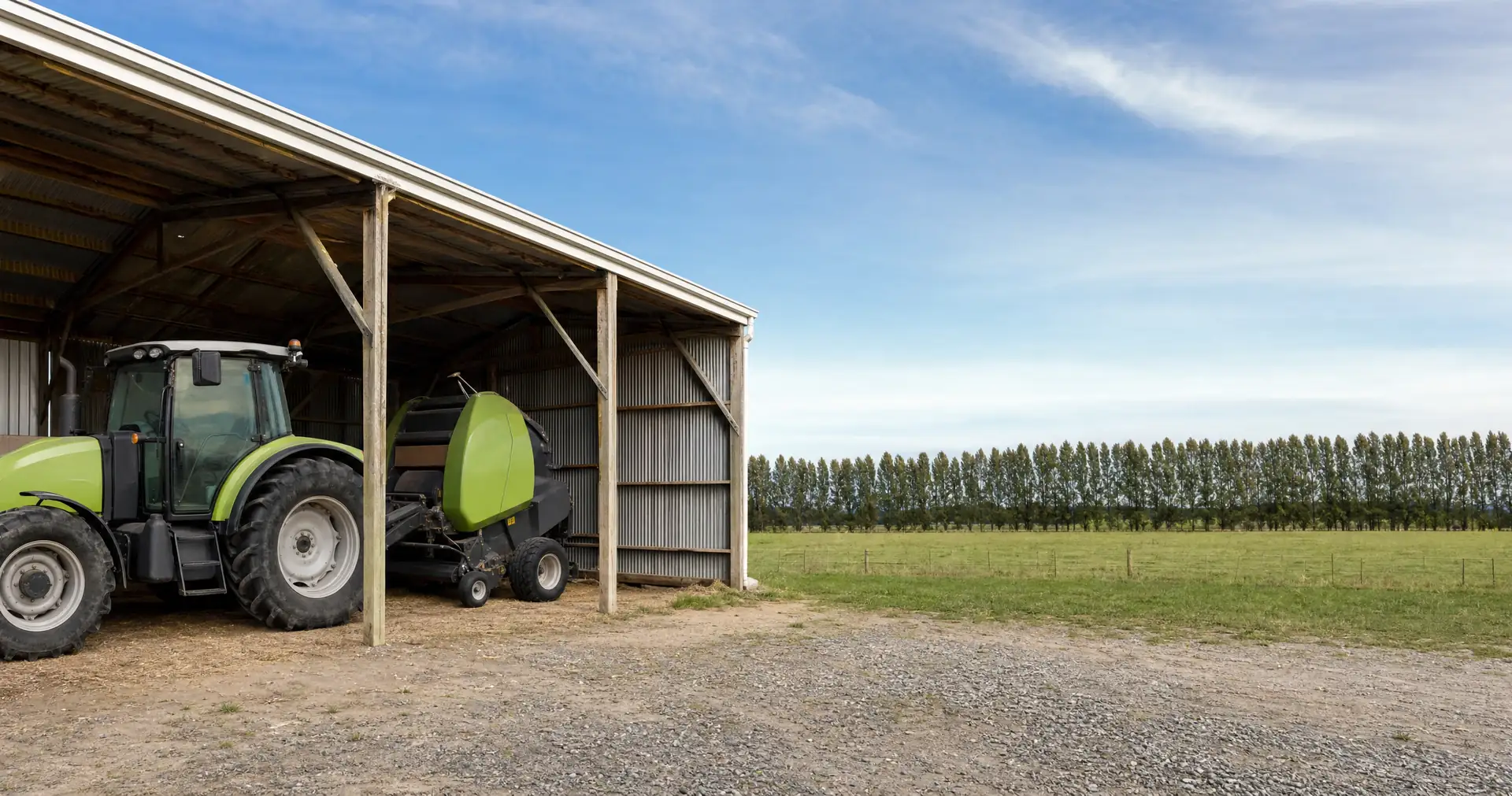
Farms, orchards, vineyards, and aquaculture operators borrow against a production cycle measured in seasons or years rather than weeks. Stock, machinery, irrigation, and post-harvest infrastructure shape the capex. Lenders commonly weight payout cycles, livestock-valuation method, and the underlying land position.
Agriculture & horticulture sub-segments, in detail.
7 dedicated guides covering the eligibility quirks, capex bands, lender mix, and worked NZ scenarios that matter for each sub-segment of agriculture & horticulture.
What you need to know about agriculture and horticulture finance in NZ.
→Rural lending is its own segment Reserve Bank data shows agricultural debt sitting above $60 billion, with dairy, sheep-and-beef, and horticulture the three largest sub-segments.
→Seasonality drives the cash-flow shape Fonterra advance and final payments, kiwifruit and apple pool settlements, and viticulture vintage cash flow each shape a different repayment profile.
→Stock finance and seasonal facilities are distinct from term debt banks structure rural lending across long-dated land debt, medium-dated chattel debt, and revolving seasonal facilities.
→Livestock-valuation method matters IRD herd scheme and national-standard cost election sits inside the financial statements lenders rely on; the choice is widely viewed as material to the credit picture.
The landscape
A long-cycle, capital-intensive segment with regional concentration.
New Zealand agriculture and horticulture sits at the centre of the goods-export economy. Stats NZ Agricultural Production data tracks roughly 4.6 million dairy cattle, 24 million sheep, and 3.7 million beef cattle across the national herd, with regional concentration shaping each sub-segment. Dairy concentrates in Waikato, Taranaki, Southland, and Canterbury. Sheep and beef concentrate on the East Coast, Wairarapa, Manawatu, and the South Island high country. Kiwifruit concentrates in the Bay of Plenty. Pip-fruit (apples and pears) concentrates in Hawke's Bay and Nelson. Viticulture concentrates in Marlborough, Hawke's Bay, Central Otago, and Wairarapa. Aquaculture concentrates in the Marlborough Sounds (mussels and salmon) and Stewart Island.
According to Reserve Bank New Zealand sector lending statistics, agricultural debt has sat above $60 billion across recent reporting periods, with dairy the largest single sub-segment. Lender appetite is shaped by RBNZ capital rules around agricultural exposure, with the major banks (ANZ, ASB, BNZ, Westpac) and Rabobank New Zealand commanding the largest share of rural lending. Heartland Bank, FarmFlex, UDC Finance, and a small number of agricultural-finance specialists round out the market for chattel and seasonal facilities.
The structures that fit agriculture most cleanly are long-dated term debt secured against the land (commonly 15 to 25 years), stock finance against livestock (commonly revolving), seasonal working-capital facilities for input costs (revolving on a 12-month cycle), and chattel-mortgage asset finance against tractors, harvesters, and dairy-shed equipment (commonly 5 to 8 years). Lender posture is commonly tightened by drought exposure, M. bovis or other biosecurity risk, and freshwater regulation under the National Policy Statement for Freshwater Management.
Tractor and machinery finance
$80K to $500K
Irrigation system
$120K to $1.5M+
Seasonal working capital
$50K to $750K
Post-harvest infrastructure
$300K to $5M+
Sub-segments
How NZ agricultural and horticultural operators borrow, by sub-segment.
Agriculture is not one segment; it is several, each with its own production cycle, payout structure, and finance footprint.
Dairy farms
Waikato, Taranaki, Southland, Canterbury. Capex tied to dairy-shed upgrades, in-shed feeding, effluent compliance, and herd replacement. Cash flow shaped by the Fonterra advance and final-payment cycle. Long-dated land debt commonly the dominant facility, with revolving seasonal facilities sitting alongside.
·Loan amount: $250K to $5M+
·Term: revolving / 5 to 25 years
Sheep and beef stations
East Coast, Wairarapa, Manawatu, South Island high country. Capex tied to genetic improvement, fencing, water reticulation, and machinery. Cash flow shaped by saleyard prices, schedule cycles, and wool clip settlement. Land typically the dominant security item.
·Loan amount: $200K to $4M+
·Term: 5 to 25 years
Kiwifruit and pip-fruit orchards
Bay of Plenty (kiwifruit), Hawke's Bay and Nelson (apples and pears). Capex tied to canopy and trellising, frost protection, irrigation, and post-harvest packhouse infrastructure. Pool-based settlement (Zespri, NZAPI member packhouses) shapes the payment cycle.
·Loan amount: $300K to $3M+
·Term: 5 to 20 years
Viticulture
Marlborough, Hawke's Bay, Central Otago, Wairarapa. Capex tied to vineyard establishment, trellising, irrigation, frost fans, and harvester or hand-pick equipment. Vintage cash flow concentrates in autumn settlement following grape supply contracts.
·Loan amount: $400K to $5M+
·Term: 7 to 20 years
Arable and vegetable growers
Canterbury Plains, Manawatu, Pukekohe, Hawke's Bay. Capex tied to tractors, harvesters, planting equipment, irrigation, and grain or vegetable storage. Cash flow tied to contract-supply settlement (Heinz Wattie's, Talley's, AgriFoods) or open-market sales.
·Loan amount: $150K to $2M+
·Term: 5 to 15 years
Aquaculture and forestry
Marlborough Sounds and Stewart Island (mussels, salmon, oysters); Tasman, Bay of Plenty, Northland (forestry). Aquaculture capex tied to lines, barges, and processing kit. Forestry capex tied to harvesting machinery and replanting. Long production cycle for forestry shapes the lender review.
·Loan amount: $200K to $5M+
·Term: 5 to 25 years
Common reasons
What NZ farms and orchards borrow for.
The bulk of NZ agricultural lending volume falls into seven common purposes. Each has a typical structure that fits.
Stock finance against livestock
Revolving facilities backed by the herd or flock, sized against the IRD herd-scheme or national-standard-cost livestock value carried in the financial statements. Commonly drawn on through calving and weaning cycles.
Seasonal working capital
Input costs (fertiliser, feed, agrichemicals, casual labour) revolved on a 12-month cycle. Repaid out of milk-payout final, post-harvest pool settlement, or schedule cash flow. Commonly an "ag-bank facility" with the major banks or Rabobank.
Tractors, harvesters, and machinery
Chattel mortgage or hire purchase against new and used machinery from John Deere, Case IH, New Holland, Fendt, and Massey Ferguson dealer networks. Commonly 5 to 8-year terms aligned to expected machine life.
Irrigation systems
Centre pivots, K-line, drip irrigation. Cost driven by hectares, water-take consent, and pump capacity. Commonly term-loan financed against the underlying land where the security position supports it. Council water consents feed the lender review.
Dairy shed and farm building upgrades
Rotary or herringbone shed conversions, in-shed feeding systems, effluent management upgrades to meet regional council standards. Term loan against land or chattel mortgage on the equipment portion.
Vineyard and orchard development
New plantings, trellising, frost protection, canopy infrastructure. Multi-year cash-flow gap before first commercial harvest (commonly year 3 to year 5). Lenders commonly capitalise interest across the establishment phase.
Post-harvest infrastructure
Packhouses, coolstores, grain silos, dairy effluent ponds, processing sheds. Larger ticket sizes, commonly 10 to 20-year terms. Council consenting and resource consent stability sit inside the lender review.
Succession and farm purchase
Generational handover or third-party purchase of going-concern farms or orchards. Commonly bank-led with major equity contribution. Sharemilking and equity-partnership structures common in dairy.
Biosecurity and compliance response
Mycoplasma bovis depopulation and restocking, freshwater farm-plan compliance, winter-grazing rules. Commonly a mix of MPI compensation and bridging finance.
Eligibility quirks
What rural lenders ask that other industries don't.
Beyond the standard NZBN, trading history, and turnover questions, NZ rural lenders commonly ask about livestock-valuation method, payout cycle, water consents, and farm-environment plans.
Livestock-valuation method
IRD herd scheme vs national-standard cost election commonly sits inside the credit review. The election affects the carrying value of livestock on the balance sheet, which feeds the lender's view of equity. The accountant's confirmation is the standard last step on the election.
Payout and pool settlement cycle
Fonterra advance vs final payments, Zespri pool tranches, NZAPI packhouse settlement, and viticulture grape-contract payment terms each shape the cash-flow profile. Lenders structure repayment timing to match.
Water take and freshwater farm plan
Regional-council water consents (and remaining term), nutrient discharge limits under the National Policy Statement for Freshwater Management, and registered freshwater farm plans where applicable. Lenders commonly want consent term to fit inside the loan term.
Climate and biosecurity exposure
Drought history (Hawke's Bay, Wairarapa, Canterbury), flood exposure (Tairawhiti, West Coast), Psa-V history in kiwifruit, M. bovis status in dairy and beef. Lenders increasingly weigh climate exposure as a structural credit factor.
Land tenure and Maori land
Freehold vs leasehold (including Crown pastoral lease and Maori freehold land under Te Ture Whenua Maori Act 1993). Lender appetite varies materially by tenure type. Pastoral-lease tenure review under the Crown Pastoral Land Reform Act 2022 sits inside the credit picture for South Island high-country operators.
Tax pooling and provisional tax
Many farms use tax pooling (Tax Management NZ, Tax Traders) to smooth provisional tax timing across uneven income years. Lenders commonly ask whether tax pooling is in use and whether outstanding pooling positions affect available cash. The accountant's confirmation is the standard last step on the pooling position.
Sharemilking and equity partnership
Common in dairy. 50:50 sharemilkers, contract milkers, and equity partners each carry a different credit profile from the farm-owner. Lenders look at the contract type, the sharemilking agreement, and the herd-ownership split.
Asset depreciation and tax deductibility
IRD-set depreciation rates apply to tractors, irrigation, and shed equipment. Land does not depreciate. Vine and tree establishment costs commonly sit on the balance sheet across a long life. Tax-deductibility framing is general; the accountant's confirmation is the standard last step on the specific tax position.
Capex by sub-segment
Indicative agricultural and horticultural finance bands by sub-segment.
The bands below are observed across NZ rural finance applications in 2026. Final cost depends on land size, regional location, supplier, and specification.
Sub-segment / project
Small operator
Medium operator
Large operator
Dairy shed conversion (rotary)
$400K to $700K
$700K to $1.2M
$1.2M to $2.5M
Effluent management upgrade
$80K to $200K
$200K to $500K
$500K to $1.5M
Centre-pivot irrigation
$180K to $400K
$400K to $900K
$900K to $2.5M
Vineyard establishment (per ha)
$45K to $70K
$45K to $70K
$45K to $70K
Kiwifruit canopy / orchard development (per ha)
$280K to $450K (Gold)
$280K to $450K (Gold)
$280K to $450K (Gold)
Tractor (utility, 100 to 150 hp)
$80K to $150K
$120K to $220K
n/a
Combine harvester
n/a
$280K to $500K
$500K to $1.2M
Coolstore or packhouse build
$300K to $700K
$700K to $2M
$2M to $8M+
Mussel barge / aquaculture vessel
$180K to $400K
$400K to $900K
$900K to $2.5M
Indicative bands only. Actual cost depends on specification, regional location, supplier pricing, and consenting requirements. Premium installations can run materially higher.
Worked scenarios
Three NZ agriculture and horticulture finance scenarios.
Real-world structures across Waikato dairy, Marlborough viticulture, and Canterbury arable, illustrating how production cycle and security position shift the offered structure.
Dairy farm, 320-cow herd
Waikato dairy effluent and shed upgrade
A Morrinsville dairy operator running a 320-cow herringbone-shed operation upgrading the effluent system to meet Waikato Regional Council standards and adding in-shed feeding. Total project $480K ex-GST. Operator owns the underlying farm freehold with a long-standing major-bank rural-banking relationship.
Structure: $300K added to the existing 20-year rural term loan secured against the farm at indicative 7.5%, plus $180K chattel mortgage on the in-shed feeding system at indicative 9.5% over 7 years. Combined indicative weekly ~$1,420 in this scenario. The freehold position and clean payout history materially tightened both rate bands. GST on the total project of around $72,000 typically claimable across the relevant GST returns, subject to the accountant's confirmation.
Indicative figures
Total project
$480,000
Land top-up
$300K @ 7.5%
In-shed feeding
$180K @ 9.5%
Combined weekly
~$1,420
GST claim (indicative)
~$72,000
Viticulture, 28 ha planted
Marlborough vineyard expansion
A Wairau Valley grower expanding the planted area by 12 hectares and adding frost fans across existing blocks. Total project $720K ex-GST: $540K vineyard establishment (cuttings, trellising, irrigation, labour to year 3), $180K frost fans across 28 hectares.
Structure: $540K rural term loan at indicative 8% over 12 years with capitalised interest across the year 1 to year 3 establishment phase, secured against the freehold land, plus $180K chattel mortgage on the frost fans at indicative 10% over 7 years. Combined indicative weekly ~$1,805 once the establishment phase ends. Existing grape-supply contract with a major Marlborough winery underwrote the cash-flow assumptions in the lender review.
Indicative figures
Total project
$720,000
Vineyard term loan
$540K @ 8%
Frost fans
$180K @ 10%
Combined weekly
~$1,805
Establishment phase
3 years
Arable / cropping, 480 ha
Canterbury arable harvester
A Methven cropping operator replacing a 14-year-old combine harvester with a near-new model. Asset value $420K ex-GST. Existing operation runs wheat, barley, and seed crops on freehold and leased land combined.
Structure: $420K chattel mortgage at indicative 9.5% across 6 years (asset life aligned to expected harvester life), with seasonal step-up repayments shaped to land in February to April after the harvest cash flow. Indicative weekly ~$1,755. The operator's 18 years of trading history and clean repayment record on prior chattel mortgage positions tightened the rate band. GST claim of around $63,000 typically claimable in the next GST return after settlement, subject to the accountant's confirmation.
Indicative figures
Asset value
$420,000
Term
6 years
Indicative rate
9.5% p.a.
Weekly indicative
~$1,755
GST claim (indicative)
~$63,000
Structure × purpose
Which loan structure fits which agricultural purpose.
No single structure suits every rural purpose. The matrix below maps the four common rural structures to the most common purposes.
Feature
Rural term loan (land-secured)
Chattel mortgage / hire purchase
Stock finance
Seasonal working-capital facility
Tractor and harvester purchase
Possible (larger ticket)
Best fit
No
No (purpose mismatch)
Irrigation system
Best fit (long-dated)
Best fit (chattel portion)
No
No
Dairy shed conversion
Best fit
Equipment portion only
No
No
Vineyard or orchard establishment
Best fit (capitalised interest)
No
No
No
Livestock acquisition or replacement
Marginal
No
Best fit
Possible
Fertiliser, feed, casual labour
No
No
No
Best fit
Post-harvest packhouse / coolstore
Best fit
Equipment portion only
No
No
Farm or orchard purchase
Best fit
No
Possible (livestock portion)
No
Regulatory framing
Agriculture-specific regulatory and tax items lenders weigh.
Rural lending sits inside a regulatory frame that touches almost every credit decision. Reserve Bank New Zealand sets capital requirements for registered banks that include specific risk weights for agricultural lending. Recent RBNZ work on bank capital and on climate-related disclosure has filtered through to rural credit policies at the major banks (ANZ, ASB, BNZ, Westpac) and Rabobank New Zealand. Operators with strong farm-environment plans and verifiable greenhouse-gas data commonly sit better in current lender frameworks.
IRD livestock valuation rules sit inside the rural balance sheet that lenders rely on. Operators commonly elect either the herd scheme (a notional fixed value updated annually by IRD) or the national-standard cost (a more bookkeeping-intensive method that tracks actual cost). The choice is widely viewed as material because herd-scheme values commonly carry more equity into the balance sheet than national-standard cost in a rising-livestock-value environment, and less in a falling environment. The election is not freely reversible and the accountant's confirmation is the standard last step. Tax pooling through Tax Management NZ or Tax Traders is widely used in agriculture to smooth provisional tax across uneven income years, particularly in dairy where the Fonterra payout cycle can move materially within a single tax year.
IRD depreciation rates apply across the chattel base. Tractors, harvesters, irrigation equipment, dairy-shed plant, vineyard machinery, and aquaculture barges each carry their own diminishing-value or straight-line rate. Land does not depreciate. Buildings on agricultural land sit at 0% depreciation since 2011, although commercial buildings have had partial reinstatement; the accountant's confirmation is the standard last step on the building-depreciation position. Vine and tree establishment costs commonly capitalise to the balance sheet and amortise across the productive life of the planting under specific IRD rules. GST on machinery, irrigation, and shed equipment purchases is typically claimable in the relevant GST return where the operator is GST-registered, subject to the accountant's confirmation.
Resource consents under the Resource Management Act 1991 and the National Policy Statement for Freshwater Management 2020 sit inside the credit picture for many irrigated and dairy operators. Water-take consents, nutrient-discharge consents, and (for some catchments) registered freshwater farm plans are commonly checked by lenders during the credit review. Loss of consent or material reduction in allocated water typically counts as a material adverse change. Te Ture Whenua Maori Act 1993 governs the alienation of Maori freehold land; lender appetite for security over Maori land varies by lender and by land status. The Crown Pastoral Land Reform Act 2022 changed the framework for South Island high-country pastoral leases, and ongoing tenure review continues to shape credit decisions on those properties.
Biosecurity exposure is increasingly part of the credit picture. The 2017 to 2025 Mycoplasma bovis response under MPI-led eradication, kiwifruit Psa-V history in the Bay of Plenty since 2010, and ongoing fruit-fly and brown marmorated stink-bug surveillance all feature in lender reviews of dairy, beef, and horticulture exposures. The Biosecurity Act 1993 underpins MPI compensation arrangements, and lenders commonly bridge cash flow between depopulation and restocking on M. bovis-affected farms. Climate-related disclosure under the Climate-related Disclosures regime is now a fixed feature of major-bank reporting, and the implications continue to filter through to rural credit policy.
Lenders to know
NZ lenders that fund agriculture and horticulture well.
Rural lending is dominated by the major banks (long-dated land debt and seasonal facilities), Rabobank New Zealand (rural specialist), and a smaller set of asset finance specialists for chattel and machinery.
Rural-aware brokers and financial advisers across the main rural regions commonly tighten the offered structure by knowing which lender fits each operator profile. Editorial-only listing; commercial relationship with Prospa disclosed at /partner/.
How big is the NZ rural lending market and who lends into it?
Reserve Bank NZ sector lending statistics have shown agricultural lending sitting above $60 billion across recent reporting periods, making it one of the largest single industry exposures in the NZ banking system. The major banks (ANZ, ASB, BNZ, Westpac) and Rabobank New Zealand command the bulk of long-dated land debt and seasonal facilities. Heartland Bank, UDC Finance, FarmFlex, and a small number of specialist financiers fund chattel, livestock, and shorter-dated rural facilities.
How does the Fonterra payout cycle affect dairy lending?
Fonterra pays suppliers across an advance schedule through the season, with a final payment after the season closes. Many dairy lenders structure seasonal working-capital facilities to align repayments with the advance and final payment dates. The forecast farm-gate milk price (announced and updated by Fonterra during the season) sits inside lender stress-tests, and operators commonly carry covenant headroom against a lower-than-forecast payout outcome.
What is stock finance and how does it work in NZ?
Stock finance is a revolving facility backed by the value of the livestock herd or flock carried on the farm. The facility size is commonly tied to the IRD herd-scheme or national-standard-cost value of the livestock as it appears in the financial statements. Stock finance is drawn through calving, lambing, weaning, and finishing cycles to bridge the timing gap between input costs and saleyard or schedule cash flow. Major-bank rural banking and Heartland Bank are common providers.
How does the IRD herd scheme affect a rural finance application?
The herd-scheme election sets the carrying value of livestock on the balance sheet at IRD-set values that update annually, rather than at actual cost. Lenders rely on the financial statements to assess equity in the rural business, so the choice between herd scheme and national-standard cost commonly affects the apparent equity position and therefore the credit picture. The election is not freely reversible. The accountant's confirmation is the standard last step on the election and on its cash and equity implications.
What rate range applies to NZ rural finance in 2026?
Indicative rates on rural finance commonly sit in the 7% to 16% per annum band depending on structure, security, and operator profile. Long-dated rural term loans against farm freehold sit at the lower end, often in the 7% to 9% band with the major banks or Rabobank. Chattel mortgages on tractors and machinery commonly sit in the 8% to 13% band. Unsecured working capital sits at the upper end. Final rate is set by the lender after assessment.
Can GST be claimed on a tractor or irrigation system purchase?
A GST-registered farm or orchard operator can typically claim the GST component on a tractor, harvester, or irrigation system purchase as input tax in the relevant GST return, subject to the accountant's confirmation. Where the asset is acquired under chattel mortgage, the full GST is typically claimable in the next return after settlement. Where it is acquired under finance lease, GST is typically claimed across the rental payments. The accountant's confirmation is the standard last step on the GST position.
How does irrigation and water-take consent affect rural finance?
Regional-council water-take consents (and the remaining consent term) commonly sit inside the lender review on irrigated farms. Lenders typically want the loan term to fit inside the remaining consent period plus any contracted renewal options. Reduction or revocation of allocated water under National Policy Statement for Freshwater Management catchment limits is widely treated as a material adverse change. Freshwater farm plans where required by regional council also feature in the credit review.
How do banks treat M. bovis or other biosecurity events in credit?
Mycoplasma bovis depopulation and restocking has been a long-running feature of NZ dairy and beef credit since 2017. Lenders commonly bridge cash flow between MPI compensation milestones and restocking, with the compensation entitlement under the Biosecurity Act 1993 sitting inside the security position. Psa-V history in kiwifruit, fruit-fly surveillance, and brown marmorated stink-bug exposure are similarly weighed by lenders into orchard and viticulture credit reviews.
What is tax pooling and is it used in agriculture?
Tax pooling (through Tax Management NZ or Tax Traders) lets businesses smooth provisional tax timing by buying and selling tax payments at IRD-approved dates without incurring use-of-money interest. Tax pooling is widely used in agriculture and horticulture to smooth provisional tax across uneven income years, particularly in dairy where the Fonterra payout cycle can move within a single tax year. Lenders commonly ask whether tax pooling is in use and how outstanding pooling positions affect available cash. The accountant's confirmation is the standard last step on the pooling position.
Can a viticulture or kiwifruit grower borrow before first harvest?
Vineyard and orchard development typically carries a multi-year cash-flow gap before first commercial harvest (commonly year 3 to year 5 for viticulture, year 4 to year 6 for kiwifruit Gold). Lenders commonly capitalise interest across the establishment phase against the underlying land security, with full principal-and-interest repayments commencing once cash flow from the planting begins. Existing supply contracts (Zespri grower licences, grape-supply contracts) materially support the cash-flow assumptions in the lender review.
How does sharemilking affect a dairy finance application?
50:50 sharemilkers, contract milkers, and equity partners each carry a different credit profile from the underlying farm-owner. Lenders look at the sharemilking agreement, the herd-ownership split, the term of the agreement, and the contract milker rate or 50:50 milk-price exposure. Sharemilker stock finance against the herd is a long-standing NZ structure, with major-bank rural banking and Rabobank the typical providers.
Are seasonal step-up repayments available on rural loans?
Specialist rural lenders commonly structure repayments to align with the cash-flow profile of the underlying production. Dairy facilities commonly weight repayments toward the spring advance and the autumn final payment. Arable facilities commonly weight repayments to land in February to April after harvest. Viticulture facilities commonly weight repayments to land after vintage settlement. Generic SME lenders typically average across 12 months instead, which can put pressure on off-season cash flow.
Can a rural operator refinance to a better rate after trading?
Often yes, particularly after consecutive seasons of clean trading where the financial profile has strengthened (lower debt-to-asset ratio, stronger equity, demonstrated payout-cycle resilience). Refinancing is commonly used to consolidate seasonal, chattel, and term debt into a single facility, or to move from chattel-finance pricing to land-secured pricing once the security position supports it. Early-repayment fees on the original loan and the cost of registering new security are the main considerations.
How does climate-related disclosure affect rural lending?
Major-bank rural banking has progressively moved climate exposure into credit assessment under the Climate-related Disclosures regime that applies to large reporting entities. Operators with strong farm-environment plans, registered freshwater farm plans where required, and verifiable greenhouse-gas data commonly sit more comfortably in current lender frameworks. The picture continues to evolve and the lender's own credit policy is the determining factor in any specific application.
Indicative content only. Not personalised financial advice.
A business loan is a commitment that runs for months or years, and repayments come out of the same operating cash flow as everything else. Before committing, it is worth modelling the weekly and monthly cost against the business's working-capital position, which is what this site is built to help with. Borrowing at a level that stays comfortable through a quiet quarter, not just a strong one, is widely regarded as the safer frame.
What this site is
A calculator and information tool. Not a lender, not a broker, not a registered financial adviser. Nothing here is personalised financial advice.
What the figures show
Modelled estimates based on the inputs you enter. Not a quote. Not an offer of credit. Not a guarantee of approval, rate, or fees.
What the lender decides
Final rates, fees, and approval are set by the lender after a CCCFA-appropriate assessment of the applicant's circumstances and credit decision.
Commercial disclosure
Businessloans.org.nz earns a commission from Prospa when a visitor applies through this site and their application is approved. The commission is paid by Prospa, not by the borrower, and it does not influence the rate Prospa offers. Full disclosure on the partner page.
Tax, GST, and accountant framing
Tax-treatment statements (GST claim timing, interest deductibility, depreciation rates) are general in nature and subject to your accountant's confirmation on the specific business position. For material amounts, professional advice from a registered financial adviser or chartered accountant is widely regarded as the safer frame.