
Major bank floating: 1-2 weeks
Floating-rate business loans and overdrafts at the major banks reprice within 1 to 2 weeks of an OCR move. The transmission is closest to immediate on this product.
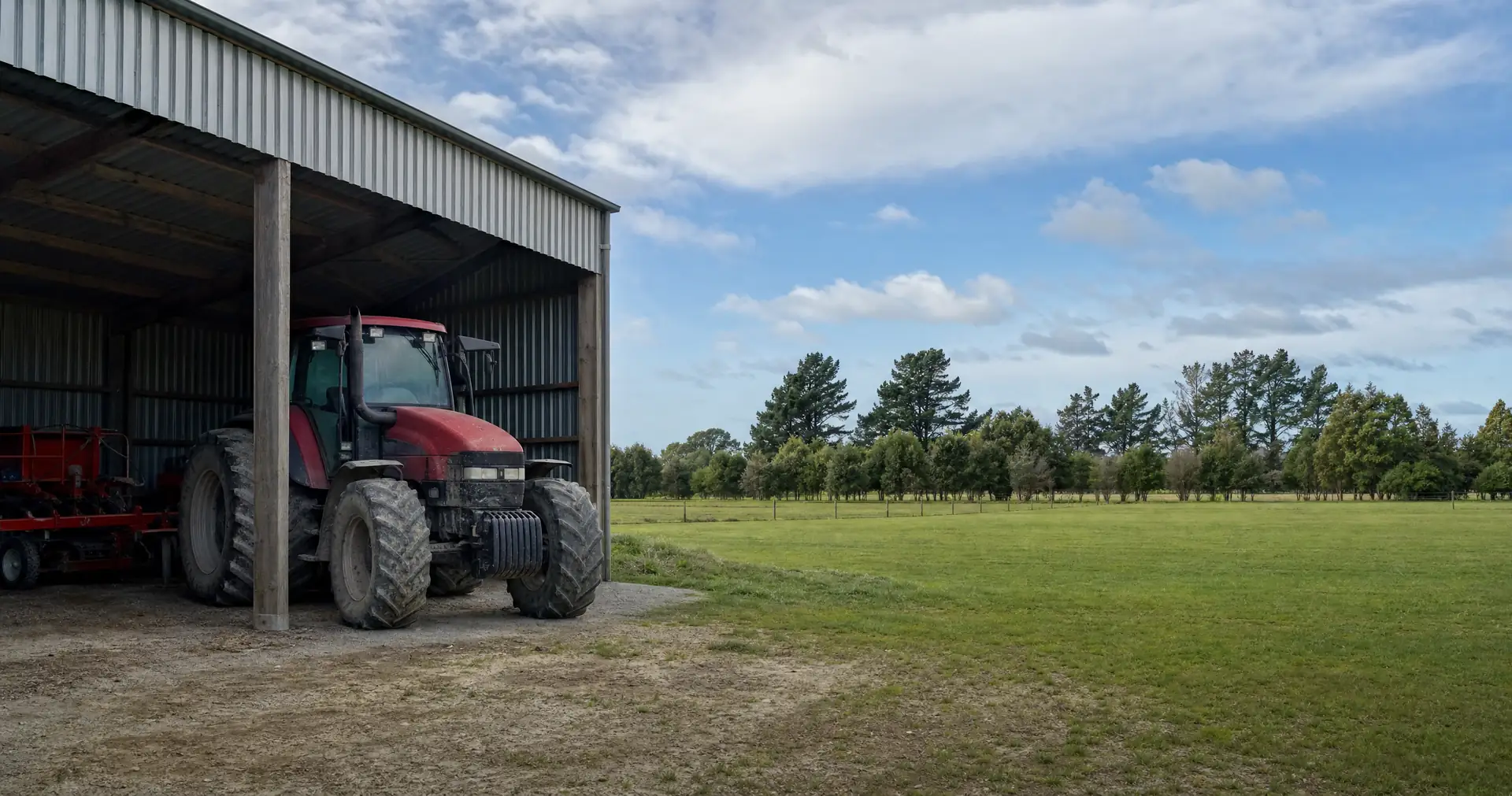
Indicative rate bands across the NZ business-lending market by product type. What drives your offered rate, how secured pricing differs from unsecured, and the fees that sit on top.
Indicative only. Why we say this











Historical context
NZ business loan rates do not move in lockstep with the Official Cash Rate, but the linkage is real. From late 2021 through 2023, the OCR rose from 0.25% to 5.5% as the Reserve Bank of NZ tightened in response to inflation. Major-bank business lending rates rose roughly in step, lifting indicative bands by 3 to 4 percentage points across that period. Alternative-lender rates moved less because their cost of capital is less directly OCR-linked.
From mid-2024 onwards, the OCR began easing as inflation moderated. Major-bank business lending pricing has followed, though with a lag. Through 2025 and into 2026, indicative business loan rates settled into the bands shown above, broadly 1 to 1.5 percentage points below the late-2023 peak. Borrowers refinancing loans written at peak rates commonly find a meaningful saving available now, particularly on secured products where the rate-cycle transmission is sharpest.
Looking forward, the rate-band framework above is the right horizon for 2026 lending decisions, but it should be re-checked at the time of application. The rates published by lenders lag the wholesale market by weeks; the offered rate at application is always more current than any published indicative band.
By amount band
Loan amount materially shifts the indicative rate band. Small loans carry higher per-dollar acquisition cost for lenders, so unit economics push pricing up at the small end. Larger loans price down both because of unit economics and because larger borrowers commonly clear stronger credit assessments.
| Loan amount | Major bank secured | Major bank unsecured | Alternative lender |
|---|---|---|---|
| Under $25,000 | 9% to 12% | 11% to 15% | 15% to 28% |
| $25,000 to $100,000 | 8% to 11% | 10% to 14% | 12% to 22% |
| $100,000 to $250,000 | 8% to 10% | 9% to 13% | 11% to 18% |
| $250,000 to $500,000 | 7% to 9% | 8% to 12% | 10% to 15% |
| $500,000+ | 6% to 8% (relationship-managed) | 7% to 10% | 9% to 13% |
Indicative bands only. Actual rates depend on credit assessment, security, and trading history.
By industry
Lenders price different industries differently because the underlying default rates and asset-recovery patterns vary. The bands below are observed indicative ranges across NZ business lenders for unsecured term loans of $50K to $150K with established trading history.
| Industry | Indicative rate band | Why |
|---|---|---|
| Established professional services | 10% to 14% | Low capex, stable cash flow, low default rates |
| Construction and trades | 11% to 16% | Asset finance available; trade-services moderate risk |
| Retail and e-commerce | 12% to 18% | Margin pressure, online retail volatility |
| Hospitality | 14% to 22% | Higher first-18-month failure rate, lease risk |
| Transport and logistics | 11% to 15% | Asset finance dominates; truck operators well-supported |
| Agriculture and rural | 8% to 12% | Specialist lenders, livestock-secured, strong NZ market |
| Healthcare practices | 10% to 14% | Stable demand, professional borrowers |
| Manufacturing | 10% to 14% | Asset finance dominates; equipment well-secured |
Bands are observed indicative pricing for unsecured term loans, $50K to $150K, established borrowers. Secured products typically price 2 to 4 percentage points below the unsecured band shown.
Rate negotiation
01
A like-for-like application across 3 NZ lenders commonly returns rates spanning 2 to 5 percentage points. The cheapest decision a borrower can make is to apply more than once.
02
A written offer from a competing lender is the strongest negotiation lever. Bank relationship managers commonly have discretion of 0.5 to 1.5 percentage points on standard pricing where a written competitor offer exists.
03
Moving from 10% to 20% deposit on a $200K loan typically improves both the achievable amount and the rate by 0.5 to 1.5 percentage points. The deposit dollar size is the smaller signal; the percentage matters.
04
Cutting a 5-year term to 4 years often improves the rate by 0.5 to 1 percentage points because the lender carries the risk for less time. Total interest paid drops sharply on shorter terms even at the same rate.
05
When the OCR is easing, waiting 2 to 4 weeks after a cut often catches lender repricing. When the OCR is tightening, applying before the next move locks in better pricing. Major-bank pricing reprices faster than alternative-lender pricing.
OCR transmission
Reserve Bank of NZ rate decisions affect business lending rates with a lag. The transmission speed varies by lender type and product.
Floating-rate business loans and overdrafts at the major banks reprice within 1 to 2 weeks of an OCR move. The transmission is closest to immediate on this product.
Fixed-rate term loans hold their rate until the contracted term ends. A 5-year fixed-rate loan written at the OCR peak retains that rate until the term ends.
Alternative lenders reprice less frequently because their cost of capital is less directly OCR-linked. Repricing typically lags major banks by 6 to 12 weeks, sometimes longer.
References
OCR context for how wholesale funding cost flows to business lending rates.
CCCFA scope and where business lending interacts with consumer-credit rules (e.g., sole traders).
Business interest deduction framework.
Indicative pricing reference for the unsecured online band.
Indicative pricing reference for the alternative-lender band.
Major-bank pricing reference for the secured band.
NZ SME lending market context.
FAQ
There is no single "average" rate because NZ business loan pricing varies sharply by product type, security, and borrower profile. Secured term loans from major banks commonly indicative-price in the 7% to 11% band. Unsecured term loans from alternative lenders commonly indicative-price in the 12% to 25% band. Asset and equipment finance typically lands in the 9% to 14% band. The rate offered depends on the lender's individual credit assessment.
Business loans cost more than home loans because the lender's risk profile is materially different. Home loans are secured by residential property in a deep, liquid market with predictable resale values; the lender's recovery risk is low. Business loans are often unsecured or secured by depreciating assets in thinner markets, the borrower's income depends on trading rather than salary, and default rates are higher. The rate differential reflects the additional risk.
The strongest levers on a NZ business loan rate are: offering security (property or qualifying business assets), increasing the deposit, demonstrating longer trading history with consistent turnover, presenting a clean credit file with no recent arrears, choosing a shorter term, and shopping the rate across multiple lenders rather than accepting the first offer. A specialist broker commonly sources meaningfully better pricing than a direct application to a generic lender.
Most NZ small-business term loans are fixed-rate for the loan term. Lines of credit and overdrafts are typically variable, repricing as the lender's base rate moves. Commercial mortgages are commonly available on both fixed and variable structures. The choice between fixed and variable is the same conversation as on a home loan: certainty against potential savings if rates fall.
Common fees on NZ business loans include an establishment or origination fee (commonly 1% to 4% of the loan amount, sometimes a flat dollar figure), a monthly service fee on some products, a security or PPSR registration fee, an early repayment fee on some structures, and a default fee structure documented in the contract. Total cost of credit (interest plus fees over the life of the loan) is the more meaningful comparison than the headline rate alone.
Generally yes, on a like-for-like product. Alternative lenders typically price 2 to 6 percentage points above an equivalent major-bank product because their cost of capital is higher and their underwriting is faster and more flexible. The trade-off is access (alternative lenders fund borrowers and amounts banks decline) and speed (alternative lenders often fund within a business day). For a borrower who can clear a major-bank application, the bank rate is typically lower.
Major-bank business loan rates change as the OCR (Official Cash Rate) and wholesale funding costs move, typically with a few weeks of lag. Alternative lender rates reprice less frequently, often quarterly or in response to specific funding-cost changes. Published indicative ranges across the NZ market are widely observed to lag actual movements by weeks, so the rate offered at application is the authoritative number, not the published headline.
Often yes, particularly for larger amounts (above $100K), longer-trading-history applicants, and where security is on offer. The most effective negotiation lever is a written offer from a competing lender at a lower rate, on the same loan structure. Bank relationship managers commonly have discretion of 0.5 to 1.5 percentage points on standard pricing where the application is strong and a competitor offer exists.
Related
Equipment finance
Where the lower-rate end of business lending typically sits, because the asset secures the loan.
Read onHeartland Bank
A registered NZ bank with mid-market pricing across asset, livestock, and online unsecured products.
Read onWorking capital
The use case that typically attracts the highest indicative rate band, because it's usually unsecured and short-term.
Read onDisclaimer
A business loan is a commitment that runs for months or years, and repayments come out of the same operating cash flow as everything else. Before committing, it is worth modelling the weekly and monthly cost against the business's working-capital position, which is what this site is built to help with. Borrowing at a level that stays comfortable through a quiet quarter, not just a strong one, is widely regarded as the safer frame.
What this site is
A calculator and information tool. Not a lender, not a broker, not a registered financial adviser. Nothing here is personalised financial advice.
What the figures show
Modelled estimates based on the inputs you enter. Not a quote. Not an offer of credit. Not a guarantee of approval, rate, or fees.
What the lender decides
Final rates, fees, and approval are set by the lender after a CCCFA-appropriate assessment of the applicant's circumstances and credit decision.
Commercial disclosure
Businessloans.org.nz earns a commission from Prospa when a visitor applies through this site and their application is approved. The commission is paid by Prospa, not by the borrower, and it does not influence the rate Prospa offers. Full disclosure on the partner page.
Tax, GST, and accountant framing
Tax-treatment statements (GST claim timing, interest deductibility, depreciation rates) are general in nature and subject to your accountant's confirmation on the specific business position. For material amounts, professional advice from a registered financial adviser or chartered accountant is widely regarded as the safer frame.