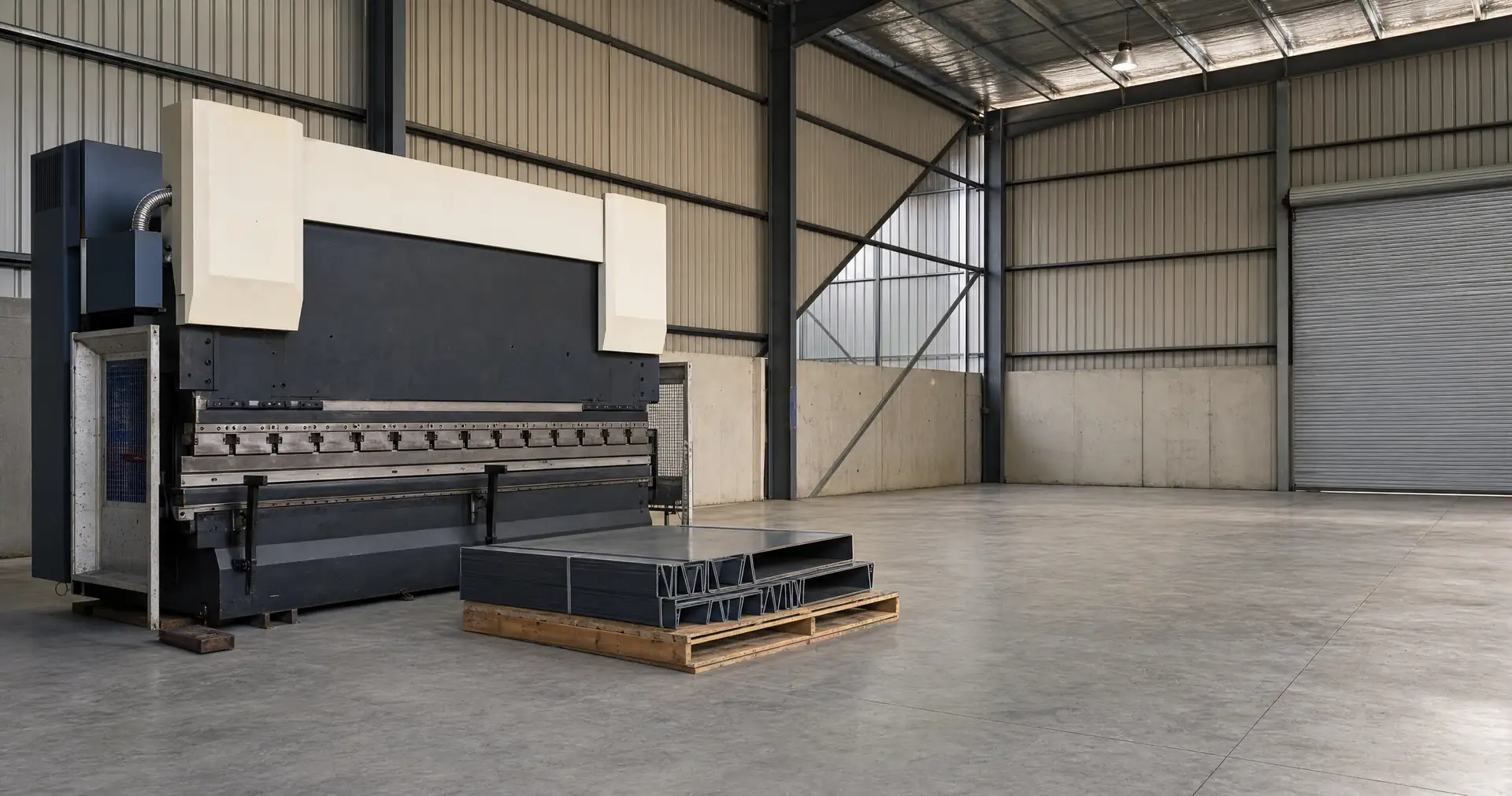
What you need to know about manufacturing finance in NZ.
→Equipment finance dominates the structure mix CNC machining, robotics, processing lines, and packaging kit commonly $120K to $2M, financed via chattel mortgage on 5 to 8-year terms.
→Working capital is the second-largest commitment raw-material buying ahead of confirmed sales orders commonly funded through a line of credit or invoice finance against debtor book.
→Compliance regime is layered HACCP and MPI for food, EPA hazardous-substances for chemicals and plastics, WorkSafe across all manufacturing, and (for export) MPI export licensing all feed the lender review.
→Callaghan and NZTE programmes commonly paired R&D grants (Callaghan Innovation) and export-credit-guarantee (NZTE) commonly bolt on to bank or asset finance for development-stage and exporting manufacturers.
Manufacturing represents around 10% of New Zealand GDP according to Stats NZ. The sector spans food and beverage manufacturing (the single largest sub-segment by output), textiles and apparel, wood and paper, chemicals and plastics, basic metals, fabricated metal products, machinery and equipment, and transport equipment. Boatbuilding is a recognisable NZ specialty within transport equipment, with established yards in Auckland (Tamaki, Westhaven), Whangarei, and the Bay of Islands.
The structures that fit manufacturing most cleanly are chattel-mortgage equipment finance for plant, a working-capital line of credit for raw-material cycles, invoice finance against debtor books, and a commercial mortgage where the factory is owner-occupied. Lenders that play in this space include UDC Finance, Heartland Bank, the major banks (ANZ, ASB, BNZ, Westpac) which run dedicated commercial-equipment teams, Avanti Finance, Prospa, and a handful of specialist invoice-finance providers (Bibby, Scottish Pacific NZ).
Lender posture on manufacturing is shaped by the compliance regime, the order book, and the export profile. Food and beverage manufacturers operate under MPI risk-based food control plans and HACCP standards under the Food Act 2014, with MPI export licensing required for export to most markets. Chemical and plastics manufacturers manage hazardous-substances compliance under EPA-administered HSNO regulations. WorkSafe duties under the Health and Safety at Work Act 2015 apply across all manufacturing. Manufacturers with stable confirmed-order books and strong compliance histories commonly attract a tighter indicative rate band, particularly where export revenue is verified through NZTE export-credit-guarantee or trade finance arrangements.
CNC machining centre
$120K to $800K
Food processing line
$200K to $2M+
Factory fit-out
$150K to $1.5M
Working capital line
$50K to $500K
Sub-segments
How NZ manufacturers borrow, by sub-segment.
Manufacturing is not one segment; it is several. Each sub-segment has its own typical loan amounts, common purposes, and regulatory framing.
Food and beverage
Dairy processing, meat and seafood, beverages (wine, beer, spirits, juice), bakeries, ready meals, snack foods. Capex tied to processing lines, bottling lines, packaging, cold-chain. Operates under MPI food control plans and HACCP. Export to most markets requires MPI export licensing.
·Loan amount: $150K to $5M+
·Term: 5 to 10 years
Fabricated metals and machinery
Sheet metal fabrication, structural steel, precision machining, agricultural machinery, contract manufacturing. CNC mills and lathes (Mazak, Haas, DMG Mori), laser cutters, press brakes, robotic welding cells. Capex per machine commonly $120K to $800K.
·Loan amount: $120K to $2M
·Term: 5 to 8 years
Wood and paper products
Sawmilling, joinery, furniture, prefabricated building components, paper and packaging. Capex tied to CNC routers, dust extraction, finishing lines, kilns. WorkSafe dust and noise compliance feeds the equipment specification.
·Loan amount: $80K to $1.5M
·Term: 5 to 8 years
Chemicals, plastics, and rubber
Plastics injection moulding, blow moulding, extrusion, rubber moulding, paint and coatings, specialty chemicals. EPA-administered HSNO compliance, hazardous-substances handling, and emergency response plans feed the lender review.
·Loan amount: $200K to $3M
·Term: 5 to 10 years
Transport equipment and boatbuilding
NZ has a recognised boatbuilding specialty with established yards in Auckland, Whangarei, and the Bay of Islands. Also includes truck body building, trailer manufacturing, and rail. Capex tied to specialised tooling, lifting equipment, and CNC moulding.
·Loan amount: $200K to $5M+
·Term: 5 to 10 years
Textiles, apparel, and leather
Knitwear, technical textiles, outdoor and sports apparel, leather goods. Capex commonly lighter than other manufacturing sub-segments: industrial sewing, cutting, knitting machines, embroidery, screen printing. Working capital often higher proportion of total finance.
·Loan amount: $50K to $500K
·Term: 4 to 7 years
Common reasons
What NZ manufacturers borrow for.
The bulk of NZ manufacturing lending volume falls into six common purposes. Each has a typical structure that fits.
01
CNC machinery and robotics
CNC mills, lathes, machining centres, laser cutters, press brakes, robotic welding and palletising cells. Largest single spend most fabricators face. Chattel mortgage on a 5 to 8-year term aligned to industrial-machinery life.
02
Food processing and bottling lines
Whole-line food processing (slicing, mixing, cooking, cooling), bottling and capping, packaging and palletising, cold-chain capacity. Capex per line commonly $200K to $2M+. Chattel mortgage on 7 to 10-year terms reflecting line longevity.
03
Factory fit-out and building services
Concrete pour, ventilation, dust extraction, hazardous-substance storage, racking, fire protection upgrades, lighting. Term loan against personal property or, where the factory is owner-occupied, top-up against the commercial mortgage.
04
Raw-material working capital
Funding raw-material buying ahead of confirmed sales orders. Common across food (seasonal commodity ingredients), metals (steel and aluminium stock), and plastics (resin pellets). Line of credit or invoice finance against debtor book.
05
R&D capex (Callaghan-paired)
Pilot lines, prototype tooling, and development equipment for new product introduction. Commonly paired with Callaghan Innovation R&D grants (Project Grants, Growth Grants, R&D Tax Incentive). Debt funds the gap between grant tranches.
06
Export capacity expansion
Capacity expansion to support export orders. Larger commercial-mortgage or term loan, often paired with NZTE export-credit-guarantee where the order book is concentrated on a small number of overseas buyers. Trade finance commonly part of the package.
Eligibility quirks
What manufacturing lenders ask that other industries don't.
Beyond the standard NZBN, trading history, and turnover questions, NZ manufacturing lenders commonly ask about compliance status, order-book concentration, machine specifications, and (for exporters) market diversification.
Compliance regime status
MPI risk-based food control plan and HACCP for food, EPA HSNO compliance for chemicals and plastics, WorkSafe duties across all manufacturing, MPI export licensing for exporters. Lapsed compliance typically stops the application; current compliance supports it.
Order-book concentration
Lenders commonly ask about top-customer concentration (single customer above 30% of revenue is widely viewed as elevated risk), forward order coverage, and contracted versus spot-market revenue. Stronger forward order books tighten the indicative rate band.
Machine specification and supplier
CNC and processing equipment is brand-and-spec specific. Mazak, DMG Mori, Haas, Trumpf, GEA, Tetra Pak each carry different credit views. New versus used impacts asset finance LVR and term. Suppliers commonly involved in PPSR and warranty.
Export market diversification
For exporting manufacturers, lenders weight market diversification: single-country concentration is widely viewed as higher risk than diversified Australian-Asian-EU exposure. NZTE export-credit-guarantee can offset the concentration risk for specific markets.
Capex by sub-segment and region
Indicative manufacturing capex bands by NZ region.
Auckland and Hamilton concentrate a material share of NZ manufacturing. Capex bands below are observed across NZ manufacturing finance applications in 2026 and reflect both equipment specification and installation cost.
Sub-segment
Auckland
Hamilton / Tauranga
Christchurch
Other regions
Single CNC machining centre
$140K to $400K
$130K to $370K
$130K to $370K
$120K to $340K
Robotic welding cell
$220K to $600K
$200K to $560K
$200K to $560K
$180K to $520K
Food processing line (single product)
$280K to $1.2M
$260K to $1.1M
$260K to $1.1M
$240K to $1M
Bottling and packaging line
$400K to $2M+
$370K to $1.8M+
$370K to $1.8M+
$340K to $1.6M+
Plastics injection moulding (single press)
$250K to $900K
$230K to $830K
$230K to $830K
$210K to $760K
Factory fit-out (1500 to 3000 sqm)
$300K to $1.2M
$280K to $1.1M
$280K to $1.1M
$240K to $950K
Boatbuilding lift and tooling
$200K to $1.5M
$180K to $1.4M
$180K to $1.4M
$160K to $1.2M
Indicative bands only. Actual cost depends on equipment specification, building condition, hazardous-substances and food-grade requirements, and consenting timeline. Premium specialist installations can run materially higher.
Worked scenarios
Three NZ manufacturing finance scenarios.
Real-world structures across Auckland fabrication, Hamilton food processing, and Marlborough boatbuilding, illustrating how compliance profile and order-book concentration shift the offered rate.
Fabricated metals
Auckland metal fabrication CNC investment
A South Auckland metal fabrication operation adding a 5-axis CNC machining centre and a robotic welding cell to support a contracted automotive-parts order book. Total project $620K ex-GST: $380K CNC machining centre, $240K robotic welding cell. Operator with 12 years trading and ISO 9001 certification.
Structure: $620K chattel mortgage at indicative 9.5% over 7 years (asset life aligned to industrial-machine longevity). Operator's clean trading history, ISO 9001 certification, and 18-month forward order coverage tightened the rate band. Indicative weekly ~$2,150. GST claim of around $93,000 typically claimable in the next return, subject to the accountant's confirmation.
Indicative figures
Asset value
$620,000
Term
7 years
Indicative rate
9.5% p.a.
Weekly indicative
~$2,150
GST claim (indicative)
~$93,000
Food and beverage
Hamilton craft beverage line expansion
A Waikato-based craft beverage manufacturer adding a second bottling line, expanding cold-store capacity, and upgrading the labelling system to support an MPI-licensed Australian export programme. Total project $920K ex-GST: $560K bottling and capping line, $220K cold-store extension, $140K labelling and palletising.
Structure: $700K chattel mortgage at indicative 9% over 8 years on the bottling and labelling lines + $220K secured term loan at indicative 8.5% over 10 years for the cold-store extension. Combined indicative weekly ~$2,580. The MPI risk-based food control plan, HACCP certification, and confirmed Australian forward orders tightened the bank pricing materially.
Indicative figures
Total project
$920,000
Equipment finance
$700K @ 9%
Cold-store loan
$220K @ 8.5%
Combined weekly
~$2,580
Term
8 / 10 years
Transport equipment
Marlborough boatbuilding tooling and lift
A Picton-based aluminium boatbuilder upgrading the marine travel lift, adding a CNC plasma cutter, and refurbishing the build hall to support a 5-vessel forward order book. Total project $740K ex-GST: $420K travel lift, $220K CNC plasma, $100K build hall refurbishment.
Structure: $640K chattel mortgage at indicative 10% over 7 years on the lift and plasma + $100K unsecured term loan at indicative 13% over 5 years for the refurbishment. Combined indicative weekly ~$2,200. Boatbuilder's established export track record (across Australia and the Pacific) and confirmed forward orders supported the asset finance pricing despite the specialist asset class.
Indicative figures
Total project
$740,000
Equipment finance
$640K @ 10%
Refurbishment loan
$100K @ 13%
Combined weekly
~$2,200
Term
7 / 5 years
Structure × purpose
Which loan structure fits which manufacturing purpose.
No single structure suits every manufacturing purpose. The matrix below maps the four common structures to the most common purposes.
Feature
Equipment finance
Term loan
Line of credit / invoice finance
Commercial mortgage
CNC machinery and robotics
Best fit
Possible (combined)
No
No
Food processing and bottling lines
Best fit
Possible (combined)
No
No
Factory fit-out and building services
Equipment portion only
Best fit
No
Best fit if owner-occupied
Raw-material working capital
No
Marginal (term too long)
Best fit
No
Premises purchase (owner-occupied)
No
Marginal
No
Best fit
R&D capex (Callaghan-paired)
Best fit
Possible
Possible (gap funding)
No
Regulatory framing
Manufacturing-specific regulatory and tax items lenders weigh.
Manufacturers sit under several NZ regulatory frameworks that lenders verify before disbursing. Food and beverage manufacturers operate under the Food Act 2014, with MPI-administered risk-based food control plans (FCPs) or national programmes specifying HACCP-aligned food-safety controls. MPI export licensing is required for export of animal products under the Animal Products Act 1999 and dairy under the Dairy Industry Restructuring Act 2001 administered by NZ MPI Verification Services and Export Certification. Lenders financing food-processing equipment commonly require current FCP or licensing evidence as a settlement condition.
Chemicals, plastics, and paints manufacturers manage hazardous-substances compliance under the Hazardous Substances and New Organisms Act 1996 (HSNO), administered by the Environmental Protection Authority (EPA), with workplace-substance management under WorkSafe-administered Health and Safety at Work (Hazardous Substances) Regulations 2017. The Health and Safety at Work Act 2015 applies across all manufacturing, with WorkSafe duties around plant guarding, noise, dust, and asbestos common across the sub-segments. Lapsed compliance typically stops a finance application; current compliance supports it.
IRD depreciation rates relevant to manufacturing vary by category. Industrial machinery commonly depreciates at 10% to 15.5% diminishing value depending on category, food-processing equipment at 13% to 15.5%, packaging machinery at 13.5%, motor vehicles used in the business at 30%, and computer-based control systems faster at 30% to 40% reflecting technology obsolescence. Building improvements typically attach to the building structure and depreciate at 0% under post-2011 IRD treatment, while plant separated from the structure (commonly the case with bolted-down machinery) can depreciate independently. The accountant's confirmation is the standard last step on the depreciation schedule and the diminishing-value vs straight-line election.
GST on equipment purchases is typically claimable in the next return after settlement under chattel mortgage, subject to the accountant's confirmation that the manufacturer is GST-registered and the asset qualifies. Exporting manufacturers typically zero-rate exports under the Goods and Services Tax Act 1985, with input-tax claims continuing on inputs to those zero-rated supplies. The R&D Tax Incentive (RDTI) administered by IRD and Callaghan Innovation provides a 15% credit against eligible R&D expenditure, with finance commonly used to bridge the timing gap between R&D spend and credit claim. NZTE export-credit-guarantee commonly bolts on to bank trade finance for exporters with concentrated overseas-buyer exposure. Personal Property Securities Register (PPSR) registration on financed plant is standard practice across manufacturing equipment finance, with PPSR commonly registered against both the manufacturer and the supplier in tied-supplier arrangements.
Lenders to know
NZ lenders that fund manufacturing well.
Manufacturing is supported by a mix of asset finance specialists (for plant), major banks with commercial-equipment teams, alternative SME lenders for working capital, and specialist invoice-finance providers.
Equipment supplier finance arrangements (Mazak, Haas, DMG Mori, Tetra Pak, GEA) commonly carry tied finance offers worth comparing alongside the lenders above. Callaghan Innovation R&D programmes and NZTE export-credit-guarantee commonly bolt on to the bank finance package. Editorial-only listing; commercial relationship with Prospa disclosed at /partner/.
Editor's note
“NZ manufacturers underprice their own asset finance. The kit is sitting there, the security is real, the rate band sits below most term loans. Most operators borrow short-term unsecured because they did not think to ask for asset finance first.”
How do New Zealand manufacturers commonly finance a CNC machining centre?
A typical NZ CNC machining centre runs $120,000 to $800,000 depending on axis count, work envelope, and tooling specification. Manufacturers commonly fund this through chattel mortgage against the machine, with terms of 5 to 8 years aligned to industrial-machinery life. UDC Finance, Heartland Bank, and major-bank commercial-equipment teams are typical lenders. Some manufacturers also use machine supplier finance offers as an alternative path.
How does invoice finance fit into a manufacturing working-capital plan?
Invoice finance advances a portion (commonly 70% to 85%) of the value of confirmed customer invoices, with the balance released on payment. This suits manufacturers with debtor-book concentration and 30 to 90-day customer payment terms, where raw-material buying ahead of sales creates a working-capital squeeze. Specialist providers (Bibby, Scottish Pacific NZ) operate alongside major-bank debtor-finance products. Effective cost is commonly 9% to 18% per annum.
What eligibility questions do manufacturing lenders ask that other industries do not?
Beyond the standard NZBN, trading history, and turnover questions, NZ manufacturing lenders commonly ask about MPI food control plan or export licensing (food), EPA HSNO compliance (chemicals and plastics), WorkSafe duties across all manufacturing, top-customer concentration, forward order coverage, machine specification and supplier, and (for exporters) market diversification. Lapsed compliance typically stops the application.
How do NZ lenders view a Callaghan R&D grant alongside debt finance?
Callaghan Innovation R&D grants (Project Grants and the R&D Tax Incentive administered jointly with IRD) are widely viewed as a positive signal in the NZ lender market. Lenders commonly fund the gap between grant tranches, the matching equity contribution, or the broader capex programme alongside the grant-funded R&D. The 15% RDTI credit against eligible expenditure adds to the project economics, subject to the accountant's confirmation on RDTI eligibility.
What rate range applies to NZ manufacturing finance in 2026?
Indicative rates on manufacturing finance commonly sit in the 7% to 16% per annum band depending on structure and operator profile. Property-secured commercial mortgages for established manufacturers and major-bank commercial-equipment loans sit at the lower end. Asset-secured chattel mortgages on CNC and processing lines from specialist asset finance lenders sit in the middle band. Unsecured working capital sits at the upper end. Final rate is set by the lender after assessment.
Is GST claimable on a CNC machine or food processing line purchase?
A GST-registered manufacturer can typically claim the GST component on equipment purchases as input tax in the relevant GST return, subject to the accountant's confirmation. Where the equipment is acquired under chattel mortgage, the full GST is typically claimable upfront. Exporting manufacturers typically zero-rate exports, with input-tax claims continuing on inputs to those zero-rated supplies. The accountant's confirmation is the standard last step on the GST treatment for any specific manufacturer.
How does MPI export licensing affect food manufacturer finance?
Food manufacturers exporting animal products or dairy require MPI export licensing under the Animal Products Act 1999 or the Dairy Industry Restructuring Act 2001, administered by MPI Verification Services. Lenders financing food-processing equipment for exporters commonly require current export-licence evidence and the underlying risk-based food control plan as a settlement condition. Lapsed licensing typically stops the application; current licensing supports it.
What deposit do NZ manufacturing lenders typically require?
For equipment finance, deposits commonly run 0% to 25% of the asset value depending on lender, manufacturer profile, and asset condition. Established manufacturers with multi-year trading history can commonly access zero-deposit asset finance on standard machinery categories. Used machinery typically attracts a higher deposit requirement (15% to 30%) than new equivalents. Property-secured commercial mortgages typically follow standard LVR norms (commonly 60% to 75% LVR).
How does order-book concentration affect a manufacturing application?
Lenders commonly weight top-customer concentration in the credit assessment. A single customer above 30% of revenue is widely viewed as elevated risk, particularly where contract terms are short or termination notice periods are limited. Stronger forward order books (12 to 24-month coverage) tighten the indicative rate band. Manufacturers with diversified customer bases across multiple industries typically face less restrictive lender posture than those concentrated on a single buyer.
How does NZTE export-credit-guarantee fit into manufacturing finance?
NZTE's export-credit-guarantee scheme provides credit support for exporters with concentrated overseas-buyer exposure. The guarantee commonly bolts on to bank trade finance, reducing the lender's risk on overseas-buyer payment default and tightening the indicative pricing for the underlying export-related working capital. Eligibility and pricing depend on the destination market, buyer credit profile, and the specific NZTE programme, subject to NZTE's assessment.
Can I refinance my manufacturing equipment loan to a better rate after trading?
Often yes, particularly after 12 to 24 months of clean trading and repayments where the financial profile has strengthened. Refinancing is commonly used to consolidate multiple manufacturing loans (CNC + working capital + fit-out) into a single facility, or to move from alternative-lender pricing to major-bank pricing once trading history supports it. Early-repayment fees on the original loan are the main consideration.
Is operating lease an option for industrial machinery?
Operating lease is available across some categories of industrial machinery, particularly where short technology-cycle equipment (CNC controls, robotic systems) favours rental over ownership. Cash-flow simpler than chattel mortgage but no GST claimed upfront and no asset on the balance sheet. The right structure depends on the manufacturer's priorities, subject to the accountant's confirmation on the specific tax position.
How does HSNO compliance affect chemical or plastics manufacturer finance?
Chemicals, plastics, and paints manufacturers manage hazardous-substances compliance under the EPA-administered HSNO Act and the WorkSafe-administered Hazardous Substances Regulations 2017. Lenders financing equipment, premises, or working capital for these manufacturers commonly require current HSNO test certificates, location compliance certificates, and emergency response plan evidence as a settlement condition. Lapsed compliance typically stops the application.
Indicative content only. Not personalised financial advice.
A business loan is a commitment that runs for months or years, and repayments come out of the same operating cash flow as everything else. Before committing, it is worth modelling the weekly and monthly cost against the business's working-capital position, which is what this site is built to help with. Borrowing at a level that stays comfortable through a quiet quarter, not just a strong one, is widely regarded as the safer frame.
What this site is
A calculator and information tool. Not a lender, not a broker, not a registered financial adviser. Nothing here is personalised financial advice.
What the figures show
Modelled estimates based on the inputs you enter. Not a quote. Not an offer of credit. Not a guarantee of approval, rate, or fees.
What the lender decides
Final rates, fees, and approval are set by the lender after a CCCFA-appropriate assessment of the applicant's circumstances and credit decision.
Commercial disclosure
Businessloans.org.nz earns a commission from Prospa when a visitor applies through this site and their application is approved. The commission is paid by Prospa, not by the borrower, and it does not influence the rate Prospa offers. Full disclosure on the partner page.
Tax, GST, and accountant framing
Tax-treatment statements (GST claim timing, interest deductibility, depreciation rates) are general in nature and subject to your accountant's confirmation on the specific business position. For material amounts, professional advice from a registered financial adviser or chartered accountant is widely regarded as the safer frame.