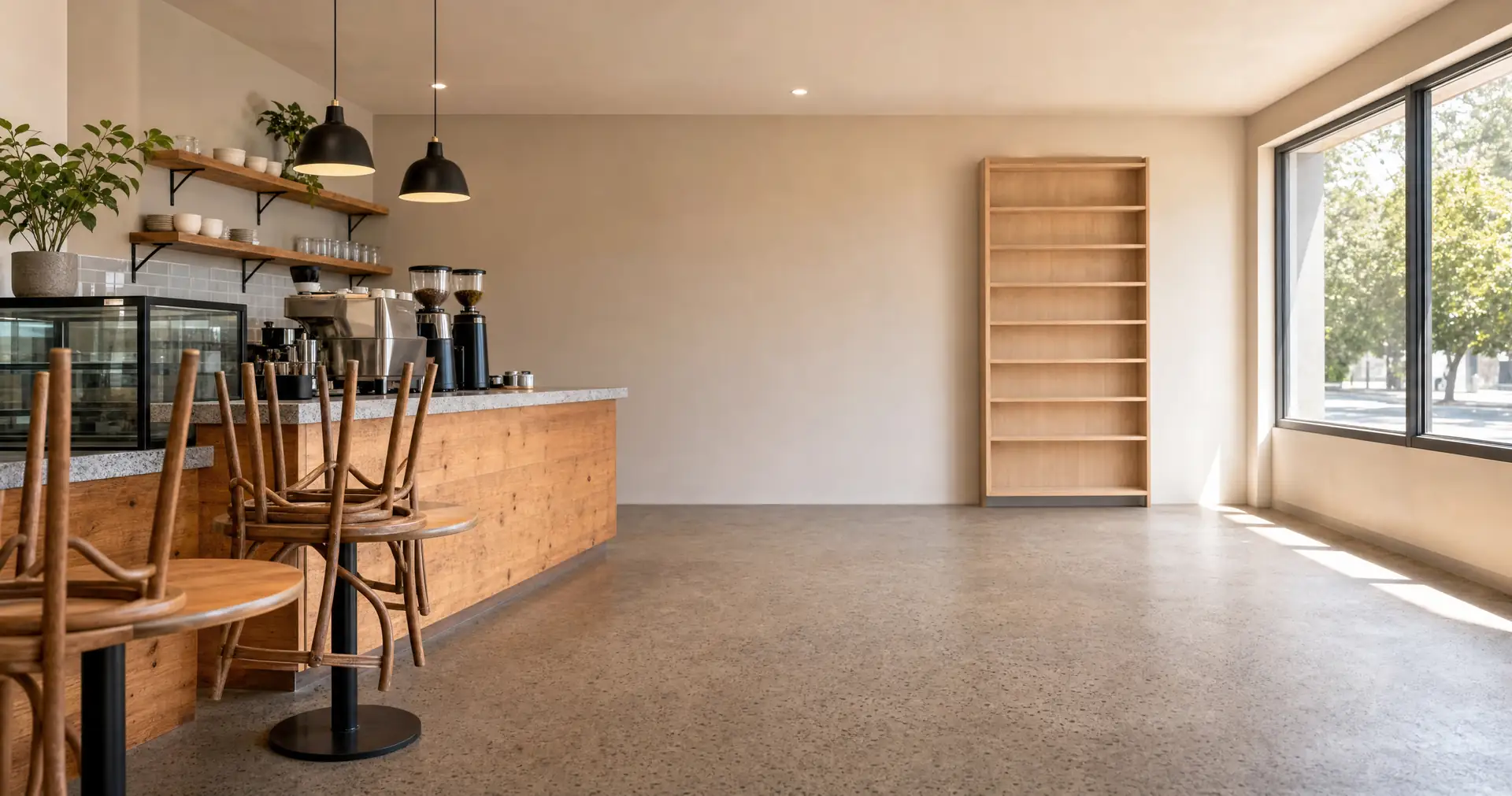
Restaurant loans for New Zealand full-service operators .
Full-service restaurant finance in NZ runs at materially higher capex than the cafe sub-segment. Kitchen line capex (Rational combi ovens, Moffat ranges, Skope cool storage), on-licence dynamics under the Sale and Supply of Alcohol Act 2012, and the Auckland CBD vs Wellington vs regional fitout cost spread shape the structure.
What you need to know about NZ restaurant finance.
→Full-service fitout commonly $150K to $500K+ Auckland CBD and Wellington fitouts commonly run 25-45% above regional NZ pricing for a comparable brief. Kitchen line capex typically accounts for 40-55% of the total project budget.
→Kitchen brands set the indicative kitchen-line band Rational combi ovens, Moffat and Goldstein ranges, Waldorf cooking suites, Skope and Williams cool storage, and Hobart warewashing dominate the NZ commercial-kitchen specification pool.
→On-licence under the Sale and Supply of Alcohol Act 2012 sits in the lender file On-licence (typically restaurant style endorsement) issued by the local District Licensing Committee with a three-year initial term, then renewals. Manager Certificates and host-responsibility policies sit alongside.
→Food Act 2014 oversight runs through MPI-recognised Verifiers Restaurants operate under a registered Food Control Plan, with scheduled audits from MPI-recognised Verifiers (council EHOs in some areas, third-party Verifiers in others). Verification history is commonly noted in the operator profile section of the lender file.
The landscape
Kitchen line capex, on-licence dynamics, and city cost gaps shape the NZ restaurant finance file.
New Zealand full-service restaurants sit across two clear delivery patterns. The owner-operator restaurant runs a single 40 to 80 cover dining room, an open or semi-open kitchen with a 4 to 6 burner range, a single combi oven, a single fryer station, and a small walk-in chiller. The destination or group restaurant runs an 80 to 200 cover dining room, a brigade kitchen with a Rational iCombi Pro or Convotherm combi tower, a multi-burner Waldorf or Goldstein cooking suite, an under-counter blast chiller, and a separate wash-up area with Hobart warewashing. The kitchen capex band tracks the brigade structure and menu type more than the cover count alone.
The cost frame sits firmly inside the Auckland CBD vs Wellington CBD vs regional differential. Auckland CBD lease premiums, fitout cost (joinery, services, ventilation), and licensed-trade competition commonly push a comparable fitout 30-45% above a regional NZ project, while Wellington CBD typically sits 20-35% above regional pricing. A fitout that costs $220,000 in a Hawke's Bay regional centre commonly costs $300,000 to $320,000 in Wellington and $320,000 to $360,000 in Auckland CBD, indicative of the cost stack rather than a quoted number. The lease structure (rent-free period, landlord contribution to fitout, term length, and assignment provisions) shapes the working-capital sizing alongside the term loan against the fitout itself.
The regulatory frame operates across two statutes. The Sale and Supply of Alcohol Act 2012 governs the on-licence regime through the District Licensing Committee in each territorial authority, with a three-year initial term, a Certified Manager on duty during licensed hours, host-responsibility policies, and a renewals cycle. The Food Act 2014 governs food safety through registered Food Control Plans verified by MPI-recognised Verifiers (council Environmental Health Officers in some areas, third-party Verifiers in others), with verification frequency tied to the risk profile and history of the operation. The Health and Safety at Work Act 2015 sits alongside both, governing kitchen brigade safety, fryer and combi oven controls, and contractor management.
Full-service fitout
$150K to $500K+
Kitchen line capex
$80K to $250K
Working capital line
$30K to $100K
Term loan term
4 to 6 years
Restaurant scenarios
Four common NZ restaurant finance scenarios.
Most full-service restaurant applications fall into one of four patterns. Each pattern carries a typical loan amount, structure, and lender pool.
Independent owner-operator opening
New 50 to 80 cover regional or suburban restaurant. Total project commonly $180K-$320K: $90K-$160K kitchen line, $80K-$140K front-of-house and joinery, $20K-$30K licensing, professional services, and pre-opening costs. Combined chattel mortgage on kitchen plus term loan on fitout.
·Loan amount: $180K to $320K
·Term: 4 to 5 years
Auckland CBD or Wellington destination opening
New 100 to 180 cover destination restaurant in Auckland CBD or Wellington CBD. Higher kitchen brigade structure, Rational iCombi Pro tower, Waldorf cooking suite, separate wash-up zone. Total project commonly $400K-$700K. Term loan on fitout, asset finance on kitchen line, working capital line.
·Loan amount: $400K to $700K
·Term: 5 to 6 years
Kitchen line refresh at year 6 to 8
Established restaurant replacing a tired combi, range, fryer station, and walk-in chiller after 6 to 8 years of service. Trade-in credit on the existing kit. Asset finance on the new line; existing trading data tightens the indicative rate band.
·Loan amount: $80K to $180K
·Term: 4 to 5 years
Acquisition of a going-concern restaurant
Buying an established restaurant with on-licence in good standing, kitchen line in working order, and trading data through the prior 12-24 months. Vendor finance commonly part of the structure. On-licence transfer application runs in parallel with the settlement.
·Loan amount: $250K to $800K
·Term: 5 to 6 years
What restaurants borrow for
Six common NZ restaurant loan purposes.
Restaurant lending volume falls into six common purposes. Each carries a structure that commonly fits.
Combi ovens and cooking suites
Rational iCombi Pro and SelfCookingCenter combi ovens, Convotherm towers, Waldorf cooking suites, Goldstein and Moffat ranges, Garland chargrills. Asset finance on a 4 to 6 year term against each unit, often packaged across the kitchen line.
Cool storage and refrigeration
Skope upright and underbench fridges and freezers, Williams blast chillers, walk-in chiller and freezer rooms (often Polar King or Coolroom Solutions construction). Asset finance on a 5 to 7 year term reflecting longer asset life; commonly $25K to $90K per scope.
Warewashing and cleaning
Hobart underbench, passthrough, and conveyor dishwashers, Winterhalter glasswashers, prep sink and waste-disposal stacks. Asset finance on a 4 to 5 year term; commonly $15K to $45K per warewashing line.
Front-of-house joinery and seating
Bar build, banquette and booth joinery, table and chair package, lighting, ventilation, and acoustic treatment. Term loan against the fitout; commonly the largest single line item alongside kitchen capex on a destination opening.
Working capital for produce and payroll
Revolving facility absorbing the gap between weekly kitchen brigade payroll, produce supplier 7-day terms, beverage supplier 30-day terms, and the daily cash and EFTPOS settlement rhythm. Line of credit suits the recurring pattern.
Licensing, consents, and pre-opening
On-licence application fees and Public Notice costs under the Sale and Supply of Alcohol Act 2012, Food Control Plan registration under the Food Act 2014, building consent costs for kitchen extract and grease trap, plus the pre-opening payroll and marketing build-up.
Tax and GST
How GST, kitchen line depreciation, and on-licence costs typically work for NZ restaurants.
A GST-registered restaurant operator can typically claim the GST component on kitchen line capex, front-of-house joinery, refrigeration, and warewashing as input tax in the relevant GST return, subject to the accountant's confirmation. Where the kitchen line is acquired under chattel mortgage, the full GST is typically claimable upfront in the next return after settlement. Where it is acquired under finance lease, GST is typically claimed across the rental payments. IRD depreciation on commercial-kitchen assets commonly applies the published rates for catering equipment, refrigeration, and shopfit, with combi ovens and ranges often sitting on a 13-15% diminishing-value basis and refrigeration on slightly different bands. On-licence application fees and renewal fees under the Sale and Supply of Alcohol Act 2012 are commonly treated as deductible business expenses in the year incurred, while building work to bring premises to licensed standard is commonly capitalised and depreciated. Food Control Plan registration and Verifier audit fees under the Food Act 2014 are commonly treated as operating expenses. The accountant is the right person to confirm structure choice, depreciation rates, and the capital vs operating treatment of licensing and consenting costs on the specific business position.
Restaurant fitout and kitchen bands
Indicative NZ restaurant fitout and kitchen line finance bands.
Pricing varies by city (Auckland CBD vs Wellington vs regional), brand specification, and lease condition. The bands below are observed across the NZ full-service restaurant finance pool in 2026, drawn from commercial kitchen specification and shopfit market activity.
Scope
Regional NZ
Wellington CBD
Auckland CBD
Full-service fitout (60-80 covers)
$180K to $260K
$220K to $320K
$250K to $360K
Destination fitout (100-180 covers)
$320K to $480K
$400K to $580K
$450K to $700K+
Combi oven (Rational iCombi Pro 6-grid or 10-grid)
$22K to $42K
$22K to $42K
$22K to $42K
Cooking suite (Waldorf or Goldstein 6-burner)
$18K to $35K
$18K to $35K
$18K to $35K
Walk-in chiller and freezer build
$25K to $60K
$28K to $65K
$30K to $70K
Hobart passthrough warewashing line
$15K to $35K
$15K to $35K
$15K to $35K
Indicative bands only. Actual price depends on brand spec, lease condition, ventilation and services scope, and city. Final rate, fee, and approval decisions are made by the lender after assessment.
Restaurant structure choice
Term loan vs asset finance vs operating lease for restaurant capex.
Restaurants commonly blend structures across the project. Front-of-house joinery and bar fitout are often funded by a term loan against the personal guarantor file; kitchen line is often funded by asset finance secured by each unit; some refrigeration and combi units are taken on operating lease where the lessor program suits the cash-flow shape.
Feature
Term loan (fitout and joinery)
Asset finance (kitchen line)
Operating lease (combi or refrigeration)
Typical loan or commitment
$80K to $300K against fitout
$80K to $250K across kitchen line
$400 to $1,200 per month per unit
GST upfront claim
Yes, claimed against itemised tax invoices
Yes, full GST per asset in next return
No, claimed across payments
Ownership at end of term
Restaurant owns fitout
Restaurant owns each asset
Lessor retains; option to buy
Maintenance responsibility
Restaurant
Restaurant
Often included (full-service lease)
Best fit
Joinery, bar build, banquettes, lighting
Combi ovens, cooking suites, walk-in chillers
Operators preferring smooth monthly cost on a single high-ticket unit
Cash flow profile
Larger upfront, fixed monthly repayments
Per-asset repayments matched to useful life
Smooth monthly cost across the term
How it works
A typical NZ restaurant finance application.
Restaurant applications carry a Sale and Supply of Alcohol Act 2012 on-licence step and a Food Act 2014 Food Control Plan step that other hospitality sub-segments sometimes do not lean on as heavily. Established operators with documented prior trading, a current on-licence, and a clean Verifier history commonly move faster and access tighter pricing.
01
Day 1 to 7
Define the scope and structure
A typical full-service restaurant loan combines a term loan against front-of-house fitout and joinery with asset finance on the kitchen line and refrigeration, plus a working-capital line for the kitchen brigade payroll and produce supplier rhythm. Defining components upfront tightens the application and helps the lender size each tranche correctly.
Documents commonly required
·Lease agreement or heads of agreement
·Fitout quote with itemised joinery and services
·Kitchen line quote (Rational, Moffat, Waldorf, Skope, Hobart)
·Refrigeration and walk-in chiller scope
·Insurance quote (public liability, contents, business interruption)
02
Day 1 to 14
Submit application with restaurant-specific documents
Beyond the standard SME application pack, restaurant lenders commonly ask for the on-licence application or current on-licence under the Sale and Supply of Alcohol Act 2012, the Food Control Plan registration under the Food Act 2014, the Manager Certificate for the certified manager on duty, building consent documentation for the kitchen extract and grease trap where the project includes structural work, and the head chef and front-of-house manager profile where lender policy notes operator experience.
Documents commonly required
·NZBN, business owner ID
·Last 6 to 12 months business bank statements (where prior trading)
·On-licence application or current on-licence (Sale and Supply of Alcohol Act 2012)
·Food Control Plan registration (Food Act 2014)
·Manager Certificate for the certified manager on duty
·Building consent for kitchen extract, grease trap, and structural work where applicable
·Head chef and front-of-house manager experience profile
·Lease agreement with full term, rent-free period, and assignment provisions
03
Day 7 to 21
Lender assessment and offer
Lenders commonly assess against four things: the operator profile (prior restaurant experience, certified manager status, head chef tenure), the security position on the kitchen line and fitout (LVR after deposit, secondary-market value of the kitchen brand mix), the lease structure (term, rent-free period, landlord contribution, assignment provisions), and the regulatory position (on-licence status, Food Control Plan, Verifier audit history, building consent for extract and grease trap). Offers commonly come back with conditions: deposit size, additional security or personal guarantee, insurance scope, or a phased drawdown tied to fitout milestones.
04
Week 4 to 16
Settle, register PPSR, fitout milestones
Asset finance on kitchen line settles directly to the supplier (Moffat NZ, Williams Refrigeration, Hobart, Skope, or the project equipment integrator). Term loan on fitout commonly draws in stages tied to fitout milestones (services rough-in, joinery install, kitchen install, final commissioning). The lender registers a security interest on the Personal Property Securities Register (PPSR) against each financed asset. On-licence is commonly granted ahead of opening date with a target service-of-alcohol commencement aligned to the fitout completion. Working-capital line opens alongside the term loan, with the first draw commonly aligned to the pre-opening payroll and produce build-up.
A broker familiar with the NZ full-service restaurant pipeline, the Sale and Supply of Alcohol Act 2012 on-licence regime, and the Food Act 2014 Food Control Plan framework commonly tightens the rate band and reduces the documentation cycle versus a direct application to a generic SME lender.
Worked scenarios
Three NZ restaurant finance scenarios.
Real-world structures across an Auckland CBD destination opening, a Wellington owner-operator opening, and a regional kitchen line refresh. Each illustrates how city, lease, and trading history shift the offered rate.
Auckland CBD destination opening on Federal Street
An experienced Auckland operator pair (head chef with 12 years across Sydney and Auckland fine-dining and a front-of-house manager with 8 years across the Britomart precinct) opening a 140 cover destination restaurant on Federal Street. Total project $620,000 ex-GST: $185,000 kitchen line (Rational iCombi Pro 10-grid, Waldorf 6-burner cooking suite, Garland chargrill, Williams blast chiller, walk-in chiller and freezer build, Hobart passthrough warewashing), $310,000 front-of-house and bar fitout (banquette joinery, marble bar, lighting, acoustic treatment), $65,000 furniture and tableware, $60,000 licensing, professional services, and pre-opening payroll and marketing.
Structure agreed with a hospitality-experienced broker: term loan on the front-of-house fitout ($310,000, 6-year term, indicative 9-12% p.a.) drawn in three stages tied to fitout milestones, asset finance package on the kitchen line ($185,000, 5-year term, indicative 8-11% p.a.) settled directly to Moffat NZ, Williams Refrigeration, and Hobart at install, working-capital line of $80,000 (indicative 12-15% p.a. on drawn balance only) for pre-opening payroll and produce build-up. Personal guarantees from both operators. On-licence application lodged with the Auckland District Licensing Committee under the Sale and Supply of Alcohol Act 2012 in parallel.
PPSR security interests registered against each financed asset at settlement. Food Control Plan registered under the Food Act 2014 with a third-party MPI-recognised Verifier engaged for the first audit cycle. ASB Business funded the term loan and working-capital line; UDC Finance funded the kitchen line asset finance through the equipment integrator settlement.
Indicative figures
Total project
$620,000
Front-of-house fitout
$310,000
Kitchen line
$185,000
Indicative blended rate
9-12% p.a.
Solo head chef-operator, 60 cover bistro, open kitchen
Wellington owner-operator opening in Cuba Street precinct
A Wellington solo head chef-operator with 9 years across Wellington and Melbourne kitchens opening a 60 cover bistro in the Cuba Street precinct. Total project $245,000 ex-GST: $108,000 kitchen line (Rational iCombi Pro 6-grid, Goldstein 4-burner range with oven, Waldorf chargrill, Skope underbench fridges and freezer, Hobart underbench dishwasher), $98,000 front-of-house and joinery (open kitchen pass, banquette joinery, bar build, lighting), $24,000 furniture and tableware, $15,000 licensing, professional services, and pre-opening costs. 20% deposit from personal savings and KiwiSaver first-home withdrawal already used for prior owner-operator deposit.
Structure agreed with a Wellington hospitality-aware broker: term loan on front-of-house fitout ($78,000 after deposit, 5-year term, indicative 10-13% p.a.), asset finance on the kitchen line ($86,000 after deposit, 5-year term, indicative 9-12% p.a.) settled directly to the equipment integrator, working-capital line of $35,000 (indicative 13-15% p.a. on drawn balance only) for pre-opening payroll and produce build-up. Personal guarantee from the operator. On-licence (BYO endorsement plus on-licence) applied for with the Wellington District Licensing Committee.
PPSR security interests registered against the kitchen line and refrigeration at settlement. Food Control Plan registered with Wellington City Council Environmental Health Officer Verifier engagement. Heartland Bank funded the term loan; UDC Finance funded the kitchen line asset finance; Prospa funded the working-capital line.
Indicative figures
Total project
$245,000
Front-of-house fitout
$98,000
Kitchen line
$108,000
Indicative blended rate
10-13% p.a.
Established 80 cover regional restaurant, brigade replacement
Hawke's Bay regional kitchen line refresh at year 7
A Hawke's Bay 80 cover regional restaurant 7 years into trading, replacing a tired Convotherm combi, a single 6-burner range, a salamander, and the walk-in chiller compressor stack. Original kitchen line installed at opening in 2019 has reached the maintenance-cost crossover where ongoing service calls and parts cost have caught up to the asset-finance repayment on a refreshed line. Total refresh $145,000 ex-GST: $42,000 Rational iCombi Pro 10-grid, $26,000 Waldorf 6-burner range with oven, $15,000 salamander, $35,000 walk-in chiller compressor and condenser refresh plus blast chiller addition, $12,000 ventilation servicing and minor extract upgrade, $15,000 contingency and install.
Trade-in credit of $14,000 against the existing Convotherm and salamander units, applied against the new asset finance settlement. Asset finance on the new line ($131,000 after trade-in, 5-year term, indicative 9-11% p.a.) settled directly to Moffat NZ and the refrigeration contractor. The 7 years of trading data, clean Food Control Plan Verifier audit history under the Food Act 2014, and a current on-licence in good standing under the Sale and Supply of Alcohol Act 2012 supported the indicative rate band at the lower end of the asset-finance pool.
PPSR security interests registered against each new unit at settlement. Refresh scheduled across the late-winter quiet trading window to minimise revenue disruption. UDC Finance funded the asset finance package through the integrator settlement.
Indicative figures
Total refresh
$145,000
Trade-in credit
$14,000
Asset finance after trade-in
$131,000
Indicative blended rate
9-11% p.a.
NZ restaurant lenders
Lenders that fund NZ full-service restaurants well.
Several NZ lenders carry familiarity with full-service restaurant fitout and kitchen line capex, the Sale and Supply of Alcohol Act 2012 on-licence regime, and the Food Act 2014 Food Control Plan framework. The shortlist below is editorial.
How much does it cost to open a NZ full-service restaurant?
A NZ full-service restaurant opening commonly runs $180,000 to $700,000 or more depending on city, cover count, and brigade structure. Regional 60 to 80 cover restaurants commonly sit at $180,000 to $320,000, Wellington full-service at $220,000 to $420,000, and Auckland CBD destination openings at $400,000 to $700,000 or beyond. The total covers kitchen line capex (typically 40-55% of project), front-of-house and joinery fitout, furniture and tableware, on-licence and Food Control Plan costs, and pre-opening payroll and marketing. Most operators fund this through a term loan on the fitout plus asset finance on the kitchen line plus a working-capital line.
What is an on-licence and how does it affect restaurant finance?
An on-licence is the licence required to sell and supply alcohol for consumption on the premises, granted by the local District Licensing Committee under the Sale and Supply of Alcohol Act 2012. The initial term is typically three years with renewals every three years thereafter. The licence requires a Certified Manager on duty during licensed hours, a written host-responsibility policy, and compliance with the conditions imposed by the Committee. Lenders commonly note on-licence status, the Manager Certificate held by the certified manager, and the licence renewal cycle in the operator profile section of the file. A licence in active application or renewal is not a blocker but is commonly noted with a settlement condition.
How does the Food Act 2014 Food Control Plan affect restaurant operations and finance?
The Food Act 2014 requires most food businesses including full-service restaurants to operate under a registered Food Control Plan, which sets out the food safety procedures the operator follows. The plan is verified by an MPI-recognised Verifier, which in some council areas is the council Environmental Health Officer and in others is a third-party Verifier. Verification frequency tracks the risk profile and the prior verification history of the operation, with newly registered plans commonly receiving a higher frequency until a track record is established. Lenders commonly note Food Control Plan registration and the Verifier audit history in the operator profile section of the file; recent non-conformance can affect the indicative rate band.
What rate range applies to NZ restaurant finance in 2026?
Indicative rates on full-service restaurant finance commonly sit in the 8% to 16% per annum band depending on structure, security, and operator profile. Asset finance on kitchen line and refrigeration secured by the equipment sits at the lower end (commonly 8-12%). Term loans on front-of-house fitout secured by personal guarantee sit in the middle (commonly 10-13%). Unsecured working-capital lines sit at the upper end (commonly 12-16%). Final rate is set by the lender after assessment. Established operators with documented prior restaurant experience, a clean Verifier history under the Food Act 2014, and a current on-licence in good standing commonly access the lower bands.
Can I claim GST on restaurant kitchen line and fitout financed under chattel mortgage?
A GST-registered restaurant operator can typically claim the GST component on kitchen line capex (combi ovens, ranges, refrigeration, warewashing) and front-of-house joinery acquired under chattel mortgage as input tax in the relevant GST return, subject to the accountant's confirmation. Where the asset is acquired under chattel mortgage, the full GST is typically claimable upfront in the next return after settlement. Where it is acquired under finance lease or operating lease, GST is typically claimed across the rental payments. The structure choice affects cash-flow timing more than total cost over the life of the loan. The accountant is the right person to confirm structure choice on the specific business position.
How does an Auckland CBD or Wellington fitout differ from a regional restaurant fitout in cost?
Auckland CBD fitouts commonly run 30-45% above a comparable regional NZ project, while Wellington CBD fitouts commonly run 20-35% above regional pricing. The differential tracks lease premiums, fitout labour and material costs, joinery and services pricing, ventilation and grease trap requirements, and licensed-trade competition for skilled trades during the build window. A 60 cover fitout that costs $220,000 in a regional centre commonly costs $280,000 to $300,000 in Wellington and $300,000 to $340,000 in Auckland CBD, indicative of the cost stack rather than a quoted number. Lenders sizing the term loan tranche commonly factor the city differential into the LVR calculation.
What kitchen brands are commonly specified in NZ commercial restaurants?
Rational (combi ovens, particularly the iCombi Pro 6-grid and 10-grid units), Convotherm (combi ovens), Moffat (ranges, ovens, and the Turbofan and Cobra ranges), Waldorf (cooking suites, chargrills, and bain-maries), Goldstein (ranges and gas equipment), Garland (chargrills and salamanders), Skope (refrigeration and underbench units), Williams (blast chillers and refrigeration), Polar King and Coolroom Solutions (walk-in chiller and freezer construction), Hobart (warewashing including underbench, passthrough, and conveyor dishwashers), and Winterhalter (glasswashing) commonly feature in the NZ commercial-kitchen specification pool. Integrators such as Moffat NZ commonly handle multi-brand kitchen line packages.
How does kitchen brigade payroll affect restaurant working capital?
Kitchen brigade payroll runs on a weekly cycle in most NZ full-service restaurants, with hourly-paid commis, demi-chef, chef de partie, sous chef, and head chef positions plus front-of-house wait and bar staff. Combined with produce supplier 7-day terms, beverage supplier 30-day terms, and the daily cash and EFTPOS settlement rhythm, the working-capital cycle is materially tighter than many other small-business segments. Working-capital lines of credit sized at 4 to 8 weeks of payroll plus produce spend are common, drawn down during slower trading periods and repaid during stronger weeks. Holiday pay accruals, public holiday rates under the Holidays Act 2003, and KiwiSaver employer contributions add to the cash-flow planning.
What insurance is typically required for a NZ restaurant loan application?
Restaurant loan applications commonly require public liability insurance (typically $5m to $10m cover sized to the cover count and licensed status), contents insurance covering kitchen line and front-of-house fitout, business interruption insurance covering loss of trading income from a covered event, and statutory liability and employers liability cover where the operation includes employees. Some lenders also note a separate cover endorsement for fryer fire and combi oven incidents. Specific cover requirements are set by the lender and can vary; a hospitality-experienced broker commonly outlines the cover stack expected by each lender. Insurance must commonly be bound before settlement of the term loan and asset finance tranches.
What happens to a financed restaurant kitchen line if the business closes?
Where the kitchen line is financed under chattel mortgage and the restaurant business closes before the loan is repaid, the lender typically has a security interest registered on the Personal Property Securities Register (PPSR) and can take possession of the kitchen line to recover the outstanding balance. Any shortfall between resale value and balance owing typically falls to the borrower and any personal guarantor. Used commercial kitchen line typically retains 35-55% of value in the secondary market depending on age, brand, condition, and the strength of the secondary-market buyer pool at the time; Rational, Moffat, Waldorf, Skope, and Hobart units typically retain value better than less-recognised brands. Lenders commonly work with operators to restructure repayments before resorting to repossession.
Can a restaurant refinance into better pricing once trading history is built?
Yes. Established restaurants with 18 to 36 months of clean trading, a current on-licence under the Sale and Supply of Alcohol Act 2012 in good standing, and a clean Food Control Plan Verifier history under the Food Act 2014 commonly refinance from alternative-lender pricing (12-16%) into asset-finance specialist or major-bank pricing (8-11%). Refinancing is also commonly used to consolidate multiple tranches (term loan on fitout, asset finance on kitchen line, working-capital line) into a single facility, or to release equity to fund a kitchen line refresh or a second-site opening. Early-repayment fees on the original loans, the resale value position on the existing assets, and the lease term remaining are the main considerations.
How does building consent for kitchen extract and grease trap affect a restaurant fitout?
Most NZ restaurant fitouts involving a commercial kitchen require building consent under the Building Act 2004 for kitchen extract canopy and ductwork, grease trap installation, and structural work to accommodate ventilation and services. The consent process runs through the local territorial authority and commonly requires a registered architect or designer to prepare the documentation. Lenders commonly want building consent confirmed before settlement of the term loan tranche tied to fitout work, because a denied or delayed consent can stall the project and affect the security position. Wellington City Council, Auckland Council, and Christchurch City Council each publish their commercial kitchen consent guidance separately.
What lenders specialise in NZ restaurant finance?
UDC Finance has long-running familiarity with hospitality kitchen line capex and is one of the standing asset-finance lenders to the restaurant pool, particularly across combi ovens, cooking suites, refrigeration, and warewashing. ASB Business, BNZ Business, Heartland Bank, and the other major banks (ANZ, Westpac, Kiwibank) commonly fund the term loan tranche on full-service fitout and the working-capital lines for established operators with prior trading data. Prospa funds the smaller unsecured tickets that sit alongside the main tranches (pre-opening payroll, marketing, licensing). A broker familiar with the Sale and Supply of Alcohol Act 2012 on-licence regime and the Food Act 2014 Food Control Plan framework commonly tightens the indicative rate band.
Indicative content only. Not personalised financial advice.
A business loan is a commitment that runs for months or years, and repayments come out of the same operating cash flow as everything else. Before committing, it is worth modelling the weekly and monthly cost against the business's working-capital position, which is what this site is built to help with. Borrowing at a level that stays comfortable through a quiet quarter, not just a strong one, is widely regarded as the safer frame.
What this site is
A calculator and information tool. Not a lender, not a broker, not a registered financial adviser. Nothing here is personalised financial advice.
What the figures show
Modelled estimates based on the inputs you enter. Not a quote. Not an offer of credit. Not a guarantee of approval, rate, or fees.
What the lender decides
Final rates, fees, and approval are set by the lender after a CCCFA-appropriate assessment of the applicant's circumstances and credit decision.
Commercial disclosure
Businessloans.org.nz earns a commission from Prospa when a visitor applies through this site and their application is approved. The commission is paid by Prospa, not by the borrower, and it does not influence the rate Prospa offers. Full disclosure on the partner page.
Tax, GST, and accountant framing
Tax-treatment statements (GST claim timing, interest deductibility, depreciation rates) are general in nature and subject to your accountant's confirmation on the specific business position. For material amounts, professional advice from a registered financial adviser or chartered accountant is widely regarded as the safer frame.