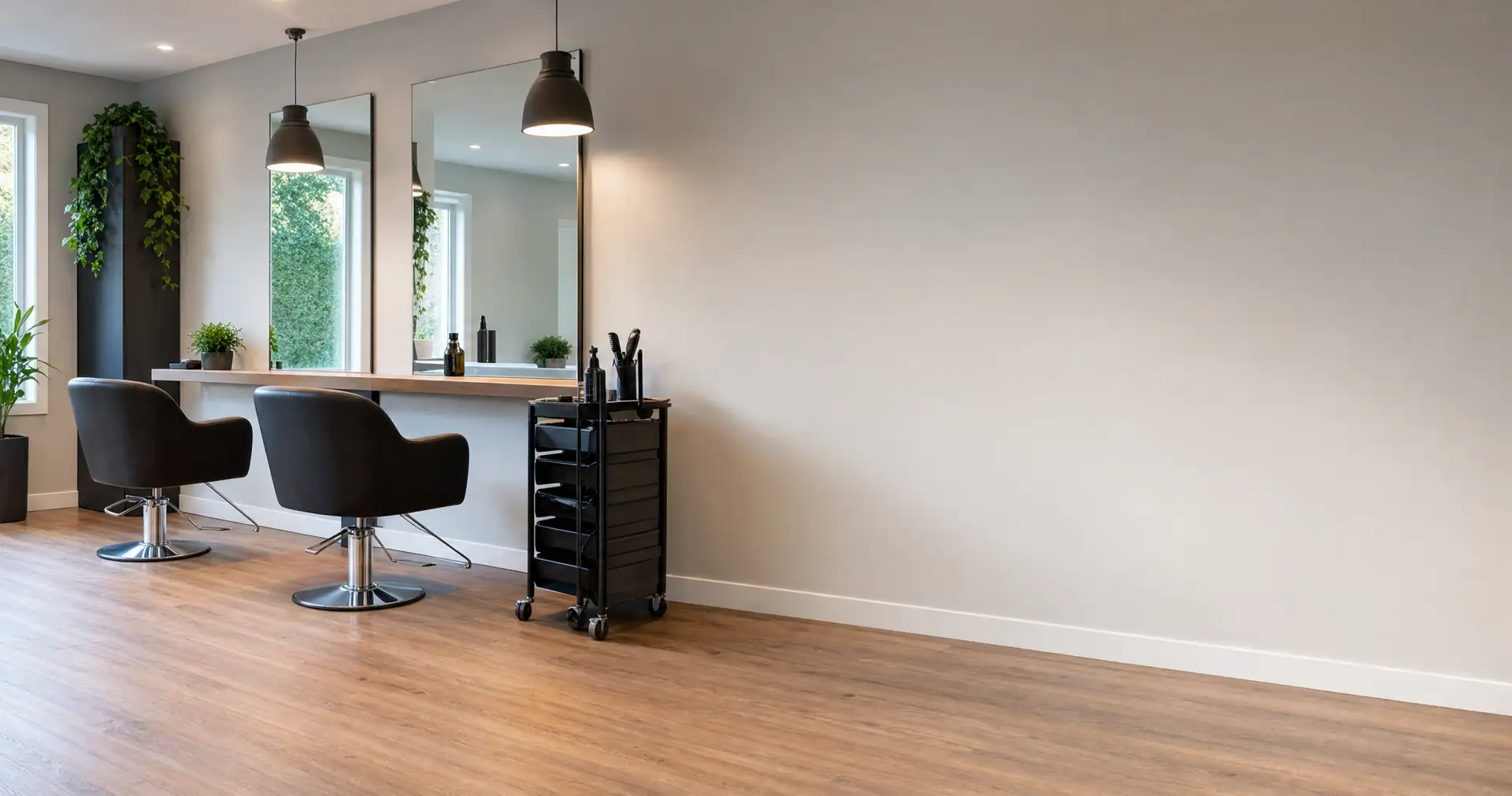
Business loans for New Zealand salons and beauty therapy.
Hair salons, barber shops, beauty therapy clinics, and day spas borrow against an appointment-driven cash-flow model with significant fit-out and equipment cost. Salon chairs, IPL and laser kit, retail product stock, and booking technology drive the capex. Lenders commonly weight stylist commission models, gift-voucher liability, and Health and Safety Act risk on light-based devices.
4 dedicated guides covering the eligibility quirks, capex bands, lender mix, and worked NZ scenarios that matter for each sub-segment of beauty & wellness.
What you need to know about beauty and wellness finance in NZ.
→Fit-out is the largest single spend salon chairs, basins, mirrors, plumbing, lighting, and reception commonly $60K to $300K depending on size and CBD positioning.
→IPL and laser kit needs WorkSafe notification high-power light-based devices are notifiable to WorkSafe under Health and Safety at Work regulations, and lenders typically ask about compliance status.
→Stylist commission-vs-rent shapes cash flow commission models carry direct payroll cost; chair-rent or booth-rent models shift cash-flow risk to stylists. Lenders read each pattern differently.
→Gift-voucher liability sits on the balance sheet unredeemed vouchers are a future-service obligation under NZ accounting standards, and a large balance can affect lender debt-service calculations.
The landscape
Appointment-driven, fit-out-heavy, and high female-owned-business representation.
New Zealand beauty and wellness is a personal-service-intensive segment with a very high proportion of female-owned businesses, according to MBIE small-business data. Stats NZ Business Demography figures show thousands of registered hairdressing, beauty therapy, and personal-care service operators, ranging from solo barbers and mobile beauty therapists through to multi-site salon groups and full-service day spas. The finance footprint is shaped by appointment-driven cash flow, walk-in revenue, retail product sales, and gift-voucher liability.
The structures that fit beauty and wellness most cleanly are a term loan for fit-out and renovation, equipment finance for chairs, basins, IPL, and laser kit, a smaller-ticket revolving facility or short-term loan for retail opening stock and seasonal working capital, and a commercial mortgage for the small subset of operators who own their premises. Lenders that play in this space include Heartland Bank, UDC Finance, Avanti Finance, Prospa, the major banks for property-secured operators, and a small number of beauty-aware brokers.
Lender posture on beauty and wellness is shaped by lease length, fit-out specificity, and stylist or therapist retention. Salon fit-outs are commonly bespoke and not transferable to a non-salon tenant, so lenders typically want loan term to fit inside the remaining lease (plus options). Stylist and therapist retention drives revenue stability. Operators with multi-year senior-stylist tenure commonly attract a tighter indicative rate band than start-up salons with new teams.
Seasonality is a defining cash-flow feature across the segment. The Christmas-party and wedding seasons drive a December peak; January carries strong post-Christmas voucher redemptions; March and September are widely observed as quieter shoulder months; winter (June to August) is typically the quietest period for hair, beauty, and tanning. Operators with disciplined seasonal forecasting commonly carry a working-capital line of credit through the quieter months and pay it down across peaks. The seasonality is less pronounced for barber shops (which trade more steadily across the year) and more pronounced for tanning and skin-clinic operators (where summer demand for tan-prep and post-summer skin-correction reshape the calendar). Acquisition financing in the segment commonly times the change of ownership for the start of a new lease year and after the December peak settles, to avoid a transition through the quietest months.
Salon fit-out
$60K to $300K
IPL / laser equipment
$30K to $150K
Retail opening stock
$15K to $80K
Working capital (seasonal)
$10K to $60K
Sub-segments
How NZ beauty and wellness operators borrow, by sub-segment.
Beauty and wellness is not one segment; it is several. Each sub-segment has its own typical loan amounts, common purposes, and equipment profile.
Hair salons
Hairdressing salons ranging from single-chair operators through to 8-chair multi-stylist sites. Capex sits in chairs, basins, mirror stations, plumbing, lighting, and retail product opening stock. Booking technology (Timely, Fresha) and POS round out the spend.
·Loan amount: $60K to $250K
·Term: 4 to 6 years
Barber shops
Traditional barber shops and modern men's grooming concepts. Lower fit-out cost than full hair salons (no basin row), but signage, leather chairs, and grooming retail can add up. Cash flow is walk-in heavy with shorter average ticket times.
·Loan amount: $40K to $150K
·Term: 3 to 5 years
Beauty therapy and skin clinics
Beauty therapy salons and skin clinics offering facials, peels, microdermabrasion, and dermal needling. Equipment-heavy with treatment beds, magnifying lamps, and consumables stock. NZIBS-trained therapists are the typical staffing pattern.
·Loan amount: $50K to $200K
·Term: 4 to 6 years
IPL, laser, and advanced skin
IPL hair removal, laser tattoo removal, fractional laser resurfacing, and advanced skin technology. High-cost specialised equipment with WorkSafe notification obligations. Often a high-margin add-on to an established beauty therapy clinic.
·Loan amount: $40K to $250K
·Term: 4 to 6 years
Day spas
Full-service day spas combining beauty therapy, massage, hydrotherapy, and retail. Largest fit-out cost in the segment. Plumbing-heavy (multiple treatment rooms with sinks, hydrotherapy plumbing). Premium positioning common.
·Loan amount: $150K to $600K
·Term: 5 to 8 years
Mobile and in-home beauty
Solo mobile therapists, brow-bar pop-ups, in-home wedding-and-event makeup. Asset-light with capex concentrated in product kit, vehicle, and online booking system. Working capital and small-ticket equipment loans suit better than larger fit-out structures.
·Loan amount: $10K to $60K
·Term: 2 to 4 years
Common reasons
What NZ beauty and wellness businesses borrow for.
The bulk of NZ beauty and wellness lending volume falls into six common purposes. Each has a typical structure that fits.
Initial salon or clinic fit-out
Chairs, basins, mirrors, plumbing, lighting, signage, and reception. Largest single spend most beauty businesses face. Term loan against personal property or, where lease length supports it, an unsecured fit-out loan.
IPL, laser, and advanced skin equipment
High-power light-based devices for hair removal, skin rejuvenation, and tattoo removal. Chattel mortgage on a 4 to 6-year term aligned to commercial-grade equipment life. WorkSafe notification feeds the lender review.
Retail product opening stock
Hair-care, skincare, and cosmetic retail buy-in (Olaplex, Dermalogica, Skinstitut, and others). Smaller-ticket short-term loan or revolving facility, repaid out of retail margin and seasonal sales.
Booking, POS, and CRM software
Timely, Fresha, Vagaro, Mindbody, and similar platforms plus POS hardware. Smaller-ticket equipment finance or unsecured loan on a 3 to 4-year cycle, often bundled into the broader fit-out package.
Lease bond and security deposit
Commercial leases for high-foot-traffic CBD and suburban shopping-mall positions commonly require 3 to 6 months' rent as security deposit or bank guarantee. Short-term unsecured loans bridge the bond outlay until the salon is profitable.
Working capital across slower seasons
Winter quiet weeks, post-Christmas dip, and back-to-school slowdown. Line of credit or short-term loan with repayments aligned to the upcoming peak (Christmas-party and wedding seasons being the strongest).
Eligibility quirks
What beauty and wellness lenders ask that other industries don't.
Beyond the standard NZBN, trading history, and turnover questions, NZ beauty and wellness lenders commonly ask about WorkSafe compliance on light-based devices, gift-voucher liability, stylist or therapist retention, and lease specificity.
WorkSafe compliance on IPL and laser
High-power light-based devices used for hair removal and skin treatments are notifiable to WorkSafe under Health and Safety at Work regulations. Lenders typically ask about notification status and operator training records before disbursing on light-based equipment finance.
Gift-voucher liability
Unredeemed gift vouchers are a future-service obligation under NZ accounting standards (NZ IAS 18 / NZ IFRS 15). A large gift-voucher balance reduces effective working capital and can affect lender debt-service calculations on the application.
Stylist commission-vs-rent model
Commission models carry direct payroll cost; chair-rent or booth-rent models shift cash-flow risk to stylists. Lenders read each pattern differently. Pure commission salons typically face tighter scrutiny on staff retention and revenue stability.
Lease specificity and remaining term
Salon fit-outs are commonly bespoke and not transferable to non-salon tenants. Lenders typically want loan term to fit inside the remaining lease (plus contracted options), and may ask about landlord exclusivity clauses where the centre has multiple beauty tenants.
Capex by sub-segment and region
Indicative beauty and wellness finance bands by NZ region.
Auckland CBD, Ponsonby, and Newmarket fit-out costs commonly run 15 to 30% above regional NZ pricing for an equivalent brief. The bands below are observed across NZ beauty and wellness finance applications in 2026.
Sub-segment
Auckland
Wellington / Christchurch
Regional NZ
Single-chair barber shop
$50K to $110K
$45K to $95K
$35K to $80K
Hair salon (4 to 6 chairs)
$140K to $260K
$120K to $230K
$95K to $190K
Beauty therapy / skin clinic
$110K to $220K
$95K to $190K
$75K to $160K
IPL / laser add-on equipment
$60K to $180K
$55K to $170K
$45K to $150K
Day spa (full-service)
$280K to $640K
$240K to $560K
$180K to $460K
Brow / lash / nail bar
$60K to $140K
$50K to $120K
$40K to $100K
Indicative bands only. Actual cost depends on equipment specification, lease condition, plumbing requirements, and retail-fit positioning. Premium concepts can run materially higher.
Worked scenarios
Three NZ beauty and wellness finance scenarios.
Real-world structures across an Auckland hair salon, a Wellington skin clinic, and a Tauranga day spa, illustrating how regional positioning and operator experience shift the offered rate.
Hair salon
Auckland Ponsonby hair salon
A Ponsonby-based hair salon owner opening their first independent site after 11 years as a senior stylist. New 6-year lease secured on Ponsonby Road. Total project $190K ex-GST: $130K fit-out (5 styling chairs, 3 basins, mirrored stations, reception, lighting), $30K retail opening stock, $30K booking technology and signage.
Structure: $40K chattel mortgage on chairs and basins at indicative 11% over 5 years + $150K unsecured term loan at indicative 13.5% over 5 years for fit-out, retail stock, and tech. Combined indicative weekly ~$910. Operator's 11 years senior-stylist experience and a transferring client base materially tightened both rate bands. GST claim on the chattel-mortgaged equipment (around $6,000) typically claimable in the next return, subject to the accountant's confirmation.
Indicative figures
Total project
$190,000
Equipment finance
$40K @ 11%
Fit-out term loan
$150K @ 13.5%
Combined weekly
~$910
GST claim (indicative)
~$6,000
Beauty therapy and skin
Wellington skin clinic IPL upgrade
A Wellington-based established beauty therapy clinic (4 years trading) adding an IPL hair-removal and skin-rejuvenation service line. Equipment cost $95K ex-GST for a medical-grade IPL platform plus operator training. WorkSafe notification lodged and operator-training records current.
Structure: $95K chattel mortgage at indicative 11.5% over 5 years, secured against the IPL kit. Indicative weekly ~$485. Established trading history, current WorkSafe notification, and existing client base for the new service tightened the rate band. GST claim of around $14,250 typically claimable in the next return, subject to the accountant's confirmation. Service margin is widely observed as the main payback driver in beauty therapy IPL additions.
Indicative figures
Equipment cost
$95,000
Term
5 years
Indicative rate
11.5% p.a.
Weekly indicative
~$485
GST claim (indicative)
~$14,250
Day spa
Tauranga day spa expansion
A Tauranga-based established day spa (7 years trading) expanding from 4 to 7 treatment rooms in a relocated 280sqm CBD position. Total project $420K ex-GST: $260K fit-out (7 rooms with plumbing, hydrotherapy zone, retail), $90K equipment refresh (treatment beds, steamers, dermal kit), $40K retail opening stock, $30K booking technology.
Structure: $90K chattel mortgage on equipment at indicative 10.5% over 6 years + $330K secured term loan at indicative 11.5% over 7 years for fit-out and stock, secured against business assets plus director personal guarantee. Combined indicative weekly ~$1,395. Existing 7-year track record, recurring-membership revenue (around 30% of turnover), and disciplined gift-voucher accounting tightened the rates materially.
Indicative figures
Total project
$420,000
Equipment finance
$90K @ 10.5%
Fit-out term loan
$330K @ 11.5%
Combined weekly
~$1,395
Term
6 / 7 years
Structure × purpose
Which loan structure fits which beauty and wellness purpose.
No single structure suits every beauty and wellness purpose. The matrix below maps the four common structures to the most common purposes.
Feature
Asset / chattel mortgage
Term loan
Line of credit / short-term
Commercial mortgage
Chairs, basins, mirrors
Best fit
Possible (smaller tickets)
No
No
IPL and laser equipment
Best fit
Marginal
No
No
Salon or spa fit-out
Furniture portion only
Best fit (lease-tied)
No
Best fit if owner-occupied
Retail product opening stock
No (consumed inventory)
Possible (smaller tickets)
Best fit
No
Working capital / quiet seasons
No
Marginal
Best fit
No
Lease bond / security deposit
No
Possible (bundled)
Best fit (short-term)
No
Regulatory framing
Beauty and wellness regulatory and tax items lenders weigh.
Beauty and wellness applications carry a regulatory layer most other industries do not. High-power light-based devices used for hair removal, skin rejuvenation, tattoo removal, and similar treatments are notifiable to WorkSafe under the Health and Safety at Work (Hazardous Substances) Regulations 2017 and broader Health and Safety at Work Act 2015 obligations. Operators are expected to notify WorkSafe before commencing operation of an applicable device and to maintain operator training records and protective-equipment compliance. Lenders that fund IPL and laser kit commonly ask about notification status before disbursing, and lapsed compliance can stop a tourism application until rectified. The Ministry of Health and the Office of Radiation Safety publish further guidance on radiation-emitting devices.
Training-provider relationships shape the workforce. The New Zealand Institute of Beauty Sciences (NZIBS), Pacific International Beauty College, NZMA, Yoobee, and several others credential beauty therapists and stylists across NZ. Many salon and clinic operators carry alumni or apprenticeship relationships with these providers. Lenders typically do not test the qualification path directly but commonly view operator and senior-staff qualification levels positively in the credit narrative.
Stylist commission models versus chair-rent models materially affect the cash-flow shape and the lender review. Commission salons carry direct payroll cost (with PAYE, KiwiSaver, ACC levies, and holiday pay obligations) on every stylist, with revenue and cost moving together. Chair-rent and booth-rent models charge stylists a weekly chair fee against their own client revenue, shifting cash-flow risk to stylists and reducing the salon's payroll obligation. Lenders read each pattern differently. Commission salons typically face tighter scrutiny on staff retention; chair-rent salons face tighter scrutiny on stylist tenure and the lease covenants that govern subletting of chair space. Neither model is inherently better from a credit perspective.
Gift-voucher liability is a feature of beauty and wellness accounting that can affect lender posture. Unredeemed gift vouchers are a future-service obligation under NZ accounting standards (NZ IFRS 15). On a balance sheet, voucher revenue is held as deferred revenue (a liability) until the service is provided. Operators with a large unredeemed voucher balance can show inflated cash on hand against an offsetting deferred-revenue liability. Lenders that read accounts carefully commonly net the two when assessing effective working capital. Tax treatment of voucher revenue is complex and is widely viewed as a question for the firm's accountant rather than the lender. Interest on borrowing for fit-out, equipment, and working capital is generally deductible against business income where the funds are used for business purposes, subject to the accountant's confirmation. GST on equipment purchases is typically claimable in the next return after settlement under chattel mortgage, subject to the accountant's confirmation that the salon is GST-registered and the asset qualifies.
Female-owned business representation across the NZ beauty and wellness segment is among the highest of any small-business industry, according to MBIE small-business data. The implications for finance are practical rather than regulatory. Lenders that fund the segment commonly engage with sole-director female owners as primary applicants and primary personal guarantors. Programmes such as the Co-operative Bank's women-in-business outreach, ANZ Business Toolkit content, and various MBIE-supported business advisory networks are widely available, though specific lending programmes targeted at female-owned beauty businesses are less common in NZ than in Australia. Lender posture on the demographic is widely viewed as neutral on application merits. Decisions track the underlying financials rather than ownership demographics.
Retail product accounting is a sub-question lenders commonly ask about. Many salons operate a retail line alongside services, stocking professional-grade haircare (Olaplex, Kerastase, Wella professional) and skincare (Dermalogica, Skinstitut, Murad). Retail margin is widely viewed as supportive of cash flow and can support a separate stock-finance facility where the volume justifies it. Retail stock obsolescence (discontinued product lines, expiry dates on cosmetic products) is the main risk lenders price for, and operators with disciplined inventory turnover (commonly 4 to 6 turns per year) attract more favourable retail-stock finance terms than those with slower turnover. Stock-on-hand at year-end appears on the balance sheet and feeds the lender's working-capital assessment.
Lenders to know
NZ lenders that fund beauty and wellness well.
Beauty and wellness is supported by a mix of asset finance specialists (for chairs, basins, IPL, and laser kit), alternative SME lenders (for fit-out and working capital), and the major banks (for property-secured day-spa-scale projects).
Beauty-aware brokers exist in Auckland, Wellington, and Christchurch, and commonly tighten the offered rate by knowing which lender fits each operator profile. Editorial-only listing; commercial relationship with Prospa disclosed at /partner/.
How do New Zealand hair salons commonly finance an initial fit-out?
A typical NZ hair salon fit-out runs $80,000 to $250,000 depending on chair count, lease condition, and CBD positioning. Operators commonly fund this through a combination of equipment finance against chairs and basins (chattel mortgage) and an unsecured term loan against fit-out, lighting, and reception. Heartland Bank, UDC Finance, and alternative SME lenders are the typical funders. Personal guarantees from owners are common, subject to the lender's credit assessment.
How does WorkSafe compliance affect IPL and laser equipment finance?
High-power light-based devices used for hair removal and skin treatments are notifiable to WorkSafe under the Health and Safety at Work (Hazardous Substances) Regulations 2017 and broader Health and Safety at Work Act 2015 obligations. Lenders that fund IPL and laser kit commonly ask about notification status, operator training records, and protective-equipment compliance before disbursing. Lapsed compliance commonly stops a tourism application until rectified.
What eligibility questions do beauty and wellness lenders ask that other industries do not?
Beyond the standard NZBN, trading history, and turnover questions, NZ beauty and wellness lenders commonly ask about WorkSafe notification on light-based devices, gift-voucher liability balance, stylist or therapist retention, lease specificity and remaining term, and whether the salon operates a commission or chair-rent model. Acquisition financing also asks about transferring client base.
Can a brand-new NZ salon owner access unsecured finance?
Brand-new salon owners with no business trading history typically face tighter limits on unsecured finance. Owners with significant senior-stylist or senior-therapist experience (often 8 years or more) and a transferring client base can commonly access unsecured term loans up to around $150,000 from alternative SME lenders. Personal guarantees with family home as supporting asset are common across new-salon applications.
What rate range applies to NZ beauty and wellness finance in 2026?
Indicative rates on beauty and wellness finance commonly sit in the 8% to 20% per annum band depending on structure, security, and operator profile. Property-secured commercial mortgages for day-spa operators sit at the lower end. Asset-secured chattel mortgages on equipment sit in the middle band. Unsecured working capital and short-term lines for smaller operators sit at the upper end. Final rate is set by the lender after assessment.
Is GST claimable on salon chairs, basins, and IPL equipment?
A GST-registered salon or clinic can typically claim the GST component on chairs, basins, IPL, laser, and other equipment purchases as input tax in the relevant GST return, subject to the accountant's confirmation. Where equipment is acquired under chattel mortgage, the full GST is typically claimable upfront. Where it is acquired under finance lease, GST is typically claimed across the rental payments. The structure choice affects cash-flow timing more than total cost.
How does gift-voucher liability affect a salon loan application?
Unredeemed gift vouchers are a future-service obligation under NZ accounting standards (NZ IFRS 15). On a balance sheet, voucher revenue is held as deferred revenue (a liability) until the service is provided. Lenders that read accounts carefully commonly net cash on hand against deferred-revenue liability when assessing effective working capital. A large unredeemed voucher balance can affect debt-service calculations on the application.
How does the stylist commission-vs-rent model affect lender posture?
Commission salons carry direct payroll cost on every stylist, with revenue and cost moving together. Chair-rent or booth-rent models charge stylists a weekly chair fee against their own client revenue, shifting cash-flow risk to stylists. Lenders read each pattern differently. Commission salons typically face tighter scrutiny on staff retention; chair-rent salons face tighter scrutiny on stylist tenure and lease covenants around subletting. Neither model is inherently better from a credit perspective.
What deposit do NZ beauty and wellness lenders typically require?
For equipment finance against chairs, basins, IPL, and laser kit, deposits commonly run 0% to 20% of asset value depending on lender, operator profile, and asset condition. New operators with no trading history often face deposit requirements of 20% or more on larger IPL or laser tickets. Established operators with multi-year trading history can commonly access zero-deposit asset finance on standard categories, subject to the lender's credit assessment.
Can a mobile beauty therapist access finance for a vehicle and product kit?
Yes. Mobile beauty therapists commonly fund a service vehicle, product kit, and online booking system through a small-ticket combination of asset finance (vehicle on chattel mortgage) and unsecured term loan (kit and tech). Total borrowing commonly sits in the $20,000 to $60,000 range. Trading history of 12 months or more, current public liability insurance, and a verified booking volume support the application.
How does a salon refinance bonded lease and equipment debt?
Often after 18 to 36 months of clean trading where the salon has hit its turnover targets and built a client base. Refinancing is commonly used to consolidate equipment finance, fit-out term loan, and working capital into a single facility, or to move from alternative-lender pricing to bank pricing. Early-repayment fees on the original loans and any landlord-bond conditions are the main considerations.
Are there specialist beauty-and-wellness lenders in NZ?
No NZ lender markets exclusively to the beauty and wellness segment, but several lenders carry deep familiarity with it. Heartland Bank and UDC Finance handle salon and IPL equipment well. Prospa and Bizcap suit unsecured working capital and smaller-ticket fit-outs. The major banks suit larger property-secured day spas. Specialist brokers in Auckland, Wellington, and Christchurch commonly tighten the offered rate by knowing which lender fits each operator profile.
Can an existing salon owner finance a second-site expansion?
Established salon owners with at least 3 years trading history and clean financials at the first site can commonly access second-site expansion finance from $80,000 to $400,000 depending on the new fit-out specification. Existing site profitability is the strongest approval lever. Lenders typically expect first-site financials, second-site fit-out budget, lease terms, and a personal guarantee from the owner. Banks and Heartland Bank are the most common lenders.
What happens to financed salon equipment if the lease ends and the salon closes?
Where equipment is financed under chattel mortgage and the salon closes before the loan is repaid, the lender typically has a security interest registered on the Personal Property Securities Register (PPSR) and can take possession of the equipment to recover the outstanding balance. Any shortfall between resale value and balance owing typically falls to the borrower and any personal guarantor. Lenders commonly work with operators to restructure repayments before resorting to repossession.
Are there finance programmes specifically for female-owned beauty businesses in NZ?
Female-owned business representation across the NZ beauty and wellness segment is among the highest of any small-business industry, according to MBIE small-business data. Programmes such as the Co-operative Bank's women-in-business outreach, ANZ Business Toolkit content, and various MBIE-supported business advisory networks are widely available. Specific lending programmes targeted at female-owned beauty businesses are less common in NZ than in Australia. Decisions track the underlying financials rather than ownership demographics.
How is retail product stock financed in a NZ salon or clinic?
Retail stock (haircare, skincare, cosmetics) is commonly financed through a short-term loan or revolving facility rather than chattel mortgage, because consumed inventory cannot serve as security. Suppliers such as professional haircare distributors sometimes offer extended trade terms (60 to 90 days) on opening orders. Operators with disciplined inventory turnover (commonly 4 to 6 turns per year) attract more favourable retail-stock finance terms than those with slower turnover, subject to the lender's credit assessment.
Does training-provider relationship affect a salon loan application?
Indirectly. NZIBS, Pacific International Beauty College, NZMA, Yoobee, and other providers credential beauty therapists and stylists across NZ. Lenders typically do not test the qualification path directly but commonly view operator and senior-staff qualification levels positively in the credit narrative. Apprenticeship relationships through providers such as HITO (Hair and Beauty Industry Training Organisation) can also feature in the staff-retention narrative, though they are not a formal lending criterion.
Indicative content only. Not personalised financial advice.
A business loan is a commitment that runs for months or years, and repayments come out of the same operating cash flow as everything else. Before committing, it is worth modelling the weekly and monthly cost against the business's working-capital position, which is what this site is built to help with. Borrowing at a level that stays comfortable through a quiet quarter, not just a strong one, is widely regarded as the safer frame.
What this site is
A calculator and information tool. Not a lender, not a broker, not a registered financial adviser. Nothing here is personalised financial advice.
What the figures show
Modelled estimates based on the inputs you enter. Not a quote. Not an offer of credit. Not a guarantee of approval, rate, or fees.
What the lender decides
Final rates, fees, and approval are set by the lender after a CCCFA-appropriate assessment of the applicant's circumstances and credit decision.
Commercial disclosure
Businessloans.org.nz earns a commission from Prospa when a visitor applies through this site and their application is approved. The commission is paid by Prospa, not by the borrower, and it does not influence the rate Prospa offers. Full disclosure on the partner page.
Tax, GST, and accountant framing
Tax-treatment statements (GST claim timing, interest deductibility, depreciation rates) are general in nature and subject to your accountant's confirmation on the specific business position. For material amounts, professional advice from a registered financial adviser or chartered accountant is widely regarded as the safer frame.