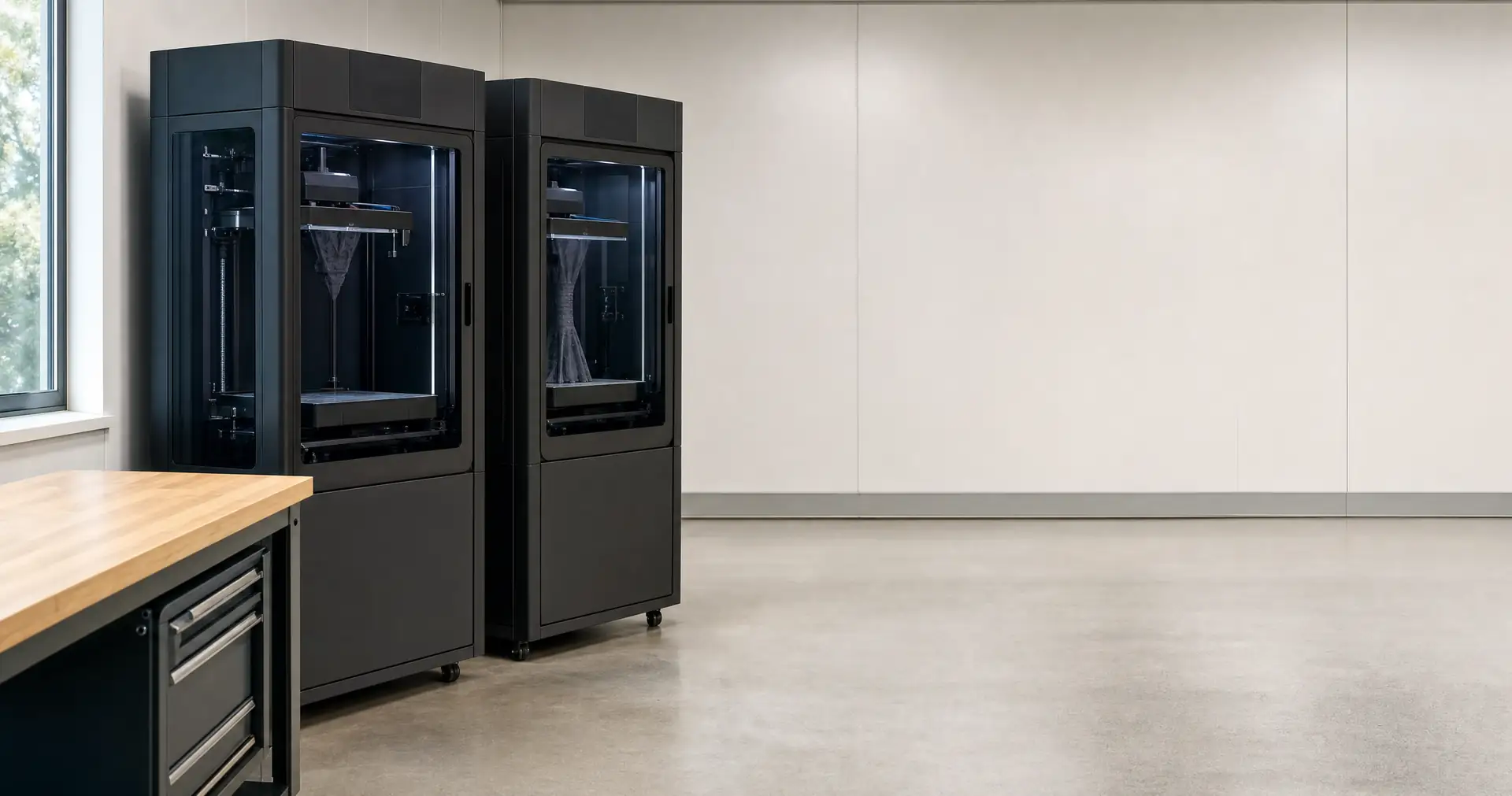
3D printer and additive manufacturing finance for NZ design, prototyping, and production businesses.
Industrial 3D printers and additive manufacturing kit sit at the centre of an active NZ design, prototyping, and short-run production segment. Asset values commonly run $20K to $300K depending on technology (FDM, SLA, SLS, DMLS), with RDTI overlap where the printer supports in-house R&D, and IRD plant depreciation on the asset itself.
What you need to know about NZ 3D printer and additive manufacturing finance.
→Asset bands $20K to $300K-plus Industrial FDM and resin SLA at the entry tier, SLS polymer powder mid-tier, metal DMLS or SLM at the top tier. Post-processing kit (sintering ovens, depowder stations) layers on top.
→RDTI overlap is a key consideration Where the printer supports qualifying in-house R&D, the IRD-administered Research and Development Tax Incentive offers a 15% tax credit on eligible expenditure. The asset finance and the RDTI claim are separate workstreams.
→Brand pool is concentrated Stratasys, Markforged, Formlabs, EOS, and BambuLab industrial sit in the regular NZ enquiry pool. Resellers Mindkits, IGo3D, and NZ3D handle most of the install base.
→UDC, Heartland, Speirs, brokers fund this segment Asset finance specialists familiar with industrial plant. Chattel mortgage on a 3 to 5 year term is the dominant structure; finance lease and operating lease appear on higher-ticket metal systems.
The landscape
NZ additive manufacturing finance reads as industrial plant with an R&D overlay.
Additive manufacturing in NZ has matured from prototyping novelty to embedded production tool across product design studios, dental and medical-device makers, aerospace and motorsport suppliers, jewellery manufacturers, and short-run consumer goods. The MBIE Innovation Services group, which inherited the policy and programme work previously held by Callaghan Innovation, publishes context on advanced manufacturing capability and the funding pathways that sit alongside private finance. The Research and Development Tax Incentive, administered jointly by IRD and MBIE under the Taxation (Research and Development Tax Credits) Act 2019, is the primary public-sector overlay for businesses operating qualifying R&D programmes that include additive manufacturing.
Three structures dominate 3D printer and additive manufacturing lending. A chattel mortgage on the printer (and any post-processing kit treated as separate asset finance) is the cheapest tier because the asset secures the loan; UDC Finance, Heartland Bank, and Speirs Finance all participate. A finance lease appears on higher-ticket metal DMLS or SLM systems where the operator prefers to spread the GST claim across rental payments. An operating lease, less common but available on multi-year service contracts, appears where the manufacturer wraps the printer with consumables, software, and service into a single monthly fee.
Print bureau and product-design applications read differently to a lender than internal R&D applications. The bureau application turns on customer pipeline, billable utilisation forecasts, and the post-processing capability stack. The internal-R&D application turns on the parent business trading data, the security position, and (where relevant) the RDTI eligibility note from the borrower's tax adviser. Industrial resin and metal powder handling bring HSWA 2015 obligations on ventilation, PPE, and hazardous-substance storage, with WorkSafe NZ as the regulator; lenders increasingly ask for the WorkSafe-aligned site safety plan as part of the application file on metal DMLS or SLM tickets.
Desktop FDM / SLA industrial
$20K to $50K
Mid-tier SLS / polymer powder
$80K to $180K
Metal DMLS / SLM
$200K to $300K+
Term loan term
3 to 5 years
Additive manufacturing scenarios
Four common NZ 3D printer and additive manufacturing finance scenarios.
Most additive manufacturing applications fall into one of four patterns. Each pattern has a typical loan amount, structure, and lender pool.
Product-design studio adding industrial FDM and SLA
Auckland or Wellington product-design studio adding a Markforged X7 industrial FDM and a Formlabs Form 4L large-format SLA. Total project commonly $35K-$60K including resin and filament starter stock. Chattel mortgage on a 3 to 5 year term.
·Loan amount: $30K to $60K
·Term: 3 to 5 years
Mid-tier SLS bureau build-out
Established prototyping bureau adding an EOS Formiga or comparable polymer SLS system with sintering oven, depowder station, and bead-blast finishing. Bureau billable-utilisation forecast supports serviceability. Chattel mortgage with optional separate asset finance on post-processing.
·Loan amount: $120K to $220K
·Term: 5 years
Metal DMLS for aerospace, motorsport, or medical
Specialist NZ supplier adding an EOS M 290, Renishaw, or comparable DMLS or SLM metal system. Total package commonly $300K-$500K including powder handling, atmosphere, and post-processing. RDTI overlay where the system supports qualifying R&D.
·Loan amount: $250K to $450K
·Term: 5 years
Dental or medical-device maker resin SLA fleet
NZ dental lab or medical-device maker running a Formlabs Form 4B fleet for surgical guides, models, and clear aligners. Resin biocompatibility certifications carried by the manufacturer. Smaller per-unit ticket, multiple printers in parallel.
·Loan amount: $40K to $120K
·Term: 3 to 5 years
What additive manufacturing operators borrow for
Six common NZ additive manufacturing loan purposes.
Additive manufacturing lending volume falls into six common purposes. Each has a typical structure that fits.
Industrial FDM printers
Stratasys F-Series, Markforged X7 and FX20, BambuLab industrial. Engineering-grade thermoplastics including PEEK, ULTEM, carbon-fibre reinforced nylon. Chattel mortgage on a 3 to 5 year term.
Resin SLA and DLP systems
Formlabs Form 4 and Form 4L, larger-format DLP systems. Dental, jewellery, prototyping, and short-run production. Resin chemistry and biocompatibility ratings shape the application pool.
SLS polymer powder systems
EOS Formiga and P-Series, Sinterit, Stratasys H-Series. Polymer powder sintering for end-use parts. Sintering oven, depowder station, and bead-blast finishing layered as separate asset finance.
Metal DMLS and SLM systems
EOS M 290 and M 400, Renishaw, SLM Solutions. Metal powder bed fusion for aerospace, motorsport, medical implants, and tooling. Inert-atmosphere and powder-handling kit attached.
Post-processing and finishing kit
Sintering ovens, depowder stations, washing and curing chambers, bead-blast cabinets, abrasive flow machining. Asset finance against each unit, often staged across the bureau build-out.
CAM and slicing software, scanners
Materialise Magics, nTopology, Hyperganic, Artec or Creaform 3D scanners. Asset finance or unsecured term loan on the software and scanner stack. Smaller-ticket but commonly bundled in the build-out.
Tax, GST, and RDTI
How GST, IRD plant depreciation, and the RDTI typically apply to additive manufacturing kit.
A GST-registered operator can typically claim the GST component on industrial 3D printers, post-processing kit, and ancillary plant as input tax in the relevant GST return, subject to the accountant's confirmation. Where the printer is acquired under chattel mortgage, the full GST is typically claimable upfront in the next GST return after settlement. Where it is acquired under finance lease, GST is typically claimed across the rental payments. IRD asset-class depreciation rates for manufacturing plant commonly apply to 3D printers and additive manufacturing kit; IRD publishes the depreciation determinations and the asset-class lookup. The Research and Development Tax Incentive (RDTI), administered jointly by IRD and MBIE under the Taxation (Research and Development Tax Credits) Act 2019, offers a 15% tax credit on eligible R&D expenditure where the printer supports qualifying activity (typically systematic, hypothesis-led work seeking new knowledge or capability). The asset finance and the RDTI claim are separate workstreams; the accountant or registered RDTI adviser is the right person to confirm eligibility and treatment on the specific business position.
Additive manufacturing asset bands
Indicative NZ 3D printer and additive manufacturing finance bands.
Pricing varies by build volume, materials capability, and inclusion of post-processing kit. The bands below are observed across the NZ additive manufacturing finance pool in 2026, drawn from reseller list pricing and manufacturer published configurations.
Indicative bands only. Actual price depends on configuration, build volume, materials capability, and reseller. Final rate, fee, and approval decisions are made by the lender after assessment.
Chattel mortgage vs finance lease vs operating lease
Chattel mortgage vs finance lease vs operating lease for additive manufacturing kit.
The structure choice tracks ticket size, operator preference for ownership, and whether the manufacturer offers an integrated service-and-consumables wrap. Smaller-ticket FDM and SLA commonly sit on chattel mortgage; larger-ticket SLS and metal DMLS sometimes sit on finance lease or operating lease where the operator prefers monthly opex shape.
Feature
Chattel mortgage
Finance lease
Operating lease (manufacturer wrap)
Typical ticket
$20K to $300K
$120K to $700K
$80K to $300K (with consumables)
GST upfront claim
Yes, full GST in next return
No, claimed across payments
No, claimed across payments
Ownership at end of term
Operator owns from settlement
Operator typically owns at end
Lessor retains; option to upgrade
Maintenance and consumables
Operator responsible
Operator responsible
Often included in monthly fee
IRD depreciation by operator
Yes, on the asset
Yes, on the asset
No, lessor depreciates
Suits
Operators prioritising upfront GST and ownership
Operators prioritising spread GST and end-of-term ownership
Operators prioritising service wrap and rotation
How it works
A typical NZ additive manufacturing finance application.
Applications carry an asset-spec verification step that lenders less familiar with industrial plant sometimes underweight. Established design studios, bureaus, and manufacturers with multi-year trading move faster.
01
Day 1 to 7
Define the asset spec, post-processing stack, and structure
A typical additive manufacturing loan combines a chattel mortgage on the printer with separate asset finance on post-processing kit (sintering oven, depowder station, washing and curing chamber). Defining the components upfront tightens the application and helps the lender size each tranche correctly. Reseller quotes from Mindkits, IGo3D, or NZ3D commonly form the starting documentation.
Documents commonly required
·Reseller quote or sale agreement (Mindkits, IGo3D, NZ3D, direct manufacturer)
·Itemised post-processing kit quotes
·Site readiness note (power, ventilation, HSWA 2015 site safety plan on metal systems)
02
Day 3 to 14
Submit application with manufacturing-specific documents
Beyond the standard SME application pack, additive manufacturing lenders ask for the asset spec sheet, the reseller or manufacturer quote, evidence of customer pipeline or internal R&D programme, and (on metal DMLS or SLM) the WorkSafe-aligned site safety plan covering metal powder handling under the Health and Safety at Work Act 2015. Where RDTI eligibility supports the business case, a note from the borrower's registered RDTI adviser is commonly included.
Documents commonly required
·NZBN, business owner ID
·Last 12 months business bank statements
·Last 2 years financial statements
·Asset spec sheet and reseller / manufacturer quote
·Customer pipeline or internal R&D programme evidence
·WorkSafe-aligned site safety plan (metal DMLS / SLM)
·RDTI adviser note (where applicable)
·Insurance quote
03
Day 7 to 21
Lender assessment and offer
Lenders assess against three things: the security position on the asset (LVR after deposit), the customer pipeline or internal trading data supporting the asset use, and the operator profile (prior trading, technical capability, site readiness). Offers commonly come back with conditions: deposit, additional security, or staged drawdowns tied to manufacturer milestones for metal systems with longer lead times.
04
Week 3 onward
Settle, register PPSR, install, and commission
Asset finance settles directly to the reseller, manufacturer, or seller. The lender registers a security interest on the Personal Property Securities Register (PPSR) for each financed asset. Manufacturer or reseller commissions the printer on site, with operator training commonly bundled. Where the kit involves resins or metal powders, the HSWA 2015 obligations on ventilation, PPE, and hazardous-substance storage apply from commissioning. Electrical Safety Regulations 2010 inspection and connection by a registered electrician are routine on higher-power systems.
A broker familiar with NZ industrial plant and reseller pricing across Mindkits, IGo3D, and NZ3D commonly tightens the indicative rate band and reduces the documentation cycle versus a direct application to a generic SME lender.
Worked scenarios
Three NZ 3D printer and additive manufacturing finance scenarios.
Real-world structures across product-design studio FDM and SLA build-out, bureau SLS expansion, and metal DMLS for a specialist manufacturer. Each illustrates how customer pipeline, trading history, and RDTI overlay shift the offered rate.
Established 6-person studio adding industrial FDM and SLA
Auckland product-design studio FDM and SLA build-out
An Auckland product-design studio with 4 years of trading adding a Markforged X7 industrial FDM and a Formlabs Form 4L large-format SLA to bring prototyping in-house. Total project $58,000 ex-GST: $32,000 Markforged X7 with carbon-fibre and PEEK capability, $18,000 Formlabs Form 4L with starter resin pack, $5,000 fume extraction and PPE setup, $3,000 cabinetry. Reseller quote from Mindkits with 4-week delivery.
Structure agreed with an asset-finance broker: chattel mortgage on the combined printer package ($49,300 after 15% deposit, 5-year term, indicative 9-12% p.a.). Existing 4 years of design-studio trading and an active client roster across consumer-goods and medical-device clients tightened the indicative rate band. The studio's registered RDTI adviser confirmed that internal prototyping work supporting client R&D programmes would form part of the studio's own RDTI claim in the relevant year.
PPSR security interest registered against both printers at settlement. UDC Finance funded the chattel mortgage. Resin and filament storage configured to align with HSWA 2015 hazardous-substance handling. First production prints on the Markforged within 2 weeks of installation; Form 4L commissioned and operator-trained the following week.
Indicative figures
Total project
$58,000
Markforged X7
$32,000
Formlabs Form 4L
$18,000
Indicative rate
9-12% p.a.
Established bureau adding mid-tier polymer SLS
Wellington prototyping bureau SLS expansion
A Wellington prototyping bureau with 7 years of trading adding an EOS Formiga P 110 polymer SLS system with sintering oven, depowder station, and bead-blast finishing to support a step-up in end-use part orders from medical-device and aerospace clients. Total package $215,000 ex-GST: $155,000 EOS Formiga reseller-supplied, $35,000 sintering oven, $15,000 depowder and bead-blast finishing, $10,000 ventilation and powder-handling kit aligned with HSWA 2015.
Structure agreed with the bureau's existing asset-finance lender: chattel mortgage on the SLS printer ($131,750 after 15% deposit, 5-year term, indicative 9-11% p.a.), separate asset finance on post-processing kit ($51,000, 5-year term, indicative 10-12% p.a.). Bureau's 12-month customer pipeline forecast across medical-device and aerospace clients supported the serviceability calculation.
PPSR security interest registered against each financed asset at settlement. Heartland Bank funded the chattel mortgage based on the existing trading relationship. Polymer powder handling protocols and ventilation aligned with the HSWA 2015 hazardous-substance regime. First production runs on the Formiga within 4 weeks of installation; operator training delivered by EOS NZ partner over 2 weeks.
Indicative figures
Total package
$215,000
EOS Formiga P 110
$155,000
Post-processing kit
$60,000
Indicative blended rate
9-12% p.a.
Specialist manufacturer commissioning EOS M 290 metal DMLS
Christchurch aerospace supplier metal DMLS commissioning
A Christchurch aerospace and motorsport supplier with 9 years of trading commissioning an EOS M 290 metal DMLS system to bring titanium and stainless steel additive parts in-house. Total package $480,000 ex-GST: $370,000 EOS M 290 with inert-atmosphere unit, $55,000 powder handling and storage, $30,000 sintering oven and post-processing kit, $25,000 site preparation including upgraded power, ventilation, and HSWA 2015 metal-powder safety plan signed off with WorkSafe alignment.
Structure agreed with a heavy plant asset-finance broker: chattel mortgage on the M 290 ($314,500 after 15% deposit, 5-year term, indicative 8-10% p.a.), separate asset finance on powder handling and post-processing ($85,000, 5-year term, indicative 9-11% p.a.). RDTI overlay confirmed by the supplier's registered RDTI adviser; an internal R&D programme on titanium part qualification expected to attract the 15% tax credit on eligible expenditure under the Taxation (Research and Development Tax Credits) Act 2019.
PPSR security interest registered against each financed asset at settlement. Speirs Finance funded the chattel mortgage based on the trading history and aerospace customer evidence. Electrical inspection and connection by a registered electrician under the Electrical Safety Regulations 2010 completed before commissioning. WorkSafe-aligned site safety plan covering metal powder handling activated from day 1 of commissioning. First titanium parts produced 8 weeks after install.
Indicative figures
Total package
$480,000
EOS M 290
$370,000
Powder handling and post-processing
$85,000
Indicative blended rate
8-11% p.a.
NZ additive manufacturing lenders
Lenders that fund NZ additive manufacturing kit well.
Several NZ lenders carry deep familiarity with industrial plant and the additive manufacturing segment specifically. The shortlist below is editorial.
NZ manufacturing sector context including advanced and short-run production segments.
FAQ
3D printer and additive manufacturing finance, NZ small-business questions answered
How much does an industrial 3D printer cost in NZ?
Industrial 3D printer pricing in NZ commonly runs $20,000 to $300,000 depending on technology and build volume. Industrial FDM (Markforged X7, Stratasys F-Series) and resin SLA (Formlabs Form 4L) sit at $20,000 to $60,000. Mid-tier polymer SLS (Sinterit, EOS Formiga) sits at $80,000 to $250,000. Metal DMLS or SLM (EOS M 290, Renishaw) sits at $200,000 to $700,000-plus when post-processing and powder handling are included. Reseller pricing through Mindkits, IGo3D, NZ3D, or direct manufacturer quotes is the starting point for any application.
What technologies sit inside additive manufacturing finance applications in NZ?
Five technology bands dominate NZ additive manufacturing finance applications. FDM (fused deposition modelling) covers thermoplastic extrusion printers; industrial-grade systems run engineering thermoplastics including PEEK, ULTEM, and carbon-fibre reinforced nylon. SLA and DLP cover resin photopolymerisation; common in dental, jewellery, and prototyping. SLS (selective laser sintering) covers polymer powder bed fusion; common in end-use part bureaus. DMLS and SLM cover metal powder bed fusion; common in aerospace, motorsport, and medical implants. Material extrusion systems for ceramics and concrete sit in a smaller specialist segment.
Can I finance a 3D printer through chattel mortgage in NZ?
Yes. Chattel mortgage is the dominant structure for additive manufacturing finance in NZ across the entry, mid, and metal tiers. Under chattel mortgage, the operator owns the printer from settlement, the lender registers a security interest on the Personal Property Securities Register (PPSR), and the GST is typically claimable upfront in the next GST return after settlement, subject to the accountant's confirmation. Loan terms commonly run 3 to 5 years on entry-tier kit and 5 years on mid-tier and metal kit.
How does the Research and Development Tax Incentive (RDTI) interact with 3D printer finance?
The RDTI is a 15% tax credit on eligible R&D expenditure, administered jointly by IRD and MBIE under the Taxation (Research and Development Tax Credits) Act 2019. Where the printer supports qualifying R&D activity (typically systematic, hypothesis-led work seeking new knowledge or capability), expenditure on materials, operator time, and a portion of the depreciation may qualify. The asset finance and the RDTI claim are separate workstreams: the finance covers acquisition, while the RDTI is claimed against eligible operating costs. A registered RDTI adviser is the right person to confirm eligibility on the specific business position.
What rate range applies to NZ additive manufacturing finance in 2026?
Indicative rates on additive manufacturing finance commonly sit in the 8% to 14% per annum band depending on structure, security, and operator profile. Chattel-mortgage finance secured by the printer sits at the lower end (commonly 8-12%). Smaller asset finance on post-processing kit and software sits in the middle (commonly 10-12%). Unsecured term loans on top-ups for consumables, scanners, or software sit at the upper end (commonly 12-15%). Final rate is set by the lender after assessment. Established bureaus and manufacturers with multi-year trading and clean financial history commonly access the lower bands.
Can I claim GST on a 3D printer financed under chattel mortgage in NZ?
A GST-registered operator can typically claim the GST component on a 3D printer acquired under chattel mortgage as input tax in the relevant GST return, subject to the accountant's confirmation. Where the printer is acquired under chattel mortgage, the full GST is typically claimable upfront in the next GST return after settlement. Where it is acquired under finance lease or operating lease, GST is typically claimed across the rental payments. The structure choice affects cash-flow timing more than total cost across the life of the loan. The accountant is the right person to confirm structure choice on the specific business position.
What IRD depreciation rate applies to a 3D printer in NZ?
IRD publishes depreciation determinations and an asset-class lookup covering manufacturing plant. 3D printers and additive manufacturing kit commonly sit within the manufacturing plant asset classes; the diminishing-value or straight-line rate depends on the determined asset life and the operator election. Specific rates are published on the IRD asset-class lookup and updated periodically by IRD determination. The accountant is the right person to confirm the applicable rate and method on the specific business position.
Are there special safety requirements for metal DMLS or SLM systems in NZ?
Yes. Metal powder bed fusion systems involve fine reactive metal powders (titanium, aluminium, stainless steel) and inert atmosphere requirements. The Health and Safety at Work Act 2015 (HSWA), administered by WorkSafe NZ, sets the obligations on ventilation, PPE, atmosphere control, and hazardous-substance storage. A site safety plan covering metal powder handling is commonly required by lenders as part of the application file on metal DMLS or SLM tickets. Electrical inspection and connection by a registered electrician under the Electrical Safety Regulations 2010 is routine on higher-power systems.
Which NZ lenders fund additive manufacturing kit?
UDC Finance is the NZ asset-finance specialist with broad industrial plant appetite and is a regular funder across entry and mid-tier additive manufacturing kit. Heartland Bank covers mid-tier polymer SLS and dental or medical-device fleet finance with strong NZ-wide presence. Speirs Finance carries appetite for higher-ticket metal DMLS and specialist plant. Equipment-finance brokers familiar with reseller pricing through Mindkits, IGo3D, and NZ3D commonly tighten the indicative rate band. Prospa and Bizcap fund the smaller unsecured tickets that sit alongside the main chattel mortgage.
What lead time should I expect on a metal DMLS system in NZ?
Metal DMLS and SLM systems commonly carry manufacturer build and shipping lead times of 4 to 8 months from order, plus an additional 4 to 8 weeks for on-site commissioning, atmosphere validation, powder qualification, and operator training. Lenders commonly stage drawdowns across milestones (deposit, factory acceptance test, on-site commissioning, sign-off). Polymer SLS systems commonly run 2 to 4 month lead times. Industrial FDM and resin SLA systems are commonly available within 2 to 6 weeks from reseller stock or manufacturer build.
Can a NZ dental lab or medical-device maker finance multiple resin SLA printers?
Yes. NZ dental labs and medical-device makers commonly run a fleet of resin SLA printers (typically Formlabs Form 4B) for surgical guides, models, and clear aligners. Each printer is a smaller per-unit ticket ($10,000 to $25,000) but the combined fleet finance commonly runs $40,000 to $120,000 across multiple units, often financed under a single chattel mortgage covering the fleet. Resin biocompatibility certifications carried by the manufacturer (Formlabs and others) are part of the regulatory framework supporting medical and dental use; the operator confirms applicability under MedSafe or relevant clinical authority on the specific application.
What happens to a financed 3D printer if the business closes?
Where the printer is financed under chattel mortgage and the business closes before the loan is repaid, the lender typically has a security interest registered on the PPSR and can take possession of the printer to recover the outstanding balance. Any shortfall between resale value and balance owing typically falls to the borrower and any personal guarantor. Industrial 3D printers retain value in the secondary market depending on age, technology, and condition; mid-tier SLS and metal DMLS systems with documented service history typically retain a higher proportion of value than entry-tier FDM. Lenders commonly work with operators to restructure repayments before resorting to repossession.
Can the printer software, slicer licences, and 3D scanners be financed alongside the printer?
Yes. CAM and slicing software (Materialise Magics, nTopology, Hyperganic), industrial 3D scanners (Artec Leo, Creaform HandySCAN), and ancillary software licences are commonly bundled into the asset finance package. Software and scanner tickets commonly sit at $10,000 to $80,000 and may be financed under separate asset finance or as an unsecured term loan top-up alongside the main chattel mortgage. Where the lender prefers a single facility, the bundled package is structured as a portfolio asset finance covering each financed item.
Can an established design studio refinance an older 3D printer loan into better pricing?
Yes. Established studios and bureaus with 18 to 36 months of clean repayment history commonly refinance from the entry-tier rate band (10-13%) into the mid-tier rate band (8-10%) once trading history is built. Refinancing is also commonly used to consolidate multiple separate asset-finance loans (printer, post-processing, software, scanner) into a single facility, or to release equity to fund the next-tier upgrade (mid-tier SLS or metal DMLS). Early-repayment fees on the original loans and the resale value position on the existing kit are the main considerations. The refinance application typically requires 12 months of bank statements and current trading data.
Indicative content only. Not personalised financial advice.
A business loan is a commitment that runs for months or years, and repayments come out of the same operating cash flow as everything else. Before committing, it is worth modelling the weekly and monthly cost against the business's working-capital position, which is what this site is built to help with. Borrowing at a level that stays comfortable through a quiet quarter, not just a strong one, is widely regarded as the safer frame.
What this site is
A calculator and information tool. Not a lender, not a broker, not a registered financial adviser. Nothing here is personalised financial advice.
What the figures show
Modelled estimates based on the inputs you enter. Not a quote. Not an offer of credit. Not a guarantee of approval, rate, or fees.
What the lender decides
Final rates, fees, and approval are set by the lender after a CCCFA-appropriate assessment of the applicant's circumstances and credit decision.
Commercial disclosure
Businessloans.org.nz earns a commission from Prospa when a visitor applies through this site and their application is approved. The commission is paid by Prospa, not by the borrower, and it does not influence the rate Prospa offers. Full disclosure on the partner page.
Tax, GST, and accountant framing
Tax-treatment statements (GST claim timing, interest deductibility, depreciation rates) are general in nature and subject to your accountant's confirmation on the specific business position. For material amounts, professional advice from a registered financial adviser or chartered accountant is widely regarded as the safer frame.