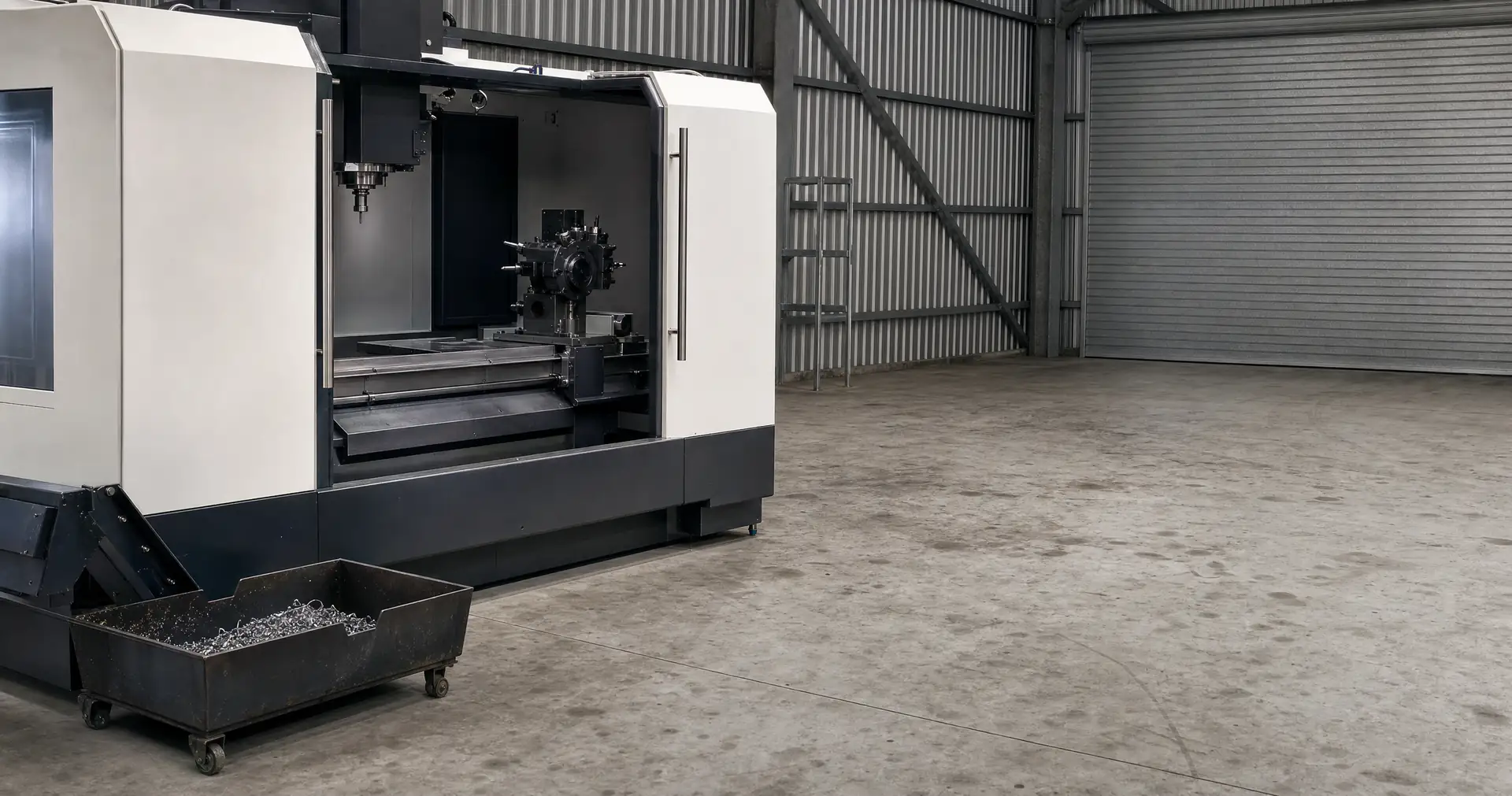
CNC machinery finance for New Zealand manufacturers and fabricators .
CNC machinery finance in NZ runs across CNC mill, lathe, plasma cutter, press brake, and laser cutter. Indicative bands $40K to $500K depending on size, axis count, and brand. Haas, Mazak, Trumpf, and AMADA dominate. UDC, Heartland, and Speirs fund the chattel mortgage pool; manufacturer-arranged finance options sit alongside.
→Haas, Mazak, Trumpf, AMADA dominate the NZ pool Haas Automation entry tier, Mazak full-spectrum mill and lathe, Trumpf laser and press brake, AMADA press brake and laser. Smaller volumes from DMG MORI, Okuma, Doosan.
→UDC, Heartland, Speirs fund the chattel mortgage pool Specialist asset-finance lenders dominate the chattel mortgage and hire purchase pool. Manufacturer-arranged finance through dealers (Machinery Solutions, Scott Machinery) sits alongside.
→IRD manufacturing plant depreciation applies CNC machinery falls under IRD asset-class rates for manufacturing plant under the General Depreciation Determinations. The accountant is the right person to confirm the specific rate and method.
The landscape
NZ CNC machinery finance reflects the structural shift to higher-precision and 5-axis processing.
CNC machinery is the structural backbone of NZ engineering, fabrication, sheet-metal, and precision manufacturing. The active asset pool covers CNC turning lathes, 3-axis machining centres (mills), 5-axis machining centres for complex part geometry, CNC press brakes for sheet-metal forming, fibre laser cutters for high-throughput sheet processing, plasma cutters for heavier plate work, and CNC waterjets for difficult materials. Haas Automation dominates the entry tier across mill and lathe; Mazak (Yamazaki Mazak) covers the full spectrum from entry to high-end multi-tasking; Trumpf is the dominant fibre laser and press brake brand; AMADA holds strong NZ market share in press brake and laser cutter.
The finance pool has two layers. UDC Finance, Heartland Bank, and Speirs Finance fund the broader chattel mortgage and hire purchase pool, with deep familiarity across CNC asset bands and dealer relationships. Manufacturer-arranged finance through dealers sits alongside as an alternative or complementary route: Machinery Solutions arranges Haas Automation finance, Scott Machinery handles Mazak, Trumpf, and AMADA finance options, Industrial Sales covers a range of mid-tier brands. Operators commonly compare specialist lender quotes against dealer-arranged finance to test which structure carries the tighter rate for their position.
The structural shift across NZ manufacturing in 2024-2026 has been toward higher-precision 5-axis machining centres for export-oriented engineering work, and toward fibre laser cutters replacing older CO2 lasers and plasma cutters for sheet-metal throughput. Both shifts lift the typical loan size: 5-axis machining centres push from a typical $120K mid-range tier to $250K-$400K for higher-spec installations; fibre laser cutters commonly land at $300K-$500K+. IRD publishes manufacturing plant depreciation rates under the General Depreciation Determinations covering CNC and related equipment.
Entry CNC mill or lathe
$40K to $90K
Mid-range 5-axis mill
$120K to $250K
CNC press brake
$180K to $400K
Common term
5 to 7 years
CNC machinery finance scenarios
Four common NZ CNC machinery finance scenarios.
Most CNC finance applications fall into one of four patterns. Each pattern has a typical loan amount, structure, and lender pool.
Entry CNC mill or lathe for a new fabricator
Owner-managed engineering or precision fabrication shop adding a Haas Mini Mill, Haas TL-1 lathe, or comparable entry CNC. Chattel mortgage on a 5 to 6 year term. Existing manual machining business stepping up.
·Loan amount: $40K to $90K
·Term: 5 to 6 years
5-axis upgrade for export-oriented engineering
Established engineering shop upgrading to a Mazak Variaxis i-300 or DMG MORI DMU 50 5-axis machining centre to support more complex part geometry. Chattel mortgage on a 6 to 7 year term.
·Loan amount: $200K to $400K
·Term: 6 to 7 years
Fibre laser cutter replacing older plasma
Sheet-metal fabricator replacing a 10+ year old plasma cutter with a Trumpf TruLaser or AMADA Ensis fibre laser to lift throughput and edge quality. Chattel mortgage with extraction and software upgrade.
·Loan amount: $300K to $500K+
·Term: 6 to 7 years
CNC press brake for sheet-metal forming
Sheet-metal shop adding a Trumpf TruBend or AMADA HG press brake for forming after laser-cut sheet. Tooling commonly funded alongside the main brake. Chattel mortgage on a 6 to 7 year term.
·Loan amount: $180K to $400K
·Term: 6 to 7 years
What CNC machinery buyers borrow for
Six common NZ CNC machinery loan purposes.
CNC lending volume falls into six common purposes. Each has a typical structure that fits.
CNC machining centres (mills)
Haas VF-Series, Mazak VTC, DMG MORI NMV, Doosan DNM. 3-axis to 5-axis. $40K-$90K entry through to $400K+ high-spec 5-axis. Chattel mortgage on 5-7 year terms.
CNC turning lathes
Haas ST-Series, Mazak Quick Turn, Okuma LB. 2-axis through to multi-tasking with live tooling and Y-axis. $50K-$300K depending on spec.
Fibre laser cutters
Trumpf TruLaser, AMADA Ensis, Bystronic ByStar. 3-6 kW common in NZ; higher-power 8-12 kW for thick plate. $300K-$500K+. Replacing CO2 laser and plasma in many shops.
CNC press brakes
Trumpf TruBend, AMADA HG, LVD PPEB. 50-tonne to 320-tonne capacity common in NZ. Tooling commonly funded alongside ($15K-$40K).
CNC plasma and waterjet
Hypertherm plasma tables, Flow waterjet. Plasma cutters $80K-$220K; waterjets $180K-$400K. Suit thicker plate or difficult-material work where laser is not optimal.
CAD/CAM software and CMM inspection
Mastercam, SolidWorks, Fusion 360 CAD/CAM software. CMM inspection equipment (Mitutoyo, Hexagon). Asset finance or unsecured term loan. $20K-$120K typical.
Tax, GST, and depreciation
How GST and IRD manufacturing plant depreciation typically work on NZ CNC machinery.
A GST-registered manufacturer or fabricator can typically claim the GST component on CNC machinery acquired under chattel mortgage as input tax in the relevant GST return, subject to the accountant's confirmation. Where the machinery is acquired under chattel mortgage or hire purchase, the full GST is typically claimable upfront in the next GST return after settlement. Where it is acquired under finance lease or operating lease, GST is typically claimed across the rental payments. IRD publishes manufacturing plant depreciation rates under the General Depreciation Determinations covering CNC machining centres, turning lathes, press brakes, and laser cutters; the relevant rate depends on the asset class. Tooling, CAD/CAM software, and CMM inspection equipment commonly fall under separate asset classes with their own depreciation rates. Installation costs (electrical upgrade, foundation pour for heavier machines, dust and fume extraction) are commonly capitalised against the asset where they are necessary to bring the machine into use; the accountant is the right person to confirm capitalisation treatment and depreciation method on the specific business position.
CNC machinery finance bands by class
Indicative NZ CNC machinery finance bands by class.
CNC pricing varies by capacity, axis count, brand, and dealer-arranged terms. The bands below are observed across the NZ CNC finance pool in 2026, drawn from new and used dealer market activity.
Class and brand examples
Used (5-10 yr)
New
Common term
Entry CNC mill (Haas VF-2, Mini Mill)
$30K to $60K
$70K to $120K
5 to 6 years
Entry CNC lathe (Haas ST-Series, Doosan)
$40K to $80K
$80K to $140K
5 to 6 years
Mid-range 5-axis mill (Mazak VCN, DMG NMV)
$120K to $220K
$220K to $400K
6 to 7 years
CNC press brake (Trumpf TruBend, AMADA HG)
$90K to $200K
$180K to $400K
6 to 7 years
Fibre laser cutter (Trumpf TruLaser, AMADA Ensis)
$180K to $320K
$300K to $500K+
6 to 7 years
CNC plasma table (Hypertherm)
$50K to $120K
$120K to $220K
5 to 7 years
Indicative bands only. Actual price depends on capacity, axis count, controller, tooling, and dealer-arranged terms. Final rate, fee, and approval decisions are made by the lender after assessment.
Specialist lender vs manufacturer-arranged finance
Specialist lender chattel mortgage vs manufacturer-arranged finance vs finance lease.
The structure choice tracks dealer relationship, capex appetite, and end-of-life rotation pattern. Specialist lenders typically suit operators preferring asset ownership; manufacturer-arranged finance commonly bundles installation, training, and warranty into a single line.
Established operator, multi-machine portfolio, GST upfront priority
Single-machine purchase tied to dealer relationship
Capex-light approach, end-of-term flexibility
Rate band
Indicative 8-12% (established operator)
Indicative 9-13% (dealer-arranged, varies by promotion)
Indicative 9-12% (mainstream lender)
How it works
A typical NZ CNC machinery finance application.
CNC applications carry an installation and commissioning step that other equipment finance applications do not. Established manufacturers with multi-year trading and existing CNC fleet move faster.
01
Day 1 to 7
Define the machine spec, tooling, and structure
A typical CNC loan combines a chattel mortgage on the main machine with separate asset finance on tooling, fixtures, CAD/CAM software, and CMM inspection equipment. Installation cost (electrical upgrade, foundation pour for heavier machines, dust and fume extraction) is commonly capitalised against the asset.
Submit application with manufacturing trading documents
Beyond the standard SME application pack, CNC lenders ask for 12 to 24 months of trading data (manufacturing turnover commonly assessed across multiple GST returns), the existing machinery list and depreciation schedule, the contract or letter of intent that supports the new machine use, and the operator profile (skilled CNC machinist coverage across the shop).
Documents commonly required
·NZBN, business owner ID
·12 to 24 months business bank statements
·Last 2 years financial statements
·Existing machinery list and depreciation schedule
·Contract or letter of intent (where the machine funds new work)
·Operator and CNC machinist coverage
·Site readiness for installation
03
Day 7 to 21
Lender assessment and offer
Lenders assess against three things: the security position on the machine (LVR after deposit, with newer machines and major brands attracting higher LVR), the trading data and contract evidence supporting the asset use, and the operator profile. Offers commonly come back with conditions: deposit (commonly 10-20%), staged drawdowns tied to dealer milestones (deposit, shipment, commissioning), or installation completion tied to first repayment.
04
Week 4 to Week 12 (depending on brand and lead time)
Settle, install, commission, register PPSR
Asset finance settles directly to the dealer in stages tied to the machine purchase milestones. The lender registers a security interest on the Personal Property Securities Register (PPSR). Site readiness check before delivery (electrical, foundation, extraction). Machine delivered, installed, and commissioned by the dealer; operator training delivered as part of dealer commissioning. First repayment commonly aligned to commissioning rather than settlement to reflect the install lead time.
A specialist machinery finance broker familiar with NZ engineering and fabrication operators commonly tightens the indicative rate band by knowing which lender fits each machine class and which dealer-arranged finance offers complement specialist lender quotes.
Worked scenarios
Three NZ CNC machinery finance scenarios.
Real-world structures across entry CNC mill purchase, 5-axis upgrade, and fibre laser replacement. Each illustrates how trading data, dealer relationship, and machine class shift the offered rate and structure.
Owner-managed manual engineering shop adding first CNC mill
Hamilton owner-managed engineering shop entry CNC purchase
A Hamilton owner-managed engineering shop with 4 years of trading on manual machines adding a first CNC machining centre. Total project $98,000 ex-GST: $78,000 new Haas VF-2 3-axis machining centre, $12,000 tooling and workholding, $5,000 electrical upgrade and dust extraction, $3,000 Mastercam CAD/CAM software. 15% deposit ($14,700) from cash flow.
Structure agreed with a machinery finance broker: chattel mortgage on the Haas VF-2 ($66,300 after deposit, 6-year term, indicative 9-11% p.a.). Tooling and software financed under a separate unsecured asset finance line ($17,000, 5-year term, indicative 10-12% p.a.). Speirs Finance funded the chattel mortgage based on the trading history; manufacturer-arranged finance through Machinery Solutions (the NZ Haas dealer) was compared and aligned with similar terms.
Site readiness check completed before delivery (3-phase electrical upgrade, dust extraction installed). PPSR security interest registered against the Haas VF-2 at settlement. Machine commissioned by Machinery Solutions with operator training delivered to the owner-operator over 5 days. First production run within 4 weeks of installation. IRD manufacturing plant depreciation rate applied to the Haas under the General Depreciation Determinations, confirmed with the accountant.
Indicative figures
Total project
$98,000
Haas VF-2
$78,000
Chattel mortgage after deposit
$66,300
Indicative blended rate
9-12% p.a.
Established 12-machine engineering shop, 8 years trading
Auckland 5-axis upgrade for export-oriented precision work
An Auckland precision engineering shop with 12 existing CNC machines and 8 years of trading upgrading to a Mazak Variaxis i-300 5-axis machining centre to support an expanded export contract for aerospace component work. Total project $385,000 ex-GST: $340,000 new Mazak Variaxis, $25,000 5-axis tooling and probing, $12,000 foundation pour and electrical upgrade, $8,000 Mastercam multi-axis CAM upgrade. 20% deposit ($77,000) from existing trading.
Existing fleet trading data, the export contract evidence, and the established relationship with the lender materially tightened the indicative rate band. Chattel mortgage on the Mazak ($263,000 after deposit, 7-year term, indicative 8-10% p.a.). Heartland Bank funded the chattel mortgage based on the multi-machine fleet and trading history. Manufacturer-arranged finance through Scott Machinery (the NZ Mazak dealer) was compared and offered similar terms.
Staged drawdown tied to dealer milestones: 10% on order, 30% on shipment from Japan, 60% on commissioning at site. PPSR security interest registered at each drawdown stage. Foundation pour completed prior to delivery. Machine commissioned by Scott Machinery with operator training delivered over 10 days. First aerospace component production run within 12 weeks of order placement. IRD manufacturing plant depreciation applied per the General Depreciation Determinations.
Indicative figures
Total project
$385,000
Mazak Variaxis i-300
$340,000
Chattel mortgage after deposit
$263,000
Indicative rate
8-10% p.a.
Sheet-metal fabricator replacing 12-year old plasma cutter
Christchurch sheet-metal fibre laser replacement
A Christchurch sheet-metal fabricator with 14 years of trading replacing a 12-year-old plasma cutter with a Trumpf TruLaser 3030 fibre laser to lift sheet-processing throughput and edge quality. Total project $445,000 ex-GST: $385,000 new Trumpf TruLaser 3030 with 6 kW source, $25,000 fume extraction and chiller upgrade, $20,000 software and nesting suite, $15,000 sheet-handling automation upgrade. Trade-in credit of $35,000 on the outgoing plasma.
Existing fleet trading data and the well-established AMADA press brake fleet alongside the laser drove lender confidence. Chattel mortgage on the Trumpf ($350,000 after trade-in, 7-year term, indicative 8-10% p.a.). UDC Finance funded the chattel mortgage based on the long trading history and the multi-machine fleet position. Manufacturer-arranged finance through Scott Machinery (the NZ Trumpf dealer) was compared at similar terms; Trumpf factory-arranged finance offered an alternative dealer-bundled package including extended warranty.
Site readiness completed before delivery (extraction upgrade, chiller commissioned, electrical capacity confirmed). PPSR security interest registered against the Trumpf at settlement. Machine commissioned over 3 weeks with operator training and CAM nesting suite training. First high-throughput production run within 8 weeks of dealer order placement. Outgoing plasma cutter sold to dealer at trade-in. IRD manufacturing plant depreciation applied per the General Depreciation Determinations.
Indicative figures
Total project
$445,000
Trumpf TruLaser 3030
$385,000
Trade-in credit
$35,000
Indicative rate
8-10% p.a.
NZ CNC machinery finance lenders
Lenders that fund NZ CNC machinery purchases well.
Several NZ lenders carry deep familiarity with manufacturing plant finance. The shortlist below is editorial.
Indicative shortlist. Final rate, fee, and approval decisions are made by each lender after assessment. Manufacturer-arranged finance through dealers (Machinery Solutions, Scott Machinery, Industrial Sales) sits alongside as an alternative or complementary route.
Where CNC machinery finance fits
When NZ CNC machinery finance is straightforward, and when it gets harder.
Where it works smoothly
·Established engineering or fabrication operator with 2+ years of trading
·New or recent-used machine from a major NZ dealer (Machinery Solutions, Scott Machinery, Industrial Sales)
·Existing CNC fleet with documented depreciation schedule and trading history
·Contract or letter of intent supporting the new machine use case
·Skilled CNC machinist coverage across the shop
·Site readiness for installation (electrical, foundation, extraction)
·Deposit of 10-20% of the machine price from existing trading
Where it gets harder
·First-time CNC purchase with no prior manufacturing trading or operator coverage
·Used machine older than 12 years or with no documented service history
·Specialist or non-mainstream brand with limited NZ dealer support
·Site not ready for installation (insufficient electrical capacity, no foundation, no extraction)
·Reliance on a single contract relationship without diversification
NZ CNC machine pricing varies materially by class and capacity. Entry CNC machining centres (Haas Mini Mill, Haas VF-2) commonly run $70,000 to $120,000 new, $30,000 to $60,000 used. Entry CNC turning lathes (Haas ST-Series) commonly run $80,000 to $140,000 new. Mid-range 5-axis machining centres (Mazak, DMG MORI) commonly run $220,000 to $400,000 new. CNC press brakes (Trumpf, AMADA) commonly run $180,000 to $400,000 new. Fibre laser cutters (Trumpf TruLaser, AMADA Ensis) commonly run $300,000 to $500,000+ new depending on power and bed size.
Which lenders specialise in NZ CNC machinery finance?
UDC Finance, Heartland Bank, and Speirs Finance fund the broader chattel mortgage and hire purchase pool with deep familiarity across CNC asset bands and major dealer relationships. Pioneer Finance sits alongside as a specialist alternative. ANZ, BNZ, ASB, and Westpac business banking cover larger relationship-managed manufacturing accounts. Manufacturer-arranged finance through NZ dealers (Machinery Solutions for Haas, Scott Machinery for Mazak, Trumpf, AMADA, Industrial Sales for mid-tier brands) sits alongside as an alternative or complementary route. A specialist machinery finance broker commonly tightens the indicative rate band.
What rate range applies to NZ CNC machinery finance in 2026?
Indicative rates on NZ CNC machinery finance commonly sit in the 8% to 13% per annum band depending on structure, security, and operator profile. Chattel-mortgage finance secured by a new machine for an established multi-machine engineering operator with documented trading sits at the lower end (commonly 8-10%). Used machine finance and entry CNC purchases for newer operators sit in the middle (commonly 10-12%). Higher-tolerance applications (specialist brand, older used machine, first-time CNC purchase) sit at the upper end (commonly 12-13%+). Final rate is set by the lender after assessment.
Should a NZ manufacturer use specialist lender finance or manufacturer-arranged finance?
The choice tracks dealer relationship, capex appetite, and the bundle on offer. Specialist lender finance (UDC, Heartland, Speirs) typically suits operators preferring asset ownership with full GST claim upfront, with the lender separate from the dealer relationship. Manufacturer-arranged finance through NZ dealers (Machinery Solutions, Scott Machinery, Industrial Sales) commonly bundles installation, training, warranty, and sometimes service plan into a single line, and can suit single-machine purchases tied to the dealer relationship. Operators commonly compare both routes to test which carries the tighter rate and best bundle for the position.
Can GST be claimed on a CNC machine under chattel mortgage?
A GST-registered manufacturer or fabricator can typically claim the GST component on a CNC machine acquired under chattel mortgage as input tax in the relevant GST return, subject to the accountant's confirmation. Where the machine is acquired under chattel mortgage or hire purchase, the full GST is typically claimable upfront in the next GST return after settlement. Where it is acquired under finance lease or operating lease, GST is typically claimed across the rental payments. Tooling and software financed alongside the main machine typically follow the same GST treatment as the asset finance line they sit on. The accountant is the right person to confirm GST timing on the specific position.
How does IRD manufacturing plant depreciation work on CNC machinery?
IRD publishes asset-class depreciation rates for manufacturing plant under the General Depreciation Determinations. CNC machining centres, turning lathes, press brakes, and laser cutters fall within the manufacturing plant asset class with diminishing-value or straight-line depreciation rates set out in the relevant determination. Tooling commonly falls under a separate, faster depreciation class reflecting shorter asset life. CAD/CAM software and CMM inspection equipment have their own asset classifications. Installation costs (electrical upgrade, foundation pour, extraction) are commonly capitalised against the asset where they are necessary to bring the machine into use. The accountant is the right person to confirm depreciation rate and method on the specific position.
What is the typical CNC machinery loan term in NZ?
NZ CNC machinery chattel mortgages and hire purchase loans commonly run 5 to 7 year terms, longer than the 3 to 5 year terms typical on lighter equipment such as forklifts. Entry CNC mills and lathes typically attract 5 to 6 year terms; mid-range 5-axis machining centres typically attract 6 to 7 year terms reflecting longer asset life and higher capex; CNC press brakes and fibre laser cutters typically attract 6 to 7 year terms. The loan term should fit within the expected useful life of the machine for the use case, and lenders commonly will not write a loan term that exceeds the practical residual life of the machine.
How does staged drawdown work on a CNC machine purchase?
Larger CNC machine purchases (5-axis machining centres, fibre laser cutters, CNC press brakes) commonly involve staged drawdowns tied to dealer milestones: typically 10% on order, 30% on shipment from the manufacturer (often Japan, Germany, or Switzerland), and 60% on commissioning at the site. The lender registers a security interest on the Personal Property Securities Register (PPSR) at each drawdown stage. First repayment is commonly aligned to commissioning rather than initial settlement to reflect the install lead time, which can run 8 to 16 weeks for offshore-built machines. The structure is documented in the loan offer and dealer agreement.
What installation work is typically required for a CNC machine?
NZ CNC machine installation typically involves three site readiness items. Electrical upgrade (3-phase capacity sufficient for the machine plus auxiliaries) is commonly required for mid-range and larger machines. Foundation pour (concrete pad of specified thickness for stability and vibration isolation) is typically required for heavier 5-axis machining centres, press brakes, and laser cutters. Dust, fume, and chip extraction (commonly with chiller for laser cutters) is typically required to manage workplace air quality and machine reliability. Installation cost commonly runs 5-15% of the machine cost depending on scope and is commonly capitalised against the asset under IRD rules.
What happens to a financed CNC machine if the manufacturing business closes?
Where the CNC machine is financed under chattel mortgage or hire purchase and the business closes before the loan is repaid, the lender typically has a security interest registered on the Personal Property Securities Register (PPSR) and can take possession of the machine to recover the outstanding balance. Any shortfall between resale value and balance owing typically falls to the borrower and any personal guarantor. NZ CNC machines from major brands (Haas, Mazak, Trumpf, AMADA) typically retain 35-60% of new value over a 6-year hold period depending on hours, condition, and machine class; specialist or non-mainstream brands commonly hold value less well in the NZ secondary market.
Can tooling and CAD/CAM software be financed alongside the CNC machine?
Yes. CNC tooling (cutting tools, holders, fixtures, workholding), CAD/CAM software (Mastercam, SolidWorks, Fusion 360), and CMM inspection equipment (Mitutoyo, Hexagon) are commonly financed alongside the main CNC machine purchase. Tooling and fixtures typically sit on the same chattel-mortgage or hire-purchase facility as the main machine where they are bought together; software and CMM equipment sometimes sit on separate asset finance lines reflecting different depreciation classes. Total tooling and software cost commonly runs 5-20% of the main machine cost depending on application complexity. The accountant is the right person to confirm capitalisation and depreciation treatment.
How does fibre laser cutter finance compare to plasma or waterjet finance?
Fibre laser cutters typically attract higher loan amounts than plasma cutters or waterjets ($300K-$500K+ for fibre laser versus $80K-$220K for CNC plasma versus $180K-$400K for waterjet) reflecting capex and capability differences. The shift across NZ sheet-metal in 2024-2026 has been toward fibre laser replacing older CO2 laser and plasma for thinner sheet processing where edge quality and throughput matter; plasma remains common for thicker plate where laser is not optimal; waterjet remains common for difficult materials (composite, stone, food-grade). Loan terms run similar (6-7 years) across all three classes; the lender pool is the same (UDC, Heartland, Speirs, plus dealer-arranged through Scott Machinery).
Can an established NZ engineering shop refinance into better pricing?
Yes. Established NZ engineering and fabrication operators with 2+ years of clean trading and a documented multi-machine fleet commonly refinance into tighter pricing as the fleet builds operating history, contracts diversify, and equity builds in the existing asset base. Refinancing is also commonly used to consolidate multiple chattel mortgages across the machine fleet into a single facility, to release equity to fund a new machine purchase (5-axis upgrade or fibre laser replacement), or to move from a specialist asset-finance lender into a major-bank relationship at scale. Early-repayment fees on the existing loans, the resale or carrying value of each machine, and the security position across the fleet are the main considerations.
What does workplace safety look like for a NZ CNC operating environment?
NZ CNC operating environments fall under the Health and Safety at Work Act 2015 administered by WorkSafe. Operators commonly hold documented machinery operating procedures, lockout-tagout protocols for tool changes and maintenance, guarding compliance under the relevant standards (commonly AS/NZS 4024 for machinery safety), and operator training records. CNC operators do not require a specific licence equivalent to forklift F-endorsement, but workplaces typically maintain trained-operator records and refresher training schedules. NZ Workplace First Aid kit at the operating site is typical per WorkSafe guidance. Lenders sometimes reference workplace safety documentation in larger applications.
Indicative content only. Not personalised financial advice.
A business loan is a commitment that runs for months or years, and repayments come out of the same operating cash flow as everything else. Before committing, it is worth modelling the weekly and monthly cost against the business's working-capital position, which is what this site is built to help with. Borrowing at a level that stays comfortable through a quiet quarter, not just a strong one, is widely regarded as the safer frame.
What this site is
A calculator and information tool. Not a lender, not a broker, not a registered financial adviser. Nothing here is personalised financial advice.
What the figures show
Modelled estimates based on the inputs you enter. Not a quote. Not an offer of credit. Not a guarantee of approval, rate, or fees.
What the lender decides
Final rates, fees, and approval are set by the lender after a CCCFA-appropriate assessment of the applicant's circumstances and credit decision.
Commercial disclosure
Businessloans.org.nz earns a commission from Prospa when a visitor applies through this site and their application is approved. The commission is paid by Prospa, not by the borrower, and it does not influence the rate Prospa offers. Full disclosure on the partner page.
Tax, GST, and accountant framing
Tax-treatment statements (GST claim timing, interest deductibility, depreciation rates) are general in nature and subject to your accountant's confirmation on the specific business position. For material amounts, professional advice from a registered financial adviser or chartered accountant is widely regarded as the safer frame.