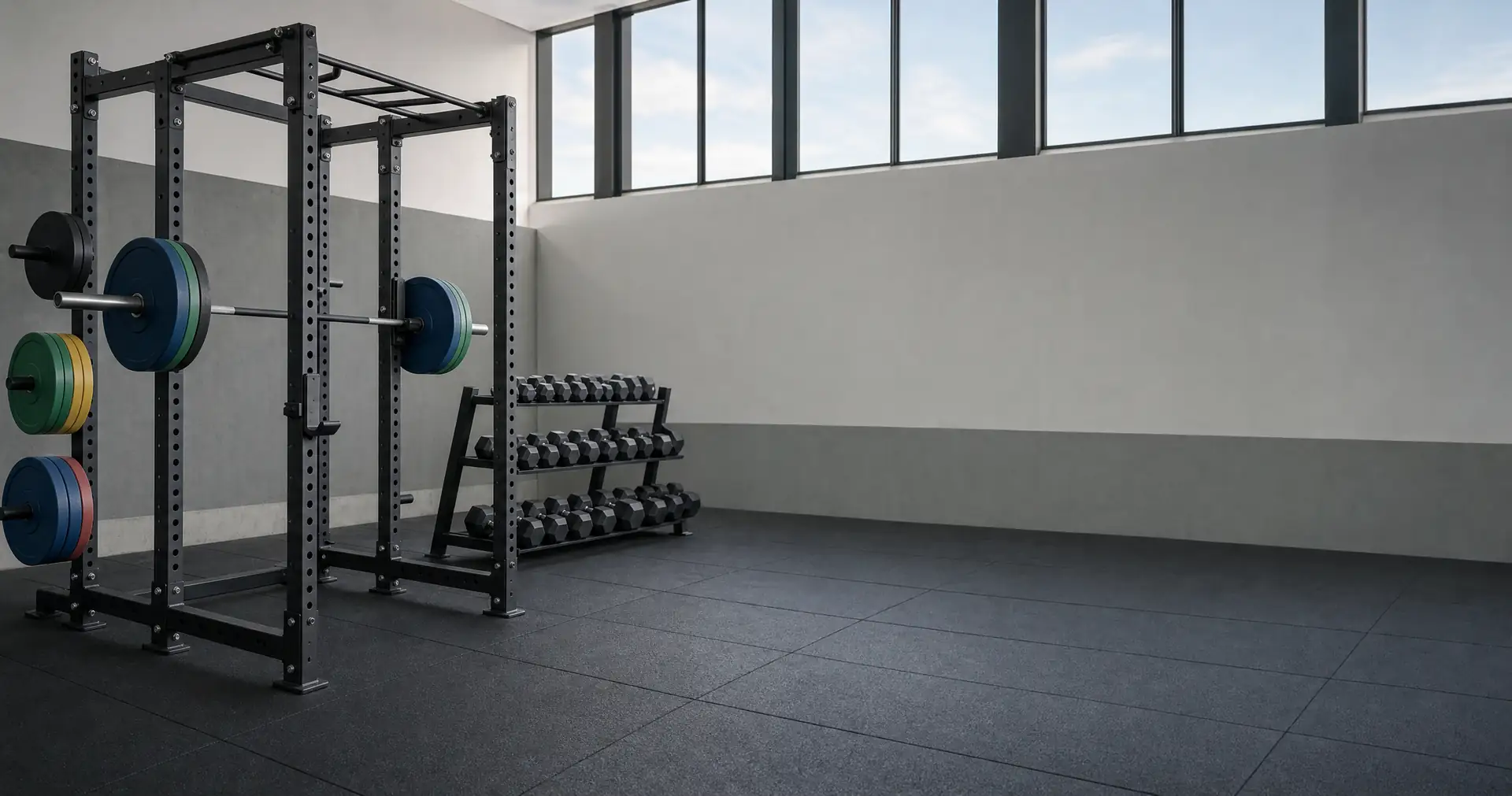
Gym equipment finance for New Zealand studios and full-service gyms .
Gym equipment finance in NZ funds the cardio, strength, functional, and recovery kit that sits inside boutique PT studios, F45 and CrossFit-style functional gyms, and full-service 24-hour facilities. Life Fitness, Technogym, Precor, Hammer Strength, and BodyMaster dominate the imported brand pool; Fitness 2 You and Pacific Fitness are the main NZ specialist suppliers.
What you need to know about NZ gym equipment finance.
→PT studio set commonly $20K to $60K A single PT studio set covers a cardio piece, a functional rig, dumbbells and kettlebells, and one or two strength stations. Boutique-tier brands (Hammer Strength, BodyMaster) sit at the upper end.
→Full-service gym fitout commonly $150K to $300K+ A full 24-hour gym fitout layers cardio, selectorised strength, free weights, functional, and recovery zones. Life Fitness, Technogym, and Precor are the dominant brands at this scale.
→NZ specialist suppliers publish finance partnerships Fitness 2 You and Pacific Fitness are the main NZ commercial gym equipment suppliers, both with finance partnerships in market.
→REPs and IRD depreciation frame the operator side Registered Exercise Professionals (REPs) is the NZ industry registration framework for trainers; IRD publishes the asset-class depreciation rates for fitness equipment.
The landscape
The NZ gym equipment market splits across boutique studios, functional gyms, and full-service facilities.
Gym equipment finance in New Zealand serves three distinct facility types. Boutique PT studios (commonly 50 to 150 sqm) carry a small set of cardio, functional rig, and a couple of strength stations targeted at one-to-one or small-group personal training; total equipment commonly $20,000 to $60,000. Functional and group-class gyms (F45, CrossFit-style, group HIIT) layer rigs, sleds, kettlebells, dumbbell racks, and rower or assault-bike fleets; total commonly $60,000 to $150,000. Full-service 24-hour facilities (Anytime Fitness, Snap Fitness, CityFitness format equivalents, independents) layer cardio, selectorised strength, free weights, functional, and recovery; total commonly $150,000 to $300,000 and above.
The brand pool is dominated by imported commercial-grade equipment. Life Fitness, Technogym, Precor, Hammer Strength, and BodyMaster are the most-installed strength and cardio brands in NZ commercial gyms. Functional and CrossFit-style fitouts commonly use Rogue Fitness, Eleiko, and Australian-built rig systems. Two NZ specialist suppliers dominate the commercial supply chain: Fitness 2 You and Pacific Fitness, both publishing finance partnerships with NZ asset-finance lenders. UDC Finance, Spinach, and generic asset-finance providers participate alongside the supplier programmes.
The operator-side regulatory overlay sits under the Registered Exercise Professionals (REPs) framework administered by Skills Active Aotearoa, which registers personal trainers and gym instructors against published competency standards. REPs registration is voluntary at the trainer level but commonly required by gym operators as a condition of work. IRD publishes asset-class depreciation rates for fitness equipment, with separate rates applying to cardio kit, strength equipment, and functional accessories. Lender comfort tracks the operator profile, the supplier (manufacturer-backed warranty position), and the membership or PT income evidence supporting the asset use.
PT studio set
$20K to $60K
Boutique gym fitout
$60K to $150K
Full-service 24/7 fitout
$150K to $300K+
Common term
4 to 5 years
Gym finance scenarios
Four common NZ gym equipment finance scenarios.
Most gym equipment applications fall into one of four patterns. Each pattern has a typical loan amount, structure, and lender pool.
Boutique PT studio entry fitout
New PT operator fitting out a 80 to 120 sqm boutique studio. Single cardio piece, functional rig, dumbbell and kettlebell set, one or two strength stations. Commonly funded as a single equipment finance tranche.
Independent or franchised 24-hour facility (Anytime Fitness, Snap Fitness format equivalents). Cardio, selectorised strength, free weights, functional, recovery zones. Commonly 600 to 1,200 sqm.
·Loan amount: $180K to $350K
·Term: 5 years
Equipment refresh or zone upgrade
Established gym refreshing cardio fleet, adding a recovery zone (saunas, ice baths, massage chairs), or upgrading to commercial-grade strength stack. Trade-in credit common on the outgoing kit.
·Loan amount: $40K to $120K
·Term: 4 to 5 years
What gyms borrow for
Six common NZ gym equipment finance purposes.
Gym equipment lending volume falls into six common purposes. Each has a typical structure that fits.
Cardio kit (treadmills, bikes, rowers)
Life Fitness Integrity and Discover series, Technogym Excite, Precor Experience, Concept2 RowErg. Treadmill commonly $6,000 to $12,000 each commercial-grade; bikes and rowers $2,500 to $6,000 each.
Selectorised strength and plate-loaded
Life Fitness Insignia and Signature, Technogym Selection, Hammer Strength MTS and HD Elite, Precor Discovery. A full selectorised circuit commonly $80,000 to $140,000 across 12 to 18 stations.
Functional rigs and HIIT zones
Rogue Fitness rigs, Eleiko platforms, Australian-built rig systems. Functional zone build commonly $25,000 to $80,000 covering rig, sleds, kettlebells, dumbbells, and recovery accessories.
Free weights and Olympic lifting
Eleiko bumper plates and bars, Rogue Olympic platforms, dumbbell racks (5 to 50kg). A full free-weight zone commonly $30,000 to $70,000 depending on plate fleet, bar count, and platform spec.
Recovery zones (sauna, ice bath)
Sauna cabinets, cold-plunge ice baths, percussion massage devices, compression boots. Recovery zone build commonly $20,000 to $80,000 covering 1-2 saunas, 1-2 ice baths, and accessories.
Member-management and access systems
Card-access entry systems for 24-hour facilities, member-management software, in-gym screens and audio. Smaller-ticket finance often as a separate tranche or unsecured term loan.
Tax and GST
How GST and IRD depreciation typically work on gym equipment.
A GST-registered NZ gym or PT studio can typically claim the GST component on cardio kit, strength stations, functional rigs, free weights, and recovery equipment as input tax in the relevant GST return, subject to the accountant's confirmation. Where the equipment is acquired under chattel mortgage, the full GST is typically claimable upfront in the next GST return after settlement. Where it is acquired under finance lease, GST is typically claimed across the rental payments. IRD publishes asset-class depreciation rates covering fitness and gymnasium equipment; cardio machines, strength stations, and functional accessories each carry their own asset-class rate. Diminishing-value or straight-line depreciation is selected by the operator's accountant aligned to the gym tax position. The accountant is the right person to confirm structure choice and depreciation treatment on the specific gym position.
Gym equipment bands
Indicative NZ gym equipment finance bands.
Gym equipment pricing varies by brand, spec, supplier, and bundle. The bands below are observed across the NZ gym equipment finance pool in 2026.
Asset category
Used or refurbished
New (commercial-grade)
Common term
Treadmill (commercial-grade)
$3K to $7K
$6K to $12K
4 to 5 years
Bike or rower (commercial-grade)
$1.5K to $3.5K
$2.5K to $6K
4 to 5 years
Selectorised strength station (single)
$3K to $5.5K
$5.5K to $9K
4 to 5 years
Full selectorised circuit (12-18 stations)
$45K to $80K
$80K to $140K
5 years
Functional rig and accessories build
$15K to $40K
$25K to $80K
5 years
Olympic platform and free-weight zone
$18K to $40K
$30K to $70K
5 years
Recovery zone (sauna, ice bath, accessories)
Limited used market
$20K to $80K
5 years
Indicative bands only. Actual price depends on brand, spec, supplier, and bundle. Final rate, fee, and approval decisions are made by the lender after assessment.
PT studio vs functional vs full-service
Boutique PT studio vs functional gym vs full-service 24-hour facility.
The structure choice tracks facility type, total capex, and the operator profile. Boutique PT studios often run lighter equipment finance alongside personal-trainer working capital; full-service facilities layer multiple equipment tranches across cardio, strength, and functional zones.
Boutique PT studio applications run a lighter documentation path than full-service facility applications. Established gym operators with multi-year membership data move faster and access tighter pricing.
01
Day 1 to 14
Define the asset spec and zone structure
A typical gym equipment loan combines a chattel mortgage on the strength and cardio kit with optional separate tranches for the functional rig, free-weight zone, and recovery zone. Full-service fitouts are commonly drawn in stages tied to fitout milestones (flooring laid, electrical commissioned, equipment delivered and installed by zone).
Documents commonly required
·Equipment quote (commonly via Fitness 2 You or Pacific Fitness)
·Zone-by-zone breakdown for full-service fitouts
·Flooring and fitout quote
02
Day 3 to 14
Submit application with gym-specific documents
Beyond the standard SME application pack, gym lenders ask for the lease agreement (premises commitment), evidence of REPs registration for nominated trainers (where applicable), and 12 to 24 months of trading data for established facilities. PT studio operators commonly submit PT income evidence and a membership or session-pack growth plan.
Documents commonly required
·NZBN, gym owner ID
·Last 12 to 24 months business bank statements
·Last 2 years financial statements (established gym)
·Lease agreement (premises)
·REPs registration for nominated trainers (where applicable)
·Membership growth plan or PT income evidence
·Public liability insurance quote
03
Day 7 to 21
Lender assessment and offer
Lenders assess against three things: the operator profile and trading data, the asset and security position (LVR after deposit), and the membership or session-pack income evidence supporting the asset use. Offers commonly come back with conditions: deposit, additional security, staged drawdowns tied to fitout milestones, or insurance requirements.
04
Week 3 onward (PT studio) to Month 2-4 (full-service)
Settle, register PPSR, take delivery
Asset finance settles directly to the supplier (Fitness 2 You, Pacific Fitness, or specialist importer). The lender registers a security interest on the Personal Property Securities Register (PPSR) for each financed asset class. Full-service fitouts settle in stages across milestones; PT studio sets settle on delivery and installation. First member sessions commonly scheduled within 1 to 4 weeks of installation.
A finance broker familiar with the Fitness 2 You and Pacific Fitness supplier programmes commonly tightens the indicative rate band and reduces the documentation cycle versus a direct application to a generic SME lender.
Worked scenarios
Three NZ gym equipment finance scenarios.
Real-world structures across boutique PT studio entry, functional gym fitout, and full-service 24-hour facility. Each illustrates how facility type, supplier programme, and trading data shift the offered rate.
REPs-registered PT operator opening a 90 sqm boutique studio
Tauranga boutique PT studio entry
A REPs-registered Tauranga PT operator with 4 years of one-to-one training experience opening a 90 sqm boutique studio in Mount Maunganui. Total project $52,000 ex-GST: $14,000 Life Fitness IC5 indoor cycle and Concept2 rower combination, $18,000 functional rig with pull-up, dip, and battle-rope attachments, $12,000 dumbbell and kettlebell set (5 to 40kg), $8,000 strength station and adjustable bench combination.
Structure agreed with a finance broker familiar with the Fitness 2 You programme: equipment finance on the combined kit ($45,000 after deposit, 5-year term, indicative 10-12% p.a.), unsecured term loan top-up on flooring and signage ($7,000, 3-year term, indicative 12-14% p.a.). REPs registration confirmed; public liability insurance bound through the Exercise Association of New Zealand (ExerciseNZ) member scheme.
PPSR security interest registered against the equipment at settlement. First PT sessions scheduled for week 2 after installation. Lease agreement runs 4 years with a 3-year right of renewal, aligning with the equipment finance term.
Indicative figures
Total project
$52,000
Equipment finance
$45,000
Unsecured top-up
$7,000
Indicative blended rate
11-13% p.a.
Two-owner partnership opening a functional group-class gym
Wellington F45-style functional gym fitout
A two-owner Wellington partnership with combined 8 years of group-class instruction experience opening a 280 sqm F45-style functional gym in the inner city. Total project $128,000 ex-GST: $42,000 functional rig system with battle-rope and TRX attachments, $32,000 rower and assault-bike fleet (8 rowers, 6 assault bikes), $28,000 dumbbell, kettlebell, and slam-ball set, $26,000 sled, plyo-box, and accessory kit including audio system.
Existing combined trading data through both partners' prior PT books and a 12-month membership growth plan supported the application. Equipment finance sourced through the Pacific Fitness supplier programme ($110,000 after deposit, 5-year term, indicative 9-11% p.a.). Both partners hold REPs registration; public liability insurance bound through ExerciseNZ.
PPSR security interest registered against the rig and equipment at settlement. Soft-launch group classes scheduled for week 4 after fitout completion; full launch week 6. Lease agreement runs 6 years with a 6-year right of renewal.
Indicative figures
Total project
$128,000
Equipment finance
$110,000
Owner contribution
$18,000
Indicative rate
9-11% p.a.
Independent operator opening a 850 sqm 24-hour gym
Hamilton 24-hour full-service facility fitout
An independent Hamilton operator with 6 years of prior gym management experience opening a 850 sqm independent 24-hour facility. Total package $265,000 ex-GST: $95,000 Life Fitness Integrity cardio fleet (10 treadmills, 8 bikes, 6 ellipticals, 4 rowers), $85,000 Hammer Strength selectorised circuit (16 stations), $40,000 free-weight zone (Eleiko bumper plates, bars, dumbbell rack 5-50kg), $30,000 functional rig and accessories, $15,000 sauna and ice-bath recovery zone.
Structure agreed under the Fitness 2 You supplier programme: equipment finance staged across fitout milestones ($240,000 total, 5-year term, indicative 9-11% p.a.). Operator contribution of $25,000 covering flooring and member-access system. 24-month membership ramp plan submitted with the application.
PPSR security interest registered against each zone at the relevant stage. Build commissioning sequence: flooring laid week 4, cardio installed week 6, strength stations installed week 7, free weights and functional installed week 8, recovery zone commissioned week 9, member access live week 10. Public liability insurance bound. The accountant confirmed GST and depreciation treatment on the fitout.
Indicative figures
Total package
$265,000
Equipment finance
$240,000
Owner contribution
$25,000
Indicative rate
9-11% p.a.
NZ gym equipment lenders
Lenders that fund NZ gyms and PT studios well.
Several NZ lenders carry familiarity with the gym and fitness segment. The shortlist below is editorial.
A new boutique PT studio fitout commonly runs $20,000 to $60,000 ex-GST for the equipment portion. Functional or F45 / CrossFit-style group-class fitouts commonly run $80,000 to $150,000. Full-service 24-hour facilities commonly run $150,000 to $300,000 and above for the equipment portion, before flooring, member-access systems, and signage. Total project costs (including flooring, electrical, plumbing, signage, member-access systems) commonly add 15-30% on top of the equipment line. Lease, base building fitout, and council compliance are funded separately, often by the landlord on a fitout-incentive basis.
What is the typical loan term for gym equipment in NZ?
NZ gym equipment finance commonly runs 4 to 5 year loan terms. Cardio kit (treadmills, bikes, rowers) commonly attracts 4 to 5 year terms reflecting the high-use commercial wear profile. Strength stations and free weights commonly attract 5 year terms reflecting longer asset life. Functional rigs and recovery equipment commonly attract 5 year terms. The loan term should fit within the lease agreement on the premises, and lenders commonly will not write a loan term that exceeds the remaining lease (including renewal options).
What rate range applies to NZ gym equipment finance in 2026?
Indicative rates on gym equipment finance commonly sit in the 9% to 14% per annum band depending on lender, structure, security, and operator profile. Established gym operators with multi-year trading data accessing UDC or Heartland commonly sit at the lower end (9-11%). Boutique studio operators with limited trading data accessing Spinach or specialist programmes sit in the middle (11-13%). Higher-tolerance unsecured lenders for first-year operators sit in the higher band (13%+). Final rate is set by the lender after assessment.
Which gym equipment brands are most common in NZ commercial fitouts?
Life Fitness is the most-installed cardio and selectorised strength brand across NZ commercial gyms, with Technogym, Precor, and Hammer Strength rounding out the dominant imported brand pool. BodyMaster sits at the boutique tier. Functional and CrossFit-style fitouts commonly use Rogue Fitness rigs, Eleiko Olympic platforms, and Australian-built rig systems. The brand pool itself does not materially affect the finance application; lenders are typically comfortable across the major brands provided the supplier is a recognised NZ distributor (commonly Fitness 2 You or Pacific Fitness).
Can I claim GST on gym equipment financed under chattel mortgage?
A GST-registered NZ gym or PT studio can typically claim the GST component on cardio kit, strength stations, functional rigs, free weights, and recovery equipment acquired under chattel mortgage as input tax in the relevant GST return, subject to the accountant's confirmation. Where the equipment is acquired under chattel mortgage, the full GST is typically claimable upfront in the next GST return after settlement. Where it is acquired under finance lease, GST is typically claimed across the rental payments. The structure choice affects cash-flow timing more than total cost over the life of the loan.
Is REPs registration required to operate a gym in NZ?
Registered Exercise Professionals (REPs) registration is voluntary at the trainer level under the framework administered by Skills Active Aotearoa, but is widely required by gym operators as a condition of work for personal trainers, group instructors, and floor staff. Gym ownership itself does not require REPs registration. Public liability insurance providers commonly reference REPs registration in policy terms, and lenders commonly take REPs registration as a positive signal on operator profile. ExerciseNZ (the industry body) and Skills Active publish the REPs framework in full.
How is gym equipment depreciated for tax purposes in NZ?
IRD publishes asset-class depreciation rates covering fitness and gymnasium equipment, with separate rates applying to cardio kit, strength stations, and functional accessories. Most gym equipment falls within IRD asset classes that allow either diminishing-value or straight-line depreciation, with the operator's accountant selecting the method aligned to the gym tax position. Depreciation begins from the date the asset is first available for use. The accountant is the right person to confirm the applicable rate and method on the specific gym position.
What happens if my gym closes before the equipment loan is repaid?
Where the equipment is financed under chattel mortgage and the gym closes before the loan is repaid, the lender typically has a security interest registered on the Personal Property Securities Register (PPSR) and can take possession of the equipment to recover the outstanding balance. Any shortfall between resale value and balance owing typically falls to the gym and any personal guarantor. Used commercial gym equipment retains 30-50% of value in the secondary market depending on age, brand, and condition; high-use cardio kit can sit at the lower end. Lenders commonly work with operators to restructure repayments before resorting to repossession.
Can a gym franchise (Anytime Fitness, Snap Fitness) access equipment finance?
Yes. Franchised gym operators commonly access equipment finance through both the franchisor's preferred-supplier programme and through independent NZ asset-finance lenders. The franchise track-record (membership performance across the brand network in NZ) materially supports the application and commonly tightens the indicative rate band. Franchise fee, build-out costs, and equipment are commonly funded as separate tranches: franchise fee through unsecured term lending, build-out through fitout finance, equipment through chattel mortgage on the equipment.
How does PT studio finance differ from full-service gym finance?
PT studio finance is a small single equipment finance tranche assessed against PT income evidence and lease commitment; full-service gym finance is a layered set of tranches across cardio, strength, functional, and recovery zones assessed against multi-year trading data and a membership ramp plan. Full-service operators commonly access tighter pricing because the lender has trading history to underwrite the serviceability calculation across recurring monthly membership revenue. PT studio operators in their first year face a tighter application; lenders such as Spinach and supplier programmes (Fitness 2 You) are commonly the entry route.
What lenders specialise in NZ gym equipment finance?
UDC Finance is one of the long-standing NZ asset-finance lenders to the gym segment with broad equipment finance coverage. Spinach is the NZ online asset finance platform with appetite across boutique and functional fitouts. Heartland Bank covers established operators refreshing cardio fleet or adding zones. Prospa and Bizcap fund the smaller unsecured tickets that sit alongside the main equipment finance (flooring, signage, audio, member-access). Specialist NZ suppliers (Fitness 2 You, Pacific Fitness) publish finance partnerships that often present the most competitive route for the equipment portion specifically.
Can a gym operator refinance equipment finance into better pricing?
Yes. Established gym operators with 18 to 36 months of clean trading data commonly refinance from boutique-tier pricing (11-14%) into established-operator pricing (9-11%) once trading history is built. Refinancing is also commonly used to consolidate multiple equipment loans (cardio, strength, functional, recovery) into a single facility, or to release equity to fund a zone upgrade. Early-repayment fees on the existing loans are the main consideration; the loan contract is the authoritative reference on break costs.
Is public liability insurance required as part of the finance application?
Most NZ gym equipment lenders confirm public liability insurance as part of the application file, given the gym's exposure to member injury claims. The Exercise Association of New Zealand (ExerciseNZ) operates a member public liability insurance scheme that is widely used across the sector. Lenders typically take confirmation of cover rather than detailed policy review. Public liability insurance is separate from professional indemnity insurance (covering trainers individually) and contents insurance (covering the equipment itself).
Can recovery equipment (saunas, ice baths) be financed alongside the gym equipment?
Yes. Sauna cabinets, cold-plunge ice baths, percussion massage devices, and compression boots are financeable through the same chattel-mortgage and asset-finance pool as cardio and strength equipment. Recovery zones have grown materially in NZ commercial gym fitouts since 2022 as the recovery and longevity category has expanded. Recovery zone build commonly $20,000 to $80,000 covering 1-2 saunas, 1-2 ice baths, and accessories. Some operators fund recovery zones as a separate later tranche once core gym membership is stable.
What is the difference between selectorised, plate-loaded, and free weights for finance purposes?
Selectorised strength stations have a built-in weight stack with pin selection and are the dominant commercial-gym strength format (Life Fitness Insignia, Technogym Selection, Hammer Strength HD Elite). Plate-loaded stations require external Olympic plates and are used in CrossFit-style and powerlifting-focused gyms (Hammer Strength MTS, Rogue rigs). Free weights are the dumbbell, kettlebell, barbell, and bumper plate set. All three are financeable through the same equipment finance pool; the asset class affects depreciation rate and resale value more than it affects the application itself.
Indicative content only. Not personalised financial advice.
A business loan is a commitment that runs for months or years, and repayments come out of the same operating cash flow as everything else. Before committing, it is worth modelling the weekly and monthly cost against the business's working-capital position, which is what this site is built to help with. Borrowing at a level that stays comfortable through a quiet quarter, not just a strong one, is widely regarded as the safer frame.
What this site is
A calculator and information tool. Not a lender, not a broker, not a registered financial adviser. Nothing here is personalised financial advice.
What the figures show
Modelled estimates based on the inputs you enter. Not a quote. Not an offer of credit. Not a guarantee of approval, rate, or fees.
What the lender decides
Final rates, fees, and approval are set by the lender after a CCCFA-appropriate assessment of the applicant's circumstances and credit decision.
Commercial disclosure
Businessloans.org.nz earns a commission from Prospa when a visitor applies through this site and their application is approved. The commission is paid by Prospa, not by the borrower, and it does not influence the rate Prospa offers. Full disclosure on the partner page.
Tax, GST, and accountant framing
Tax-treatment statements (GST claim timing, interest deductibility, depreciation rates) are general in nature and subject to your accountant's confirmation on the specific business position. For material amounts, professional advice from a registered financial adviser or chartered accountant is widely regarded as the safer frame.