Tour operator loans for New Zealand inbound and domestic tour operators .
Tour operator finance in NZ combines vehicle fleet capex (coaches, shuttles, 4WD touring vans) with a working-capital overlay sized to the inbound tour operator (IBO) payment lag. Qualmark accreditation, TIA membership, and the post-2022 inbound visitor recovery pattern each shape both lender appetite and the structure of the facility.
What you need to know about NZ tour operator finance.
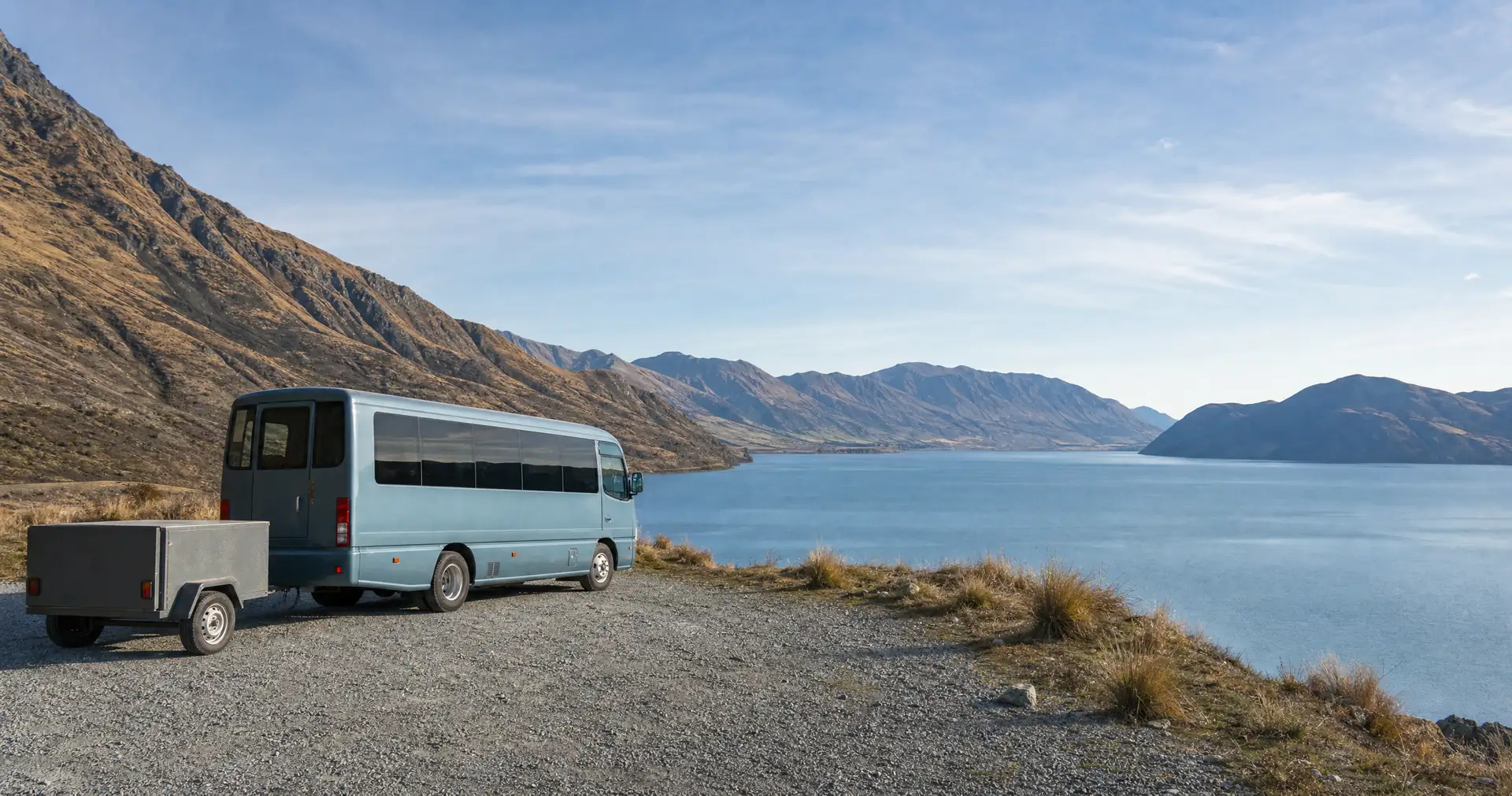
→Coach commonly $280K to $420K, shuttle $90K to $180K Mercedes-Benz Tourismo, MAN Lions Coach, Yutong, Higer, and Toyota Coaster mini-coach are common NZ tour operator picks. Asset values reflect spec, accessibility kit, and dealer sourcing.
→Working capital sized to the IBO payment lag Inbound tour operator (IBO) wholesalers commonly settle 30 to 90 days after tour delivery. Working-capital lines of credit smooth the lag between delivering the tour and receiving the IBO settlement.
→Qualmark accreditation supports the application Qualmark is the NZ tourism quality accreditation programme administered by Tourism New Zealand. Lenders commonly note Qualmark and TIA membership as positive signals of operator engagement.
→Post-2022 inbound recovery has been uneven by source market Australian and North American inbound recovered faster than long-haul European and East Asian. Lenders commonly ask for source-market mix in tour operator applications.
The landscape
Tour operators carry vehicle capex plus an IBO payment lag overlay.
New Zealand tour operators sit across a wide spectrum: large coach operators running multi-day Auckland to Queenstown itineraries, regional shuttle operators connecting visitor towns and trail trailheads, 4WD touring operators specialising in alpine, beach, and back-country experiences, and small-group cultural and food tour operators in Auckland, Wellington, Rotorua, and Queenstown. Tourism New Zealand and Tourism Industry Aotearoa (TIA) publish sector data showing tour operations as a material employer in tourism-concentrated regions.
Two cost shapes dominate. Vehicle capex is heavy and front-loaded: a new 53-seat Mercedes-Benz Tourismo or MAN Lions Coach commonly runs $350,000 to $420,000, a Yutong or Higer-built coach $280,000 to $360,000, a Toyota Coaster mini-coach $90,000 to $150,000, and a 4WD touring van (Land Cruiser 70-Series, Ford Ranger PX) $80,000 to $140,000. Working capital is the second cost shape: NZ tour operators selling to international visitors through inbound tour operator (IBO) wholesalers commonly settle 30 to 90 days after delivering the tour, creating a structural lag between cost incurrence and revenue receipt.
Lender posture on tour operators is shaped by the inbound visitor recovery pattern post-2022. Australian and North American inbound visitor numbers recovered faster than long-haul European and East Asian markets; many tour operators with diversified source-market exposure recovered faster than those concentrated on a single long-haul market. Specialist tourism lenders (Heartland, UDC, ASB tourism team) commonly ask for source-market mix and Qualmark accreditation status alongside the standard SME application pack. The major banks (ANZ, BNZ, ASB, Westpac) cover larger property-secured tour operator relationships at the lowest indicative rate band.
Coach (40 to 53 seat)
$280K to $420K
Shuttle / mini-coach
$90K to $180K
Working capital (IBO lag)
$50K to $250K
Term loan term
5 to 7 years
Tour operator scenarios
Four common NZ tour operator finance scenarios.
Most tour operator applications fall into one of four patterns. Each pattern carries its own asset class, working-capital overlay, and lender pool.
Coach replacement or addition for multi-day tours
Established Auckland-, Christchurch-, or Queenstown-based coach operator replacing a 7 to 10 year old coach or adding a unit to support a new wholesale contract. Mercedes-Benz, MAN, or Yutong-built 40 to 53-seat coach with accessibility kit.
·Loan amount: $280K to $420K
·Term: 6 to 7 years
Shuttle or mini-coach fleet expansion
Regional shuttle operator (Cook Connection, InterCity contract, Great Walks shuttle) adding 1 to 3 mini-coaches or shuttle vans. Toyota Coaster, Hino Poncho, Mercedes Sprinter shuttle. Combined chattel mortgage portfolio.
·Loan amount: $180K to $400K
·Term: 5 to 6 years
Working-capital line for IBO payment lag
Established tour operator drawing on a revolving facility to smooth the gap between delivering tours and receiving IBO settlement. Limit sized to peak IBO receivables. Repaid out of IBO settlements.
·Limit: $50K to $250K
·Structure: Revolving line of credit
4WD touring or cultural tour operator setup
Smaller-scale 4WD touring or cultural tour operator establishing a new product. Specialist 4WD vehicle or branded shuttle, supporting kit (sound system, route notes, Qualmark accreditation cost), and working-capital buffer.
·Loan amount: $80K to $180K
·Term: 5 years
What tour operators borrow for
Six common NZ tour operator loan purposes.
Tour operator lending volume falls into six common purposes. Each has a typical structure that fits.
Coaches and large mini-coaches
Mercedes-Benz Tourismo, MAN Lions Coach, Yutong, Higer-built 40 to 53-seat coaches. Hino Poncho mini-coach for tighter routes. Chattel mortgage on a 6 to 7 year term reflecting longer asset life.
Shuttle vans and mini-coaches
Toyota Coaster, Mercedes Sprinter shuttle, Iveco Daily, LDV Deliver 9 in shuttle spec. Common across regional shuttle, Great Walks transfer, and trailhead shuttle services. Chattel mortgage on a 5 to 6 year term.
4WD touring vehicles
Toyota Land Cruiser 70-Series, Ford Ranger PX, Mitsubishi Triton in 4WD touring spec. Common for alpine, beach, and back-country touring products. Chattel mortgage on a 5 year term.
Working capital for IBO payment lag
Revolving line of credit sized to peak IBO receivables. Smooths the gap between delivering tours and receiving inbound tour operator settlement (commonly 30 to 90 day terms). Drawn through peak season, repaid as settlements arrive.
Qualmark accreditation and TIA membership
Qualmark accreditation cost, TIA membership cost, and supporting marketing and quality investments. Commonly funded through a small-ticket unsecured term loan or working-capital draw rather than a standalone line.
Depot, garage, and driver-rest facility fitout
Lease or owned depot fitout, mechanical workshop kit, fuel storage, secure parking, driver-rest facility for multi-day tour drivers. Term loan or asset finance against the fitout.
Tax, GST, and IBO settlement
How GST, depreciation, and IBO settlements typically interact for NZ tour operators.
A GST-registered tour operator can typically claim the GST component on coaches, shuttles, 4WD touring vehicles, and depot fitouts as input tax in the relevant GST return, subject to the accountant's confirmation. Where the asset is acquired under chattel mortgage, the full GST is typically claimable upfront. Where it is acquired under finance lease, GST is typically claimed across the rental payments. Inbound tour operator (IBO) settlements are typically structured so that GST treatment depends on whether the supply is to an offshore wholesaler (commonly zero-rated under IRD rules for exports of services, subject to the accountant's confirmation) or to the end visitor directly. The split between zero-rated and standard-rated supplies materially affects net GST position. IRD depreciation on coaches and shuttle vehicles commonly uses asset-class rates published by IRD; passenger service vehicles depreciate on a published category rate. The accountant is the right person to confirm GST treatment of IBO settlements, depreciation schedule, and structure choice on the specific business position.
Tour operator vehicle bands
Indicative NZ tour operator vehicle finance bands.
Vehicle pricing varies by spec, accessibility kit, dealer, and lead time. The bands below are observed across NZ tour operator finance applications in 2026, drawn from supplier and operator market activity.
Vehicle category
Used (5-8 yr)
New
Common term
53-seat coach (Mercedes Tourismo, MAN Lions)
$160K to $280K
$350K to $420K
7 years
40 to 50-seat coach (Yutong, Higer-built)
$120K to $220K
$280K to $360K
6 to 7 years
Mid-size mini-coach (Hino Poncho, Iveco Daily)
$90K to $140K
$160K to $220K
5 to 6 years
Toyota Coaster mini-coach
$60K to $110K
$130K to $180K
5 years
Mercedes Sprinter / LDV Deliver 9 shuttle
$45K to $80K
$95K to $140K
5 years
4WD touring vehicle (Land Cruiser, Ranger)
$55K to $100K
$110K to $160K
5 years
Indicative bands only. Actual price depends on spec, accessibility kit, dealer, and lead time. Final rate, fee, and approval decisions are made by the lender after assessment.
Tour operator structure comparison
Coach operator vs shuttle operator vs 4WD touring operator.
The operating model drives both the asset profile and the working-capital overlay. Coach operators carry the heaviest capex and longest IBO lag exposure; shuttle operators sit in the middle; 4WD and small-group touring operators carry lighter capex but typically a similar IBO settlement profile per booking.
Tour operator applications carry an IBO source-market mix and Qualmark accreditation step that mainstream vehicle finance applications do not. Established operators with multi-year trading and current Qualmark move faster.
01
Day 1 to 7
Define the vehicle, fleet structure, and working-capital overlay
A typical tour operator finance package combines a chattel mortgage on the new coach, shuttle, or touring vehicle with a working-capital line of credit sized to the IBO payment lag. Defining the working-capital overlay upfront tightens the application because lenders want a clear view of peak IBO receivables.
Documents commonly required
·Vehicle quote or sale agreement
·IBO contract or wholesale agreement (where supporting working-capital sizing)
·Insurance quote (commercial passenger service cover)
02
Day 3 to 14
Submit application with tour operator-specific documents
Beyond the standard SME application pack, tour operator lenders ask for the NZTA Operator Licence under the Land Transport Act 1998, Class 2 or Class 4 driver licence status for the nominated coach drivers, Qualmark accreditation status, TIA membership confirmation, IBO contracts or letters of intent, and 12 to 24 months of trading data showing source-market mix.
Documents commonly required
·NZBN, business owner ID
·12 to 24 months business bank statements
·Last 2 years financial statements showing seasonal cycle and source-market mix
·NZTA Operator Licence
·Class 2 or Class 4 driver licence (nominated drivers)
·Qualmark accreditation status
·TIA membership confirmation (where held)
·IBO contracts or letters of intent
·Public liability and motor vehicle insurance (commercial passenger service cover)
03
Day 7 to 21
Lender assessment and offer
Lenders assess against four things: the security position on the vehicle (LVR after deposit), the IBO contract evidence and source-market diversification, the seasonal trading shape and operator profile (Operator Licence track-record, prior trading, Qualmark history), and the working-capital sizing relative to peak IBO receivables. Offers commonly come back with conditions on insurance bound, certifications current, and IBO contract evidence in place.
04
Week 3 onward
Settle, register PPSR, take delivery
Asset finance settles directly to the dealer or builder. The lender registers a security interest on the Personal Property Securities Register (PPSR). Working-capital line opens alongside or shortly after asset finance settlement. Operator Licence updated to reflect the new vehicle on the fleet. First commercial tours scheduled within 2 to 6 weeks of settlement (dealer-stock units) or longer for custom-spec coach builds.
A broker familiar with NZ tour operator lending commonly tightens the indicative rate band by knowing which lenders are comfortable with IBO receivables as part of the working-capital sizing and which lenders defer to the major banks for larger property-secured tour operator relationships.
Worked scenarios
Three NZ tour operator finance scenarios.
Real-world structures across coach replacement for an inbound multi-day operator, regional shuttle expansion, and 4WD touring operator establishing a new product. Each illustrates how IBO source-market mix, Qualmark status, and trading history shift the offered rate.
Established 7-coach inbound multi-day operator, 14 years trading
Auckland to Queenstown coach replacement for inbound multi-day operator
An Auckland-based inbound multi-day tour operator with 7 coaches and 14 years of trading replacing a 9-year-old 53-seat Mercedes-Benz Tourismo at end-of-life ahead of the spring inbound season. Total project $385,000 ex-GST: $370,000 new Mercedes-Benz Tourismo with accessibility kit and underfloor luggage capacity, $15,000 livery and onboard tech upgrade. 15% deposit ($55,500) from existing trading.
Structure agreed with the existing major-bank relationship: chattel mortgage on the coach ($329,500 after deposit, 7-year term, indicative 8-10% p.a.), separate refresh of the existing working-capital line covering IBO payment lag (limit lifted from $300,000 to $400,000 to support the larger inbound season). Diversified source-market exposure (Australia, US, UK, Germany, Japan) materially supported the application.
NZTA Operator Licence under the Land Transport Act 1998 amended to add the new coach. PPSR security interest registered against the coach at settlement. Qualmark Gold accreditation refreshed on the operator file. ASB business banking funded the chattel mortgage and working-capital uplift. First commercial inbound tour on the new coach within 5 weeks of settlement.
Indicative figures
Total project
$385,000
Coach (Mercedes Tourismo)
$370,000
Chattel mortgage after deposit
$329,500
Indicative rate
8-10% p.a.
Established 6-shuttle regional operator, 9 years trading
Rotorua regional shuttle fleet expansion for Great Walks transfers
A Rotorua-based regional shuttle operator with 6 shuttles and 9 years of trading adding 2 Toyota Coaster mini-coaches to support a new Great Walks transfer contract (Tongariro Northern Circuit and Whanganui Journey trailhead transfers). Total project $310,000 ex-GST: 2 new Toyota Coaster mini-coaches at $150,000 each, $10,000 combined livery and luggage rack fitout.
Structure agreed with a tourism-experienced asset-finance lender: combined chattel mortgage on the 2 mini-coaches ($263,500 after 15% deposit, 5-year term, indicative 9-11% p.a.). Working-capital line of credit at $100,000 sized to the seasonal trailhead transfer billing cycle and IBO settlements on tied wholesale bookings.
NZTA Operator Licence amended to add the 2 new vehicles. PPSR security interest registered against each Toyota Coaster at settlement. Qualmark Silver accreditation refreshed. UDC Finance funded the chattel mortgage; the working-capital line placed with Heartland Bank. Both new mini-coaches in service within 4 weeks of settlement, ahead of the Great Walks summer season.
Indicative figures
Total project
$310,000
Mini-coaches (2 Coasters)
$300,000
Chattel mortgage after deposit
$263,500
Indicative rate
9-11% p.a.
New small-group 4WD touring operator, 18 months trading
Wanaka 4WD touring operator establishing a new product
A Wanaka-based 4WD touring operator with 18 months of trading establishing a new high-country day-tour product. Total project $135,000 ex-GST: $120,000 new Toyota Land Cruiser 70-Series with custom 8-seat passenger conversion, $10,000 onboard sound system, route notes, and brand kit, $5,000 Qualmark Silver accreditation application and TIA membership cost.
Structure agreed with a vehicle finance broker: chattel mortgage on the Land Cruiser ($102,000 after 15% deposit, 5-year term, indicative 10-12% p.a.). Small unsecured term loan on the onboard kit and accreditation cost ($15,000, 3-year term, indicative 12-14% p.a.). Working-capital line of credit at $40,000 covering the IBO settlement lag on Australian boutique wholesale bookings.
NZTA Operator Licence amended to add the converted Land Cruiser. PPSR security interest registered. Qualmark Silver assessment scheduled within 2 months of vehicle commissioning. Avanti Finance funded the chattel mortgage based on the trading history; Prospa funded the unsecured kit loan and working-capital line. First high-country day tour 6 weeks after settlement.
Indicative figures
Total project
$135,000
Vehicle (Land Cruiser conversion)
$120,000
Chattel mortgage
$102,000
Indicative blended rate
11-13% p.a.
NZ tour operator lenders
Lenders that fund NZ tour operators well.
Several NZ lenders carry familiarity with the tour operator vehicle and working-capital profile. The shortlist below is editorial.
GST framework relevant to zero-rating of tour services supplied to offshore wholesalers.
FAQ
Tour operator loans, NZ small-business questions answered
How much does a NZ tour operator coach or shuttle cost in 2026?
A new 53-seat Mercedes-Benz Tourismo or MAN Lions Coach commonly runs $350,000 to $420,000 with accessibility kit and underfloor luggage capacity. A 40 to 50-seat Yutong or Higer-built coach commonly runs $280,000 to $360,000. A Hino Poncho or Iveco Daily mid-size mini-coach commonly runs $160,000 to $220,000. A Toyota Coaster mini-coach commonly runs $130,000 to $180,000. A Mercedes Sprinter or LDV Deliver 9 in shuttle spec commonly runs $95,000 to $140,000. Used 5 to 8 year stock typically sits at 50-70% of new cost depending on kilometres, condition, and remaining economic life.
What is an inbound tour operator (IBO) and how does it affect cash flow?
An inbound tour operator (IBO) is an offshore wholesaler that sells NZ tour product to international visitors and books the on-the-ground delivery with a NZ tour operator. Common IBOs operate from Australia, the US, the UK, Germany, Japan, and China. The settlement model typically has the NZ tour operator deliver the tour and invoice the IBO, with the IBO settling 30 to 90 days after delivery. The lag between delivering the tour (incurring the cost) and receiving the IBO settlement (receiving the revenue) creates a structural working-capital requirement. Working-capital lines of credit sized to peak IBO receivables are common across NZ tour operators with material IBO exposure.
What is Qualmark and is it required for a NZ tour operator?
Qualmark is the NZ tourism quality accreditation programme administered by Tourism New Zealand. Qualmark assesses operators against quality, sustainability, and customer-experience standards and awards Silver, Gold, or Endorsed status. Qualmark accreditation is not a regulatory requirement; the regulatory requirement is the NZTA Operator Licence under the Land Transport Act 1998. Qualmark is widely treated by lenders, IBOs, and Tourism New Zealand listing as a positive signal of operator engagement with the sector quality framework. Many IBOs require Qualmark accreditation as a condition of wholesale contracting.
What rate range applies to NZ tour operator finance in 2026?
Indicative rates on tour operator finance commonly sit in the 8% to 13% per annum band depending on structure, security, source-market mix, and operator profile. Chattel-mortgage finance secured by a new coach for an established inbound operator with diversified source-market exposure and Qualmark Gold sits at the lower end (commonly 8-10%). Mini-coach and shuttle finance for established operators sits in the middle (commonly 9-11%). Working-capital lines covering IBO payment lag sit at the upper end (commonly 11-13%). Final rate is set by the lender after assessment.
How did the 2020 to 2022 border closure affect NZ tour operator finance?
The 2020 to 2022 international border closure left a material credit memory across NZ tour operator lending. Inbound-concentrated operators carried the deepest revenue dislocation; operators with stronger domestic exposure recovered faster. Post-2022 inbound recovery has been uneven across source markets: Australian and North American visitor numbers recovered faster than long-haul European and East Asian markets. Lenders commonly ask for current source-market mix and the trajectory of the operator's recovery from 2022 onward. MBIE Tourism Evidence and Insights and Stats NZ both publish source-market arrival data that lenders typically reference.
What licence is required to drive a tour coach or mini-coach in NZ?
A Class 4 driver licence is required to drive a heavy passenger vehicle above 18,000 kg gross laden weight (most full-size 53-seat coaches) per NZTA driver licence classes under the Land Transport Act 1998. A Class 2 driver licence covers heavy vehicles between 6,000 kg and 18,000 kg, which captures most mini-coaches and Toyota Coaster-class vehicles. A Passenger (P) endorsement on the driver licence is also required for paid passenger service work. NZTA publishes the licence class progression rules and P-endorsement requirements in full.
How is GST treated on tour services supplied to offshore IBOs?
GST treatment on NZ tour services supplied to offshore inbound tour operators (IBOs) is a specific area where the supply may qualify for zero-rating under IRD rules covering exports of services, subject to the accountant's confirmation of the contracting and supply structure. Where the tour service is supplied to and contracted with the offshore IBO (rather than direct to the visitor), the supply may be zero-rated for GST. The split between zero-rated supplies (typically IBO contracts) and standard-rated supplies (typically direct visitor bookings) materially affects net GST position and input tax claims. The accountant is the right person to confirm GST treatment on the specific business structure.
How are working-capital lines sized for the IBO payment lag?
Working-capital lines of credit for tour operators are commonly sized to peak IBO receivables, typically calculated as average monthly IBO billing multiplied by the average settlement window (commonly 1.5 to 3 months depending on IBO mix). For an inbound coach operator billing $300,000 per peak month to IBOs with 60-day average settlement, peak receivables sit around $600,000 and the working-capital line is commonly sized at $300,000 to $500,000 to provide cover for the working-capital trough. Lenders also commonly look at peak season payroll, fuel, and Road User Charges spend in sizing the line.
Can a tour operator coach be financed under finance lease rather than chattel mortgage?
Yes. NZ tour operators can finance coaches and shuttles under chattel mortgage (operator owns the asset) or finance lease (lessor retains ownership; operator has option to buy at end of term). Chattel mortgage typically suits operators wanting upfront GST claim and ownership at end of term. Finance lease typically suits operators wanting smoother monthly cash flow with GST claimed across rentals rather than upfront. Operating lease (where the lessor retains residual risk and the operator returns the vehicle at end of term) is less common in NZ tour operator finance because of the bespoke spec on accessibility kit and luggage capacity. The accountant is the right person to confirm structure choice on the specific business position.
What happens to a financed coach if the tour operator business closes?
Where the coach is financed under chattel mortgage and the tour operator business closes before the loan is repaid, the lender typically has a security interest registered on the Personal Property Securities Register (PPSR) and can take possession of the coach to recover the outstanding balance. Any shortfall between resale value and balance owing typically falls to the borrower and any personal guarantor. NZ used coaches typically retain 50-70% of original value over a 5 to 7 year hold period depending on age, kilometres, and condition; bespoke accessibility-equipped coaches commonly hold value better than generic spec because demand from established tour operators tends to outstrip supply.
How does Qualmark accreditation interact with the loan application?
Lenders and IBOs commonly note Qualmark accreditation status as part of the operator file. Qualmark Gold typically signals an established operator with strong quality standards, sustainability commitment, and IBO contractability; Qualmark Silver typically signals an established operator with the core operational framework in place. Lapsed Qualmark accreditation does not stop a loan application but typically prompts a question about the reason for lapse. New tour operators commonly apply for Qualmark Silver within the first 12 to 24 months of trading, with the accreditation cost sometimes included in the initial finance package as a small unsecured term loan or working-capital draw.
What lenders specialise in NZ tour operator finance?
ASB business banking and the other major banks (ANZ, BNZ, Westpac) cover larger established tour operators with property security and multi-year trading. Heartland Bank carries familiarity with the coach and shuttle pool with comfort structuring working-capital lines for the IBO payment lag. UDC Finance has lent to NZ road transport since 1937 and covers the chattel mortgage finance on coaches and shuttles. Avanti Finance covers newer tour operators and bespoke 4WD touring conversions where mainstream lenders prefer established trading. Prospa and unsecured SME lenders cover smaller-ticket Qualmark accreditation, marketing, and onboard kit costs.
Can an established tour operator refinance into better pricing?
Yes. Established tour operators with multi-year trading, current Qualmark accreditation, clean Operator Licence track-record, and diversified IBO source-market exposure commonly refinance into tighter pricing as trading history builds and the post-2022 inbound recovery cements. Refinancing is also commonly used to consolidate multiple chattel mortgages (across coach, shuttle, and 4WD touring fleet) into a single facility, to release equity to fund a fleet replacement cycle, or to move from a specialist asset-finance lender into a major-bank relationship at scale. Early-repayment fees on the existing loans, the resale value position on each vehicle, and the working-capital sizing across the fleet are the main considerations.
Indicative content only. Not personalised financial advice.
A business loan is a commitment that runs for months or years, and repayments come out of the same operating cash flow as everything else. Before committing, it is worth modelling the weekly and monthly cost against the business's working-capital position, which is what this site is built to help with. Borrowing at a level that stays comfortable through a quiet quarter, not just a strong one, is widely regarded as the safer frame.
What this site is
A calculator and information tool. Not a lender, not a broker, not a registered financial adviser. Nothing here is personalised financial advice.
What the figures show
Modelled estimates based on the inputs you enter. Not a quote. Not an offer of credit. Not a guarantee of approval, rate, or fees.
What the lender decides
Final rates, fees, and approval are set by the lender after a CCCFA-appropriate assessment of the applicant's circumstances and credit decision.
Commercial disclosure
Businessloans.org.nz earns a commission from Prospa when a visitor applies through this site and their application is approved. The commission is paid by Prospa, not by the borrower, and it does not influence the rate Prospa offers. Full disclosure on the partner page.
Tax, GST, and accountant framing
Tax-treatment statements (GST claim timing, interest deductibility, depreciation rates) are general in nature and subject to your accountant's confirmation on the specific business position. For material amounts, professional advice from a registered financial adviser or chartered accountant is widely regarded as the safer frame.