
Light commercial vehicles
Utes, vans, light trucks. The single biggest asset class. LVR up to 100% on common models. Rate 8% to 13%.
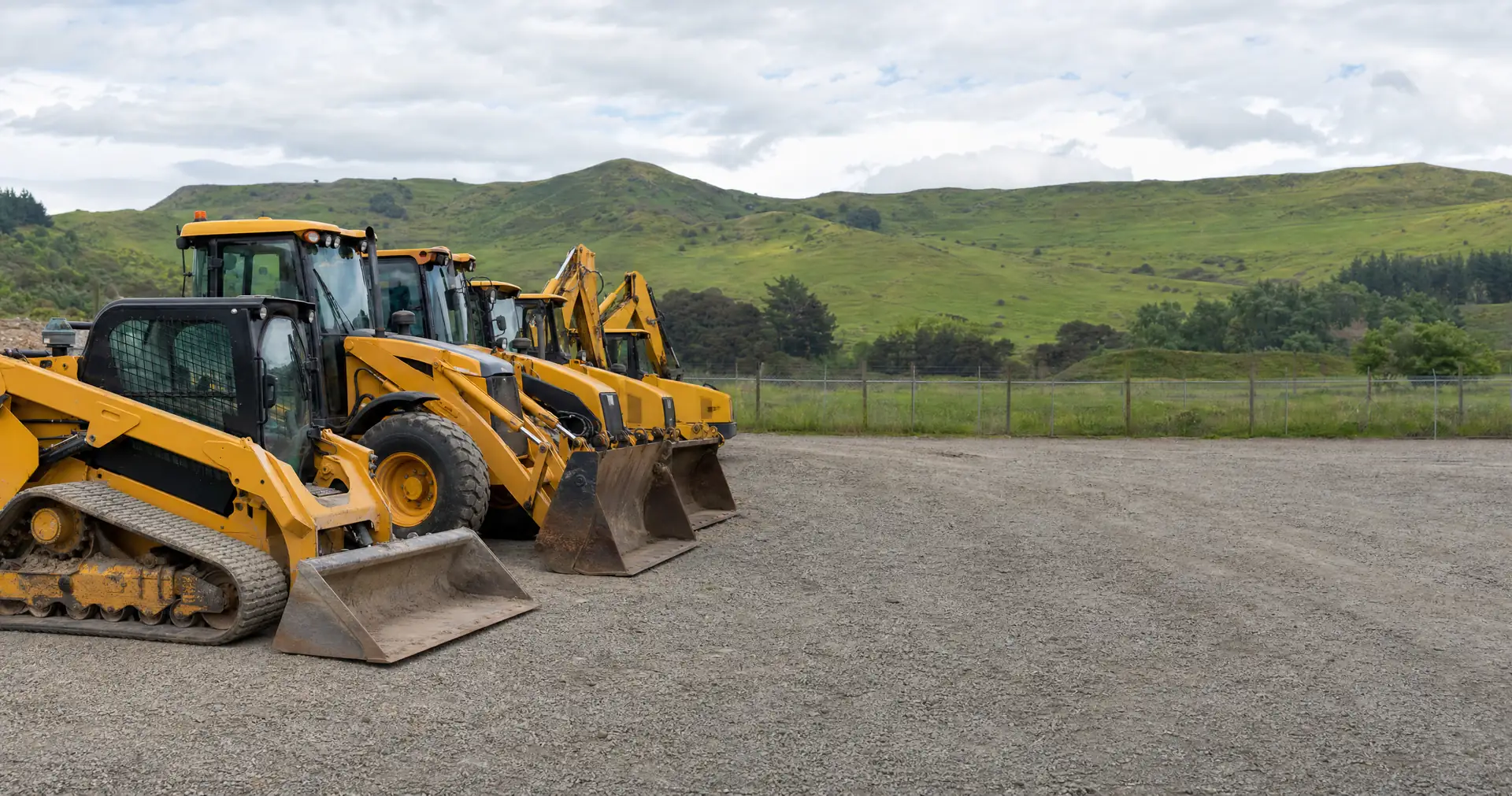
The broader category that covers vehicles, equipment, machinery, livestock, and trailers. Asset-secured lending across $5K to $500K+, with indicative rate bands and the four common structures.
Last reviewed 5 May 2026
Indicative repayment
Weekly
$596/week
Indicative only. Not a quote or offer of credit. Actual rates, fees, and repayments depend on the business profile and the lender's decision.
Sending to Prospa
4 years at 11.00%. Prospa will ask a few quick questions, then provide a firm quote and funding if eligible.
Redirecting…
Indicative only. Why we say this












Quick answer
What it is
Asset finance is the umbrella term for any business loan secured against a specific physical asset. It covers vehicles (utes, trucks, vans, fleet), equipment (kitchen, machinery, IT), livestock, trailers, and qualifying capital equipment. The asset itself is the primary security, which keeps indicative rates lower than equivalent unsecured term loans (commonly 8% to 16% depending on asset class).
The single largest sub-segment by volume in NZ is light commercial vehicle finance (utes, vans, light trucks) bought by tradies, field-services businesses, and rural operators. Heavy commercial vehicles, agricultural machinery, and commercial kitchen equipment make up the next bands. Specialist asset finance covers livestock (Heartland Bank specialty), aircraft, marine, and bespoke industrial machinery.
UDC Finance, Heartland Bank, the four major banks, and specialists like Pioneer Finance and MTF Finance dominate the NZ asset-finance market. Each lender has a different sweet spot in asset class and amount band.
Amount
$5K to $500K+
Term
1 to 5 years
Security
The asset itself
Rate band
8% to 16% indicative
Asset categories
Each asset category has its own rate band, LVR, and lender preferences. Vehicles and mainstream machinery price at the lower end; specialist or fast-depreciating assets at the higher end.
Utes, vans, light trucks. The single biggest asset class. LVR up to 100% on common models. Rate 8% to 13%.
Trucks, prime movers, refrigerated trailers. Specialist lenders. Rate 9% to 14%, longer terms (up to 7 years).
CNC, manufacturing plant, packaging. Lender appetite varies by asset class. Rate 10% to 15%.
Combi ovens, fridges, espresso machines, prep benches. Hospo specialty. Rate 10% to 14%.
Tractors, milking plant, irrigation, livestock. Rural specialists like Heartland and major banks. Rate 8% to 12%.
Imaging, dental chairs, sterilisation. Specialist lender territory. Rate 10% to 14%.
GST and tax
On a chattel mortgage or hire purchase, the GST-registered business is treated as the asset owner and can typically claim the full GST component upfront in the next GST return. On a finance lease, GST is typically claimed across the rental payments instead, subject to the accountant's confirmation. On an operating lease, GST is typically claimed on each rental too, subject to the accountant's confirmation. The structure choice affects cash-flow timing materially; the headline rate is similar across them. The accountant's confirmation on the specific structure is the standard last step.
Rate and LVR by asset class
Two things move the offer more than anything on the application form: how liquid the asset is on the second-hand market, and how fast it loses value. A five-year-old Hilux has thousands of comparable sales behind it and a lender can model recovery within a few hundred dollars. A five-year-old CNC lathe has a resale market of perhaps a dozen buyers in the country. The bands below are observed across major-bank asset finance divisions and NZ specialists as at 2026.
| Asset class | Indicative rate | LVR new | LVR used | Typical term |
|---|---|---|---|---|
| Light commercial (utes, vans) | 8% to 13% | Up to 100% | 80% to 95% | 3 to 5 years |
| Trucks and prime movers | 9% to 14% | 90% to 100% | 70% to 90% | 4 to 7 years |
| Trailers and towed plant | 9% to 14% | 80% to 95% | 65% to 85% | 3 to 5 years |
| Mainstream agricultural plant | 8% to 12% | 80% to 100% | 70% to 90% | 4 to 7 years |
| Livestock | 8% to 12% | Herd-value based | Not applicable | Seasonal to 3 years |
| Commercial kitchen | 10% to 14% | 75% to 90% | 60% to 80% | 3 to 5 years |
| Industrial machinery (CNC, plant) | 10% to 15% | 70% to 90% | 60% to 80% | 3 to 5 years |
| Medical and dental | 10% to 14% | 70% to 85% | 60% to 75% | 3 to 5 years |
| IT and office hardware | 11% to 16% | 70% to 85% | 50% to 70% | 2 to 3 years |
Indicative bands only, not an offer of credit. The actual rate and LVR are set by the lender after credit assessment and depend on the borrower profile, trading history, deposit, asset condition, and the specific resale market for that asset.
Where it fits
Worked examples
Three businesses, three asset classes, three different reasons the structure landed where it did. Figures are indicative and calculated on the assumptions stated in each scenario.
Civil contracting, 6 years trading, 4 staff, turnover around $1.4M
The business has been hiring a 5-tonne excavator roughly 30 weeks a year at an indicative $1,100 a week, which is around $33,000 annually going out the door with nothing owned at the end of it. A three-year-old machine at $145,000 plus GST changes that arithmetic.
A chattel mortgage over 5 years at an indicative 10.5% with a 10% deposit puts the weekly repayment at roughly $700 on these assumptions. That is materially below the hire cost in the weeks the machine works, and the business carries it in the weeks it does not. The GST component of around $21,750 is typically claimable in the next return where the business is GST-registered and the asset qualifies, subject to the accountant confirming the treatment.
The lender registered a security interest on the PPSR over the machine and took a director guarantee. Comprehensive insurance with the lender noted was a settlement condition.
Indicative figures
Dairy, 180ha effective, 12 years owner-operated
Livestock is one of the few asset classes where the security is alive, moves, and is counted rather than serial-numbered. Heartland Bank and the major banks both fund it, and the assessment leans on herd records and the milk-payout position rather than on a supplier invoice.
The farm funded 120 in-calf heifers at an indicative $2,100 a head, which is $252,000. Structured seasonally at an indicative 9%, with repayments weighted toward the peak payout months rather than spread flat across the year. That seasonal shaping is the point of the product: a flat weekly repayment on a business with a lumpy payout is a cash-flow problem the borrower did not need to buy.
Livestock finance carries a risk that plant finance does not. The security can die. Lenders commonly require the herd to be insured and the security to cover progeny, and the herd count is verified at intervals across the term.
Indicative figures
Precision engineering, 11 years trading, 9 staff
The existing lathe is 14 years old and the tolerance it holds has been drifting, which is starting to show up as rework on aerospace-adjacent jobs. A replacement at $210,000 plus GST is the kind of purchase where asset finance prices worse than a ute and better than an unsecured loan, for reasons that have nothing to do with the borrower.
The resale market for a used CNC lathe in New Zealand is small. Lenders price that in: the indicative offer came back at 12.5% with a required 20% deposit, against the 8% to 10% the same business would see on a work vehicle. The LVR on specialist machinery commonly sits at 70% to 80% for that reason.
On these assumptions the weekly lands near $860 across 5 years. Where the machine removes a rework cost the business can actually measure, that comparison is the one worth doing before the rate comparison.
Indicative figures
If it goes wrong
Asset finance is secured lending, and the security is a specific thing the lender can come and take. That is why it prices below unsecured, and it is also the part borrowers are least often walked through before signing. The sequence below is the common shape rather than any one lender procedure; the loan agreement is the authoritative document.
A single missed repayment is usually handled by the lender contacting the business, and many will restructure or defer where the cause is a timing problem rather than a solvency one. It is commonly recorded against the credit file once it passes 30 days.
What happens:Credit-file mark, possible default interest
Once the arrears pass the threshold in the agreement, the lender issues a formal notice setting out the amount owing and the time available to remedy it. The Personal Property Securities Act sets the notice requirements where the lender intends to enforce.
What happens:Statutory notice period runs
On an unremedied default the lender may take possession of the asset its PPSR registration covers. On vehicles and mobile plant this is generally straightforward, which is precisely why those classes carry the lowest rates and the highest LVRs.
What happens:Asset removed from the business
The lender sells the asset and applies the proceeds to the balance. Where the sale does not clear the debt, the remaining shortfall stays owing. Fast-depreciating assets financed at a high LVR are where a shortfall is most likely, because the debt can outrun the resale value early in the term.
What happens:Any shortfall remains a debt
Most NZ asset finance is written with a director guarantee. Where a shortfall survives the asset sale, the lender may pursue the guarantor personally, and that claim is not limited to the business assets.
What happens:Personal liability for the balance
The deposit is doing more work here than the rate comparison suggests. A larger deposit keeps the loan balance below the asset value for longer, which is the gap that decides whether a repossession clears the debt or leaves a shortfall attached to a personal guarantee.
Compared to alternatives
Asset finance competes against unsecured term loans, operating leases, and outright cash purchase for any specific asset acquisition.
| Feature | Asset finance | Unsecured term loan | Operating lease | Cash purchase |
|---|---|---|---|---|
| Indicative rate | 8% to 16% p.a. | 12% to 25% p.a. | Embedded in rental | Opportunity cost only |
| Security | The asset (PPSR) | Director PG | Lender owns asset | None |
| Ownership at term end | Owned | No asset link | Returned | Owned (immediate) |
| GST timing | Upfront on chattel mortgage | On asset purchase | Across rentals | Upfront in next return |
| Cash flow at settlement | Deposit only | Loan to bank account | First rental | Full purchase |
| Suits | Standard assets, asset-tied | Mixed-purpose loans | Predictable opex | Cash-rich businesses |
How it works
Asset finance applications run faster than unsecured because the asset is doing most of the security work. Standard process for amounts under $150K from established borrowers.
01
Day 1
A firm quote from the asset supplier on letterhead, identifying the asset by make, model, year, and VIN where applicable, with GST-inclusive and ex-GST prices.
Documents commonly required
02
Day 1 to 2
Standard application: NZBN, business owner ID, last 6 months business bank statements, supplier quote, loan purpose. Larger amounts add P&L and cash-flow forecast.
Documents commonly required
03
Day 1 to 5
Lender runs credit check, assesses affordability, verifies asset against allowable list. Offer with rate, fees, weekly repayment, term, security conditions.
04
Day 2 to 7
On acceptance, the lender registers a security interest on the PPSR over the asset. Funds typically pay the supplier directly. Insurance is commonly a settlement condition for vehicles. Asset delivered, loan term begins.
Documents commonly required
Common pitfalls
None of these show up in a rate comparison, and all five are commonly raised after the fact rather than before.
Stretching an IT purchase to 5 years or a used van to 7 leaves the business paying for something it has already replaced. Matching the term to the working life of the asset costs more per week and less in total.
Establishment fees, PPSR registration, monthly account fees and dealer origination fees vary widely between NZ lenders. Two indicative 11% offers can carry a materially different total cost once the fee schedule is read.
The GST treatment differs between a chattel mortgage and a lease, and the difference on a $150,000 purchase is roughly $22,500 arriving in the next return or spread across the rentals. The accountant is the right person to confirm which applies.
Comprehensive cover with the lender noted is commonly a settlement condition on vehicles and mobile plant, and the premium is part of the real weekly cost. A quote taken after the loan is approved sometimes changes whether the purchase works.
A zero-deposit loan on a fast-depreciating asset puts the balance above the resale value for much of the early term. That gap is what turns a repossession into a shortfall attached to a personal guarantee.
End of term
The end of the term looks different under each of the four structures, and this is commonly the part that is skimmed at signing and remembered at year four. Under a chattel mortgage the business already owns the asset and the final payment simply clears the loan; the lender then discharges the PPSR registration, which is the step worth checking has actually happened before the asset is sold.
Under a hire purchase the lender holds title until the final instalment, at which point ownership transfers. The practical difference from a chattel mortgage is typically small, and it mainly shows up in how the asset is treated on the balance sheet during the term.
A finance lease commonly ends with a residual, sometimes called a balloon, which is a lump sum set at the start and payable at the end. The residual keeps the weekly repayment down across the term, and it is a real payment that falls due on a known date. Refinancing the residual is possible and widely done, though it extends the total interest paid on an asset that is by then several years old.
An operating lease ends with the asset going back. The residual-value risk sat with the lender for the whole term, which is the reason the rental is higher and the reason the structure suits equipment that dates quickly. Return conditions on fair wear and tear are set in the agreement and are worth reading before the asset has been through five years of site work.
Refinancing before term end is common in New Zealand, most often after 12 to 24 months of clean repayments have moved the business from alternative-lender pricing into major-bank or Heartland territory. Early-repayment costs on the existing facility are the main figure to put against the saving.
Lenders to know
NZ asset finance is dominated by specialists alongside major-bank asset finance divisions. Each has a sweet spot in asset class and amount band.
Best for asset finance up to $500K
Registered NZ bank with deep asset finance specialty. Strong on light commercial, trucks, machinery, livestock.
Indicative rate band:9% to 14% p.a.
Read onBest for long-established asset finance
Long-standing NZ asset finance specialist. Strong coverage across utes, trucks, machinery, agriculture.
Indicative rate band:8% to 13% p.a.
Read onBest for vehicles and dealer-finance
NZ specialist for vehicle and asset finance through dealer/originator network.
Indicative rate band:9% to 14% p.a.
Read onBest for vehicle finance via originators
Vehicle and asset finance through MTF originator network. Common path for utes and vans.
Indicative rate band:10% to 15% p.a.
Read onBest for best rate for established borrowers
Each major bank runs an asset finance division. Lowest pricing, longest application.
Indicative rate band:7% to 12% p.a.
Read onReferences
IRD schedule of rates for depreciating assets, by category.
GST claim timing on asset finance structures.
Where asset finance security interests are registered.
Indicative rate band reference.
NZ asset finance specialist; pricing reference.
FAQ
Asset finance is any business loan secured against a specific physical asset. It covers vehicles, equipment, machinery, livestock, trailers, and qualifying capital assets. The asset is the primary security, registered on the PPSR. NZ asset finance commonly runs $5K to $500K+, terms 1 to 5 years, indicative rates 8% to 16% per annum depending on asset class and lender.
Equipment finance is a sub-category of asset finance, specifically covering equipment, machinery, and qualifying capital purchases. Asset finance is broader and includes vehicles, livestock, trailers, and other physical assets. The mechanics (chattel mortgage, hire purchase, lease structures, PPSR registration) are the same; the difference is the underlying asset class.
Indicative rates run 8% to 16% per annum, depending on asset class, age, term, deposit, trading history, and lender. Major banks price lowest (7% to 12%) on established applications. Specialists like Heartland and UDC sit in 9% to 14%. Higher-risk asset classes (specialist machinery, older equipment) attract the upper end. Newer, more liquid assets (utes, mainstream trucks) sit at the lower end.
Indicative ranges run $5K (small tools, IT) to $500K+ (manufacturing plant, commercial vehicles, agricultural equipment). The achievable amount depends on the asset value, the lender LVR (commonly 80% to 100% on liquid asset classes), trading history, and turnover. Specialist lenders often run higher LVRs on standard asset classes than major banks.
Many NZ asset finance lenders run zero-deposit on common asset classes for established borrowers, but a deposit of 10% to 20% commonly improves the rate by 0.5 to 1.5 percentage points. On older or specialist assets, a deposit is often a lender condition. The deposit size is one of the strongest levers on the offered rate.
Yes. Second-hand vehicles, machinery, and equipment are commonly financed in NZ. Lenders typically cap the asset age at end of loan term (commonly 12 to 15 years total age). Specialist lenders sometimes go older but at higher rates. Used asset finance is the larger volume segment for vehicles in particular.
Four common NZ structures: chattel mortgage (business owns from day one, GST upfront), hire purchase (lender owns until final payment, then transfers), finance lease (lender owns, business rents, residual at term end), operating lease (pure rental, asset returned at term end). The choice depends on GST timing and end-of-term ownership preference. Accountant input is the standard last step.
Interest on asset finance used for business purposes is generally deductible against business income, subject to the accountant's confirmation. The asset itself depreciates at IRD-set rates by category, separately from the loan interest. Where the asset is used partly privately, both interest and depreciation are generally apportioned, subject to the accountant's confirmation.
On default, the lender enforces the security interest registered on the PPSR over the asset. After a statutory notice period, the lender may repossess and sell the asset to clear the outstanding balance. Any shortfall is pursued under the personal guarantee directors typically provide. Asset recovery is generally faster and cleaner than unsecured-loan recovery, which is why secured rates price lower.
On vehicles and high-value mobile equipment, comprehensive insurance with the lender noted as an interested party is widely a settlement condition and required throughout the loan term. The insurance protects both the business's asset and the lender's security position. On lower-value or fixed equipment, the requirement varies by lender. Premiums are part of the true weekly cost of the asset, not just the loan.
Yes, asset finance refinancing is widely available. Common triggers are credit-profile improvement, rate cycle moves, or consolidation of multiple asset loans into one. The most common path is from alternative-lender pricing to major-bank or Heartland pricing after 12 to 24 months of clean repayments. Early-repayment fees on the existing loan are the main consideration.
Yes, sole traders are eligible across NZ asset finance lenders provided they have an active NZBN and clean credit. The application typically references both the business trading history and personal financial position. A clean credit file and 6 to 12 months of trading history are common minimum thresholds; major-bank applications typically require 2+ years.
Related
Equipment finance
The most-used asset finance sub-category for kitchen, machinery, and qualifying equipment.
Read onVehicle finance
Asset finance specifically for utes, vans, trucks, and fleet purchases.
Read onHeartland Bank
A major NZ asset finance specialist with strong coverage across all common asset classes.
Read onTrucking and haulage loans
Heavy vehicle asset finance is the largest single use of NZ asset finance volume.
Read onDairy farm loans
Tractor, milking shed, and effluent system asset finance use cases.
Read onDisclaimer
A business loan is a commitment that runs for months or years, and repayments come out of the same operating cash flow as everything else. Before committing, it is worth modelling the weekly and monthly cost against the business's working-capital position, which is what this site is built to help with. Borrowing at a level that stays comfortable through a quiet quarter, not just a strong one, is widely regarded as the safer frame.
What this site is
A calculator and information tool. Not a lender, not a broker, not a registered financial adviser. Nothing here is personalised financial advice.
What the figures show
Modelled estimates based on the inputs you enter. Not a quote. Not an offer of credit. Not a guarantee of approval, rate, or fees.
What the lender decides
Final rates, fees, and approval are set by the lender after a CCCFA-appropriate assessment of the applicant's circumstances and credit decision.
Commercial disclosure
Businessloans.org.nz earns a commission from Prospa when a visitor applies through this site and their application is approved. The commission is paid by Prospa, not by the borrower, and it does not influence the rate Prospa offers. Full disclosure on the partner page.
Tax, GST, and accountant framing
Tax-treatment statements (GST claim timing, interest deductibility, depreciation rates) are general in nature and subject to your accountant's confirmation on the specific business position. For material amounts, professional advice from a registered financial adviser or chartered accountant is widely regarded as the safer frame.