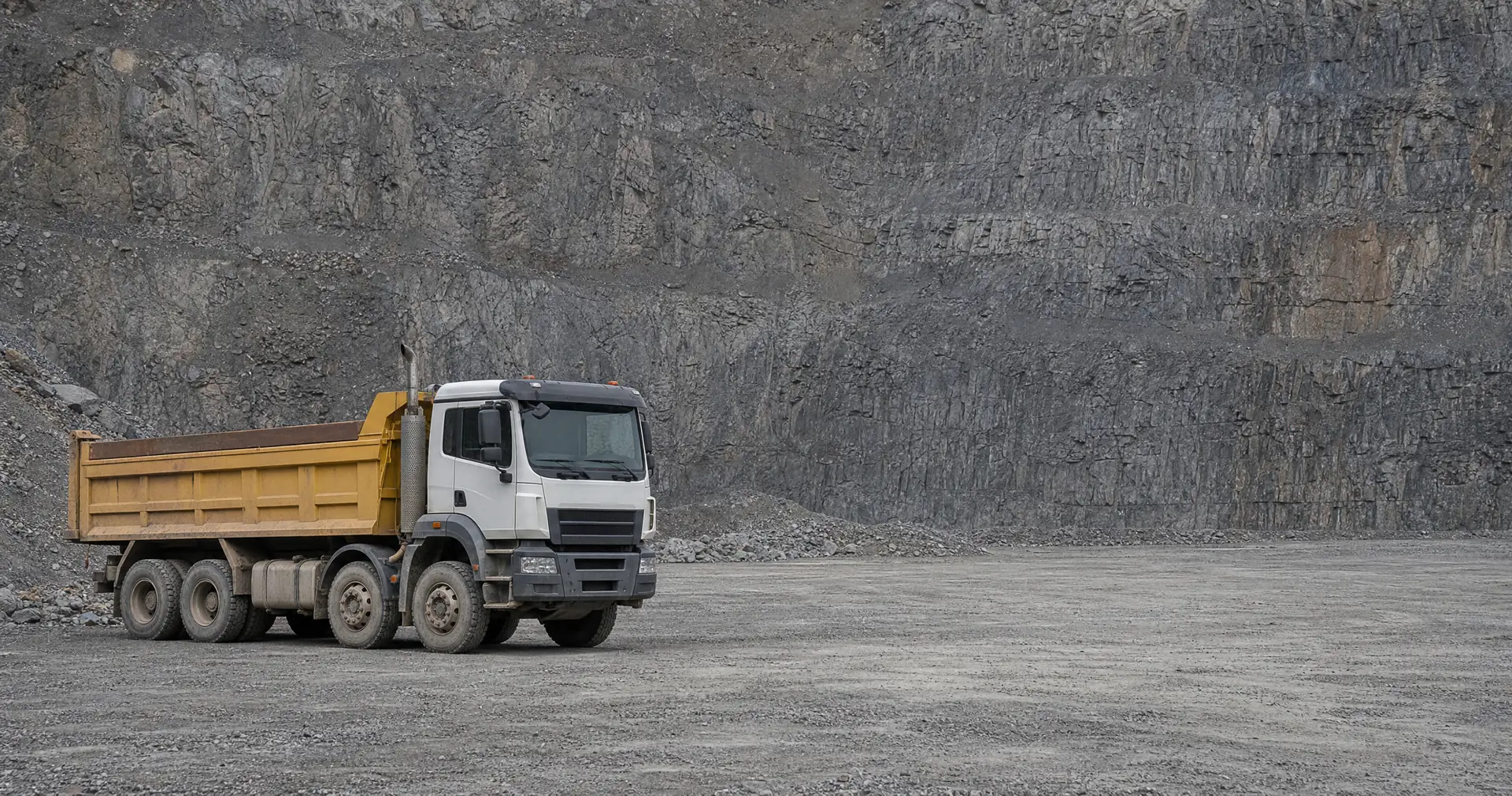
Heavy vehicle finance for New Zealand B-train and prime mover operators .
Asset finance for B-train combinations, prime movers, and 40-plus tonne heavy haulage runs at materially higher capex per unit than light commercial vehicle finance. NZTA Class 5 driver licence, the NZTA Operator Licence under the Land Transport Act 1998, and 5 to 10 year depreciation cycles shape the application.
What you need to know about NZ heavy vehicle finance.
→Per-unit commonly $200K to $700K+ B-train combinations, prime movers, B-double sets, and bespoke 40-plus tonne heavy haulage units run materially above the light commercial vehicle pool. Heavy haulage and oversized cargo units sit at the upper end.
→NZTA Class 5 driver licence required Class 5 covers combinations above 25,000 kg gross combination weight under NZTA driver licence classes. NZTA administers the licence progression from Class 2 to 4 to 5 with minimum holding periods.
→UDC Finance has lent to NZ heavy transport since 1937 UDC Finance is a NZ asset-finance heritage lender to road transport. Heartland Bank, ANZ, BNZ, and specialist heavy vehicle finance providers cover the wider lender pool.
Heavy vehicle finance in NZ runs on long depreciation cycles and a mix of specialist and manufacturer-finance lenders.
New Zealand heavy haulage covers B-train combinations (a prime mover plus two trailers articulated through a centre dolly), prime movers running single semi-trailers, B-double sets, and bespoke 40-plus tonne heavy haulage units. Per-unit capex sits at $200,000 to $700,000-plus depending on configuration: a new Kenworth, Volvo FH, Scania R-Series, DAF XF, or Mercedes Actros prime mover commonly runs $350,000 to $450,000, with B-train trailer sets adding $180,000 to $320,000 on top. Bespoke heavy haulage units (low-loaders, hydraulic platform trailers, oversized cargo configurations) sit higher.
Three regulatory items shape the application. The NZTA Class 5 driver licence is required for combinations above 25,000 kg gross combination weight, with progression from Class 2 (heavy rigid up to 18,000 kg) to Class 4 (above 18,000 kg) to Class 5 (combinations) under NZTA driver licence classes. The NZTA Operator Licence under the Land Transport Act 1998 covers the operator (the business) and tests fit-and-proper-person status, knowledge of road transport law, and operational systems. The Certificate of Fitness regime requires inspection every 6 months for heavy commercial vehicles, a tighter cycle than the WOF for private vehicles.
NZ heavy vehicle finance draws on a mix of specialist asset-finance lenders, major banks, and manufacturer finance arms. UDC Finance has lent to NZ heavy transport since 1937, predating most of the current operator pool. Heartland Bank, ANZ business banking, and BNZ business banking cover larger relationship-managed accounts. Manufacturer finance partnerships operate NZ-facing arms: Scania Finance covers Scania prime movers, Daimler Truck Financial Services covers Mercedes-Benz Actros and Freightliner, and Volvo Financial Services covers Volvo Trucks. Asset depreciation cycles in NZ heavy haulage run 5 to 10 years, materially longer than the 4 to 5 year cycle on light commercial vehicles, reflecting the longer practical life of well-maintained prime movers and trailers.
Per-unit band
$200K to $700K+
B-train combination
$450K to $750K
Loan term
5 to 7 years
Depreciation cycle
5 to 10 years
Heavy vehicle scenarios
Four common NZ heavy vehicle finance scenarios.
Most heavy vehicle applications fall into one of four patterns. Each pattern carries a typical capex band, structure, and lender pool spanning specialist asset-finance lenders, major banks, and manufacturer finance.
B-train combination acquisition
Owner-operator or established fleet acquiring a complete B-train: prime mover plus two articulated trailers through a centre dolly. Common across line-haul freight on NZ's state highway network. Total package $450K to $750K depending on prime mover spec and trailer configuration.
·Loan amount: $450K to $750K
·Term: 6 to 7 years
Prime mover replacement at end-of-life
Established haulage operator replacing a 7 to 10 year old prime mover at end-of-life. Trade-in credit on the outgoing unit. Existing trading data and Operator Licence track-record materially tighten the indicative rate band. New Kenworth K200, Volvo FH, Scania R-Series, DAF XF, or Mercedes Actros.
·Loan amount: $280K to $420K
·Term: 5 to 7 years
40-plus tonne heavy haulage unit
Specialist heavy haulage operator commissioning a bespoke unit for oversized cargo: low-loader, hydraulic platform trailer, or extendable configuration. Build window 6 to 12 months. Asset finance commonly drawn in stages tied to body-builder progress milestones.
·Loan amount: $500K to $1.2M
·Term: 7 years
Mid-fleet expansion adding 2 to 4 units
Established heavy vehicle fleet operator adding 2 to 4 prime movers or trailers to support a new contract. Existing trading data, Operator Licence track-record, and contract evidence support the application. Master facility structure across the new units commonly used.
·Loan amount: $800K to $2.5M
·Term: 5 to 7 years
What heavy vehicle operators borrow for
Six common NZ heavy vehicle finance purposes.
Heavy vehicle capex spreads across prime movers, trailer configurations, and bespoke heavy haulage builds. Each line item has a typical structure that fits.
Prime movers
Kenworth K200, Volvo FH, Scania R-Series, DAF XF, Mercedes-Benz Actros, Hino 700. Sleeper-cab variants for line-haul; day-cab variants for metro and regional runs. Chattel mortgage on a 5 to 7 year term.
B-train trailer sets and B-double combinations
B-train flat-deck and curtainsider sets, B-double combinations articulated through a centre dolly. Asset finance against each unit; trailer terms commonly match the prime mover term.
Heavy haulage and specialist trailers
Low-loaders, extendable trailers, hydraulic platform trailers, oversized cargo configurations for project freight. Bespoke builds with NZ specialist body builders (Mills-Tui, Patchell, Domett, Roadmaster). Build windows 6 to 12 months.
Tipper and bulk-haulage bodies
Aggregate tipper bodies, bulk grain trailers, side-tipper combinations for civil and primary-industry work. Often body-built by NZ specialists. Asset finance staged across cab/chassis and body-builder progress.
Working capital for diesel, RUC, and contract gaps
Heavy vehicle diesel and Road User Charges spend is material monthly cost. Working-capital line of credit covers the gap between contract invoicing cycles and the monthly RUC and fuel card invoices.
Yard, workshop, and depot fitout
Lease or owned yard fitout, workshop hoist and pit equipment, fuel tanks, secure parking. Term loan or asset finance against the fitout. Common at the mid-fleet tier scaling beyond a home base.
Tax, GST, and depreciation
How GST, RUC, and depreciation typically work on NZ heavy vehicles.
A GST-registered heavy vehicle operator can typically claim the GST component on prime movers, trailer sets, and specialist haulage builds as input tax in the relevant GST return, subject to the accountant's confirmation. Where the asset is acquired under chattel mortgage, the full GST is typically claimable upfront in the next GST return after settlement. Where it is acquired under finance lease, GST is typically claimed across the rental payments. For specialist builds drawn in stages, GST is typically claimed against each progress payment as invoiced. Road User Charges have applied to diesel heavy vehicles for many years under the Road User Charges Act 2012; RUC is paid in advance per 1,000 km block at a rate set by NZTA for each weight category, with heavy vehicles attracting materially higher per-km RUC than light commercials. RUC is typically deductible against business income separate from the finance treatment of the vehicle. IRD publishes asset-class depreciation rates for heavy commercial vehicles and trailers; depreciation cycles in NZ heavy haulage commonly run 5 to 10 years reflecting the longer practical life of well-maintained equipment. The accountant is the right person to confirm structure choice and depreciation treatment on the specific business position.
Heavy vehicle and trailer bands
Indicative NZ heavy vehicle finance bands in 2026.
Pricing varies by spec, body type, age, and dealer. The bands below are observed across the NZ heavy vehicle finance pool, drawn from new and used activity.
Asset category
Used (5-8 yr)
New
Common term
Day-cab prime mover (metro / regional)
$120K to $220K
$280K to $360K
5 to 7 years
Sleeper-cab line-haul prime mover (Kenworth, Volvo FH, Scania R-Series)
$200K to $320K
$350K to $480K
6 to 7 years
B-train flat-deck or curtainsider trailer set
$120K to $220K
$240K to $340K
6 to 7 years
B-double combination (prime mover + 2 trailers)
$320K to $520K
$580K to $750K
6 to 7 years
Low-loader / heavy haulage trailer (40+ tonne)
$180K to $320K
$380K to $700K+
7 years
Hydraulic platform / extendable specialist build
$250K to $480K
$550K to $1.2M
7 years
Indicative bands only. Actual price depends on body builder, spec, dealer, and lead time. Final rate, fee, and approval decisions are made by the lender after assessment.
Specialist asset-finance vs major-bank vs manufacturer finance
UDC and Heartland vs ANZ and BNZ vs Scania Finance and Daimler Truck Financial Services.
Heavy vehicle finance in NZ draws on three distinct lender pools: specialist asset-finance lenders with deep heritage in road transport, major-bank business banking arms, and manufacturer finance partnerships covering specific brands. Each suits different operator profiles.
Feature
Specialist asset-finance (UDC, Heartland)
Major-bank business banking (ANZ, BNZ, Westpac, ASB)
Established fleet operators with banking relationship
Operators committed to a specific manufacturer brand
Manufacturer finance arm details are summaries of publicly available framing only. Final eligibility and rate decisions are made by each lender after assessment.
How it works
A typical NZ heavy vehicle finance application.
Heavy vehicle applications carry an Operator Licence verification, asset-spec verification, and Class 5 driver licence step that smaller commercial vehicle applications do not. Specialist builds add staged drawdowns tied to body-builder milestones.
01
Day 1 to 14
Define the asset spec and structure
A typical heavy vehicle loan combines a chattel mortgage on the prime mover with separate asset finance on the trailer or trailer combination. Specialist builds are commonly drawn in stages tied to body-builder milestones: cab/chassis purchase, body-builder progress payments at rough-in and pre-paint, and final settlement on completion and certification.
Documents commonly required
·Vehicle quote or sale agreement from authorised NZ dealer
·Body-builder quote (specialist heavy haulage builds)
·Trailer quote (where separate from prime mover)
02
Day 7 to 21
Submit application with heavy vehicle and operator documents
Beyond the standard SME application pack, heavy vehicle lenders ask for the NZTA Operator Licence under the Land Transport Act 1998, the Class 5 driver licence status for nominated drivers, the contract or letter of intent supporting the asset use, and 12 to 24 months of trading data for an established fleet. COF compliance history on the existing fleet sits in the application file.
Documents commonly required
·NZBN, business owner ID
·12 to 24 months business bank statements
·Last 2 years financial statements (established fleet)
·NZTA Operator Licence under the Land Transport Act 1998
·Class 5 driver licence (nominated drivers)
·Contract or letter of intent (where the asset funds new work)
·COF history on existing fleet
·Public liability and motor vehicle insurance quotes
03
Day 14 to 28
Lender assessment and offer
Lenders assess against three things: the security position on the asset (LVR after deposit and any trade-in), the contract or trading data supporting the asset use, and the operator profile (Operator Licence track-record, prior fleet trading, RTF or industry-body membership where relevant). Manufacturer finance arms add a brand-fit assessment. Offers commonly come back with conditions: deposit, additional security, or staged drawdowns tied to body-builder milestones for specialist builds.
04
Week 4 onward
Settle, register PPSR, take delivery
Asset finance settles directly to the dealer, body builder, or seller. The lender registers a security interest on the Personal Property Securities Register (PPSR) for each financed asset. Operator Licence updated to reflect any new vehicle on the fleet. Dealer-stock units typically deliver within 2 to 6 weeks of settlement; specialist builds deliver on body-builder completion (6 to 12 months from initial drawdown).
A heavy vehicle finance broker familiar with UDC, Heartland, the major-bank business arms, and manufacturer finance commonly tightens the indicative rate band by knowing which lender fits each operator profile and asset class.
Worked scenarios
Three NZ heavy vehicle finance scenarios.
Real-world structures across owner-operator B-train acquisition, established fleet prime mover replacement, and specialist heavy haulage build. Each illustrates how operator history, contract evidence, and lender pool selection shift the offered structure.
Established owner-operator scaling to dedicated line-haul
Auckland to Tauranga line-haul B-train acquisition
An Auckland-based owner-operator with 8 years of metro and regional haulage history scaling to dedicated Auckland-to-Tauranga and Auckland-to-Hamilton line-haul on the Bay of Plenty industrial corridor. Total package $620,000 ex-GST: $410,000 new Kenworth K200 sleeper-cab prime mover, $210,000 new B-train flat-deck trailer set commissioned through a NZ body builder. 18% combined deposit ($112,000) from existing trading.
Structure agreed with a heavy vehicle finance broker covering the specialist asset-finance pool: chattel mortgage on the prime mover ($336,200 after deposit, 7-year term, indicative 8-10% p.a.) funded by UDC Finance based on the 8 years of trading and a 3-year line-haul subcontract with a national freight aggregator. Separate chattel mortgage on the B-train set ($172,200 after deposit, 7-year term, indicative 8-10% p.a.) funded by UDC alongside the prime mover.
NZTA Operator Licence under the Land Transport Act 1998 amended to add the new vehicle. PPSR security interest registered against the prime mover and B-train set at settlement. UDC Finance heritage in NZ heavy transport since 1937 supported the lender confidence on the line-haul transition. First Auckland-Tauranga run within 4 weeks of settlement; B-train trailers completed and certified at week 8 from the body builder.
Indicative figures
Total package
$620,000
Prime mover
$410,000
B-train trailer set
$210,000
Indicative blended rate
8-10% p.a.
Established 12-truck mid-fleet replacing a 9-year-old prime mover
Hamilton mid-fleet Mercedes Actros replacement under Daimler finance
A Hamilton mid-fleet operator with 12 trucks (15 years of trading, mixed Mercedes-Benz and DAF brand alignment) replacing a 9-year-old Mercedes-Benz Actros prime mover at end-of-life. Total project $390,000 ex-GST: $390,000 new Mercedes-Benz Actros 2658 prime mover. Trade-in credit of $95,000 on the outgoing 9-year-old unit.
Structure agreed at point of sale with the dealer: chattel mortgage through Daimler Truck Financial Services ($295,000 after trade-in, 6-year term, indicative 8-10% p.a.). Manufacturer finance arm sat alongside a quote from the operator's existing Heartland Bank relationship; the Daimler finance offer aligned more closely with the Mercedes-Benz spec and dealer relationship and was selected on combined commercial terms. Existing fleet trading data and Operator Licence track-record materially tightened the indicative rate band.
NZTA Operator Licence under the Land Transport Act 1998 maintained on the existing fleet schedule. PPSR security interest registered against the new Actros at settlement by Daimler Truck Financial Services. Outgoing 9-year-old Actros sold to dealer at trade-in. New unit in service within 3 weeks of settlement on dealer stock. The accountant confirmed GST upfront claim and the 10-year depreciation schedule across the existing fleet pattern.
Indicative figures
Total project
$390,000
Trade-in credit
$95,000
Manufacturer finance
$295,000
Indicative rate
8-10% p.a.
Specialist heavy haulage operator commissioning oversized cargo unit
Tauranga heavy haulage low-loader build
A Tauranga heavy haulage specialist with 14 years of trading commissioning a new 6-axle low-loader trailer build for project freight (transformer hauls, oversized industrial machinery) into the Bay of Plenty and Waikato industrial market. Total package $880,000 ex-GST: $290,000 used 4-year-old Kenworth T610 prime mover (specified for heavy haulage), $590,000 specialist 6-axle low-loader build commissioned with a NZ body builder over a 9-month build window.
Structure agreed with the operator's existing asset-finance lender: chattel mortgage on the prime mover ($246,500 after 15% deposit, 7-year term, indicative 9-11% p.a.). Specialist trailer build financed in stages: 25% on builder signing, 25% on rough-in, 25% on pre-paint, 25% on completion and NZTA certification ($590,000 total, 7-year term, indicative 9-11% p.a.). UDC Finance funded both lines based on the 14 years of trading and the specialist heavy haulage operator profile.
NZTA Operator Licence under the Land Transport Act 1998 maintained on the existing fleet schedule. PPSR security interest registered against each asset at the relevant stage. Trailer build certified and delivered at month 9; first project freight haul scheduled for week 2 after final delivery. Heavy haulage permits coordinated with NZTA and the relevant local councils on a per-haul basis, separate from the finance treatment of the unit. The accountant confirmed staged GST claims on each progress payment.
Indicative figures
Total package
$880,000
Prime mover finance
$246,500
Specialist trailer build
$590,000
Indicative blended rate
9-11% p.a.
NZ heavy vehicle lenders
Lenders that fund NZ heavy vehicle operators well.
Several NZ lenders carry deep familiarity with the heavy vehicle finance segment. Specialist asset-finance lenders, major-bank business arms, and manufacturer finance partnerships make up the lender pool. The shortlist below is editorial.
Indicative shortlist. Final rate, fee, and approval decisions are made by each lender after assessment. Manufacturer finance partnerships (Scania Finance, Daimler Truck Financial Services, Volvo Financial Services) operate alongside this shortlist at point of sale through authorised NZ dealers.
Where heavy vehicle finance fits
When heavy vehicle finance is straightforward, and when it gets harder.
Where it works smoothly
·Established operator with 2+ years of fleet trading data and NZTA Operator Licence in good standing
·Class 5 driver licence held by nominated drivers under NZTA driver licence classes
·Contract or letter of intent supporting the asset use case (line-haul subcontract, project freight contract)
·Asset within typical age band (under 8 years for used, new from authorised NZ dealer)
·Deposit of 15-25% of the asset price from existing fleet trading or trade-in proceeds
·Clean COF compliance history across the existing fleet under the 6-month inspection cycle
Where it gets harder
·First-time operator with no prior fleet trading or Operator Licence history
·Asset older than 12 years or with no documented service history
·Operator Licence breaches, work-time logbook breaches, or COF compliance issues on the existing fleet
·Specialist build with no existing contract evidence supporting the asset use
·Reliance on a single contract relationship without diversification
·Outstanding GST or PAYE arrears at IRD, or recent IRD compliance issues affecting any lender assessment
Heavy vehicle and trailer depreciation rates under IRD asset-class settings.
FAQ
Heavy vehicle finance, NZ small-business questions answered
How much does a NZ heavy vehicle cost in 2026?
A new NZ line-haul prime mover (Kenworth K200, Volvo FH, Scania R-Series, DAF XF, Mercedes-Benz Actros) commonly runs $280,000 to $480,000 depending on spec, sleeper-cab configuration, and dealer. A used 5 to 8 year old prime mover commonly runs $200,000 to $320,000. New B-train flat-deck or curtainsider trailer sets commonly run $240,000 to $340,000. Bespoke heavy haulage builds (low-loaders, hydraulic platforms, extendable configurations) sit at $380,000 to $1.2 million depending on configuration. Total per-unit packages including prime mover and trailer commonly sit at $200,000 to $700,000-plus.
What licence is required to drive a B-train or 40-plus tonne combination in NZ?
A Class 5 driver licence is required for heavy combination vehicles in NZ above 25,000 kg gross combination weight, per NZTA driver licence classes under the Land Transport Act 1998. Class 5 covers B-train sets, B-double combinations, line-haul prime mover plus trailer combinations, and 40-plus tonne heavy haulage. Drivers progress Class 2 (heavy rigid up to 18,000 kg) to Class 4 (above 18,000 kg) to Class 5 with minimum holding periods and competency assessments at each step. NZTA publishes the licence class progression rules in full.
What is an Operator Licence and how does it apply to heavy vehicle finance?
An Operator Licence is required for commercial transport service operators in NZ under the Land Transport Act 1998, administered by NZTA. The licence covers the operator (the business) rather than individual drivers, and tests fit-and-proper-person status, knowledge of road transport law, vehicle and driver compliance systems, and operational management. Heavy vehicle and haulage operators typically hold their own Operator Licence; smaller subcontractors may operate under a head operator's licence. Operator Licence breaches (logbook, COF, fatigue) commonly affect future finance applications because lenders check Operator Licence status as part of the file.
What rate range applies to NZ heavy vehicle finance in 2026?
Indicative rates on heavy vehicle finance commonly sit in the 8% to 12% per annum band depending on structure, security, and operator profile. Chattel-mortgage finance secured by a new prime mover or trailer for an established operator sits at the lower end (commonly 8-10%). Used heavy vehicle finance and specialist builds sit in the middle (commonly 9-11%). First-time operators or applications without strong contract evidence sit at the upper end (commonly 11-12%-plus). Final rate is set by the lender after assessment. Established mid-fleet operators with multi-year trading and major-bank or specialist asset-finance relationships commonly access the lower bands.
How do typical heavy vehicle loan terms compare to light commercial vehicle finance?
Heavy vehicle loan terms commonly run 5 to 7 years, longer than the 4 to 5 year terms typical on courier vans and light trucks. Prime movers and trailer sets commonly attract 6 to 7 year terms reflecting longer asset life and higher capex. Specialist builds (low-loaders, hydraulic platforms, hydraulic trailers) commonly attract 7 year terms reflecting bespoke build cost and the multi-decade life of well-maintained heavy haulage equipment. NZ heavy vehicle depreciation cycles commonly run 5 to 10 years, with trailer life often exceeding the prime mover cycle. The loan term should fit within the expected useful life of the asset for the use case.
What is the heritage of UDC Finance in NZ heavy vehicle lending?
UDC Finance has lent to NZ road transport since 1937 and is one of the longest-running specialist asset-finance lenders to the heavy vehicle pool. UDC's heritage predates most of the current operator pool and shapes the lender's familiarity with prime movers, B-train trailer sets, B-double combinations, and specialist heavy haulage builds across the NZ market. UDC commonly funds owner-operators and mid-fleet operators across the 1 to 15 unit range, alongside Heartland Bank in the specialist asset-finance tier and the major banks (ANZ, BNZ, Westpac, ASB) on larger relationship-managed accounts.
How does manufacturer finance work for heavy vehicles in NZ?
Manufacturer finance partnerships operate NZ-facing arms covering specific brands. Scania Finance covers Scania prime movers; Daimler Truck Financial Services covers Mercedes-Benz Actros and Freightliner; Volvo Financial Services covers Volvo Trucks and Volvo FH. Manufacturer finance commonly sits alongside specialist asset-finance lender quotes at point of sale through authorised NZ dealers. The manufacturer finance offer often aligns closely with the brand-specific spec and dealer relationship, and operators commonly compare the manufacturer finance terms with quotes from UDC, Heartland, or their existing major-bank business banking relationship before selection.
Can GST be claimed on a heavy truck under chattel mortgage?
A GST-registered heavy vehicle operator can typically claim the GST component on prime movers, trailers, and specialist haulage builds as input tax in the relevant GST return, subject to the accountant's confirmation. Where the asset is acquired under chattel mortgage, the full GST is typically claimable upfront in the next GST return after settlement. Where it is acquired under finance lease, GST is typically claimed across the rental payments. For specialist builds drawn in stages, GST is typically claimed against each progress payment as invoiced. The accountant is the right person to confirm structure choice and GST timing on the specific business position.
How do Road User Charges work for a NZ heavy vehicle operator?
Road User Charges (RUC) are paid in advance per 1,000 km block at a rate set by NZTA for each vehicle weight category, under the Road User Charges Act 2012. Heavy vehicles attract materially higher per-km RUC than light commercials because the rate scales with weight. RUC is a separate operating cost from the finance treatment of the vehicle and is typically deductible against business income separate from the finance interest deduction. RUC sizing is a regular topic in Road Transport Forum (RTF) policy submissions because it is one of the largest variable operating costs in the heavy vehicle pool. NZTA publishes the current RUC rates by weight class in full.
What is the typical depreciation cycle for a NZ heavy truck?
NZ heavy haulage commonly runs 5 to 10 year depreciation cycles, materially longer than the 4 to 5 year cycle on light commercial vehicles, reflecting the longer practical life of well-maintained prime movers and trailers. IRD publishes asset-class depreciation rates for heavy commercial vehicles and trailers; common methods are diminishing value or straight line. Specialist heavy haulage trailers (low-loaders, hydraulic platforms) often hold value longer than generic curtainsider trailers because rebuild capacity for specialist builds is constrained. The accountant is the right person to confirm the specific depreciation rate, method, and end-of-life carrying value on a specific asset.
How does a specialist heavy haulage build (low-loader, hydraulic platform) get financed?
Specialist heavy haulage builds are commonly financed in two stages: a chattel mortgage on the cab/chassis acquired from the dealer, and separate asset finance on the body-builder progress payments (commonly 25% on signing, 25% on rough-in, 25% on pre-paint, 25% on completion and NZTA certification). Build windows for specialist NZ body builders (Mills-Tui, Patchell, Domett, Roadmaster) commonly run 6 to 12 months. Lenders such as UDC Finance, Heartland Bank, and Avanti Finance carry familiarity with the specialist build process. Existing contract evidence (a letter of intent from a project freight customer) materially supports the application by showing the asset will be utilised on completion.
What happens to a financed heavy vehicle if the haulage business closes?
Where the truck or trailer is financed under chattel mortgage and the haulage business closes before the loan is repaid, the lender typically has a security interest registered on the Personal Property Securities Register (PPSR) and can take possession of the asset to recover the outstanding balance. Any shortfall between resale value and balance owing typically falls to the borrower and any personal guarantor. NZ heavy vehicles and specialist haulage equipment typically retain 40-65% of value over a 5 to 7 year hold period depending on age, kilometres, and condition; specialist builds commonly hold value better than generic curtainsider trailers because rebuild capacity is constrained. Lenders commonly work with operators to restructure repayments before resorting to repossession.
Can heavy vehicle fleet finance be structured across multiple units in one facility?
Yes. Mid-fleet and large-fleet operators commonly structure finance across multiple heavy vehicles either as a portfolio of individual chattel mortgages (each asset separately secured) or as a master facility with drawdown limits per vehicle. Major banks (ANZ, BNZ, Westpac, ASB) and specialist asset-finance lenders (UDC, Heartland) all offer multi-vehicle facility structures. The benefit is administrative simplicity and a single relationship for fleet rotation; the consideration is that cross-collateralisation can sometimes complicate the sale of an individual asset. The right structure depends on the fleet rotation pattern and the operator's preference for relationship simplicity versus per-asset flexibility.
Which NZ lenders specialise in heavy vehicle and B-train finance?
UDC Finance has lent to NZ road transport since 1937 and is one of the long-standing specialist asset-finance lenders to the heavy vehicle pool. Heartland Bank covers the mid-fleet replacement and expansion tier with strong NZ-wide presence. ANZ and BNZ business banking cover larger relationship-managed fleet accounts. Avanti Finance covers used heavy vehicle and specialist builds where mainstream lenders defer. Manufacturer finance partnerships (Scania Finance, Daimler Truck Financial Services, Volvo Financial Services) sit alongside the specialist asset-finance pool at point of sale through authorised NZ dealers.
Indicative content only. Not personalised financial advice.
A business loan is a commitment that runs for months or years, and repayments come out of the same operating cash flow as everything else. Before committing, it is worth modelling the weekly and monthly cost against the business's working-capital position, which is what this site is built to help with. Borrowing at a level that stays comfortable through a quiet quarter, not just a strong one, is widely regarded as the safer frame.
What this site is
A calculator and information tool. Not a lender, not a broker, not a registered financial adviser. Nothing here is personalised financial advice.
What the figures show
Modelled estimates based on the inputs you enter. Not a quote. Not an offer of credit. Not a guarantee of approval, rate, or fees.
What the lender decides
Final rates, fees, and approval are set by the lender after a CCCFA-appropriate assessment of the applicant's circumstances and credit decision.
Commercial disclosure
Businessloans.org.nz earns a commission from Prospa when a visitor applies through this site and their application is approved. The commission is paid by Prospa, not by the borrower, and it does not influence the rate Prospa offers. Full disclosure on the partner page.
Tax, GST, and accountant framing
Tax-treatment statements (GST claim timing, interest deductibility, depreciation rates) are general in nature and subject to your accountant's confirmation on the specific business position. For material amounts, professional advice from a registered financial adviser or chartered accountant is widely regarded as the safer frame.