Coffee machine finance for New Zealand cafes, roasters, and barista bars .
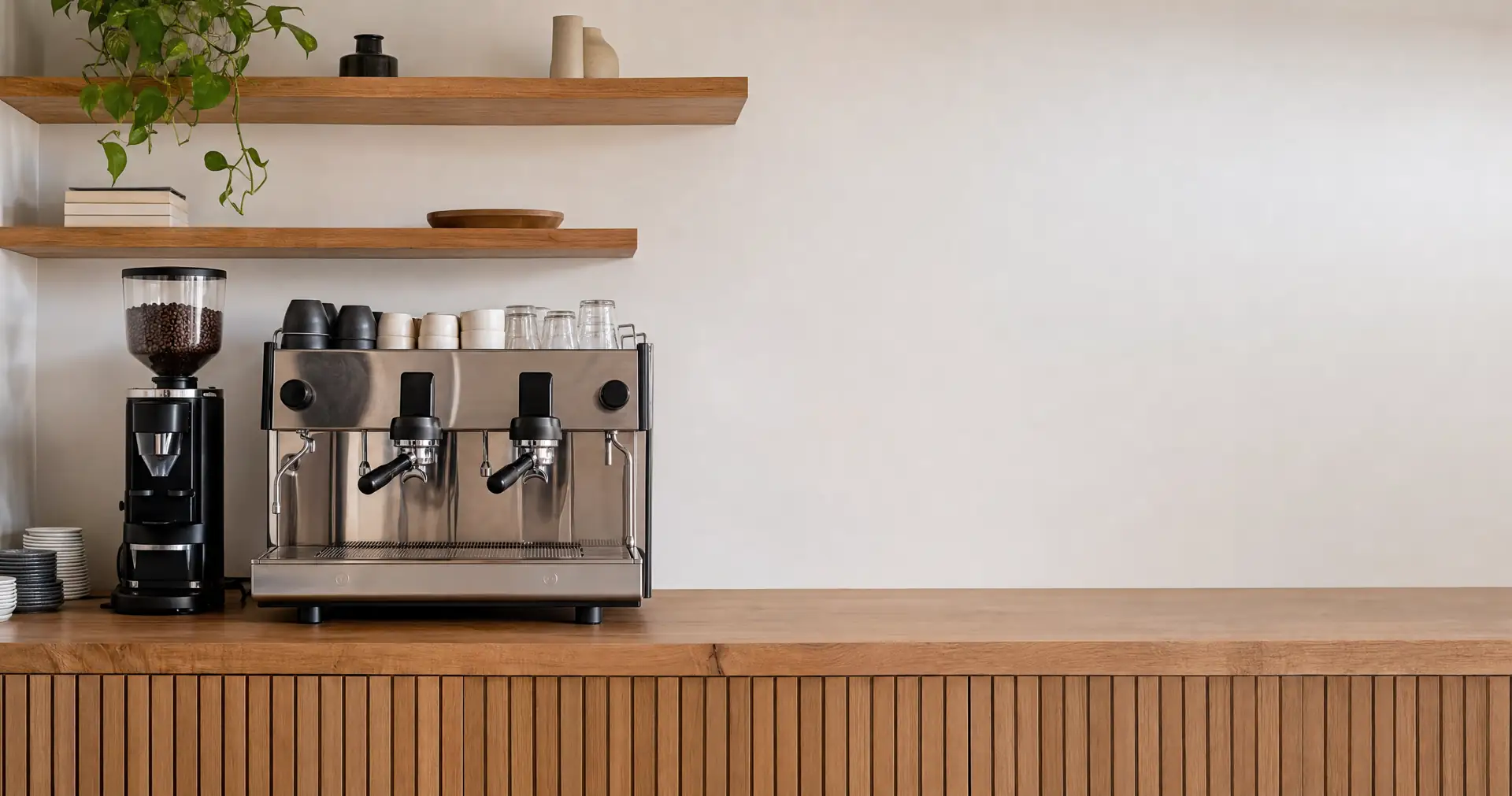
Espresso machines, grinders, water filtration, and barista bench gear are the core revenue-generating asset in any NZ cafe. A full coffee package (machine plus grinder plus setup) commonly sits at $25,000 to $35,000 ex-GST; standalone machines run $5,000 to $25,000 depending on group head count and brand tier.
What you need to know about NZ coffee machine finance.
→Full coffee package commonly $25K to $35K ex-GST A 2-group La Marzocco Linea PB, Synesso MVP, or Sanremo Cafe Racer plus matched Mahlkonig or Mythos grinder, water filtration, and barista bench setup is the canonical NZ cafe spec.
→Standalone machines run $5K to $25K Single-group entry machines (Wega Mininova, La Marzocco Linea Mini) sit at the lower end. Flagship 3-group machines (Slayer Steam LPx, Victoria Arduino Black Eagle) run higher.
→Three finance routes dominate DiPacci with Buddy Capital and Coffex finance the dealer-led path. Roma Coffee Roasters and Coffee Biz run free-on-loan programmes tied to bean contracts. Spinach, Prospa, and MTF Finance fund generic chattel-mortgage purchases.
→GST claimable upfront on chattel mortgage Where the cafe is GST-registered, the full GST is typically claimable in the next GST return after settlement under chattel mortgage. IRD depreciation commonly uses the 30% diminishing-value rate. The accountant is the right person to confirm structure.
The landscape
NZ specialty coffee culture sustains a deep machine and grinder market.
New Zealand has one of the highest cafes-per-capita ratios among developed economies, with Stats NZ business demography data showing several thousand registered hospitality entities trading at any time. The depth of the specialty coffee scene (Allpress, Coffee Supreme, Atomic, Havana, L'affare, Roma, Coffee Biz, regional roasters such as Underground, Six Barrel, and Switch) sustains a substantial machine and grinder pool. La Marzocco distributors, Synesso NZ, Slayer NZ, and Victoria Arduino through DiPacci all carry stocked inventory; Sanremo and Wega run alongside as price-point alternatives.
The economics on a coffee machine are different to most cafe equipment because the asset directly drives revenue. A well-specified 2-group machine paired with a calibrated Mahlkonig or Mythos grinder turns roughly 250 to 600 cups per day in a busy NZ urban cafe, with each cup at a $5 to $6 retail price (Wellington Cuba Street, Auckland Ponsonby, Christchurch New Regent Street price points). Owners commonly justify a higher-tier machine on the consistency and shot quality it produces, not on raw throughput.
Finance routes split into three patterns. The first is dealer-led specialist hospitality finance, where DiPacci partners with Buddy Capital and Coffex Coffee Roasters publishes its own finance terms, both packaging machine, grinder, training, and warranty into a single rental or chattel-mortgage facility. The second is the free-on-loan supplier programme, where roasteries such as Roma Coffee Roasters and Coffee Biz supply the machine at no upfront cost in exchange for a multi-year bean supply contract. The third is generic asset finance through Spinach, Prospa, MTF Finance, and the major banks, which suits operators buying a specific machine from a private seller or specialist importer outside the dealer network.
Full package (machine + grinder)
$25K to $35K
Standalone machine band
$5K to $25K
Common term
3 to 5 years
IRD depreciation (DV)
30% per annum
Coffee machine scenarios
Four common NZ coffee machine finance scenarios.
Most coffee machine applications fall into one of four patterns. Each pattern has a typical asset spec, finance structure, and lender or supplier pool.
New cafe full barista setup
Greenfield cafe spec including 2-group machine, on-demand grinder, knock box, water filtration, and barista bench fitout. Total $28K-$35K ex-GST. Chattel mortgage on a 4 to 5 year term, often packaged through DiPacci or Coffex alongside the rest of the cafe fitout.
·Loan amount: $28K to $35K
·Term: 4 to 5 years
Machine upgrade in established cafe
Existing cafe replacing a 6 to 10 year old 2-group machine with a current-spec La Marzocco Linea PB or Synesso MVP. Trade-in credit on the outgoing machine. Standalone chattel mortgage on the new asset.
·Loan amount: $14K to $22K
·Term: 3 to 4 years
Free-on-loan via roastery contract
Cafe agreeing a 3 to 5 year wholesale bean contract with Roma Coffee Roasters, Coffee Biz, or a regional roaster, with the machine and grinder supplied at no upfront cost. No chattel mortgage; the cost sits inside the per-kilogram bean price.
·Cost shape: Embedded in bean price
·Term: 3 to 5 year supply contract
Mobile or barista-bar add-on
Existing cafe adding a second machine for a satellite kiosk, event trailer, or barista bar at a market venue. Single-group La Marzocco Linea Mini or Wega Mininova. Smaller-ticket chattel mortgage or unsecured term loan.
·Loan amount: $5K to $12K
·Term: 2 to 3 years
What cafes finance under the coffee package
Six common NZ coffee equipment categories.
Coffee equipment finance volume falls into six common categories. Each has a typical price band and structure that fits.
Espresso machines
La Marzocco Linea PB and Linea Mini, Synesso MVP and S-Series, Slayer Steam LPx, Victoria Arduino Black Eagle, Sanremo Cafe Racer, Wega Polaris. 1, 2, or 3 group head configurations. $5K to $35K depending on group count and brand tier.
Grinders
Mahlkonig E65S and EK43, Mythos One, Mazzer Major, Anfim SP-II, Eureka Atom. On-demand and dose-by-weight specs. Calibrated to the espresso machine output. $2K to $7K per grinder, with most cafes running two grinders (espresso plus filter or decaf).
Water filtration and softening
BWT Bestmax, Brita Purity C, 3M cartridge systems. Critical for shot consistency and machine longevity in NZ urban water. $500 to $2,500 plus annual cartridge replacement. Often bundled into the chattel mortgage on the machine.
Knock boxes, tampers, and bench gear
Knock boxes, tamping mats, distribution tools, milk pitchers, thermometers, cleaning chemistry. Smaller-ticket items typically funded inside the broader cafe fitout rather than as standalone asset finance.
Batch brew and filter equipment
Marco SP9 and SP10 batch brewers, Curtis G4 ThermoPro, Fetco CBS, plus pour-over stations. Common in third-wave NZ cafes serving filter coffee alongside espresso. $2K to $6K per unit.
Roastery sample roasters and lab kit
Probat Sample Roaster, Ikawa lab roaster, espresso calibration setup. Used by NZ roasteries (Allpress, Coffee Supreme, Roma) for QC and origin sampling. Smaller subset of coffee equipment finance, typically funded as part of a broader roastery capex package.
GST, IRD depreciation, and structure
How GST and IRD depreciation typically work on coffee equipment.
A GST-registered cafe operator can typically claim the GST component on coffee machines, grinders, water filtration, and barista bench gear as input tax in the relevant GST return, subject to the accountant's confirmation. Where the equipment is acquired under chattel mortgage, the full GST is typically claimable upfront in the next GST return after settlement. Where it is acquired under hire purchase, the same upfront GST treatment generally applies because legal title passes at the start. Where it is acquired under operating lease (including most free-on-loan supplier programmes), GST is typically claimed across the lease payments rather than upfront. IRD publishes asset-class depreciation rates; coffee equipment commonly sits in a class allowing 30% diminishing-value or 21% straight-line depreciation, but the asset-class look-up is the authoritative reference. The accountant is the right person to confirm structure choice and depreciation treatment on the specific business position.
Coffee machine and grinder bands
Indicative NZ coffee equipment finance bands.
Pricing varies by group count, brand tier, age, and dealer. The bands below are observed across the NZ specialty coffee equipment pool in 2026, drawn from published dealer pricing and used machine market activity.
2-group flagship (La Marzocco Linea PB, Synesso MVP)
$12K to $18K
$19K to $26K
4 to 5 years
3-group flagship (Slayer LPx, Victoria Arduino Black Eagle)
$18K to $26K
$27K to $40K
4 to 5 years
On-demand grinder (Mahlkonig E65S, Mythos One)
$1.5K to $3K
$3.5K to $5.5K
3 years
Lab/calibration grinder (Mahlkonig EK43)
$2K to $4K
$5K to $7K
3 to 4 years
Indicative bands only. Actual price depends on age, condition, dealer, and import lead time. Final rate, fee, and approval decisions are made by the lender after assessment.
Three coffee equipment finance routes
Chattel mortgage vs free-on-loan vs operating lease for coffee equipment.
The structure choice tracks ownership preference, GST treatment, contract length, and roastery relationship. Each route suits a different operator profile and bean-supply approach.
Roastery retains; machine returned at contract end
Lessor retains; option to buy at residual
GST treatment
Full GST claimable upfront
No upfront GST; embedded in bean price
GST claimed across rental payments
Bean supply lock-in
None; operator chooses any roaster
Multi-year exclusive bean contract
Independent of bean supply
Maintenance responsibility
Operator (warranty cover then operator)
Often included by roastery
Often included in lease (full-service)
Cash-flow shape
Fixed weekly or monthly repayment
Embedded in COGS per kilogram
Fixed lease payment with end-of-term residual
A chattel mortgage is typically chosen by cafes prioritising GST recovery upfront and roaster choice flexibility; free-on-loan suits operators prioritising minimal upfront capital outlay; operating lease suits operators prioritising bundled maintenance and predictable cash flow. The right structure depends on the cafe's capital position and bean-supply strategy.
How it works
A typical NZ coffee machine finance application.
Coffee machine applications carry a dealer or roastery quote step that broader hospitality finance applications do not. Established cafe operators with trading data move faster.
01
Day 1 to 5
Define the spec and finance route
A typical coffee package combines a 2 or 3 group machine, a matched on-demand grinder, water filtration, and barista bench gear. Defining the spec upfront lets the dealer (DiPacci, La Marzocco NZ, Synesso NZ) or roastery (Roma, Coffee Biz) issue a single quote, which the chosen finance route then funds. Whether a chattel mortgage, hire purchase, free-on-loan, or operating lease fits best is shaped by GST position, bean-supply preference, and capital outlay tolerance.
Documents commonly required
·Dealer or roastery quote (machine, grinder, filtration, install)
·Cafe location and lease detail
·Indicative cup volume and bean preference
02
Day 3 to 10
Submit application with cafe-specific documents
Beyond the standard SME application pack, hospitality finance lenders ask for the cafe lease (or letter of intent on a new site), Food Act 2014 verification status with the local MPI Verifier, and 6 to 12 months of bank statements for established cafes. Greenfield applications instead lean on the operator's prior hospitality experience and the project budget.
Documents commonly required
·NZBN, business owner ID
·Last 6 to 12 months business bank statements
·Cafe lease or letter of intent
·Food Act 2014 registration (existing cafe) or planned MPI Verifier engagement (new cafe)
·Dealer quote and itemised equipment list
·Insurance quote covering machine and barista equipment
03
Day 5 to 14
Lender or roastery assessment and offer
Generic asset financiers (Spinach, Prospa, MTF) assess against trading data and security position. Specialist hospitality lenders (DiPacci/Buddy Capital, Coffex) layer on hospitality experience and the dealer relationship. Roasteries running free-on-loan programmes (Roma, Coffee Biz) assess on cup volume forecast and the multi-year bean contract terms. Offers commonly come back with conditions: deposit, additional security, insurance, or minimum monthly bean volume.
04
Week 2 to 4
Settle, install, calibrate, open
Asset finance settles directly to the dealer or roastery. The lender registers a security interest on the Personal Property Securities Register (PPSR). The dealer or roastery technician installs the machine and grinder, calibrates against the cafe's chosen bean, and runs barista training where included. Insurance bound before first service. The cafe opens with the machine in service from day one of trading.
A hospitality finance broker or coffee dealer familiar with the NZ specialty market commonly tightens the indicative rate band by knowing which finance route fits the cafe's capital position and bean-supply strategy.
Worked scenarios
Three NZ coffee machine finance scenarios.
Real-world structures across new cafe full-package, established cafe upgrade, and free-on-loan with bean contract. Each illustrates how cafe profile, capital position, and bean-supply approach shift the offered structure.
New cafe operator, first-time owner, 60-seat venue
Wellington Cuba Street new cafe full package
A first-time cafe operator opening a 60-seat venue on Cuba Street, Wellington. Total coffee package $32,500 ex-GST: $19,800 La Marzocco Linea PB 2-group, $4,900 Mahlkonig E65S espresso grinder, $2,400 Mahlkonig EK43 filter and decaf grinder, $1,800 BWT Bestmax water filtration plus install, $3,600 barista bench gear (knock box, tampers, pitchers, cleaning kit). 15% deposit ($4,875) from the operator's capital injection.
Structure agreed with DiPacci through Buddy Capital: chattel mortgage on the full package ($27,625 after deposit, 5-year term, indicative 10-13% p.a.). DiPacci dealer install and 90-day calibration support included. La Marzocco 2-year warranty covers the machine; year 3-5 service contract with DiPacci runs alongside.
PPSR security interest registered against the machine and grinders at settlement. Food Act 2014 registration completed with Wellington City Council MPI Verifier before opening. Cafe trading from week 4 with the machine calibrated to a Wellington-roasted single-origin Ethiopian.
Indicative figures
Total coffee package
$32,500
Espresso machine (Linea PB)
$19,800
Chattel mortgage after deposit
$27,625
Indicative rate
10-13% p.a.
Established cafe, 4 years trading, replacing aging machine
Auckland Ponsonby established cafe machine upgrade
An established Ponsonby cafe with 4 years of trading replacing an 8-year-old 2-group machine that has reached economic end-of-life. Total project $24,200 ex-GST: $21,500 Synesso MVP 2-group machine, $1,700 Mahlkonig E65S grinder upgrade, $1,000 reinstall and calibration. Trade-in credit of $3,500 on the outgoing machine.
Existing 4 years of trading data and consistent monthly turnover materially tightened the indicative rate band. Standalone chattel mortgage through Spinach: $20,700 after trade-in, 4-year term, indicative 9-11% p.a. Existing relationship with the cafe's wholesale roaster (Coffee Supreme) maintained; no roastery free-on-loan considered because the operator preferred to keep bean-supply flexibility.
PPSR security interest registered against the new Synesso at settlement. Outgoing machine sold to dealer at trade-in. Cafe traded through a 2-day install window with a hire backup 1-group machine; full service resumed week 1 after calibration.
Indicative figures
Total project
$24,200
Trade-in credit
$3,500
Chattel mortgage
$20,700
Indicative rate
9-11% p.a.
New cafe operator opting for $0 capital outlay on coffee gear
Christchurch new cafe free-on-loan via Roma Coffee Roasters
A new Christchurch cafe operator opening a 40-seat venue in the New Regent Street area, opting to minimise upfront capital outlay on coffee equipment to redirect cash to the broader fitout. Coffee gear value $26,000 ex-GST: 2-group Sanremo Cafe Racer, Mahlkonig E65S grinder, BWT water filtration, barista bench install. Supplied at $0 upfront under a Roma Coffee Roasters free-on-loan contract.
Structure agreed with Roma Coffee Roasters: 5-year exclusive wholesale bean contract at a per-kilogram price loaded to recover the equipment cost across the term. Estimated 350 cups per day forecast supports a 36 to 45 kg per month bean spend. Machine, grinder, filtration, and install all included; service and maintenance covered by Roma's technician network.
No chattel mortgage and no PPSR security required because the operator never takes title; equipment remains Roma property and is returned at end of contract. GST not claimable upfront because the operator does not own the asset; GST is recovered across the bean invoices instead. The cafe traded from week 1 of opening.
Indicative figures
Equipment value
$26,000
Upfront cost
$0
Bean contract term
5 years
Forecast bean spend
36-45 kg/month
NZ coffee machine finance routes
Lenders and suppliers that fund NZ coffee equipment well.
Several NZ specialist routes fund coffee equipment cleanly. The shortlist below is editorial.
How much does a NZ cafe coffee machine cost in 2026?
A full coffee package for a typical NZ cafe (2-group machine plus matched grinder, water filtration, and barista bench setup) commonly runs $25,000 to $35,000 ex-GST. A standalone 2-group espresso machine sits at $13,000 to $26,000 new depending on brand tier (Sanremo and Wega at the lower end, La Marzocco Linea PB and Synesso MVP in the middle, Slayer Steam LPx and Victoria Arduino Black Eagle at the upper end). Single-group entry machines such as the La Marzocco Linea Mini or Wega Mininova run $8,000 to $12,000 new. 3-group flagship machines run $27,000 to $40,000.
What lenders fund coffee machine purchases in NZ?
Three finance routes dominate the NZ coffee machine pool. DiPacci partners with Buddy Capital on dealer-led chattel-mortgage packages bundling La Marzocco, Synesso, Slayer, and Victoria Arduino machines with grinders and install. Coffex Coffee Roasters publishes its own finance terms on Coffex-supplied machines. Generic asset financiers (Spinach, Prospa, MTF Finance) handle independent purchases through any dealer or private seller. Major banks (ANZ, BNZ, ASB, Westpac) cover larger relationship-managed cafe groups. Free-on-loan supplier programmes from Roma Coffee Roasters, Coffee Biz, and regional roasteries provide an alternative no-capital route in exchange for a multi-year bean contract.
Can GST be claimed on a coffee machine acquired under chattel mortgage?
A GST-registered cafe can typically claim the full GST component on a coffee machine, grinder, and water filtration acquired under chattel mortgage as input tax in the next GST return after settlement, subject to the accountant's confirmation. Where the machine is acquired under hire purchase, the same upfront GST treatment generally applies because legal title passes at the start. Where it is acquired under operating lease (including most free-on-loan supplier programmes), GST is typically claimed across the lease payments rather than upfront. The accountant is the right person to confirm the structure choice and GST timing on the specific cafe position.
What IRD depreciation rate applies to a coffee machine?
IRD publishes asset-class depreciation rates that vary by asset category and use. Coffee machines and hospitality equipment commonly sit in a class allowing 30% diminishing-value or 21% straight-line annual depreciation, but the IRD asset-class look-up is the authoritative reference and the accountant is the right person to confirm the rate that applies to the specific machine and use case. Depreciation is calculated against the GST-exclusive cost of the asset, not the GST-inclusive cost. Depreciation runs for as long as the asset remains in productive use; on disposal, any gain or loss against the depreciated book value is brought to account.
How does a free-on-loan coffee machine programme work in NZ?
Several NZ roasteries (Roma Coffee Roasters, Coffee Biz, regional roasters) supply machines and grinders at no upfront capital cost in exchange for a multi-year exclusive wholesale bean contract. The equipment cost is recovered across the per-kilogram bean price, typically over a 3 to 5 year contract term. The cafe never takes title; the equipment is returned at end of contract. The benefit is $0 upfront capital outlay and bundled service; the consideration is bean-supply lock-in and a higher per-kilogram price than independent purchase. Free-on-loan suits new cafes prioritising minimal capital outlay over roaster flexibility.
What is the typical loan term for a coffee machine in NZ?
Coffee machines on chattel mortgage commonly run 3 to 5 year loan terms. Single-group entry machines and grinders typically attract 2 to 3 year terms; 2-group mid-tier machines run 3 to 4 year terms; 2-group and 3-group flagship machines run 4 to 5 year terms. The loan term should fit within the expected useful life of the machine for the cafe's cup volume; high-throughput cafes (400+ cups per day) wear machines faster than low-volume venues. Lenders commonly will not write a loan term that exceeds the practical residual life of the asset.
What rate range applies to NZ coffee machine finance in 2026?
Indicative rates on coffee machine finance commonly sit in the 9% to 14% per annum band depending on structure, security, and operator profile. Chattel-mortgage finance secured by a new dealer-supplied machine for an established cafe sits at the lower end (commonly 9-11%). Standalone unsecured term loans on grinders or barista bench gear sit higher (commonly 12-15%). First-time operators or applications without strong trading evidence sit at the upper end. Final rate is set by the lender after assessment.
Are imported or grey-market coffee machines financeable in NZ?
Direct-import or grey-market machines (machines imported outside the official NZ distributor channel) face a tighter finance profile because lenders rely on dealer warranties and serviceability for the security position. Specialist hospitality finance routes (DiPacci/Buddy Capital, Coffex) typically only finance machines supplied through their dealer network. Generic asset financiers (Spinach, Prospa, MTF) sometimes fund grey-market machines where the cafe demonstrates a viable service and parts arrangement, but the indicative rate band sits higher. Customs duty and GST on imported equipment is administered by NZ Customs at the point of import.
What happens to a financed coffee machine if the cafe closes?
Where the machine is financed under chattel mortgage and the cafe closes before the loan is repaid, the lender typically has a security interest registered on the Personal Property Securities Register (PPSR) and can take possession of the machine to recover the outstanding balance. Any shortfall between resale value and balance owing typically falls to the borrower and any personal guarantor. NZ used coffee machines from recognised brands (La Marzocco, Synesso, Slayer) typically retain 50-70% of value over a 4 to 5 year hold period; entry-tier brands hold less. Lenders commonly work with operators to restructure repayments before resorting to repossession.
Does a coffee machine need any specific NZ regulatory compliance?
A coffee machine itself is plumbed equipment and falls under standard cafe operational requirements rather than a specific machine-licensing regime. The cafe operating it must hold Food Act 2014 registration with a local MPI Verifier (either a Food Control Plan for higher-risk operators or a National Programme for lower-risk operators), and the machine must comply with electrical safety and plumbing standards through the install (typically signed off by the dealer's licensed electrician and plumber). Health and Safety at Work Act 2015 obligations apply to barista training and machine operation. The cafe lease and council resource consents cover the broader fitout context.
How long does coffee machine finance approval and install take?
Generic asset finance applications from Spinach, Prospa, or MTF Finance commonly fund within 2 to 5 business days for established cafe operators with clean trading history; greenfield cafe applications typically run 5 to 10 business days while the lender assesses the project budget and operator experience. Specialist hospitality finance through DiPacci with Buddy Capital or Coffex commonly aligns to the dealer's install window (1 to 3 weeks for in-stock machines, 4 to 8 weeks for ordered specs). Free-on-loan programmes through Roma or Coffee Biz typically install within 2 to 4 weeks of contract signing.
Can an established cafe refinance an existing coffee machine loan?
Yes. Established cafes with 18 to 36 months of clean trading history commonly refinance existing coffee machine loans into tighter pricing, particularly where the original loan was written at a higher rate during a greenfield application. Refinancing is also commonly used to consolidate multiple equipment loans (machine, grinder, fitout) into a single facility, or to release equity to fund a machine upgrade. Early-repayment fees on the original loan and the resale or carrying value of the existing machine are the main considerations.
Is comprehensive insurance required on a financed coffee machine?
Comprehensive insurance covering theft, fire, accidental damage, and breakdown of the machine, with the lender noted as an interested party, is widely a settlement condition on a chattel mortgage and a requirement throughout the loan term. The insurance protects both the cafe's investment and the lender's security position. Premiums commonly run $400 to $1,200 per annum depending on machine value, location, and cafe security profile. Insurance sits on top of the weekly repayment and is part of the true weekly cost of the asset.
Indicative content only. Not personalised financial advice.
A business loan is a commitment that runs for months or years, and repayments come out of the same operating cash flow as everything else. Before committing, it is worth modelling the weekly and monthly cost against the business's working-capital position, which is what this site is built to help with. Borrowing at a level that stays comfortable through a quiet quarter, not just a strong one, is widely regarded as the safer frame.
What this site is
A calculator and information tool. Not a lender, not a broker, not a registered financial adviser. Nothing here is personalised financial advice.
What the figures show
Modelled estimates based on the inputs you enter. Not a quote. Not an offer of credit. Not a guarantee of approval, rate, or fees.
What the lender decides
Final rates, fees, and approval are set by the lender after a CCCFA-appropriate assessment of the applicant's circumstances and credit decision.
Commercial disclosure
Businessloans.org.nz earns a commission from Prospa when a visitor applies through this site and their application is approved. The commission is paid by Prospa, not by the borrower, and it does not influence the rate Prospa offers. Full disclosure on the partner page.
Tax, GST, and accountant framing
Tax-treatment statements (GST claim timing, interest deductibility, depreciation rates) are general in nature and subject to your accountant's confirmation on the specific business position. For material amounts, professional advice from a registered financial adviser or chartered accountant is widely regarded as the safer frame.