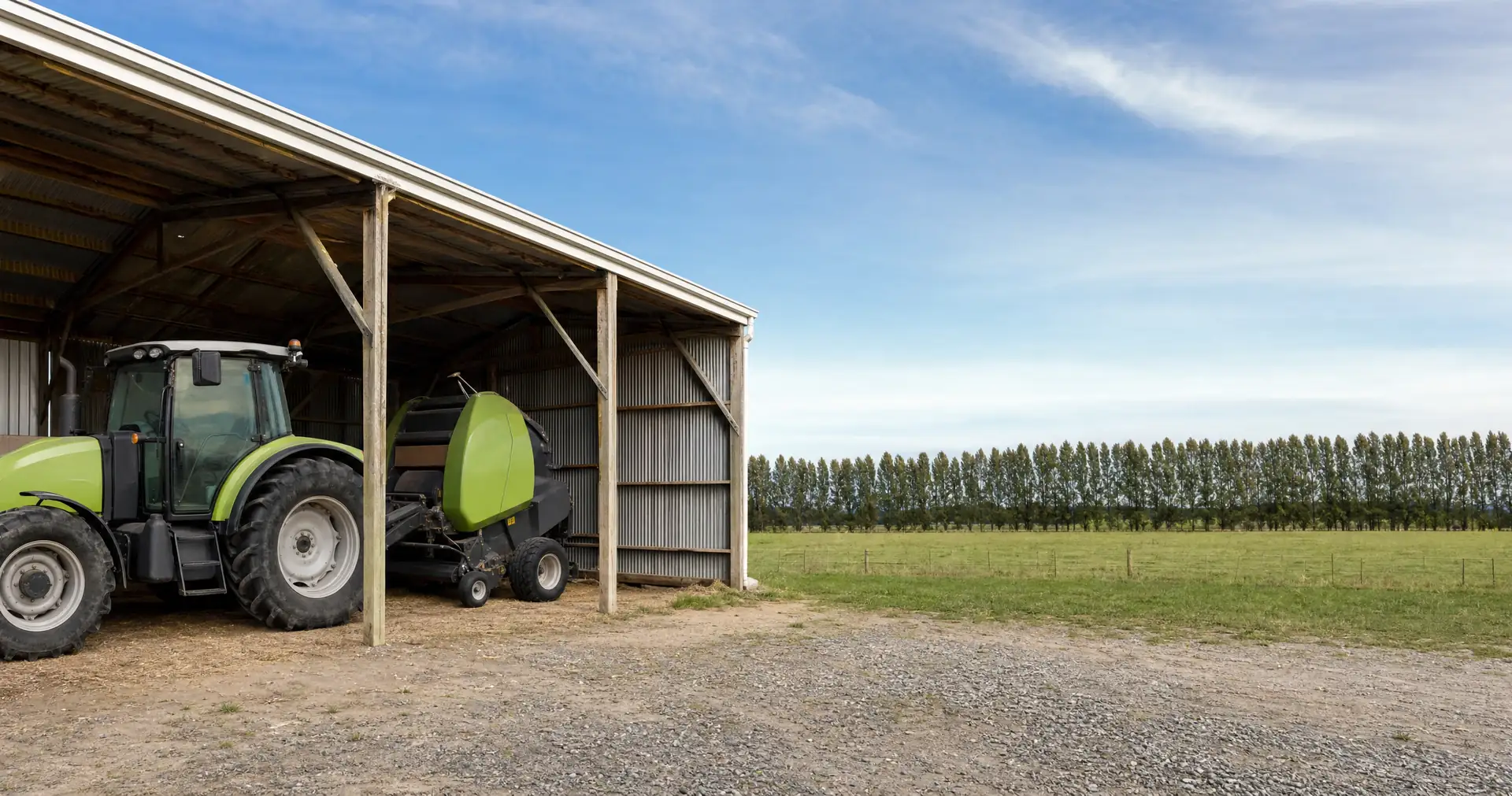
Forestry loans for New Zealand plantation owners and woodlot operators .
Forestry finance in NZ funds the longest capital cycle in the rural sector. Radiata pine plantation rotations run 25 to 30 years from planting to commercial harvest, with carbon credit revenue under the Emissions Trading Scheme (administered by the Environmental Protection Authority) materially changing the cash-flow shape during the grow-out years. Te Uru Rakau Forestry NZ within MPI sets sector strategy and the NZ Forest Owners Association represents the larger plantation owners.
→Radiata pine rotation commonly 25 to 30 years NZ plantation forestry runs the longest capital cycle in the rural sector. Establishment in year one, silviculture (pruning, thinning) across years 4 to 12, no commercial revenue until harvest at year 25 to 30 unless ETS carbon revenue is generated.
→ETS carbon credit revenue materially changes the cash flow Post-1989 forest types registered in the Emissions Trading Scheme through the Environmental Protection Authority can generate New Zealand Units (NZUs) across the grow-out years, providing revenue between planting and harvest.
→NZ Forest Owners Association is the peak body NZ Forest Owners Association represents larger plantation owners; the Farm Forestry Association represents smaller woodlot owners. Te Uru Rakau Forestry NZ within MPI sets sector strategy and historically administered the Sustainable Food and Fibre Futures fund.
→Log export market drives harvest-year revenue A material share of NZ logs are exported, with China the dominant destination through ports including Tauranga, Napier, and Marsden Point. Log export prices materially shape harvest-year economics.
The landscape
NZ forestry runs the longest capital cycle in the rural sector, reshaped by the ETS.
New Zealand plantation forestry is dominated by radiata pine (Pinus radiata), which the NZ Forest Owners Association reports as the bulk of the national plantation estate. Douglas fir holds material area in the South Island, particularly Otago and Canterbury, and smaller specialist species including cypress and eucalyptus carry niche volumes. Stats NZ goods-export data places logs and wood products in the top ten of NZ export categories by value, with the Bay of Plenty (Kaingaroa Forest), East Coast, and Northland carrying the largest single-region plantation areas. Te Uru Rakau Forestry NZ within MPI sets sector strategy.
Forestry finance differs from every other agricultural sub-sector in two ways. The capital cycle is the longest in the rural sector at 25 to 30 years from planting to commercial harvest, and the bulk of revenue arrives at harvest unless the forest is registered in the Emissions Trading Scheme. The ETS, administered by the Environmental Protection Authority under the Climate Change Response Act 2002, allows post-1989 forest owners to register and earn New Zealand Units (NZUs) across the grow-out period as the trees sequester carbon, materially changing the multi-decade cash-flow shape and the lender serviceability calculation. Pre-1990 forest types operate under a separate ETS framework with deforestation liability rather than units issuance.
Specialist rural lenders dominate the larger plantation finance pool, with major bank rural and agribusiness teams (ANZ, BNZ, ASB) covering the relationship-managed accounts. Heartland Bank and UDC Finance cover harvesting equipment asset finance (skidders, processors, log loaders, chip harvesters). Rabobank also operates in NZ rural and agribusiness lending with primary-sector forestry coverage. MPI historically operated the Sustainable Food and Fibre Futures fund and earlier afforestation grant schemes through Te Uru Rakau as overlays alongside private debt during sector growth phases.
Plantation establishment per ha
$2K to $4K
Rotation length (radiata pine)
25 to 30 years
Harvest and roading per ha
$15K to $30K
Term debt term
15 to 25 years
Forestry scenarios
Four common NZ forestry finance scenarios.
Most forestry applications fall into one of four patterns. Each pattern has a typical loan amount, structure, and lender pool.
Greenfield plantation establishment
New radiata pine plantation establishment on bare or marginal pastoral land, commonly 50 to 500 hectares. Site prep, planting, and ETS registration in year one. No log revenue until year 25 to 30; ETS carbon revenue available across the grow-out if registered.
·Loan amount: $200K to $1.8M
·Term: 15 to 25 years
Silviculture and pruning capex
Pruning, thinning, and stand management across years 4 to 12. Commonly outsourced to specialist silviculture contractors. Working-capital line drawn against the standing forest valuation and any ETS unit holdings.
·Loan amount: $50K to $400K
·Structure: Working-capital line or short-term loan
Harvesting equipment finance
Skidders, processors, log loaders, chip harvesters, and forwarders. Commonly funded for harvest contractors rather than forest owners directly. Specialist asset finance through UDC Finance, Heartland Bank, and other rural lenders.
·Loan amount: $250K to $1.5M
·Term: 5 to 8 years
Harvest, roading, and pre-export capital
Roading and harvest setup capex toward year 25, including forest road construction, skid sites, and log marshalling. Repaid out of harvest log revenue. Common at the woodlot owner stage where the rotation reaches commercial maturity.
·Loan amount: $300K to $1.2M
·Term: 2 to 4 years (repaid at harvest)
What forestry operators borrow for
Six common NZ forestry loan purposes.
Forestry lending volume falls into six common purposes. Each has a typical structure that fits.
Land or forestry-right purchase
Purchase of bare land for new planting, established plantation forestry-right, or existing plantation block. Long-dated term debt secured against the land or forestry-right, commonly $5K to $25K per hectare for bare land suitable for forestry.
Site prep and planting
Spraying, mounding, ripping, and planting of grafted radiata pine seedlings. Establishment commonly $2,000 to $4,000 per hectare. ETS registration through the EPA commonly completed in the first growth season for post-1989 forest types.
Pruning, thinning, and silviculture
Pruning across years 4 to 8, thinning around years 8 to 12, ongoing stand management. Commonly outsourced to specialist contractors. Funded through working-capital line or short-term loan.
Harvesting equipment
Skidders, processors, log loaders, chip harvesters, forwarders. Commonly held by specialist harvest contractors rather than forest owners directly. Asset finance through UDC Finance and Heartland Bank common.
Forest roading and harvest infrastructure
Forest road construction, bridge install, skid sites, log marshalling areas. Required toward year 25 to enable harvest extraction. Commonly funded against forecast harvest log revenue.
Working capital across the grow-out
Annual rates, regional council fees, ETS unit transaction cost, security and fire-prevention spend. ETS unit revenue (where the forest is registered) materially supports working-capital serviceability across the grow-out years.
Tax, GST, and ETS treatment
How GST, depreciation, and ETS carbon credit revenue typically work in NZ forestry.
A GST-registered forestry operator can typically claim the GST component on planting and silviculture services, harvesting equipment, forest roading, and other capex as input tax in the relevant GST return, subject to the accountant's confirmation. Plantation forestry has its own IRD treatment under the specified livestock and forestry rules, with planting and silviculture costs commonly capitalised as cost of timber and recovered against harvest revenue at the end of the rotation. ETS New Zealand Units (NZUs) earned by post-1989 registered forests have their own income tax and GST treatment, with unit issuance, transfer, and surrender all carrying tax consequences distinct from the underlying timber asset; the EPA (Environmental Protection Authority) administers the ETS register and Te Uru Rakau Forestry NZ within MPI publishes participant guidance. The accountant is the right person to confirm cost-of-timber capitalisation, ETS unit treatment, and depreciation choice on the specific business position.
Forestry capex bands
Indicative NZ forestry capex bands across the rotation.
Capex bands vary by region, scale, and species. The bands below are observed across NZ forestry finance applications in 2026, with planting, silviculture, roading, and harvesting equipment sourced through documented NZ contractors and suppliers.
Capex item
Small woodlot
Mid plantation
Common term
Bare land suitable for plantation (per ha)
$5K to $12K
$8K to $25K
15 to 25 years
Site prep and planting (per ha)
$2K to $3K
$2.5K to $4K
Capitalised as cost of timber
Pruning and silviculture (per ha)
$1K to $2.5K
$1K to $2.5K
Capitalised as cost of timber
Harvesting equipment (full kit)
$250K to $700K
$700K to $1.5M
5 to 8 years
Forest roading and harvest infrastructure
$8K to $20K per ha
$10K to $30K per ha
2 to 4 years (repaid at harvest)
Forestry-right (established plantation, per ha)
$15K to $40K
$20K to $60K
15 to 25 years
Indicative bands only. Actual price depends on region, scale, species, and rotation stage. Final rate, fee, and approval decisions are made by the lender after assessment.
Pre-1990 vs post-1989 vs harvest contractor structure
Pre-1990 forest owner vs post-1989 ETS-registered forest owner vs harvest contractor.
The structure choice tracks the ETS classification of the forest, the capital intensity, and the operator role. Pre-1990 forest types face deforestation liability rather than unit issuance; post-1989 types can earn NZUs across the grow-out; harvest contractors run capital-intensive equipment portfolios separate from forest ownership.
Feature
Pre-1990 forest owner
Post-1989 ETS-registered forest owner
Harvest contractor
Typical capital stack
Land + standing forest
Land + standing forest + ETS unit account
Skidders, processors, log loaders, forwarders
Cash-flow shape across the rotation
No revenue until harvest at year 25 to 30
NZU revenue across grow-out plus log revenue at harvest
Contracting revenue from forest owners across each harvest
ETS framework
Deforestation liability under the ETS
Unit issuance under the ETS, registered through the EPA
No direct ETS exposure
Typical term debt term
15 to 25 years on land and standing forest
15 to 25 years on land and standing forest
5 to 8 years on equipment
Lender comfort
Strongest with established standing forest valuation
Strongest with documented ETS unit holdings and registration
Strongest with multi-year contractor history and equipment
Operating cost shape
Light across grow-out, heavy at harvest
Light across grow-out, ETS transaction cost, heavy at harvest
Heavy and continuous (fuel, maintenance, labour, parts)
How it works
A typical NZ forestry finance application.
Forestry applications carry a multi-decade rotation serviceability test that no other agricultural sub-sector requires, plus an ETS registration check for any post-1989 forest type and a log export market context check for harvest finance.
01
Day 1 to 35
Define the project scope and rotation stage
A typical forestry loan combines long-dated term debt against the land or forestry-right, planting and silviculture working capital, optional harvest and roading capex toward year 25, and an ETS unit account where the forest is post-1989 and registered. Defining the rotation stage, ETS classification, and staged capex upfront helps the lender size each tranche and structure drawdowns correctly across the multi-decade horizon.
·Multi-decade cash flow forecast across the rotation
02
Day 21 to 49
Submit application with forestry documents
Beyond the standard SME application pack, forestry lenders ask for the forest management plan, the ETS registration through the Environmental Protection Authority and any New Zealand Unit (NZU) holdings (for post-1989 forests), a forestry-right or land title, regional council resource consents covering harvest and roading where applicable, and any historical engagement with MPI vehicles such as the Sustainable Food and Fibre Futures fund or earlier afforestation grant schemes administered by Te Uru Rakau Forestry NZ.
Documents commonly required
·NZBN, business owner ID
·12 to 24 months business bank statements
·Last 2 years financial statements (existing operator)
·Forest management plan with rotation schedule
·ETS registration and NZU account statement
·Forestry-right or land title
·Regional council resource consents (harvest, roading)
·Forest valuation report from a registered forest valuer
·Insurance quotes covering fire and standing forest
03
Day 28 to 56
Lender assessment and offer
Lenders assess against three things: the security position on the land or forestry-right (with standing forest valuation included), the multi-decade cash-flow profile across the rotation (with ETS unit revenue contribution where applicable), and the operator profile (forestry experience, prior trading, harvest contractor relationships). Offers commonly come back with conditions: deposit, capitalised-interest periods through the longest grow-out years, ETS unit account assignment, and harvest-year refinance covenants.
04
Settlement onward across 25 to 30 years
Settle, register security, manage across the rotation
Term debt settles against the land or forestry-right with a registered mortgage. Asset finance on harvesting equipment settles directly to suppliers with PPSR registration. ETS New Zealand Units commonly assigned or noted to the lender as part of the security position for post-1989 forests. Working-capital line opens against the standing forest valuation. NZ Forest Owners Association and Te Uru Rakau Forestry NZ resources commonly used by lenders to model market conditions across the rotation.
A rural and agribusiness banker familiar with NZ plantation forestry commonly tightens the indicative rate band by knowing which lenders accept the multi-decade rotation serviceability calculation and the contribution of ETS New Zealand Unit revenue to the grow-out cash flow, including the historical role of MPI vehicles such as the Sustainable Food and Fibre Futures fund and earlier Te Uru Rakau afforestation grants alongside private debt.
Worked scenarios
Three NZ forestry finance scenarios.
Real-world structures across a Northland greenfield radiata plantation establishment, a Bay of Plenty harvesting equipment finance for a contractor, and an East Coast pre-harvest roading and pre-export capital arrangement. Each illustrates how rotation stage, ETS classification, and operator role shift the offered rate.
New 220 ha radiata pine planting on marginal pastoral land, ETS-registered
A new 220 hectare radiata pine plantation establishment on marginal pastoral land in inland Northland, with the post-1989 forest type registered in the Emissions Trading Scheme through the Environmental Protection Authority. Total project $1.36M ex-GST: $1.1M land purchase ($5,000 per ha across 220 ha), $660,000 site prep and planting ($3,000 per ha), $90,000 ETS registration, fencing, and first-year management; $90,000 contingency (rounded against staged drawdowns).
Structure agreed with a rural banker familiar with Northland forestry: secured term loan on the land and forestry-right ($1.4M after deposit, 22-year term, indicative 8-10% p.a.) with capitalised-interest period through years one to seven and ETS NZU revenue assigned as supporting cash flow across grow-out. Working-capital line of $80,000 to cover ongoing rates, fire prevention, and silviculture costs from year 4.
Mortgage registered against the land title at settlement. ETS registration with the EPA confirmed during planting season; first NZUs forecast to issue from approximately year 5 onward as the trees reach measurable carbon stock. NZ Forest Owners Association regional context and Te Uru Rakau Forestry NZ rotation modelling used by the lender for the multi-decade serviceability calculation. Harvest projected for year 27 to 28 depending on log market conditions.
Indicative figures
Total project
$1.36M
Land purchase (220 ha)
$1.1M
Term loan after deposit
$1.4M
Indicative rate
8-10% p.a.
Established harvest contractor adding a skidder and processor for a Kaingaroa contract
Bay of Plenty harvesting equipment finance for a contractor
An established Bay of Plenty harvest contractor (operating 6 years, working across Kaingaroa Forest and adjacent estates) adding a tracked harvester and a wheeled forwarder to support a new 5-year harvest contract awarded by a major plantation owner. Total project $1.05M ex-GST: $620,000 tracked harvester, $360,000 wheeled forwarder, $70,000 spare parts, transport, and commissioning.
Existing 6 years of contractor trading and the new 5-year harvest contract materially tightened the indicative rate band. Asset finance package: chattel mortgage on the harvester and forwarder ($945,000 after 10% deposit, 7-year term, indicative 8-10% p.a.). UDC Finance funded the package based on the contract evidence and prior equipment trading history.
PPSR security interest registered against the harvester and forwarder at settlement. Equipment delivered and commissioned across 4 weeks; first harvest contract scheduled to begin within 6 weeks of settlement. NZ Forest Owners Association regional harvesting context used by the lender to validate the contract revenue and equipment utilisation assumptions across the loan term.
Indicative figures
Total project
$1.05M
Tracked harvester
$620,000
Asset finance after deposit
$945,000
Indicative rate
8-10% p.a.
Established 320 ha radiata woodlot owner approaching harvest at year 26
East Coast pre-harvest roading and pre-export capital
An established East Coast 320 hectare radiata pine woodlot owner approaching harvest at year 26, with the rotation reaching commercial maturity and a domestic processor and log export agreement (port of Napier, China destination market) negotiated through a marketing agent. Total project $880,000 ex-GST: $620,000 forest road construction and bridge install ($1,940 per ha), $180,000 skid site and log marshalling, $80,000 marketing agent set-up and pre-harvest survey.
Structure agreed with a rural banker: short-term harvest facility ($790,000 after deposit, 3-year term, indicative 9-11% p.a.) repaid out of harvest log revenue across the harvest period. The existing plantation valuation and the negotiated log marketing arrangements materially supported the lender comfort. ETS NZU holdings on the post-1989 portion of the rotation contributed supporting cash flow during the immediate pre-harvest months.
Mortgage registered against the land title at settlement (already in place from earlier rotation finance). Forest road construction completed across summer; first harvest crew on site at the start of the next harvest season. Te Uru Rakau Forestry NZ historical roading and harvest extraction context used by the lender to validate the per-hectare roading cost and the harvest log volume assumptions across the harvest period.
Indicative figures
Total project
$880,000
Forest road construction
$620,000
Harvest facility after deposit
$790,000
Indicative rate
9-11% p.a.
NZ forestry lenders
Lenders that fund NZ forestry operators well.
Several NZ lenders carry rural and agribusiness teams with forestry experience. The shortlist below is editorial.
NZ radiata pine plantation rotations commonly run 25 to 30 years from planting to commercial harvest, with the precise length depending on site productivity, regional growing conditions, silviculture regime, and log market conditions at the rotation stage. Establishment occurs in year one, pruning across years 4 to 8, thinning around years 8 to 12, and the stand is then managed with limited intervention until harvest at year 25 to 30. Bay of Plenty and Northland sites with high site productivity commonly reach commercial maturity at the lower end of the band; cooler or higher-altitude sites typically run longer rotations. The NZ Forest Owners Association publishes regional rotation context.
How does the ETS change the cash flow on a forestry investment?
The Emissions Trading Scheme (ETS), administered by the Environmental Protection Authority under the Climate Change Response Act 2002, materially changes the multi-decade cash-flow shape of a NZ forestry investment for post-1989 forest types that are registered. Without ETS registration, a plantation generates no commercial revenue until harvest at year 25 to 30. With ETS registration, the forest can earn New Zealand Units (NZUs) across the grow-out period as the trees sequester carbon, providing a regular revenue stream from approximately year 5 onward depending on growth rates and unit price. ETS unit issuance carries its own income tax and GST treatment.
What does it cost to establish a new plantation per hectare in NZ?
NZ plantation establishment commonly runs $2,000 to $4,000 per hectare depending on site, species, planting density, and pre-plant management. The cost covers spraying, mounding or ripping, planting of grafted seedlings, and first-year stand protection. Bare land suitable for plantation forestry typically sits at $5,000 to $25,000 per hectare depending on region and prior land use. Total establishment capex including land for a 100 hectare project commonly runs $700,000 to $2,900,000. Establishment costs have their own IRD treatment under the cost-of-timber capitalisation rules.
What is Te Uru Rakau Forestry NZ and what is its role?
Te Uru Rakau Forestry NZ is the forestry function within the Ministry for Primary Industries (MPI) responsible for NZ forestry sector strategy, regulation, and historical grant programme administration. Te Uru Rakau historically administered the One Billion Trees Programme and has overseen various afforestation grant schemes including the Sustainable Food and Fibre Futures fund as it applied to forestry. The function continues to provide sector data, regulatory guidance on the Forests Act 1949, and engagement with industry bodies including the NZ Forest Owners Association and the NZ Farm Forestry Association.
What rate range applies to NZ forestry finance in 2026?
Indicative rates on NZ forestry finance commonly sit in the 7.5% to 11% per annum band depending on structure, security, and operator profile. Long-dated term debt secured against land or forestry-right for an established forest owner sits at the lower end (commonly 7.5-9.5%). Greenfield plantation establishment loans with capitalised-interest ramp sit in the middle (commonly 8.5-10%). Pre-harvest roading and short-term harvest facilities sit at the upper end (commonly 9-11%). Asset finance on harvesting equipment for contractors sits in a similar band depending on supplier and contract evidence. Final rate is set by the lender after assessment.
Which NZ regions carry the most forestry finance volume?
The Bay of Plenty drives the largest single-region NZ forestry finance volume, with Kaingaroa Forest and adjacent estates dominating the central North Island plantation pool. The East Coast (Gisborne, Wairoa) holds material plantation area with a heavy export-log focus through the port of Napier. Northland holds substantial plantation area suited to longer-rotation radiata, and Otago and Canterbury hold the largest South Island Douglas fir plantation pool. Marlborough and Nelson hold smaller plantation areas. The NZ Forest Owners Association publishes regional plantation area statistics in full.
What was the Sustainable Food and Fibre Futures fund and is it still active?
The Sustainable Food and Fibre Futures fund was a MPI-administered investment vehicle within Te Uru Rakau Forestry NZ and the wider primary sector, providing co-investment alongside private capital for innovation projects across food and fibre sectors including forestry. The precise structure and scope of MPI investment programmes has changed across successive funding rounds and policy frameworks. Current operators considering primary-sector growth investment commonly engage with MPI directly to confirm whether any current overlay or growth-strategy investment vehicle applies; private rural and agribusiness lenders remain the primary funder of forestry establishment and operations today.
Can GST be claimed on planting and silviculture services?
A GST-registered forestry operator can typically claim the GST component on planting services, silviculture services (pruning, thinning), harvesting equipment, forest roading, and other capex as input tax in the relevant GST return, subject to the accountant's confirmation. Where assets are acquired under chattel mortgage, the full GST is typically claimable upfront. Where assets are acquired under finance lease, GST is typically claimed across the rental payments. Plantation forestry has its own IRD treatment under the cost-of-timber capitalisation rules, with planting and silviculture commonly capitalised and recovered against harvest revenue at the end of the rotation. The accountant is the right person to confirm structure choice on the specific business position.
What loan term is typical for forestry land secured term debt?
NZ forestry land and forestry-right secured term debt commonly runs 15 to 25 year terms, reflecting the long rotation length of plantation forestry (25 to 30 years for radiata pine). Major bank rural and agribusiness teams (ANZ, BNZ, ASB) commonly offer 15 to 25 year amortisation with capitalised-interest periods through the longest grow-out years and ETS unit revenue (where applicable) assigned as supporting cash flow. Asset finance on harvesting equipment commonly runs 5 to 8 years against documented contractor revenue. Pre-harvest short-term facilities commonly run 2 to 4 years and are repaid out of harvest log revenue.
What happens to a forestry loan if the log market falls before harvest?
Where the log export and domestic processor market falls in the immediate pre-harvest period, the lender typically works with the operator to defer harvest by 12 to 36 months rather than enforcing the term debt, because radiata pine continues to add commercial volume and value over deferred years. Long-dated term debt against the land or forestry-right is generally not enforced on a single market downturn because the security position remains intact. ETS New Zealand Unit holdings (where the forest is post-1989 registered) commonly continue to provide a contribution to the working-capital position during a deferred harvest period. Insurance covering fire and standing forest is commonly part of the risk-management plan.
Can a forest owner refinance once the ETS unit account is established?
Yes. Forest owners with established ETS registration through the Environmental Protection Authority and a documented New Zealand Unit (NZU) account commonly refinance from establishment-phase pricing into mainstream rural lending pricing once the multi-decade rotation serviceability test is materially supported by ongoing NZU revenue across the grow-out years. Refinancing is also commonly used to consolidate establishment-phase capitalised interest into the principal balance and to release equity for expansion onto adjacent land. Early-repayment fees on the original loan and the current standing forest valuation are the main considerations.
How does a harvest contractor differ from a forest owner for finance?
A harvest contractor operates capital-intensive harvesting equipment (skidders, processors, log loaders, forwarders) against multi-year contracts with forest owners, with no direct exposure to the multi-decade rotation. A forest owner holds the land or forestry-right and standing forest, with revenue concentrated at harvest (and across grow-out where ETS-registered). Lender comfort for harvest contractors is built around equipment value, contract evidence, and prior trading; lender comfort for forest owners is built around the standing forest valuation, ETS unit holdings, and the rotation cash-flow profile. The two structures use very different finance pools.
What lenders specialise in NZ forestry finance?
ANZ, BNZ, ASB, and Westpac all maintain dedicated rural and agribusiness teams covering NZ forestry. UDC Finance and Heartland Bank cover the asset-finance portion (harvesting equipment for contractors). Rabobank also operates in NZ rural and agribusiness lending with primary-sector forestry coverage. A rural banker familiar with the multi-decade plantation rotation serviceability calculation, the contribution of ETS New Zealand Unit revenue to the grow-out cash flow, and the historical role of MPI vehicles such as the Sustainable Food and Fibre Futures fund and earlier Te Uru Rakau afforestation grant schemes commonly tightens the indicative rate band materially.
Does the standing forest itself form part of the security position?
Yes. The standing forest, valued by a registered forest valuer, commonly forms part of the security position alongside the underlying land or forestry-right. Standing forest valuations track age class, species, site productivity, and current log market expectations, and are commonly refreshed every 2 to 4 years across the rotation. ETS New Zealand Unit holdings (for post-1989 forests registered through the Environmental Protection Authority) commonly form a separate component of the security position with its own assignment or noting arrangement. The combined security stack of land, standing forest, and ETS unit account materially supports the long amortisation periods typical of forestry term debt.
Indicative content only. Not personalised financial advice.
A business loan is a commitment that runs for months or years, and repayments come out of the same operating cash flow as everything else. Before committing, it is worth modelling the weekly and monthly cost against the business's working-capital position, which is what this site is built to help with. Borrowing at a level that stays comfortable through a quiet quarter, not just a strong one, is widely regarded as the safer frame.
What this site is
A calculator and information tool. Not a lender, not a broker, not a registered financial adviser. Nothing here is personalised financial advice.
What the figures show
Modelled estimates based on the inputs you enter. Not a quote. Not an offer of credit. Not a guarantee of approval, rate, or fees.
What the lender decides
Final rates, fees, and approval are set by the lender after a CCCFA-appropriate assessment of the applicant's circumstances and credit decision.
Commercial disclosure
Businessloans.org.nz earns a commission from Prospa when a visitor applies through this site and their application is approved. The commission is paid by Prospa, not by the borrower, and it does not influence the rate Prospa offers. Full disclosure on the partner page.
Tax, GST, and accountant framing
Tax-treatment statements (GST claim timing, interest deductibility, depreciation rates) are general in nature and subject to your accountant's confirmation on the specific business position. For material amounts, professional advice from a registered financial adviser or chartered accountant is widely regarded as the safer frame.