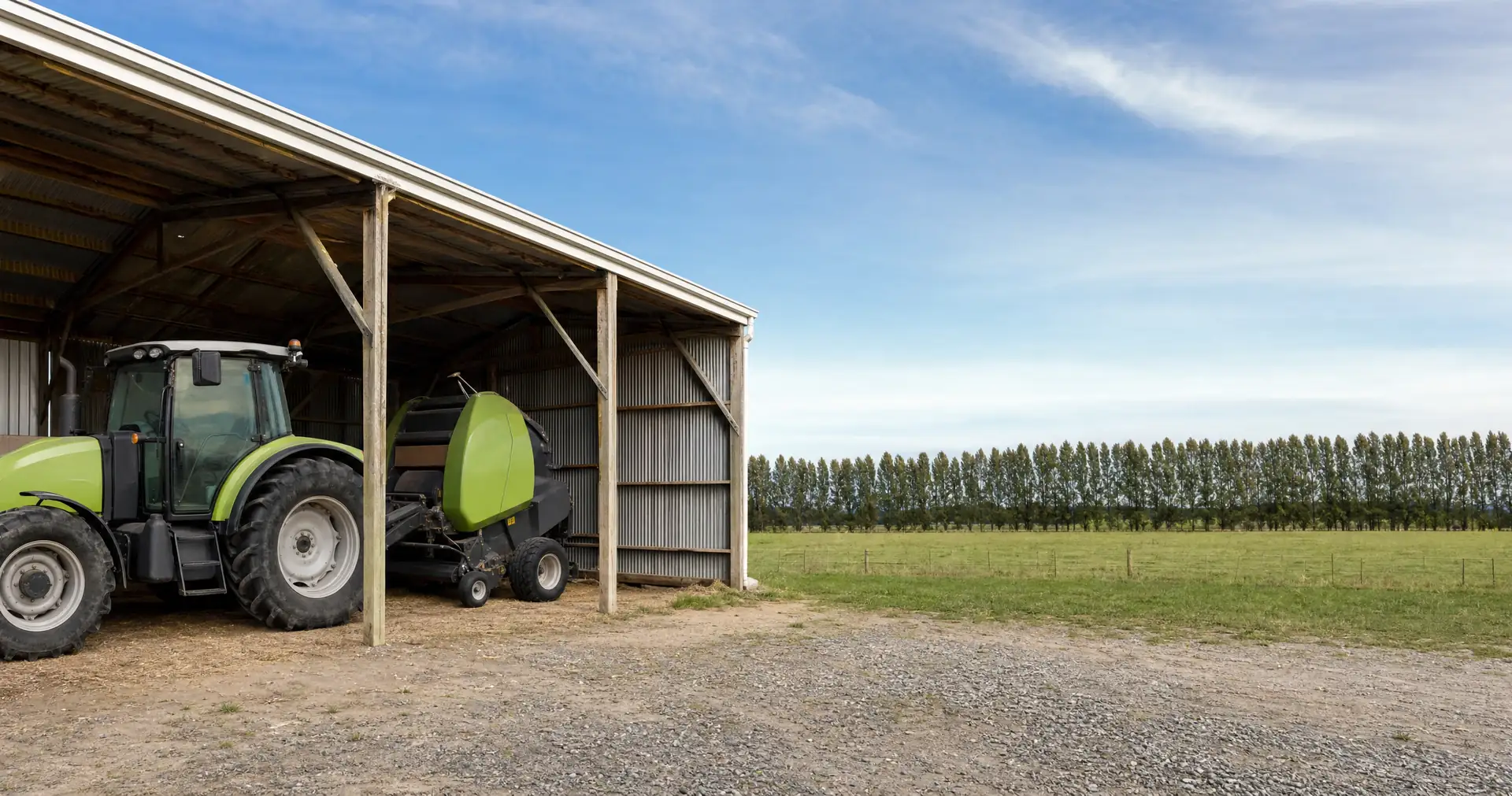
Sheep and beef farm loans for New Zealand hill country and finishing farm operators .
Sheep and beef farming covers around 24 million sheep and 3.7 million beef cattle across NZ per Stats NZ Agricultural Production data. The lending profile differs materially from dairy: lower per-hectare values on hill country, livestock trading patterns rather than continuous milk supply, and schedule price cycles set by Silver Fern Farms, Alliance, AFFCO, and ANZCO Foods.
What you need to know about NZ sheep and beef finance.
→Hill country per-hectare values are materially lower than dairy East Coast, Wairarapa, and South Island high-country hill blocks commonly $5K to $14K per hectare effective, against Waikato dairy at $45K to $80K. Total facility size is commonly comparable because farm scale is much larger.
→Livestock trading lines reflect schedule cycles Schedule prices set by Silver Fern Farms, Alliance Group, AFFCO, and ANZCO Foods drive the income cycle. Working capital sized against the store-to-finishing transition and the timing gap between purchase and slaughter receipts.
→Generational succession is a defining feature Family-held stations across multi-generational ownership are common. Inter-generational transfer commonly uses a mix of new term debt, vendor finance, and herd or flock transfer arrangements.
→Hill Country Erosion Programme co-funding overlay MPI Hill Country Erosion Programme provides co-funding for qualifying erosion-control work on Class 6, 7, and 8 land. Lenders commonly recognise the co-funded portion within capex planning.
→Farm Debt Mediation Act 2019 applies on enforcement The MPI-administered scheme requires lenders to offer mediation before taking enforcement on rural debt. The scheme is widely viewed as material to sheep and beef given the longer schedule-price cycles.
The landscape
Sheep and beef carries different cycle shape and lender posture to dairy.
Stats NZ Agricultural Production data records roughly 24 million sheep and 3.7 million beef cattle across the national herd, with sheep concentrated in Wairarapa, Manawatu, the East Coast, and the South Island high country, and beef finishing concentrated across the North Island's Bay of Plenty, Waikato, and the East Coast as well as Canterbury and Southland. Beef + Lamb New Zealand publishes the annual Sheep and Beef Farm Survey covering the farm-class system (Class 1 South Island high country, Class 2 South Island hill country, Class 3 North Island hard hill country, Class 4 North Island hill country, Class 5 North Island intensive finishing, Class 6 South Island finishing breeding, Class 7 South Island intensive finishing, Class 8 South Island mixed finishing).
The capital stack on a sheep and beef operation differs from dairy in three ways. Per-hectare land values are materially lower (hill country East Coast and Wairarapa commonly $5K to $14K per hectare; intensive finishing land in Manawatu and Canterbury commonly $18K to $35K per hectare). Livestock trading is a defining feature: store stock are bought, finished, and sold rather than retained as a continuous-supply herd, which creates a working-capital cycle quite distinct from dairy's monthly Fonterra advance. And the income cycle is shaped by schedule price cycles set by the major processors (Silver Fern Farms, Alliance Group, AFFCO, ANZCO Foods), which can move materially across a 12-month period.
Lender posture in sheep and beef is shaped by hill country erosion exposure, drought risk in the East Coast and Hawke's Bay regions, schedule-price volatility, and intergenerational succession pressure. Rabobank is widely regarded as the largest rural lender in New Zealand by exposure and carries deep familiarity with sheep and beef station structures. ANZ Agribusiness, ASB Rural, BNZ Partners, and Westpac rural-banking teams cover the mainstream pool. Heartland Bank publishes a farm transition lending product specifically targeting succession and equity release.
Hill country land (East Coast, per ha)
$5K to $14K
Finishing land (Manawatu, per ha)
$18K to $35K
Livestock trading line
$200K to $1.5M
Land debt term
15 to 25 years
Sheep and beef finance scenarios
Four common NZ sheep and beef finance scenarios.
Most sheep and beef applications fall into one of four patterns. Each pattern has a typical loan amount, structure, and lender pool.
Hill country station purchase
Established farm manager or stock manager stepping into ownership of a 600 to 1,500 hectare effective hill country station. East Coast, Wairarapa, or Hawke's Bay typical regions. Total project commonly $3M to $9M including livestock at hand.
·Loan amount: $2.5M to $7M
·Term: 20 to 25 years
Inter-generational succession transfer
Family station transferring from parent generation to next generation. Heartland Bank farm transition lending commonly the right product fit alongside the existing major-bank facility. Mix of new term debt, vendor finance, and flock or herd transfer.
·Loan amount: $1.5M to $5M
·Term: 15 to 20 years
Livestock trading working capital
Revolving facility against store-stock purchases and finishing programmes. Drawn through autumn store sales, repaid through schedule receipts at slaughter. Sized against the typical seasonal carry on the operation.
·Limit: $200K to $1.5M
·Structure: Revolving line of credit
Hill country erosion control and infrastructure
Capex on poplar and willow planting, retirement fencing, water reticulation, and yard upgrades. MPI Hill Country Erosion Programme co-funding commonly recognised within the lender's capex planning. Term loan against the rural land or asset finance on plant.
·Loan amount: $80K to $400K
·Term: 7 to 15 years
What sheep and beef operators borrow for
Six common NZ sheep and beef loan purposes.
Sheep and beef lending volume falls into six common purposes. Each has a typical structure that fits the asset life and the schedule-price cycle.
Rural land purchase or expansion
Long-dated term debt secured against the underlying land. Commonly 15 to 25 years. Per-hectare values vary materially by class: hill country East Coast or Wairarapa $5K to $14K per ha; intensive finishing Manawatu or Canterbury $18K to $35K per ha; high-country South Island $2K to $7K per ha.
Livestock trading and store-to-finishing carry
Working capital tied up in store stock purchased through autumn sales and finished for slaughter through winter and spring. Revolving line of credit shaped against the typical seasonal carry. Schedule receipts repay the line as stock are processed.
Yard, woolshed, and shearing-shed upgrades
Stockyards, woolshed redevelopment, shearing platform upgrades, dipping facilities. Term loan against land or chattel mortgage on plant. Commonly 7 to 12 years.
Hill country erosion control and fencing
Poplar and willow planting, retirement fencing, retired-area QEII covenants, water reticulation systems. MPI Hill Country Erosion Programme co-funding commonly recognised in capex planning. Term loan against land.
Tractors, ATVs, and farm machinery
Tractors, side-by-side ATVs (Kawasaki Mule, Polaris Ranger), helicopter mustering equipment shares, baling and silage-making plant. Chattel mortgage commonly 5 to 8 years.
Working capital across schedule-price cycles
Revolving facility covering input costs (drench, fertiliser, supplementary feed) across the gap between schedule-price receipts. Drawn through periods of low schedule price, repaid through periods of higher schedule price.
Tax, GST, and IRD livestock valuation
How GST, herd-scheme valuation, and Hill Country Erosion Programme funding typically work.
A GST-registered sheep and beef operator can typically claim the GST component on yards, woolshed redevelopment, machinery, and other capex as input tax in the relevant GST return, subject to the accountant's confirmation. Where plant is acquired under chattel mortgage, the full GST is typically claimable upfront. Where it is acquired under finance lease, GST is typically claimed across the rental payments. Livestock attracts a separate IRD treatment: operators commonly elect either the herd scheme (a notional fixed value updated annually by IRD) or national-standard cost (which tracks actual cost). The herd-scheme election is commonly material on breeding ewes and beef-breeding cows; trading stock (store cattle bought for finishing) is typically valued at cost. The election is not freely reversible. MPI Hill Country Erosion Programme co-funding for qualifying erosion control work is treated as receipted income or as a reduction in the capex base, depending on the funding agreement; the accountant is the right person to confirm tax treatment. Tax pooling through Tax Management NZ or Tax Traders is widely used to smooth provisional tax across uneven schedule-price years.
Sheep and beef finance bands
Indicative NZ sheep and beef finance bands by component.
The bands below are observed across the NZ rural-banking pool in 2026, drawn from public Stats NZ Agricultural Production data, Beef + Lamb New Zealand Sheep and Beef Farm Survey context, and Reserve Bank Agricultural Lending statistics. Per-hectare values vary materially by farm class and region.
Component
Typical band
Common term
Primary lender pool
South Island high country (Class 1, per ha)
$2K to $7K
20 to 25 years
Rabobank, ANZ Agribusiness, ASB Rural
North Island hard hill country (Class 3, per ha)
$5K to $12K
20 to 25 years
Rabobank, ANZ Agribusiness, ASB Rural, BNZ
North Island hill country (Class 4, per ha)
$8K to $14K
20 to 25 years
Rabobank, ANZ Agribusiness, ASB Rural, BNZ
North Island intensive finishing (Class 5, per ha)
$18K to $35K
15 to 20 years
Rabobank, ANZ Agribusiness, ASB Rural, BNZ
South Island finishing breeding (Class 6, per ha)
$15K to $30K
15 to 20 years
Rabobank, ANZ Agribusiness, ASB Rural, BNZ
Livestock trading line
$200K to $1.5M
Revolving 12-month
Major-bank rural team
Hill Country Erosion Programme capex
$80K to $400K
7 to 15 years
Major-bank rural plus MPI co-funding
Indicative bands only. Final rate, fee, and approval decisions are made by the lender after assessment. Per-hectare values vary materially by farm class, water reliability, and aspect.
Hill country vs finishing vs trading structure
Hill country station vs intensive finishing vs livestock trading.
The structure choice tracks the farm class, the income cycle, and the lender's comfort with hill country exposure. Hill country breeding sits longest because the asset life and breeding cycle are slowest; intensive finishing carries shorter facility tenor and tighter livestock-trading patterns.
Feature
Hill country breeding station
Intensive finishing operation
Pure livestock trading
Typical loan amount
$2.5M to $9M land + $400K to $1.5M livestock
$3M to $12M land + $400K to $2M livestock
Lower land base; larger trading line $500K to $2M+
Typical land term
20 to 25 years
15 to 20 years
Where land is held: 15 to 20 years
Livestock cycle
Breeding ewes and beef cows retained; lambs and weaners sold or finished
Store stock bought and finished within 6 to 12 months
Store-to-finishing carry on a 4 to 9 month cycle
Schedule price exposure
Material via lamb and prime beef receipts
Material; schedule cycle drives margin
Highly material; trading margin sits inside the cycle
Erosion / land-class overlay
Hill Country Erosion Programme commonly relevant
Limited erosion overlay typically
Limited erosion overlay typically
Default overlay
Farm Debt Mediation Act 2019 applies
Farm Debt Mediation Act 2019 applies
Farm Debt Mediation Act 2019 applies on land-secured portion
How it works
A typical NZ sheep and beef finance application.
Sheep and beef applications carry a livestock-valuation step, a farm-class assessment, and (for hill country properties) an erosion exposure review that other rural sub-segments do not always carry. Established multi-generational operators with documented trading data move faster.
01
Day 1 to 14
Define the components and structure
A typical sheep and beef proposal combines long-dated land debt with a livestock trading line and a separate capex facility for yard, woolshed, and erosion-control work. Defining each component upfront helps the rural-banking team size the security stack and apply the appropriate term to each asset class.
Documents commonly required
·Sale and purchase agreement (land)
·Stock numbers and IRD livestock valuation election
Beyond the standard SME application pack, sheep and beef lenders ask for the IRD livestock valuation election, the farm-class assignment from Beef + Lamb New Zealand context, the schedule-price exposure profile (which processor pool the operator supplies), council resource consents where applicable, and an erosion-exposure assessment for hill country properties. Established operators typically supply 3 to 5 seasons of trading data benchmarked against Beef + Lamb New Zealand Sheep and Beef Farm Survey averages.
Documents commonly required
·NZBN, business owner ID
·3 to 5 seasons financial statements (established station)
·Hill Country Erosion Programme funding agreement (where relevant)
·Insurance schedule
03
Day 21 to 60
Lender assessment, valuation, and offer
Lenders assess against the security position on the land (LVR after deposit and livestock contribution), the productive capacity per hectare benchmarked against Beef + Lamb New Zealand Sheep and Beef Farm Survey averages, the operator profile (farm management history, succession plan, processor relationships), and the erosion exposure for hill country. Independent valuation by a registered rural valuer is commonly commissioned. Offers commonly come back with conditions: deposit size, additional security, erosion-control milestones, or covenants tied to operating profit per hectare.
04
Settlement plus first season
Settle, register securities, transition stock
Land debt settles on solicitor-handled completion. The lender registers a first mortgage against the rural land title. Charge over livestock registered on the Personal Property Securities Register (PPSR). Livestock trading line opens alongside the term debt. Capex on yards, woolshed, and erosion control commonly staged across the first 18 to 36 months. Hill Country Erosion Programme funding milestones tracked through the project plan.
A rural banking specialist familiar with the Beef + Lamb New Zealand farm-class system and the local processor pool commonly tightens the application cycle versus a generalist relationship manager.
Worked scenarios
Three NZ sheep and beef finance scenarios.
Real-world structures across hill country station purchase, intensive finishing operation expansion, and intergenerational succession. Each illustrates how farm class, schedule-price exposure, and erosion overlay shift the offered structure.
Stock manager stepping up to first ownership
East Coast hill country station purchase
A Wairoa stock manager with 12 years of station-management history buying a 1,100 hectare effective Class 4 North Island hill country station running 7,200 stock units (5,400 ewes, 280 breeding cows, finishing through to lamb and prime). Total project $9.4M ex-GST: $8.6M land freehold ($7,800 per hectare effective), $720K stock at hand at IRD herd-scheme valuation, $80K consenting and entry costs.
Structure agreed with the rural-banking team: 25-year term loan against the land freehold ($6.9M after 20% combined deposit and stock contribution, indicative 7-9% p.a.), separate livestock trading line ($550K, revolving, indicative 8-10% p.a.) sized against the autumn store purchase pattern, capex line ($300K, 10-year term, indicative 8-10% p.a.) for fencing, water reticulation, and erosion control. MPI Hill Country Erosion Programme co-funding agreed at 50% on $200K of the erosion-control work.
First mortgage on the rural land registered at settlement. Charge over livestock registered on the PPSR. Schedule-supply relationships transferred (Silver Fern Farms primary processor on prime, Alliance Group on lamb). IRD herd-scheme election retained on breeding stock. Operator commenced first full season the following 1 July.
Indicative figures
Total project
$9.4M
Land freehold
$8.6M
Term loan after deposit + stock
$6.9M
Indicative blended rate
7-9% p.a.
Established finishing operator scaling
Manawatu intensive finishing operation expansion
A Feilding intensive finishing operator with 15 years of trading data adding a 180 hectare finishing block adjacent to the existing 240 hectare home block. Total project $5.6M ex-GST: $5.2M land at $28,800 per hectare (Class 5 intensive finishing), $250K boundary fencing and water reticulation, $150K trough and feed-pad upgrades. Existing major-bank rural-banking relationship of 12 years.
Structure: $5.6M facility split as $4.4M term loan secured against the combined land mortgage (20-year term, indicative 7-9% p.a.) and $400K chattel mortgage on the trough and feed-pad upgrades (10-year term, indicative 8-10% p.a.). Existing livestock trading line uplifted from $850K to $1.4M to support the larger store-to-finishing carry across the expanded finishing area. ANZCO Foods schedule-supply relationship extended to cover the additional finishing throughput.
Mortgage variation registered against the existing land title plus first mortgage on the new block. Livestock trading line uplift effective at settlement. Capex on fencing and water reticulation completed across the first 18 months. Operator integrated the new block into the existing finishing programme through the following autumn store purchases.
Indicative figures
Total project
$5.6M
Land (180 ha at $28,800)
$5.2M
Trading line uplift
$550K
Indicative blended rate
7-9% p.a.
Family station transferring to third generation
Hawke's Bay multi-generational succession transfer
A Hawke's Bay sheep and beef station transferring from second generation (60s) to third generation (30s) using a Heartland Bank farm transition lending product alongside the existing major-bank facility. Underlying farm is 980 hectares effective Class 3 hill country running 6,800 stock units. Total transfer value $9.2M including land, stock, plant, and goodwill. Existing land debt of $2.6M sits with a major-bank rural team.
Structure: Heartland farm transition lending of $2.0M provides the third generation's deposit and equity-release component to the second generation, secured against the rural land alongside the existing first-mortgage holder. Existing major-bank facility of $2.6M restructured to add $1.4M for the stock and plant transfer, total facility $4.0M (20-year term, indicative 7-9% p.a.). Second generation retains a vendor-finance second mortgage of $1.4M (10-year term, indicative 7-9% p.a.). Balance funded through the third generation's own equity from prior farm-management roles.
First mortgage and second mortgage registered against the rural land. Charge over livestock transferred on the PPSR. Schedule-supply relationships transferred at settlement. MPI Hill Country Erosion Programme funding agreement under the previous generation continued under the new ownership. Heartland's farm transition product positioned to wind down as the third generation builds equity through schedule-cycle profit retention.
Indicative figures
Total transfer value
$9.2M
Major-bank facility
$4.0M
Heartland farm transition
$2.0M
Vendor finance second mortgage
$1.4M
NZ sheep and beef lenders
Lenders that fund NZ sheep and beef operators well.
Several NZ lenders carry deep familiarity with sheep and beef station structures. The shortlist below is editorial. Rabobank does not yet have a dedicated lender page on this site and is referenced by name only.
MPI sector outlook covering schedule price expectations and regional production trends.
FAQ
Sheep and beef farm loans, NZ small-business questions answered
How much can a NZ sheep and beef station typically borrow against the land?
NZ rural lenders commonly lend to a 50% to 65% loan-to-value ratio (LVR) against rural land for established sheep and beef operations. Per-hectare values vary materially by farm class: South Island high country (Class 1) commonly $2K to $7K per hectare; North Island hard hill country (Class 3) commonly $5K to $12K per hectare; intensive finishing land (Class 5 and 6) commonly $18K to $35K per hectare. Independent valuation by a registered rural valuer is the standard input. Beef + Lamb New Zealand publishes the farm-class system and benchmarking that lenders cross-reference.
Which NZ banks lend to sheep and beef farms?
The primary rural-banking lender pool covers Rabobank (widely regarded as the largest rural lender in New Zealand by exposure), ANZ Agribusiness, ASB Rural, BNZ Partners, and Westpac's rural team. Heartland Bank publishes a farm transition lending product specifically targeting succession and intergenerational transfer. Specialist asset-finance lenders cover the tractor, ATV, and machinery portion. The major-bank rural teams typically take the relationship across land, livestock trading, capex, and working capital; Heartland and specialist lenders commonly slot in alongside on specific components.
How do schedule prices affect a sheep and beef finance application?
Schedule prices set by Silver Fern Farms (multi-stakeholder including Pamu and grower shareholders), Alliance Group (farmer co-operative), AFFCO, and ANZCO Foods drive the income cycle for sheep and beef operators. Schedule prices move materially across a 12-month period reflecting domestic and export market conditions. Lenders commonly review the operator's schedule-supply relationships and the historical schedule-price exposure as part of the application file because the income cycle shapes both serviceability and the working-capital line sizing. The Ministry for Primary Industries Situation and Outlook for Primary Industries publishes sector outlook covering schedule price expectations.
What is the IRD herd scheme and how does it apply to sheep and beef?
The IRD herd scheme is a livestock valuation method where stock is valued at a notional fixed value updated annually by IRD, rather than at actual cost (the national-standard-cost election). For sheep and beef, the herd-scheme election commonly applies to breeding ewes and beef-breeding cows, where the productive life sits across multiple years. Trading stock (store cattle bought for finishing within 6 to 12 months) is typically valued at cost rather than under the herd scheme. The election is not freely reversible. Lenders commonly review the election as part of the file because it affects the equity carried into the balance sheet. The accountant is the right person to confirm the election on the specific business position.
What is the Hill Country Erosion Programme and how does it interact with finance?
The Ministry for Primary Industries Hill Country Erosion Programme provides co-funding for qualifying erosion-control work (poplar and willow planting, retirement fencing, retired-area covenants, sediment management) on Class 6, 7, and 8 land. The programme operates through regional council partnerships and typically co-funds 50% of qualifying capex up to set limits. Lenders commonly recognise the co-funded portion within capex planning, sizing the loan portion against the operator's share of the work. The funding agreement and the erosion-control project plan typically sit inside the lender file. Tax treatment of the co-funded portion is a matter for the accountant's confirmation.
What rate range applies to NZ sheep and beef finance in 2026?
Indicative rates on sheep and beef finance commonly sit in the 7% to 11% per annum band depending on facility type, security position, and operator profile. Long-dated term debt secured against the rural land freehold sits at the lower end (commonly 7-9%). Livestock trading lines and capex facilities sit in the middle (commonly 8-10%). Final rate is set by the lender after assessment. Established operators with multi-season trading data and benchmarked Beef + Lamb New Zealand Sheep and Beef Farm Survey performance commonly access the lower bands.
How does livestock trading working capital typically work?
Sheep and beef operators commonly run a revolving line of credit sized against the typical store-to-finishing carry. Store stock are bought through autumn sales (March to May), finished through winter and spring on home pasture or specialist crops, and processed through the schedule from late spring onward. The trading line is drawn through autumn store purchases and repaid through schedule receipts as stock are processed. Line sizing reflects the operator's typical seasonal carry and the schedule-price exposure profile. The Farm Debt Mediation Act 2019 overlay applies where the trading line is secured against farm property.
How does generational succession typically work in NZ sheep and beef?
NZ sheep and beef stations are commonly held across multiple generations within a single family. Succession typically combines new term debt for the next generation, vendor finance from the parent generation, flock or herd transfer at IRD herd-scheme valuation, and an equity release to the parent generation funded by Heartland Bank farm transition lending or equivalent. The structure depends on the family's preferences around staged versus full transfer, the next generation's existing equity from prior farm-management roles, and the parent generation's retirement income needs. Solicitor and accountant input is the standard last step on the structure choice.
What is the Farm Debt Mediation Scheme?
The Farm Debt Mediation Act 2019, administered by the Ministry for Primary Industries (MPI), requires lenders to offer mediation before taking enforcement action on agricultural debt secured against farm property. The scheme covers sheep and beef, dairy, horticulture, and other primary-sector borrowers. A mediator (drawn from the MPI-approved panel) facilitates a structured discussion between the borrower and lender to explore alternatives to enforcement. The scheme commonly results in restructured repayment terms or a managed wind-down rather than forced sale. The scheme is widely viewed as material to sheep and beef given the longer schedule-price cycles, where a low-schedule year can pressure serviceability without indicating long-term viability concerns.
What documents does a sheep and beef lender typically ask for?
Beyond the standard SME application pack (NZBN, business owner ID, last 12 to 24 months bank statements, last 2 years financial statements), sheep and beef lenders commonly ask for the IRD livestock valuation election, the Beef + Lamb New Zealand farm-class assignment, the schedule-supply relationships (which processor pool the operator supplies), the stock reconciliation and ageing, council resource consents where applicable, and the Hill Country Erosion Programme funding agreement (where relevant). Established operators typically supply 3 to 5 seasons of trading data benchmarked against Beef + Lamb New Zealand Sheep and Beef Farm Survey averages.
What is the typical loan term on sheep and beef station debt?
NZ sheep and beef land debt commonly runs 15 to 25 year terms, reflecting the multi-generational asset life of the underlying station. The longest terms (25 years) typically apply to first-station purchases and to multi-generational succession transfers where the lender is comfortable with the long-term productive capacity. Refinances on existing land debt are commonly written at 15 to 20 year terms. Interest-only periods are sometimes available at the start of the term, particularly for stock or farm managers stepping up to ownership where the early years carry the highest cash-flow pressure across schedule-price cycles. Final term and interest-only treatment is set by the lender after assessment.
How does the Beef + Lamb New Zealand farm-class system fit into a loan?
Beef + Lamb New Zealand publishes the annual Sheep and Beef Farm Survey covering eight farm classes (Class 1 through Class 8) defined by region, country type, and production system. Lenders commonly use the farm-class assignment as a serviceability benchmark, comparing the operator's production per stock unit, operating profit per hectare, and gross farm income against the relevant class average. An operator running materially above the class average commonly accesses tighter rate bands; an operator running below the class average commonly attracts additional questions or more conservative LVR positioning. The class assignment also frames the appropriate per-hectare value range during independent valuation.
Can a sheep and beef station be financed for hill country forestry conversion or partial retirement?
Yes. Hill country forestry conversion (commonly Pinus radiata on Class 6, 7, or 8 land that is uneconomic for grazing) is financeable through specialist forestry lending pathways alongside the standard rural-banking pool. Partial retirement under QEII covenant or under the Hill Country Erosion Programme is also financeable, with the retired area treated as a productive-capacity adjustment within the lender's serviceability calculation. Forestry conversion carries a long cash-flow gap (commonly 25 to 30 years to harvest for radiata) that materially differs from grazing serviceability; specialist forestry-aware lenders such as Rabobank carry deeper familiarity. The structure depends on the proportion of land converted and the residual grazing operation.
Can a sheep and beef station refinance during a low-schedule year?
Yes. Refinancing is widely used in sheep and beef, both for repricing of the existing facility and for restructuring across components (consolidating land, livestock trading, and capex into a clearer structure). Low-schedule years commonly trigger refinance conversations because the schedule cycle published by Silver Fern Farms, Alliance Group, AFFCO, and ANZCO Foods can move materially within a single trading year. Lenders commonly work with operators through low-schedule periods rather than triggering enforcement; the Farm Debt Mediation Act 2019 also requires mediation before enforcement. Tax pooling through Tax Management NZ or Tax Traders is widely used to smooth provisional tax timing across uneven schedule years.
Indicative content only. Not personalised financial advice.
A business loan is a commitment that runs for months or years, and repayments come out of the same operating cash flow as everything else. Before committing, it is worth modelling the weekly and monthly cost against the business's working-capital position, which is what this site is built to help with. Borrowing at a level that stays comfortable through a quiet quarter, not just a strong one, is widely regarded as the safer frame.
What this site is
A calculator and information tool. Not a lender, not a broker, not a registered financial adviser. Nothing here is personalised financial advice.
What the figures show
Modelled estimates based on the inputs you enter. Not a quote. Not an offer of credit. Not a guarantee of approval, rate, or fees.
What the lender decides
Final rates, fees, and approval are set by the lender after a CCCFA-appropriate assessment of the applicant's circumstances and credit decision.
Commercial disclosure
Businessloans.org.nz earns a commission from Prospa when a visitor applies through this site and their application is approved. The commission is paid by Prospa, not by the borrower, and it does not influence the rate Prospa offers. Full disclosure on the partner page.
Tax, GST, and accountant framing
Tax-treatment statements (GST claim timing, interest deductibility, depreciation rates) are general in nature and subject to your accountant's confirmation on the specific business position. For material amounts, professional advice from a registered financial adviser or chartered accountant is widely regarded as the safer frame.