Viticulture and vineyard loans for New Zealand grape growers and winemakers .
Viticulture and vineyard finance in NZ funds a long capital cycle. Vine establishment runs three to four years to first commercial crop, with stainless tanks, presses, and crush-pad capex sourced through specialist NZ suppliers such as Vitis & Winemakers and Liquid Processing Equipment. Marlborough, Hawke's Bay, and Central Otago carry the bulk of national plantings.
What you need to know about NZ viticulture and vineyard finance.
→Vine establishment commonly $35K to $70K per hectare Land preparation, posts, wires, irrigation drip line, and grafted Sauvignon Blanc, Pinot Noir, or Chardonnay vines. No commercial crop until year three or four.
→Tank, press, and crush pad capex commonly $180K to $850K per stage Stainless tank lines, pneumatic presses, sorting tables, and crush-pad fitouts sourced through NZ suppliers such as Vitis & Winemakers and Liquid Processing Equipment.
→Long ramp from planting to first commercial vintage Years one and two carry pure capex with no income; year three commonly delivers a partial crop; year four onward delivers full commercial yield. Lender serviceability tested across this ramp.
→Wine Standards Management Plan registration with MPI Wineries operate under a Wine Standards Management Plan (WSMP) registered with the Ministry for Primary Industries under the Wine Act 2003. New Zealand Winegrowers represents the sector and publishes annual vintage and export data.
The landscape
Marlborough, Hawke's Bay, and Central Otago carry the bulk of NZ vineyard finance volume.
New Zealand Winegrowers (the trading name of Bragato Industry Body) publishes annual vintage and export data showing Sauvignon Blanc out of Marlborough as the dominant export variety, supported by Pinot Noir from Central Otago and Martinborough, and Chardonnay, Syrah, and Bordeaux blends from Hawke's Bay. Stats NZ goods-export data places wine in the top ten of NZ export categories by value. The vineyard finance pool tracks this regional concentration: Marlborough drives the largest single-region volume, with Hawke's Bay and Central Otago materially active.
Viticulture finance differs from generic horticulture in the capital cycle and the lender posture. The vine itself is a 25 to 30 year asset, with grafted vines on phylloxera-resistant rootstock typically reaching peak yield around years six to eight and continuing to crop into the late twenties. Land prep, post-and-wire trellising, irrigation drip line, and the grafted vine commonly run $35,000 to $70,000 per hectare to plant. The first three years carry establishment cost with no commercial revenue, which means lender serviceability is tested across the ramp rather than against current trading.
Winery capex is a separate finance question to vineyard establishment. Stainless tank lines, pneumatic presses, sorting tables, crush-pad fitouts, barrel halls, and bottling plant are commonly sourced through documented NZ suppliers including Vitis & Winemakers (Blenheim) and Liquid Processing Equipment (Hawke's Bay). Operators producing under their own label commonly stage winery capex across vintages: year-one tank line, year-three press upgrade, year-five barrel hall expansion. Operators selling fruit to a contract winery skip the winery capex entirely and run the vineyard as a grape-supply business.
Vine establishment per ha
$35K to $70K
Stainless tank line
$120K to $600K
Crush pad and press
$180K to $850K
Term debt term
15 to 20 years
Viticulture and vineyard scenarios
Four common NZ viticulture finance scenarios.
Most vineyard applications fall into one of four patterns. Each pattern has a typical loan amount, structure, and lender pool.
Greenfield vineyard establishment
New planting of 10 to 30 hectares on bare land in Marlborough Wairau Valley, Hawke's Bay Bridge Pa, or Central Otago Bannockburn. Land prep, posts, wires, drip line, and grafted vines. Three-year ramp to first commercial crop.
·Loan amount: $400K to $1.8M
·Term: 15 to 20 years
Stainless tank line and press install
New or expanded winery installing a stainless tank line and pneumatic press through Vitis & Winemakers or Liquid Processing Equipment. Staged across one or two vintages. Asset finance on the tank line and press.
·Loan amount: $300K to $850K
·Term: 7 to 10 years
Crush pad and barrel hall fitout
New crush pad including sorting table, must pumps, and stainless plumbing, plus a barrel hall sized for 200 to 800 French oak barriques. Common at the small-producer scaling stage.
·Loan amount: $250K to $1.2M
·Term: 8 to 12 years
Seasonal working capital for vintage
Revolving facility covering harvest labour (often Recognised Seasonal Employer scheme workers), bird netting, frost-protection diesel, packaging, and freight. Drawn from January to May; repaid out of contract winery settlement or wholesale receipts.
·Limit: $80K to $400K
·Structure: Revolving line of credit
What vineyards and wineries borrow for
Six common NZ vineyard and winery loan purposes.
Vineyard and winery lending volume falls into six common purposes. Each has a typical structure that fits.
Vine establishment
Grafted Sauvignon Blanc, Pinot Noir, Chardonnay, Syrah on phylloxera-resistant rootstock, with land prep, posts, wires, and drip irrigation. Long-dated term debt secured against the land and vine asset.
Stainless tanks and presses
Stainless tank lines from 2,000 L to 50,000 L, pneumatic membrane presses, sorting tables, must pumps. Sourced through Vitis & Winemakers, Liquid Processing Equipment, and other NZ winery equipment suppliers.
Crush pad and winery building
Crush-pad fitout (sorting tables, hopper, must lines), barrel hall, tank pad concrete and plumbing, refrigeration. Common at the small to mid producer transition from contract winemaking to own-label.
Frost protection and bird netting
Helicopter contracts and wind machines for spring frost (especially Central Otago and Wairarapa), full-canopy bird netting for ripening protection. Asset finance on capital items, working capital on annual contract spend.
Seasonal working capital for vintage
Harvest labour (commonly Recognised Seasonal Employer workers), packaging materials, freight to contract winery or domestic distribution. Revolving line drawn January to May, repaid on settlement.
Vineyard tractors and sprayers
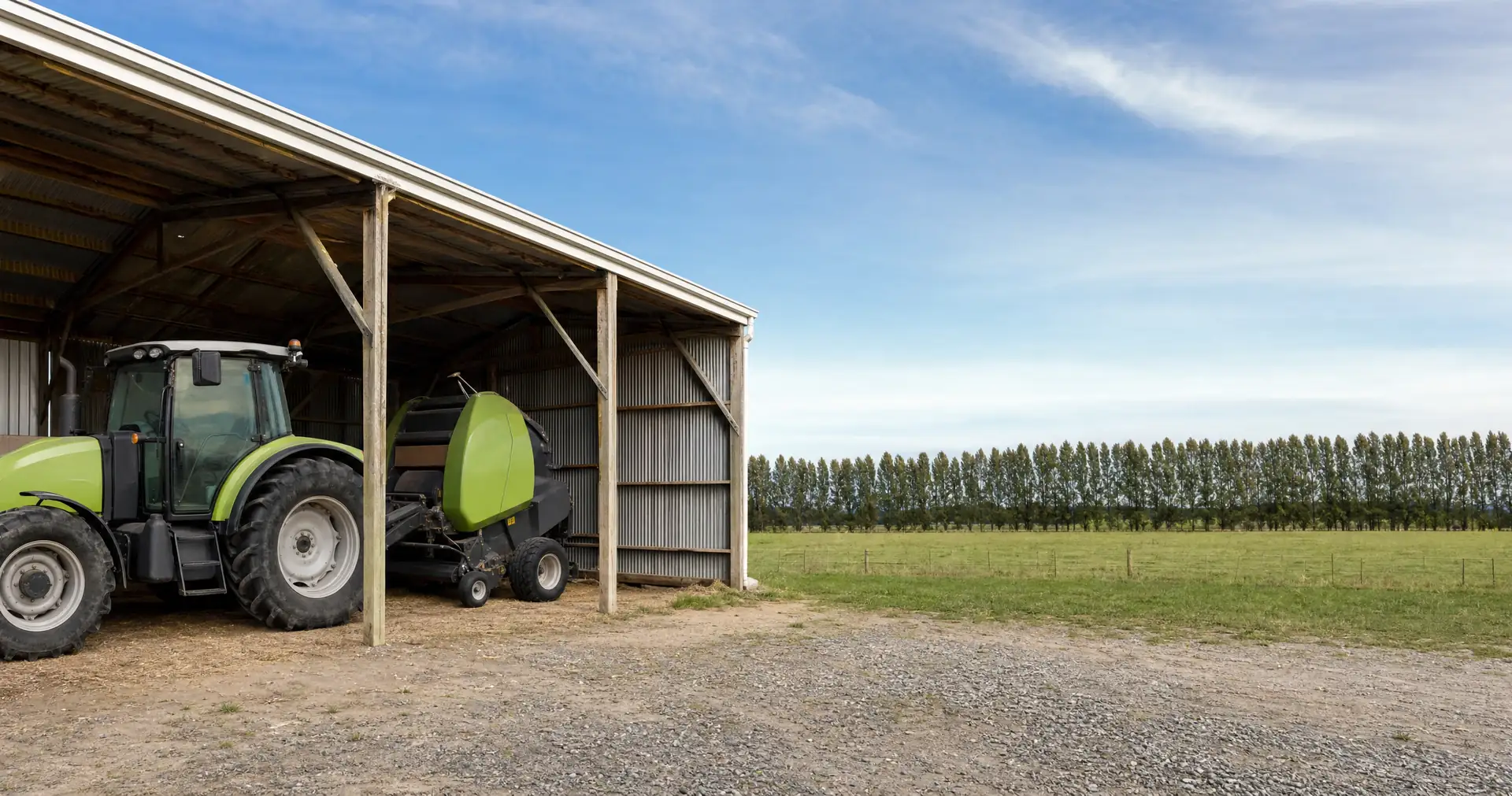
Narrow-row vineyard tractors (Fendt, New Holland, Kubota), recycle sprayers, mechanical leaf-pluckers, mid-row mowers. Chattel mortgage on a 5 to 8 year term.
Tax, GST, and depreciation
How GST, depreciation, and the vine establishment cost typically work.
A GST-registered vineyard or winery operator can typically claim the GST component on tank lines, presses, crush-pad equipment, vineyard tractors, and trellising as input tax in the relevant GST return, subject to the accountant's confirmation. Where assets are acquired under chattel mortgage, the full GST is typically claimable upfront. Where assets are acquired under finance lease, GST is typically claimed across the rental payments. Vine establishment cost has its own IRD treatment under the horticultural plant rules, with the cost commonly capitalised and amortised across the productive life of the vine rather than expensed at planting; rates and method depend on the variety and rootstock combination. The accountant is the right person to confirm vine cost treatment, depreciation schedule, and structure choice on the specific business position.
Vineyard and winery capex bands
Indicative NZ vineyard and winery capex bands.
Capex bands vary by region, scale, and supplier. The bands below are observed across NZ vineyard and winery finance applications in 2026, with NZ-supplied stainless and press equipment sourced through the documented suppliers.
Capex item
Small producer
Mid producer
Common term
Vine establishment per hectare
$35K to $50K
$45K to $70K
15 to 20 years
Stainless tank line (full install)
$120K to $300K
$300K to $600K
7 to 10 years
Pneumatic membrane press
$80K to $180K
$180K to $350K
7 to 10 years
Crush pad fitout
$150K to $300K
$300K to $600K
8 to 12 years
Barrel hall (200-800 barriques)
$180K to $400K
$400K to $1.2M
10 to 15 years
Vineyard tractor and recycle sprayer
$70K to $130K
$130K to $220K
5 to 8 years
Indicative bands only. Actual price depends on scale, supplier, and dealer. Final rate, fee, and approval decisions are made by the lender after assessment.
Grape-supply vs own-label vs contract winemaking
Grape-supply vineyard vs own-label producer vs contract winemaking arrangement.
The structure choice tracks producer ambition, capex appetite, and route to market. Grape-supply vineyards skip winery capex entirely; own-label producers carry the full vineyard plus winery capital stack; contract winemaking sits between, with the winemaking outsourced and the brand retained.
Feature
Grape-supply vineyard
Own-label producer (vineyard + winery)
Contract winemaking arrangement
Total capital required
Land + vines only
Land + vines + winery + barrel hall
Land + vines + brand and packaging
Winery capex
None, fruit sold to a winery
$300K to $3M+ for tanks, press, crush pad, barrel hall
None, contract winery handles processing
Revenue model
Per-tonne grape contract with a winery
Wholesale and direct-to-consumer wine sales
Wholesale wine sales under own brand
Typical term debt term
15 to 20 years
15 to 20 years on land, 7 to 12 on winery
15 to 20 years on vineyard land
Lender comfort
Strongest with multi-year grape supply contract
Strongest with established off-take and brand traction
Strongest with contract winery agreement signed
Cash-flow shape
Single annual settlement post-vintage
Year-round wine sales, vintage cost concentrated Jan to May
Annual contract winemaking invoice plus wholesale receipts
How it works
A typical NZ vineyard or winery finance application.
Vineyard applications carry a multi-year ramp serviceability test that generic horticulture applications do not, plus a Wine Standards Management Plan check for any applicant doing winemaking on site.
01
Day 1 to 21
Define the project scope and capex stack
A typical vineyard or winery loan combines long-dated term debt against the land and vine asset, separate asset finance on tanks, press, and crush-pad equipment, and a seasonal working-capital line for vintage. Defining the staged capex upfront helps the lender size each tranche and structure the multi-year drawdown correctly.
·Multi-year cash flow forecast across the establishment ramp
02
Day 7 to 21
Submit application with viticulture documents
Beyond the standard SME application pack, vineyard and winery lenders ask for the vineyard development plan, the Wine Standards Management Plan registration with MPI (where the operator does winemaking on site), the grape-supply contract (for grape-supply vineyards), and confirmation of irrigation water consent under the Resource Management Act 1991 where relevant.
Documents commonly required
·NZBN, business owner ID
·12 to 24 months business bank statements
·Last 2 years financial statements (existing operator)
·Vineyard development plan with planting schedule
·Grape-supply contract (where applicable)
·Wine Standards Management Plan registration
·Irrigation water consent (where applicable)
·Land title and any rural-residential subdivision detail
·Insurance quotes covering frost, hail, and vintage
03
Day 14 to 35
Lender assessment and offer
Lenders assess against three things: the security position on the land and vine asset (LVR after deposit), the multi-year cash-flow ramp across vine establishment to first full commercial crop, and the operator profile (viticulture or winemaking experience, prior trading, contract winery or grape-supply relationships). Offers commonly come back with conditions: deposit, staged drawdowns tied to planting and capex milestones, and capitalised-interest periods through the establishment phase.
04
Settlement onward across 3 years
Settle, register security, stage drawdowns
Term debt settles against the land title with a registered mortgage. Asset finance settles directly to equipment suppliers (Vitis & Winemakers, Liquid Processing Equipment, machinery dealers) with PPSR registration on each financed asset. Drawdowns commonly staged across vine planting milestones (year one and year two) and across winery capex stages (tank install, press install, crush pad). Working-capital line opens against the vineyard at first commercial crop.
A rural and agribusiness banker familiar with NZ viticulture commonly tightens the indicative rate band by knowing which lenders accept the multi-year establishment ramp serviceability calculation versus those preferring established crop history.
Worked scenarios
Three NZ vineyard and winery finance scenarios.
Real-world structures across a Marlborough greenfield Sauvignon Blanc planting, a Hawke's Bay tank-line install, and a Central Otago boutique own-label scale-up. Each illustrates how regional context, capex stage, and contract evidence shift the offered rate.
New 22 ha vineyard on bare land, grape-supply contract with major winery
Marlborough Wairau Valley greenfield Sauvignon Blanc planting
A new vineyard development on 22 hectares of bare land in the Wairau Valley, planted in Sauvignon Blanc on phylloxera-resistant rootstock for grape supply to a major Marlborough winery. Total project $1.32M ex-GST: $880,000 vine establishment ($40,000 per ha across 22 ha), $180,000 trellising and irrigation, $120,000 land prep and frost protection wind machines, $140,000 contingency for vintage one and two operating cost. Land already owned (purchased separately).
Structure agreed with a rural banker familiar with Marlborough Sauvignon Blanc: secured term loan on the vineyard development ($1.1M after 17% deposit, 18-year term, indicative 8-10% p.a.) with capitalised interest through years one to three. Five-year grape-supply contract with the off-take winery materially supported the serviceability case. Working-capital line of $200,000 to open at year three when first partial crop arrives.
Mortgage registered against the land title at settlement. Drawdowns staged across year-one planting (60%) and year-two infill and trellising (40%). New Zealand Winegrowers vintage data and grape-supply tonnage assumptions used by the lender to model years four through seven serviceability. Wine Standards Management Plan not required (grape-supply vineyard, no on-site winemaking).
Indicative figures
Total project
$1.32M
Vine establishment (22 ha)
$880,000
Term loan after deposit
$1.1M
Indicative rate
8-10% p.a.
Existing 14 ha own-label producer expanding winery capacity
Hawke's Bay Bridge Pa tank line and press install
An established Hawke's Bay Bridge Pa winery (14 ha planted, 8 years trading) installing a new stainless tank line and pneumatic membrane press to support a doubling of own-label production. Total project $620,000 ex-GST: $360,000 stainless tank line through Liquid Processing Equipment (Hawke's Bay supplier), $180,000 pneumatic membrane press, $80,000 crush-pad refrigeration upgrade and stainless plumbing.
Existing 8 years of trading and an established wholesale and direct-to-consumer brand materially tightened the indicative rate band. Asset finance package: chattel mortgage on the tank line and press ($560,000 after 10% deposit, 9-year term, indicative 8-10% p.a.). Working-capital line on the existing facility extended from $200,000 to $300,000 to cover the larger vintage cost across the increased crush.
PPSR security interest registered against the tank line and press at settlement. Wine Standards Management Plan registration with MPI updated to reflect the increased winemaking capacity. Tank line installed across two months in spring; commissioned in time for vintage. New Zealand Winegrowers Hawke's Bay regional data and the existing brand wholesale book used by the lender to model serviceability.
Indicative figures
Total project
$620,000
Stainless tank line
$360,000
Asset finance after deposit
$560,000
Indicative rate
8-10% p.a.
Established 6 ha boutique own-label producer adding crush pad and barrel hall
Central Otago Bannockburn Pinot Noir boutique scale-up
A Central Otago Bannockburn boutique producer (6 ha Pinot Noir, 12 years trading on the existing vineyard) adding an on-site crush pad and barrel hall to bring all winemaking in-house from a contract winery in Cromwell. Total project $880,000 ex-GST: $320,000 crush-pad fitout (sorting table, must pumps, stainless plumbing) through Vitis & Winemakers, $440,000 barrel hall building and 380 French oak barriques, $120,000 small stainless tanks and refrigeration.
Structure agreed with the existing rural banker: secured term loan on the building portion ($440,000, 12-year term, indicative 8-10% p.a.), separate chattel mortgage on the crush-pad equipment and small tanks ($440,000, 9-year term, indicative 8-10% p.a.). Existing 12 years of trading and an established direct-to-consumer cellar door and wine-club channel materially tightened pricing.
Mortgage registered against the existing vineyard land title. PPSR security interest registered against the financed equipment. Wine Standards Management Plan registration upgraded with MPI to reflect on-site winemaking. Frost-protection wind machines and full-canopy bird netting already in place from prior planting. Crush pad commissioned in time for vintage; first wholly in-house barrel-aged Pinot Noir bottled 18 months later.
Indicative figures
Total project
$880,000
Term loan (building)
$440,000
Chattel mortgage (equipment)
$440,000
Indicative rate
8-10% p.a.
NZ viticulture and vineyard lenders
Lenders that fund NZ vineyards and wineries well.
Several NZ lenders carry rural and agribusiness teams with viticulture experience. The shortlist below is editorial.
Reserve Bank NZ publishes rural lending stock and flow statistics including viticulture and horticulture sub-segments.
FAQ
Viticulture and vineyard loans, NZ small-business questions answered
How much does it cost to establish a vineyard per hectare in NZ?
NZ vineyard establishment commonly runs $35,000 to $70,000 per hectare depending on region, vine spacing, rootstock choice, and trellising specification. The cost covers land preparation, soil amendments, posts and wire trellising, drip irrigation, and grafted vines on phylloxera-resistant rootstock. Marlborough Sauvignon Blanc plantings on standard 2.4m row spacing typically sit toward the lower end of the band; Central Otago Pinot Noir on tighter spacing with frost-protection infrastructure typically sits toward the higher end. Vine establishment cost has its own IRD horticultural plant treatment.
How long until a new vineyard produces a commercial crop?
Newly planted NZ vines commonly produce a partial commercial crop in year three, with full commercial yield from year four onward. Years one and two carry pure capex with no commercial revenue, which is why lender serviceability for vineyard establishment loans is tested across the multi-year ramp rather than current trading. Capitalised-interest periods through years one to three are commonly built into the term loan structure. Peak yield typically arrives around year six to eight and continues into the late twenties of the vine's 25 to 30 year productive life.
What is the Wine Standards Management Plan and who needs one?
The Wine Standards Management Plan (WSMP) is a regulatory framework administered by the Ministry for Primary Industries under the Wine Act 2003. Any NZ winery producing wine for sale, including small boutique producers, must operate under a registered WSMP covering recordkeeping, labelling, traceability, and export eligibility. Grape-supply vineyards that sell fruit to a winery without doing on-site winemaking do not require their own WSMP. New Zealand Winegrowers and MPI publish guidance on WSMP development and registration in full.
Where do NZ vineyards source tank, press, and crush-pad equipment?
Documented NZ winery equipment suppliers include Vitis & Winemakers (Blenheim, Marlborough) and Liquid Processing Equipment (Hawke's Bay), both of which supply stainless tank lines, pneumatic membrane presses, sorting tables, must pumps, and crush-pad fitouts to NZ wineries. Other suppliers cover refrigeration, bottling, labelling, and laboratory equipment. Equipment is commonly sourced new from these NZ suppliers or imported direct (typically from Italy, Germany, or France) for larger or more specialised installations. Asset finance through UDC Finance, Heartland Bank, and other rural lenders is commonly available with staged drawdowns tied to install milestones.
What rate range applies to NZ vineyard finance in 2026?
Indicative rates on NZ vineyard and winery finance commonly sit in the 7.5% to 11% per annum band depending on structure, security, and operator profile. Long-dated term debt secured against vineyard land for an established producer with multi-year trading sits at the lower end (commonly 7.5-9.5%). Greenfield establishment loans with capitalised-interest ramp sit in the middle (commonly 8.5-10%). Asset finance on stainless tanks, presses, and crush-pad equipment sits in a similar band depending on supplier and term. Final rate is set by the lender after assessment.
Which NZ wine regions carry the most vineyard finance volume?
Marlborough drives the largest single-region NZ vineyard finance volume, with the Wairau Valley, Awatere Valley, and Southern Valleys carrying the bulk of national Sauvignon Blanc plantings. Hawke's Bay (Bridge Pa, Gimblett Gravels, Bay View) is the second-largest region with Chardonnay, Syrah, and Bordeaux blends. Central Otago (Bannockburn, Cromwell, Wanaka, Gibbston) is the third with Pinot Noir as the dominant variety. Wairarapa (Martinborough, Gladstone) and Nelson also carry material plantings. New Zealand Winegrowers publishes annual regional vineyard area and crush data in full.
How does the Recognised Seasonal Employer (RSE) scheme support NZ viticulture?
The Recognised Seasonal Employer (RSE) scheme administered by MBIE allows accredited NZ horticulture and viticulture employers to recruit Pacific Island workers for seasonal work where local labour cannot be sourced. Vineyards commonly use RSE workers for harvest in March to May, with Marlborough, Hawke's Bay, and Central Otago all employing material RSE workforce numbers. Working-capital lines for vintage commonly size partly against RSE labour cost, accommodation, and travel obligations under the RSE accreditation framework. MBIE publishes the RSE scheme rules and accreditation process in full.
Can GST be claimed on stainless tanks and a winery press?
A GST-registered winery operator can typically claim the GST component on stainless tank lines, pneumatic presses, crush-pad equipment, and other winery capex as input tax in the relevant GST return, subject to the accountant's confirmation. Where the equipment is acquired under chattel mortgage, the full GST is typically claimable upfront in the next GST return after settlement. Where it is acquired under finance lease, GST is typically claimed across the rental payments. For staged drawdowns tied to install milestones, GST is typically claimed against each invoiced milestone as it is paid. The accountant is the right person to confirm structure choice on the specific business position.
What loan term is typical for vineyard land secured term debt?
NZ vineyard land secured term debt commonly runs 15 to 20 year terms, reflecting the long productive life of the vine asset (25 to 30 years) and the long capital cycle from planting to peak yield. Major bank rural and agribusiness teams (ANZ, BNZ, ASB, Westpac) commonly offer 15 to 20 year amortisation with capitalised-interest periods through years one to three of vine establishment. Winery building term loans commonly run 10 to 15 years; winery equipment chattel mortgages commonly run 7 to 10 years. The loan term should fit within the productive life of the asset.
What happens to a vineyard loan if a vintage fails?
Where a vintage fails or is materially reduced (frost, hail, disease, extreme weather), the lender typically works with the operator to restructure the working-capital line for that vintage rather than enforcing the term debt. Long-dated term debt against the land and vine asset is generally not affected by a single failed vintage because the security position remains intact. Insurance covering frost, hail, and crop loss is commonly part of the vintage risk-management plan. Established operators with multi-year trading typically maintain reserves sized against single-vintage failure scenarios.
Can a grape-supply vineyard refinance once vines reach commercial yield?
Yes. Grape-supply vineyards with a multi-year supply contract and 2 to 3 vintages of commercial yield commonly refinance from establishment-phase pricing into mainstream rural lending pricing once the multi-year ramp serviceability test is replaced by current crop and contract evidence. Refinancing is also commonly used to consolidate establishment-phase capitalised interest into the principal balance and to extend the amortisation against current commercial yield. Early-repayment fees on the original loan and the current land valuation are the main considerations.
How does an own-label producer differ from a grape-supply vineyard for finance?
A grape-supply vineyard sells fruit to a winery under a per-tonne contract, with the capital stack limited to land and vines (and a vineyard tractor and sprayer). An own-label producer carries the full capital stack: land, vines, tank lines, presses, crush pad, barrel hall, bottling, and brand and packaging. Total capex for a comparable hectare planted area is materially higher for own-label producers, but the revenue per tonne of fruit is commonly multiples higher than the grape-supply contract rate. Lenders treat the two structures very differently because the lender comfort items and serviceability shape are different.
What lenders specialise in NZ viticulture and winery finance?
ANZ, BNZ, ASB, and Westpac all maintain dedicated rural and agribusiness teams covering NZ viticulture in Marlborough, Hawke's Bay, Central Otago, and Wairarapa. UDC Finance and Heartland Bank cover the asset-finance portion (stainless tanks, presses, vineyard tractors). Rabobank also operates in NZ rural and agribusiness lending with viticulture coverage. A rural banker familiar with the multi-year vineyard establishment ramp serviceability calculation commonly tightens the indicative rate band by knowing which lenders accept capitalised-interest periods through years one to three.
Does irrigation water consent affect vineyard finance?
Yes. Irrigation water consent under the Resource Management Act 1991 is commonly part of the lender file for any new vineyard establishment loan, particularly in dry sub-regions (Marlborough Awatere, Central Otago Cromwell Basin, Hawke's Bay Bridge Pa). The consent term, allocation volume, and renewal date all affect lender comfort. Vineyards with secure long-dated water consent commonly access tighter pricing than vineyards with consent renewal due in the next 5 years. Regional councils (Marlborough District Council, Hawke's Bay Regional Council, Otago Regional Council) administer the water consent regime.
Indicative content only. Not personalised financial advice.
A business loan is a commitment that runs for months or years, and repayments come out of the same operating cash flow as everything else. Before committing, it is worth modelling the weekly and monthly cost against the business's working-capital position, which is what this site is built to help with. Borrowing at a level that stays comfortable through a quiet quarter, not just a strong one, is widely regarded as the safer frame.
What this site is
A calculator and information tool. Not a lender, not a broker, not a registered financial adviser. Nothing here is personalised financial advice.
What the figures show
Modelled estimates based on the inputs you enter. Not a quote. Not an offer of credit. Not a guarantee of approval, rate, or fees.
What the lender decides
Final rates, fees, and approval are set by the lender after a CCCFA-appropriate assessment of the applicant's circumstances and credit decision.
Commercial disclosure
Businessloans.org.nz earns a commission from Prospa when a visitor applies through this site and their application is approved. The commission is paid by Prospa, not by the borrower, and it does not influence the rate Prospa offers. Full disclosure on the partner page.
Tax, GST, and accountant framing
Tax-treatment statements (GST claim timing, interest deductibility, depreciation rates) are general in nature and subject to your accountant's confirmation on the specific business position. For material amounts, professional advice from a registered financial adviser or chartered accountant is widely regarded as the safer frame.