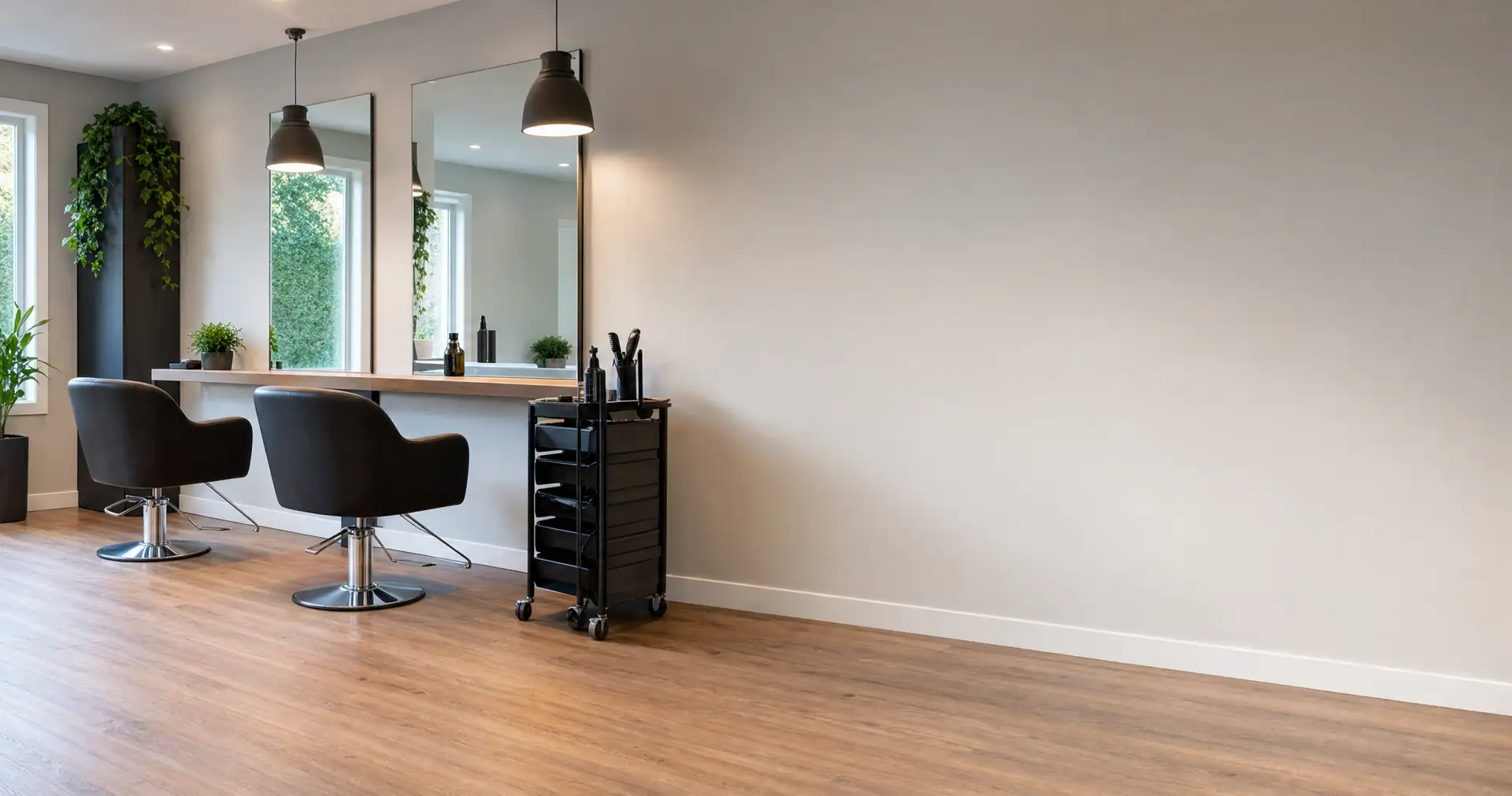
Beauty salon and day spa loans for New Zealand treatment and wellness operators .
Beauty salon and day spa finance in NZ runs at materially higher capex than hairdressing. Treatment beds, IPL and laser kit, dedicated treatment rooms with plumbing, hydrotherapy fit-out, and retail product walls drive the fit-out cost. Lenders weight WorkSafe notification under the Health and Safety at Work Act 2015 for light-based devices, gift-voucher liability under NZ IFRS 15, and the operator's qualifications and insurance position.
What you need to know about NZ beauty salon and day spa finance.
→Boutique beauty therapy clinic commonly $90K to $220K fit-out Treatment beds (commonly $1,800 to $4,500 each), magnifying lamps, multi-room plumbing rough-in, retail product wall, reception. Term loan or asset finance over 4 to 5 years.
→Day spa fit-out commonly $250K to $600K Multiple treatment rooms with plumbing, hydrotherapy or wet-room fit-out, relaxation lounge, larger reception and retail. Term loan or commercial mortgage where premises are owned.
→IPL and laser devices commonly $40K to $180K each IPL hair removal, fractional laser, laser tattoo removal, dermal needling. WorkSafe notification required for prescribed light-based devices under the Health and Safety at Work Act 2015.
→Gift vouchers carry NZ IFRS 15 deferred-revenue treatment NZ IFRS 15 (Revenue from Contracts with Customers) requires unredeemed gift vouchers to sit as deferred revenue on the balance sheet until redemption or expiry. Lenders commonly ask about the voucher liability position on day spa applications.
The landscape
Beauty salons and day spas carry a heavier capex and regulatory profile than hairdressing.
New Zealand beauty therapy and day spa operators sit across boutique single-room beauty clinics, multi-room therapy salons, full-service day spas combining therapy with hydrotherapy and massage, and specialist skin and laser clinics. Stats NZ Business Demography data lists thousands of registered beauty therapy and personal-care service operators alongside the hairdressing pool. NZIBS (New Zealand Institute of Beauty Studies) and HITO Hair and Beauty Industry Training Organisation are the primary training pathways feeding the qualified-therapist pool. NZARH (New Zealand Association of Registered Beauty Therapists) provides industry context and qualification standards.
The structures that fit beauty salons and day spas most cleanly are a term loan for fit-out and renovation, separate asset finance on each major IPL or laser device, a smaller revolving facility for retail product opening stock and seasonal working capital, and a commercial mortgage for the small share of operators who own the day-spa premises. Heartland Bank, UDC Finance, Avanti Finance, and Prospa cover the SME tier; the major banks (ANZ, BNZ, ASB, Westpac, Kiwibank) cover the larger property-secured day spa tier. Lender posture is shaped by lease length, fit-out specificity, equipment notification status, and gift-voucher liability.
Three regulatory items stand out as routine on lender files for this sub-segment. First, WorkSafe notification under the Health and Safety at Work Act 2015 and supporting regulations applies to certain prescribed light-based devices used in beauty and skin treatment. Operators using IPL, laser, or similar prescribed devices have notification, training, and operator-competency obligations to manage. Second, NZ IFRS 15 (Revenue from Contracts with Customers, applicable to NZ entities under External Reporting Board standards) requires gift vouchers to be carried as deferred revenue on the balance sheet until the voucher is redeemed for service or expires under the consumer-law breakage framework. Day spas in particular carry material gift-voucher liabilities because vouchers are a significant share of December and Mother's Day sales. Third, professional indemnity insurance covering the therapist for treatment-related claims is commonly carried alongside public liability and contents insurance.
Day-spa property considerations sit alongside the fit-out finance question for the larger operators. Where the day spa owns its premises (commonly a converted villa, refurbished commercial space, or purpose-built wellness building), commercial mortgage finance from a major bank covers the property and a separate term loan or asset finance covers the fit-out and equipment. Where the day spa leases premises, the lease length needs to support the loan term, and landlord fit-out contributions sometimes reduce the borrower's share of the project cost. Auckland, Queenstown, and Wellington carry the highest concentration of premium day spa operators reflecting wellness-tourism demand and inner-suburb wellness clusters.
Boutique clinic fit-out
$90K to $220K
Day spa fit-out
$250K to $600K
IPL or laser device
$40K to $180K
Term loan term
4 to 6 years
Beauty salon and day spa scenarios
Four common NZ beauty salon and day spa finance scenarios.
Most beauty salon and day spa applications fall into one of four patterns. Each pattern has a typical loan amount, structure, and lender pool.
Boutique 3-room beauty therapy clinic
Qualified beauty therapist opening a 3-room clinic with a small retail wall. Total project commonly $110K-$180K: treatment beds, plumbing rough-in across 3 rooms, magnifying lamps, autoclave, reception, retail stock. Term loan over 4 to 5 years.
·Loan amount: $110K to $180K
·Term: 4 to 5 years
IPL or laser device addition to existing clinic
Established beauty therapy clinic adding an IPL or laser device to expand into hair removal, vascular treatment, or skin rejuvenation. WorkSafe notification under the Health and Safety at Work Act 2015 confirmed before equipment installation. Asset finance against the device.
·Loan amount: $40K to $180K
·Term: 4 to 5 years
Full day spa fit-out (5-8 treatment rooms + hydrotherapy)
Day spa operator opening or refitting a multi-room day spa with hydrotherapy, relaxation lounge, multiple treatment rooms, and dedicated retail. Heavy plumbing and HVAC build. Term loan or commercial mortgage where premises are owned.
·Loan amount: $250K to $600K
·Term: 5 to 7 years
Day spa acquisition (existing going concern)
Operator acquiring an established day spa as a going concern. Goodwill, fit-out at depreciated value, retail stock, gift-voucher liability under NZ IFRS 15, and a transition with the outgoing owner. Bank term loan plus vendor finance and personal equity.
·Loan amount: $300K to $1.2M
·Term: 5 to 7 years
What beauty salons and day spas borrow for
Six common NZ beauty salon and day spa loan purposes.
Beauty salon and day spa lending volume falls into six common purposes. Each has a typical structure that fits.
Treatment-room fit-out and plumbing
Treatment beds (commonly $1,800-$4,500 each), multi-room plumbing rough-in, magnifying lamps, soft furnishings, lighting and acoustic treatment. Term loan or asset finance over 4 to 5 years against the fit-out package.
IPL, laser, and prescribed light-based devices
IPL hair removal, fractional laser, laser tattoo removal, vascular laser, dermal needling. WorkSafe notification under the Health and Safety at Work Act 2015 for prescribed devices. Asset finance against each device on a 4 to 5 year term.
Hydrotherapy, sauna, and wet-room fit-out
Hydrotherapy bath, infrared sauna, steam room, vichy shower. Heavy plumbing and HVAC build. Term loan or commercial mortgage where premises are owned. More common at the day spa tier than boutique clinic tier.
Retail product opening stock
Dermalogica, Murad, Skinstitut, Aspect Dr, Janesce, ASAP, ESK, Environ professional skincare. Opening stock commonly $20K-$80K depending on brand mix and retail wall size. Often funded with a revolving facility or short-term loan.
Working capital for gift voucher and seasonal flow
Revolving line of credit covering rent, wages, and ACC across quieter months, and supporting cash flow against gift-voucher deferred-revenue liability. Day spas commonly carry larger voucher liabilities than other beauty sub-segments.
Day spa acquisition or property purchase
Acquisition of an existing day spa or purchase of the day-spa premises. Bank term loan or commercial mortgage plus vendor finance and personal equity. Major bank tier dominates the property-purchase component.
Tax, GST, and gift-voucher accounting
How GST, depreciation, WorkSafe notification, and NZ IFRS 15 voucher liability typically work.
A GST-registered beauty salon or day spa operator can typically claim the GST component on treatment-room fit-out, treatment beds, IPL and laser devices, hydrotherapy equipment, and retail stock as input tax in the relevant GST return, subject to the accountant's confirmation. Where the equipment is acquired under chattel mortgage or term loan, the full GST is typically claimable upfront in the next GST return after settlement. Where it is acquired under finance lease, GST is typically claimed across the rental payments. IRD depreciation on beauty salon fit-out commonly uses asset-class rates published by IRD; treatment beds, IPL and laser devices, and hydrotherapy equipment each sit in different IRD asset categories. Gift vouchers sold by the salon or day spa are commonly carried as deferred revenue on the balance sheet under NZ IFRS 15 (Revenue from Contracts with Customers, applicable to NZ entities reporting under XRB standards) until the voucher is redeemed for service or expires under the consumer-law breakage framework. WorkSafe notification under the Health and Safety at Work Act 2015 and supporting regulations applies to certain prescribed light-based devices used in beauty and skin treatment; operators using IPL, laser, or similar prescribed devices have notification, training, and operator-competency obligations to manage. The accountant is the right person to confirm structure choice, GST timing, and voucher accounting on the specific business position.
Beauty salon and day spa finance bands
Indicative NZ beauty salon and day spa finance bands by setup type.
Fit-out and equipment cost varies by location, room count, equipment specification, and finish standard. The bands below are observed across the NZ beauty salon and day spa finance pool in 2026.
Setup type
Auckland CBD / inner
Wellington / Christchurch
Regional NZ
Boutique 2-3 room beauty clinic
$110K to $200K
$95K to $170K
$75K to $140K
Beauty therapy clinic 4-5 rooms
$170K to $300K
$140K to $250K
$110K to $200K
IPL device installation
$45K to $90K
$45K to $90K
$45K to $90K
Medical-grade laser device
$90K to $180K
$90K to $180K
$90K to $180K
Day spa fit-out (5-8 rooms + hydrotherapy)
$320K to $620K
$280K to $540K
$240K to $470K
Day spa acquisition (going concern)
$400K to $1.5M
$320K to $1.2M
$260K to $900K
Indicative bands only. Actual cost depends on room count, plumbing complexity, equipment specification, and landlord fit-out contribution. Final rate, fee, and approval decisions are made by the lender after assessment.
Boutique clinic vs full day spa vs IPL or laser addition
Boutique beauty clinic vs full day spa vs IPL or laser addition to existing clinic.
The structure choice tracks operating model, room count, equipment intensity, and property position. Each of the three patterns reads differently to a lender.
Feature
Boutique beauty therapy clinic
Full day spa with hydrotherapy
IPL or laser device addition
Typical loan amount
$110K to $220K
$300K to $1.2M
$40K to $180K
Loan structure
Term loan against fit-out
Term loan plus optional commercial mortgage
Asset finance against the device
WorkSafe notification
Only if light-based devices in use
Required where prescribed devices in use
Required for prescribed devices
Gift-voucher liability profile
Lower; modest balance-sheet impact
Material; carried as deferred revenue under NZ IFRS 15
Inherits the existing clinic liability
Property considerations
Leased, fit-out term fits remaining lease
Owned or leased; commercial mortgage common where owned
Leased; addition fits within existing fit-out
Typical loan term
4 to 5 years
5 to 7 years
4 to 5 years
Lender comfort
Heartland, UDC, Avanti, Prospa
Major banks for property-secured deals; specialist lenders for unsecured tranches
UDC, Heartland, specialist asset-finance lenders
How it works
A typical NZ beauty salon and day spa finance application.
Day spa and IPL/laser applications carry a WorkSafe notification and equipment-spec verification step that smaller boutique applications do not. Established multi-year operators with property security move faster and access tighter pricing.
01
Day 1 to 14
Define the scope, equipment, and structure
A typical beauty salon or day spa loan combines a primary fit-out term loan with separate asset finance on each major IPL or laser device and a smaller working-capital tranche for retail stock. Defining components upfront helps the lender size each tranche correctly and structure the security across the fit-out and equipment.
·Lease heads of agreement or signed lease, or property sale and purchase
02
Day 7 to 21
Submit application with regulatory and qualification documents
Beyond the standard SME application pack, beauty salon and day spa lenders ask for the lease (with remaining term and contracted options) or property documents, NZIBS or HITO qualification evidence for the principal therapist, professional indemnity insurance quote, WorkSafe notification status for any prescribed light-based devices under the Health and Safety at Work Act 2015, and clarity on the gift-voucher liability under NZ IFRS 15.
Documents commonly required
·NZBN, business owner ID
·Last 12 months business bank statements
·Last 2 years financial statements (existing clinic)
·Lease (or heads of agreement) or property sale and purchase
·NZIBS or HITO qualification evidence
·WorkSafe notification (where prescribed devices in use)
·Professional indemnity, public liability, contents insurance quotes
·Gift-voucher liability schedule (existing clinic and day spa applications)
03
Day 14 to 28
Lender assessment and offer
Lenders assess against four things: the security position on the fit-out and equipment (LVR after deposit), the lease length or property security, the operator profile (NZIBS or HITO qualification, prior trading, professional indemnity), and the regulatory status of any IPL or laser equipment. Day spa applications also see scrutiny of the gift-voucher deferred-revenue position. Offers commonly come back with conditions: deposit size, additional security, lease assignment confirmation, WorkSafe notification confirmation, or insurance binding before drawdown.
04
Week 4 onward
Settle, register PPSR, take delivery
Asset finance settles directly to the fit-out contractor, equipment supplier, or property vendor. The lender registers a security interest on the Personal Property Securities Register (PPSR) for fit-out and equipment, and a registered mortgage where the premises are owned. WorkSafe notification confirmed before any prescribed light-based device is used. Soft-launch and grand-opening commonly scheduled 6 to 12 weeks after fit-out completion to allow staff training, equipment commissioning, gift-voucher launch, and POS configuration.
A broker familiar with the beauty therapy and day spa sector commonly tightens the rate band and reduces the documentation cycle versus a direct application to a generic SME lender, particularly on the WorkSafe notification, gift-voucher accounting, and qualification sections of the file.
Worked scenarios
Three NZ beauty salon and day spa finance scenarios.
Real-world structures across boutique beauty clinic fit-out, IPL device addition, and full day spa acquisition. Each illustrates how qualifications, WorkSafe notification status, gift-voucher liability, and property position shift the offered rate.
NZIBS-qualified therapist opening a boutique clinic
An NZIBS-qualified beauty therapist with 11 years of clinic experience opening a 4-room boutique beauty therapy clinic in Newmarket, Auckland, with a 6-year lease (3 plus 3 options). Total project $185,000 ex-GST: $72,000 fit-out (4 treatment beds at $3,200 each, multi-room plumbing rough-in, magnifying lamps, autoclave, reception), $35,000 retail wall fit-out and merchandising, $42,000 retail opening stock from Dermalogica and Aspect Dr distributor accounts, $24,000 POS, booking, signage, and software setup, $12,000 first-quarter insurance package (public liability, professional indemnity, contents). 18% deposit ($33,000) from personal savings.
Structure agreed with a beauty-experienced broker: term loan on the fit-out and equipment package ($120,000, 5-year term, indicative 10-12% p.a.), separate revolving facility for retail stock ($32,000 limit, indicative 13-15% p.a.). Heartland Bank funded the term loan based on the lease length, the deposit, the 11 years of NZIBS-qualified clinic experience, and the operator's clean ACC and IRD record. No prescribed light-based devices in use at launch (no WorkSafe notification required at this stage); IPL device flagged for addition in year 2.
PPSR security interest registered against the fit-out and equipment at settlement. NZARH (New Zealand Association of Registered Beauty Therapists) membership confirmed. Professional indemnity insurance bound at settlement. Soft-launch at week 7 after fit-out completion; grand-opening at week 10. Gift vouchers launched at month 3, with deferred-revenue liability tracked under NZ IFRS 15 from the first sale.
Indicative figures
Total project
$185,000
Fit-out (beds, plumbing, equipment)
$72,000
Term loan after deposit
$120,000
Indicative blended rate
10-13% p.a.
Established 5-year beauty clinic adding IPL hair removal
Hamilton IPL device addition to existing clinic
A Hamilton beauty therapy clinic with 5 years of trading and 4 treatment rooms adding an IPL hair removal device to expand into hair removal and vascular treatment. Total project $95,000 ex-GST: $78,000 IPL device (mid-range NZ-distributed unit), $8,000 dedicated treatment-room conversion (cooling, lighting, electrical), $6,000 operator training and certification through the device distributor, $3,000 first-year additional public liability and professional indemnity uplift.
WorkSafe notification under the Health and Safety at Work Act 2015 confirmed prior to equipment installation, with operator competency evidenced through the device distributor's certification programme. Structure agreed: asset finance on the IPL device ($78,000, 5-year term, indicative 9-11% p.a.). Smaller-ticket fit-out conversion ($8,000) funded from cash reserves. UDC Finance funded the asset finance based on the existing 5 years of clinic trading and the strong commercial relationship the clinic held with its distributor.
PPSR security interest registered against the IPL device at settlement. Operator competency certification displayed in the treatment room as part of WorkSafe compliance. First IPL treatments scheduled for week 3 after device installation and operator training completion. The clinic's gift-voucher liability under NZ IFRS 15 increased modestly with the addition of IPL packages to the voucher menu, and the voucher accounting position was updated with the clinic's accountant at the time of launch.
Indicative figures
Total project
$95,000
IPL device
$78,000
Treatment-room conversion
$8,000
Indicative rate
9-11% p.a.
Wellness-experienced operator acquiring an established 7-room day spa
Queenstown day spa acquisition (going concern)
A wellness-sector operator with 14 years of senior beauty therapy and spa management experience acquiring an established 7-room day spa in Queenstown as a going concern. Total acquisition $1,180,000 ex-GST: $420,000 fit-out and equipment at depreciated value (treatment beds, IPL device already installed and WorkSafe-notified, hydrotherapy bath, infrared sauna), $80,000 retail product stock at handover, $560,000 goodwill (covering 9 years of trading history and a strong wellness-tourism client book), $120,000 gift-voucher liability transferred under NZ IFRS 15.
Structure agreed: ASB business banking term loan funding $780,000 of the acquisition (5-year term on fit-out and equipment components, 7-year term on goodwill, indicative blended 8-10% p.a.) secured by a registered mortgage over the operator's personal residence and a general security agreement over the spa company. Vendor finance covering $200,000 over 4 years (interest set in the sale and purchase agreement). Personal equity of $200,000 from the acquirer's savings and a separate property sale.
Going-concern GST election made between vendor and purchaser at sale, removing the GST cash-flow impact at settlement, subject to confirmation by the acquirer's accountant. PPSR security interest registered against the fit-out and equipment at settlement. WorkSafe notification on the existing IPL device transferred to the new operator entity. Gift-voucher deferred-revenue liability transferred to the acquirer under the sale and purchase agreement, with the existing voucher database and expiry schedule reviewed against NZ IFRS 15 reporting at the date of acquisition. Outgoing owner contracted for a 12-week handover transition. All seven existing therapists retained on existing employment agreements; NZARH membership renewed by each therapist as part of the acquisition transition.
Indicative figures
Total acquisition
$1,180,000
Bank term loan
$780,000
Vendor finance
$200,000
Indicative blended rate
8-10% p.a.
NZ beauty salon and day spa lenders
Lenders that fund NZ beauty salons and day spas well.
Several NZ lenders carry familiarity with the beauty therapy and day spa fit-out, equipment, and acquisition pool. The shortlist below is editorial.
ACC employer levy and CoverPlus framework for beauty therapy operators under the Accident Compensation Act 2001.
FAQ
Beauty salon and day spa loans, NZ small-business questions answered
How much does it cost to open a beauty therapy clinic in NZ?
A NZ boutique 3-room beauty therapy clinic fit-out commonly runs $90,000 to $200,000 ex-GST depending on room count, plumbing complexity, equipment specification, and location. The total covers treatment beds (commonly $1,800 to $4,500 each), multi-room plumbing rough-in, magnifying lamps, autoclave, reception fit-out, retail wall, opening stock, POS and booking technology, and the bond and first quarter of insurance. Auckland CBD and inner-suburb fit-outs commonly run 15 to 30% above regional NZ pricing. Larger 4 to 5 room clinics commonly run $170,000 to $300,000 reflecting heavier plumbing and a larger retail wall.
How much does it cost to open a day spa in NZ?
A NZ day spa fit-out with 5 to 8 treatment rooms plus hydrotherapy commonly runs $250,000 to $600,000 ex-GST. The heavier cost relative to a beauty clinic reflects multi-room plumbing rough-in across 5 to 8 rooms, a hydrotherapy bath or wet-room build, infrared sauna or steam-room build, larger relaxation lounge, dedicated retail merchandising, and a more substantial reception. Day spas in Auckland, Queenstown, and Wellington tourism precincts commonly sit at the upper end of the band. Day spa acquisitions of an existing going concern commonly run $400,000 to $1.5 million covering goodwill, fit-out at depreciated value, retail stock, and the transferred gift-voucher liability.
How much does an IPL or laser device cost in NZ?
IPL hair removal devices commonly run $40,000 to $90,000 ex-GST through NZ distributors depending on specification and brand. Medical-grade fractional laser, vascular laser, and laser tattoo removal devices commonly run $90,000 to $180,000 ex-GST. WorkSafe notification under the Health and Safety at Work Act 2015 is required for prescribed light-based devices used in beauty and skin treatment, with operator training and competency evidenced through the device distributor or an approved training provider. Asset finance against the device commonly runs over a 4 to 5 year term to align with the device useful life.
What WorkSafe obligations apply to IPL and laser in a NZ beauty clinic?
WorkSafe administers the Health and Safety at Work Act 2015 and supporting regulations. Certain prescribed light-based devices used in beauty and skin treatment carry notification, training, and operator-competency obligations to manage. Operators using IPL, laser, or similar prescribed devices commonly need to confirm operator competency, document risk-assessment and treatment protocols, ensure appropriate eye protection for client and operator, and notify WorkSafe under the regulatory framework where applicable. WorkSafe publishes guidance on the obligations in full. Lenders commonly want confirmation that any prescribed device is appropriately notified and the operator competency is documented before the asset-finance settlement.
How does NZ IFRS 15 treat gift vouchers in a beauty salon or day spa?
NZ IFRS 15 (Revenue from Contracts with Customers, applicable to NZ entities reporting under External Reporting Board standards) requires unredeemed gift vouchers to be carried as deferred revenue on the balance sheet until the voucher is redeemed for service or expires under the consumer-law breakage framework. For a day spa with material gift-voucher sales (commonly across December, Mother's Day, and Father's Day peaks), the deferred-revenue liability can sit at $50,000 to $200,000+ depending on size. Lenders commonly ask about the voucher liability position on day spa applications because it affects working capital and the cash-flow timing of revenue recognition. The accountant is the right person to confirm the IFRS 15 treatment on the specific business position.
What rate range applies to NZ beauty salon and day spa finance in 2026?
Indicative rates on beauty salon and day spa finance commonly sit in the 8% to 14% per annum band depending on structure, security, and operator profile. Term loans on day spa fit-out for an established operator with property security and multi-year trading sit at the lower end (commonly 8-10%). Asset finance on IPL, laser, and hydrotherapy equipment for established clinics sits in the middle (commonly 9-12%). Smaller-ticket retail-stock and working-capital tranches sit at the upper end. Final rate is set by the lender after assessment. Established multi-year day spa operators with property security and clean trading commonly access the lowest bands.
Can GST be claimed upfront on day spa fit-out and IPL equipment?
A GST-registered beauty salon or day spa operator can typically claim the GST component on fit-out, treatment beds, IPL and laser devices, hydrotherapy equipment, plumbing, and retail stock as input tax in the relevant GST return, subject to the accountant's confirmation. Where the equipment is acquired under chattel mortgage or term loan, the full GST is typically claimable upfront in the next GST return after settlement. Where it is acquired under finance lease, GST is typically claimed across the rental payments. The structure choice affects cash-flow timing more than total cost over the loan life. The accountant is the right person to confirm structure choice and GST timing on the specific business position.
What is the typical loan term for a day spa fit-out?
Day spa fit-outs commonly attract 5 to 7 year loan terms reflecting the larger capex and the longer useful life of multi-room plumbing, hydrotherapy equipment, and built-in fit-out elements. Day spa premises purchases commonly attract 15 to 20 year commercial mortgage terms separately from the fit-out term loan. Asset finance on IPL, laser, and treatment-bed equipment commonly runs 4 to 5 years to align with the equipment useful life and refresh cycle. Smaller boutique beauty therapy clinics commonly attract 4 to 5 year terms across the fit-out package.
How does professional indemnity insurance fit into a beauty salon finance application?
Professional indemnity insurance covering the therapist for treatment-related claims is commonly carried alongside public liability and contents insurance in a NZ beauty therapy clinic. Lenders commonly want a quote or evidence of bound cover before drawdown on a fit-out or equipment loan, particularly where IPL, laser, dermal needling, or other prescribed light-based or invasive treatments are part of the service menu. The cost of professional indemnity insurance varies with the service menu, claim history, and policy excess; specialist beauty insurers (BHC Insurance, ABIS, NZI specialty schemes) commonly cover the segment.
What happens to a financed beauty salon fit-out if the salon closes?
Where the fit-out is financed under chattel mortgage or asset-finance and the salon or day spa closes before the loan is repaid, the lender typically has a security interest registered on the Personal Property Securities Register (PPSR) and can take possession of financed equipment to recover the outstanding balance. Specialist beauty fit-out (multi-room plumbing, hydrotherapy build, dedicated treatment-bed installation) commonly has limited residual value because it cannot easily be transferred to a non-beauty tenant; treatment beds, IPL devices, and laser units typically retain better resale value through the secondary beauty-equipment market. Any shortfall typically falls to the borrower and any personal guarantor. Unredeemed gift-voucher liabilities sit alongside the closure as a deferred-revenue obligation under NZ IFRS 15.
How does a day spa property purchase get financed in NZ?
Where the day spa premises are purchased rather than leased, the property is typically financed through a commercial mortgage from a major bank (ANZ, BNZ, ASB, Westpac, Kiwibank) at typical commercial-mortgage LVR (commonly 60-75% of property value depending on location and property type). The fit-out and equipment are then financed separately through a term loan or asset finance package. A combined structure across commercial mortgage and term loan commonly suits day spa operators with strong personal equity and a multi-year trading record. The major banks dominate the commercial-mortgage component because of their property-secured lending posture.
Can a day spa acquisition be funded with a combination of bank loan and vendor finance?
Yes. Day spa acquisitions are commonly structured with a primary bank or specialist-lender term loan covering the majority of the purchase price (commonly 55-70%), vendor finance from the outgoing owner covering a portion (commonly 15-25%, with interest and term set in the sale and purchase agreement), and personal equity covering the balance (commonly 15-25%). The gift-voucher liability under NZ IFRS 15 is typically transferred to the acquirer under the sale and purchase agreement, with the deferred-revenue liability documented at the date of acquisition. Going-concern GST election between vendor and purchaser at sale removes the GST cash-flow impact at settlement, subject to the accountant's confirmation.
What lenders fund NZ beauty salons and day spas well?
Heartland Bank, UDC Finance, and Avanti Finance are the most commonly seen specialist lenders in the boutique beauty therapy clinic and mid-tier day spa fit-out pool. UDC Finance has particular appetite for IPL, laser, and treatment-bed asset finance. Prospa covers the smaller-ticket unsecured retail-stock and working-capital tranches. ASB and the other major banks cover the larger property-secured day spa tier and day spa acquisitions where lease length, property security, and trading history support major-bank credit policy. A broker familiar with the beauty therapy and day spa sector commonly tightens the indicative rate band by knowing which lender fits each operator profile.
Can an established beauty clinic refinance into better pricing?
Yes. Established beauty therapy clinic and day spa operators with 2+ years of clean trading and a multi-year lease (or owned premises) commonly refinance into tighter pricing as trading data builds, equity grows in the existing fit-out and equipment, and the gift-voucher liability and operator profile stabilise. Refinancing is also commonly used to consolidate multiple loans (fit-out term loan, equipment asset finance on IPL or laser, retail-stock revolving facility) into a single facility, or to release equity for an additional treatment room, an IPL or laser addition, expansion to a second site, or a day spa acquisition. Early-repayment fees, the depreciated value of the existing fit-out and equipment, and the security position are the main considerations for the refinance assessment.
Indicative content only. Not personalised financial advice.
A business loan is a commitment that runs for months or years, and repayments come out of the same operating cash flow as everything else. Before committing, it is worth modelling the weekly and monthly cost against the business's working-capital position, which is what this site is built to help with. Borrowing at a level that stays comfortable through a quiet quarter, not just a strong one, is widely regarded as the safer frame.
What this site is
A calculator and information tool. Not a lender, not a broker, not a registered financial adviser. Nothing here is personalised financial advice.
What the figures show
Modelled estimates based on the inputs you enter. Not a quote. Not an offer of credit. Not a guarantee of approval, rate, or fees.
What the lender decides
Final rates, fees, and approval are set by the lender after a CCCFA-appropriate assessment of the applicant's circumstances and credit decision.
Commercial disclosure
Businessloans.org.nz earns a commission from Prospa when a visitor applies through this site and their application is approved. The commission is paid by Prospa, not by the borrower, and it does not influence the rate Prospa offers. Full disclosure on the partner page.
Tax, GST, and accountant framing
Tax-treatment statements (GST claim timing, interest deductibility, depreciation rates) are general in nature and subject to your accountant's confirmation on the specific business position. For material amounts, professional advice from a registered financial adviser or chartered accountant is widely regarded as the safer frame.