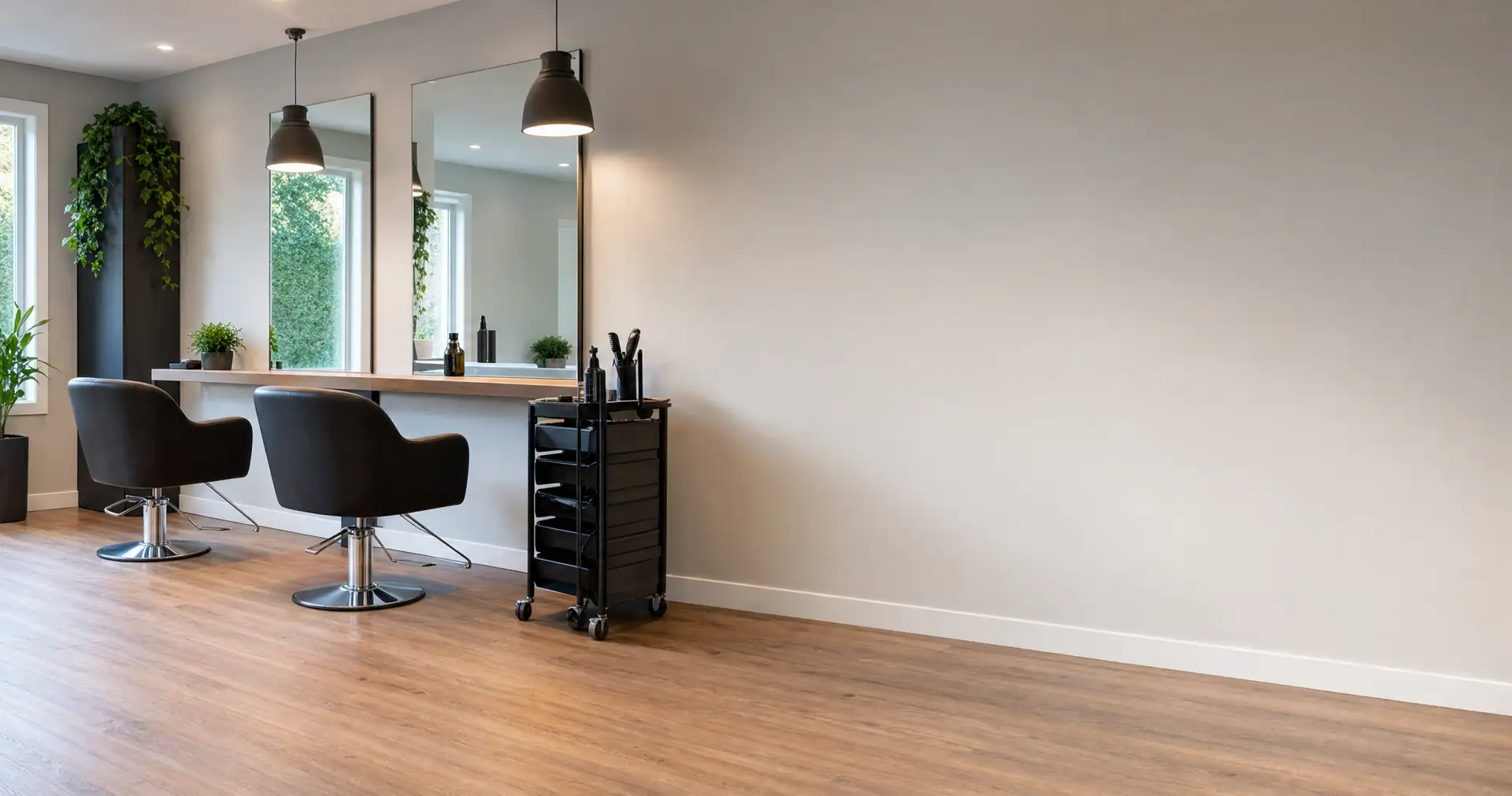
Hairdresser and barber loans for New Zealand salon and chair operators .
Hairdresser and barber finance in NZ splits along clear lines. Solo stylists buying into a chair-rent arrangement borrow at one tier, boutique salon owners with three to six chairs sit in the middle, and multi-stylist or franchised salons fund full fitouts at the upper end. Retail product stock, HITO Hair and Beauty Industry Training Organisation apprentice obligations, and the commission-versus-chair-rent staffing model all shape the lender file.
What you need to know about NZ hairdresser and barber finance.
→Chair-rent stylist setup commonly $8K to $25K Scissors and clippers, branding and signage, opening retail stock, booking-app subscription, public-liability insurance. Often unsecured term loan over 2 to 3 years.
→Boutique salon fitout (3 to 6 chairs) commonly $40K to $120K Chairs, basins, mirrors, lighting, plumbing, signage, POS and booking technology, opening retail stock. Term loan or asset finance over 4 to 5 years.
→Full salon fitout (6+ chairs or multi-site) commonly $120K to $280K Larger plumbing-heavy fit-out, multiple basin stations, colour bar, dedicated retail merchandising, training room. Term loan or commercial mortgage where premises are owned.
→HITO apprentice and chair-rent model shape the file HITO Hair and Beauty Industry Training Organisation oversees hairdressing and barbering apprenticeships under the Industry Training and Apprenticeships Act 2020. The commission-versus-chair-rent staffing mix is a standing question on lender files.
The landscape
NZ hairdressing and barbering sit across solo chair, boutique salon, and franchised tiers.
New Zealand hairdressing and barbering is one of the more fragmented parts of the personal-service economy. Stats NZ Business Demography data lists thousands of registered hairdressing and barbering enterprises, with most carrying small employee counts. The Hair and Beauty New Zealand industry body and HITO Hair and Beauty Industry Training Organisation publish sector context covering apprentice numbers, training pathways, and salon ownership patterns. Operators range from solo mobile stylists and chair-rent independents through to multi-chair salons and franchised brands such as Just Cuts and Stewarts Barbers.
The structures that fit hairdressing and barbering most cleanly are a smaller unsecured term loan for chair-rent setups and tooling refreshes, an asset-finance or term loan package for fit-out across boutique salons, and a commercial mortgage for the small share of operators who own their premises. Heartland Bank, UDC Finance, Avanti Finance, Prospa, and the major banks (where lease and security support it) all participate. The NZIBS (New Zealand Institute of Beauty Studies) and HITO are the primary training institutions feeding the apprentice pool that supplies the chair-and-employee stylist tier.
Lender posture on hairdressing and barbering is shaped by lease length, fit-out specificity, and the staffing model. Salon fit-outs are commonly bespoke (basins plumbed in, dedicated colour bar, branded mirror stations) and not transferable to a non-salon tenant, so loan term typically fits inside the remaining lease and contracted options. The commission-versus-chair-rent split also matters: a salon paying employed stylists on a commission split carries different cash-flow shape and ACC obligation to a salon renting chairs to independent contractors. Lenders typically want clarity on which model the operator runs, because it changes the income line and the wage and ACC liability side of the file.
Seasonality is real but moderate. December and the wedding-season window drive a peak; January and February carry sustained school-holiday and back-to-work demand; the winter months are widely observed as quieter for full hair services although barbering trades more steadily. Operators with disciplined seasonal forecasting commonly carry a small working-capital line through the quieter months and pay it down across peaks.
Chair-rent setup
$8K to $25K
Boutique salon fitout
$40K to $120K
Full salon (6+ chairs)
$120K to $280K
Term loan term
4 to 5 years
Hairdresser and barber scenarios
Four common NZ hairdressing and barbering finance scenarios.
Most hairdresser and barber applications fall into one of four patterns. Each pattern has a typical loan amount, structure, and lender pool.
Solo stylist taking a chair at a host salon
Independent stylist buying into a chair-rent arrangement at an existing salon. Total project commonly $8K-$25K: scissors and clippers, branding and signage, opening retail stock, booking app, public liability insurance. Unsecured term loan over 2 to 3 years.
·Loan amount: $8K to $25K
·Term: 2 to 3 years
Boutique salon owner opening 3 to 6 chairs
Senior stylist or established operator opening a boutique salon. Total project commonly $50K-$130K: chairs, basins, mirrors, plumbing rough-in, lighting, signage, POS and booking technology, opening retail stock. Term loan over 4 to 5 years.
·Loan amount: $50K to $130K
·Term: 4 to 5 years
Multi-stylist salon refit or expansion
Established salon refitting after 7 to 10 years, adding chairs, or relocating to a higher-traffic site. Trade-in or write-off on existing fit-out. Existing trading data tightens the indicative rate band materially.
·Loan amount: $120K to $280K
·Term: 4 to 5 years
Salon acquisition (buying an existing book)
Operator acquiring an established salon as a going concern. Goodwill, fit-out, retail stock, and a transition period with the outgoing owner. Acquisition commonly funded with a combination of vendor finance, bank or specialist lender term loan, and personal equity.
·Loan amount: $80K to $400K
·Term: 5 to 7 years
What hairdressers and barbers borrow for
Six common NZ hairdresser and barber loan purposes.
Hairdresser and barber lending volume falls into six common purposes. Each has a typical structure that fits.
Salon chair, basin, and mirror fit-out
Salon chairs and washing basins commonly $1,500-$5,000 each (Takara Belmont, REM, Nelson Mobilier). Mirror stations, plumbing rough-in, lighting, and floor finish. Term loan or asset finance over 4 to 5 years against the fit-out.
Retail product opening stock
Wella, Schwarzkopf, Davines, KMS, Olaplex, Kevin Murphy retail and back-bar product. Opening stock commonly $5K-$25K depending on brand and chair count. Often funded with a smaller revolving facility or short-term loan.
Tooling and clippers refresh
Scissors, clippers, dryers, wahls, capes, and consumables. Solo barbers commonly refresh tooling every 2 to 4 years. Smaller-ticket asset finance or unsecured term loan, $3K-$15K per stylist.
POS and booking technology
Timely, Kitomba, Phorest, Vagaro and similar booking and POS platforms. Subscription-funded software with smaller-ticket hardware (iPad terminals, card readers). Often expensed; sometimes financed alongside fit-out.
Working capital across slower months
Revolving line of credit covering rent, wages, and ACC across the quieter winter months. Repaid across the busy December and wedding-season peaks. Suits the seasonality of full hair services more than barbering.
Acquisition or chair buy-in
Buying into an existing salon as a chair-rent operator, or acquiring a salon as a going concern. Goodwill and fit-out value funded across vendor finance, bank or specialist lender term loan, and personal equity.
Tax, GST, and staffing
How GST, depreciation, and the commission-versus-chair-rent split typically work.
A GST-registered hairdresser or barber operator can typically claim the GST component on salon chairs, basins, plumbing fit-out, mirrors, POS hardware, and tooling as input tax in the relevant GST return, subject to the accountant's confirmation. Where the fit-out is acquired under chattel mortgage or term loan, the full GST is typically claimable upfront in the next GST return after settlement. Where it is acquired under finance lease, GST is typically claimed across the rental payments. IRD depreciation on salon fit-out commonly uses asset-class rates published by IRD; the fit-out, chairs, and basins each sit in different IRD asset categories. The commission-versus-chair-rent staffing model materially changes the wage, ACC, and PAYE lines: an employed stylist on commission triggers PAYE, KiwiSaver, and ACC employer obligations, whereas an independent contractor renting a chair invoices the salon and carries their own ACC CoverPlus and GST registration where applicable. The accountant is the right person to confirm structure choice and GST and PAYE treatment on the specific business position.
Hairdresser and barber finance bands
Indicative NZ hairdresser and barber finance bands by setup type.
Fit-out cost varies by location, finish, and chair count. The bands below are observed across the NZ hairdresser and barber finance pool in 2026.
Setup type
Auckland CBD / inner
Wellington / Christchurch
Regional NZ
Chair-rent independent setup
$12K to $25K
$10K to $22K
$8K to $18K
Boutique 3-chair salon fit-out
$55K to $110K
$45K to $95K
$35K to $75K
Boutique 4-6 chair salon fit-out
$90K to $160K
$75K to $135K
$60K to $110K
Full salon (6-10 chairs)
$160K to $280K
$130K to $230K
$110K to $200K
Barber shop fit-out (3-5 chairs)
$45K to $100K
$35K to $85K
$30K to $70K
Salon acquisition (existing going concern)
$120K to $450K
$100K to $380K
$80K to $300K
Indicative bands only. Actual cost depends on landlord fit-out contribution, finish standard, plumbing complexity, and POS and booking choice. Final rate, fee, and approval decisions are made by the lender after assessment.
Chair-rent vs commission vs salon acquisition
Chair-rent setup vs commission salon fit-out vs salon acquisition.
The structure choice tracks operator preference for ownership, staffing model, and existing salon access. Each of the three patterns reads differently to a lender.
Feature
Chair-rent independent setup
Commission salon fit-out
Salon acquisition (going concern)
Typical loan amount
$8K to $25K
$50K to $280K
$80K to $450K
Loan structure
Unsecured term loan
Term loan or asset finance against fit-out
Term loan plus optional vendor finance
GST upfront claim
Yes on tooling and stock, in next return
Yes on fit-out, in next return after settlement
GST treatment depends on going-concern election
Staffing model
Solo independent contractor
Employees on commission split
Inherits the existing model, may transition
Lease specificity
Sub-licence with host salon
Bespoke fit-out, term fits remaining lease
Existing lease assigned to incoming owner
Typical loan term
2 to 3 years
4 to 5 years
5 to 7 years
Lender comfort
Suits Prospa, Avanti, smaller-ticket lenders
Heartland, UDC, major banks where lease supports it
Major banks for established acquirers; specialist lenders for smaller targets
How it works
A typical NZ hairdresser and barber finance application.
Boutique salon and acquisition applications carry a lease and stylist-team review step that chair-rent setups do not. Established operators with multi-year trading move faster and access tighter pricing.
01
Day 1 to 7
Define the scope and structure
A typical hairdresser or barber loan combines a primary fit-out or tooling component with optional retail-stock and working-capital tranches. Defining components upfront helps the lender size each tranche correctly and structure the asset-finance versus working-capital split.
Documents commonly required
·Fit-out quote (where applicable)
·Tooling and equipment quote
·Retail stock quote from product distributor
·Lease heads of agreement or signed lease
02
Day 3 to 14
Submit application with salon-specific documents
Beyond the standard SME application pack, hairdresser and barber lenders ask for the lease (with remaining term and contracted options), evidence of the staffing model (employment agreements for commission stylists or chair-rent licences for independents), HITO apprenticeship documents where apprentices are employed, and clarity on retail-stock distributor relationships.
Documents commonly required
·NZBN, business owner ID
·Last 6 to 12 months business bank statements
·Lease (or heads of agreement)
·Stylist employment agreements or chair-rent licences
·HITO apprentice agreements (where applicable)
·Retail product distributor account letter
·Public liability and contents insurance quotes
·Fit-out quote with itemised breakdown
03
Day 7 to 21
Lender assessment and offer
Lenders assess against three things: the security position on the fit-out and any tooling (LVR after deposit), the lease length and any landlord fit-out contribution, and the operator profile (prior salon trading, stylist team retention, HITO apprentice track-record). Offers commonly come back with conditions: deposit size, additional security, lease assignment confirmation, or insurance requirements.
04
Week 3 onward
Settle, register PPSR, take delivery
Asset finance settles directly to the fit-out contractor or equipment supplier. The lender registers a security interest on the Personal Property Securities Register (PPSR) for chairs, basins, and equipment. Working-capital line (where applicable) opens alongside the asset-finance settlement. Soft-launch and grand-opening commonly scheduled 4 to 8 weeks after fit-out completion to allow staff training and POS configuration.
A broker familiar with hairdressing and barbering commonly tightens the rate band and reduces the documentation cycle versus a direct application to a generic SME lender, particularly on the lease and staffing-model sections of the file.
Worked scenarios
Three NZ hairdresser and barber finance scenarios.
Real-world structures across chair-rent setup, boutique salon fit-out, and salon acquisition. Each illustrates how staffing model, lease length, and trading history shift the offered rate.
Senior stylist moving from employment to chair-rent independent
Auckland Ponsonby chair-rent stylist
A senior stylist with 9 years of employed experience at an Auckland salon moving to a chair-rent arrangement at an established Ponsonby salon. Total project $18,500 ex-GST: $4,500 scissors and tooling refresh, $2,500 personal branding and signage at the host salon, $7,500 opening retail stock from a Wella distributor account, $1,500 Timely booking subscription and card reader hardware setup, $2,500 first-quarter public liability insurance and ACC CoverPlus.
Structure agreed: unsecured term loan ($18,500, 3-year term, indicative 12-15% p.a.). The application was placed with Prospa given the smaller ticket and the absence of asset security. ACC CoverPlus elected over CoverPlus Extra at setup. The host-salon chair-rent licence sits alongside the loan as supporting documentation showing income flow.
The stylist GST-registered at setup given the projected revenue level, with the retail-stock GST input claimed in the first return after settlement. Personal client base built over 9 years transferred across at a 70% retention rate in the first 90 days. Prospa funded the unsecured term loan based on the stylist trading history evidenced through prior payslips and the chair-rent licence.
Indicative figures
Total project
$18,500
Retail opening stock
$7,500
Tooling refresh
$4,500
Indicative rate
12-15% p.a.
Two senior stylists co-founding a boutique salon
Wellington 5-chair boutique salon fit-out
Two senior stylists co-founding a 5-chair boutique salon on a side street off Cuba Street, Wellington, with a 6-year lease (3 plus 3 options). Total project $115,000 ex-GST: $48,000 fit-out (5 chairs at $3,200 each, 3 wash basins at $4,500 each, mirror stations, plumbing rough-in, lighting), $22,000 reception, signage, and floor finish, $18,000 colour bar and back-bar product setup, $15,000 opening retail stock from a Davines distributor account, $12,000 POS, booking, and software setup. 20% combined deposit ($23,000) from existing personal savings.
Structure agreed with a salon-experienced broker: term loan on the fit-out package ($75,000, 5-year term, indicative 10-12% p.a.), separate revolving facility for retail stock and seasonal working capital ($17,000 limit, indicative 13-15% p.a.). Heartland Bank funded the term loan based on the lease length, the deposit, and 9+ years of stylist trading evidenced through prior payslips and a chair-rent track-record at a previous salon.
PPSR security interest registered against the fit-out at settlement. Two HITO apprentice positions opened in year one under the Industry Training and Apprenticeships Act 2020 framework, with HITO apprentice agreements lodged at the time the apprentices commenced. Soft-launch at week 6 after fit-out completion; grand-opening at week 9. The two co-founders elected commission-split employment for incoming junior stylists rather than a chair-rent model, reflecting the boutique-salon team-building strategy.
Indicative figures
Total project
$115,000
Fit-out (chairs, basins, plumbing)
$48,000
Term loan after deposit
$75,000
Indicative blended rate
10-13% p.a.
Established barber acquiring an existing 4-chair shop
Christchurch barber shop acquisition
An established barber with 7 years of chair-rent and contracted experience acquiring an existing 4-chair barber shop in central Christchurch as a going concern. Total acquisition $245,000 ex-GST: $90,000 fit-out value (chairs, mirrors, fittings carried at depreciated value), $35,000 retail stock at handover, $120,000 goodwill (covering established client book and trading history of 11 years).
Structure agreed: bank term loan funding $170,000 of the purchase price (5-year term on fit-out and retail components, 7-year term on goodwill component, indicative blended 9-11% p.a.), vendor finance covering $45,000 over 3 years (interest set in the sale and purchase agreement), personal equity of $30,000 from savings. Going-concern GST election made between vendor and purchaser at sale, removing the GST cash-flow impact at settlement.
PPSR security interest registered against the fit-out at settlement. ASB business banking funded the term loan based on the prior trading history of the target shop, the goodwill valuation supported by 3 years of financial statements from the outgoing owner, and the personal equity contribution. Outgoing owner contracted for an 8-week handover transition. All four existing chair-rent barbers retained on the same chair-rent licence terms; HITO apprentice in year 2 of training continued on the existing apprentice agreement.
Indicative figures
Total acquisition
$245,000
Bank term loan
$170,000
Vendor finance
$45,000
Indicative blended rate
9-11% p.a.
NZ hairdresser and barber lenders
Lenders that fund NZ hairdressers and barbers well.
Several NZ lenders carry familiarity with the salon and barber fit-out and acquisition pool. The shortlist below is editorial.
NZ small business profile context including personal-service segments.
FAQ
Hairdresser and barber loans, NZ small-business questions answered
How much does it cost to open a hair salon in NZ?
A NZ boutique hair salon fit-out for 3 to 6 chairs commonly runs $40,000 to $130,000 ex-GST, depending on chair count, basin count, plumbing complexity, finish standard, and location. The total covers chairs (commonly $1,500 to $5,000 each), wash basins ($3,500 to $5,500 each), mirror stations and lighting, plumbing rough-in and floor finish, signage and reception, POS and booking technology, opening retail stock, and the bond and first quarter of insurance. Auckland CBD and inner-suburb fit-outs commonly run 15 to 30% above regional NZ pricing for an equivalent brief. Larger 6 to 10 chair salons commonly run $130,000 to $280,000 reflecting the heavier plumbing and reception build.
How much does it cost to set up a barber shop in NZ?
A typical NZ 3 to 5 chair barber shop fit-out commonly runs $30,000 to $100,000 ex-GST. The lower fit-out cost relative to a full hair salon reflects lighter plumbing (fewer wash basins relative to chair count) and a more focused product range. The total covers barber chairs ($1,500 to $4,000 each), mirror stations, signage, reception, POS, opening tooling and consumables, and the bond and first quarter of insurance. Solo barbers buying into a chair-rent arrangement at an existing shop commonly run $8,000 to $20,000 covering tooling, branding, opening stock, and insurance only.
What is the difference between commission and chair-rent staffing in a NZ salon?
A commission stylist is an employee paid a percentage of services and product sales, with PAYE, KiwiSaver employer contribution, and ACC employer levy obligations carried by the salon under the Employment Relations Act 2000 and the Accident Compensation Act 2001. A chair-rent stylist is an independent contractor who pays the salon a weekly or monthly fee for use of the chair and shared facilities, invoices the salon or clients directly, and carries their own GST registration (where over the threshold), ACC CoverPlus or CoverPlus Extra, and tax obligations. Lenders commonly want clarity on the staffing mix because it changes both the income line and the wage and ACC liability side of the file.
What rate range applies to NZ hairdresser and barber finance in 2026?
Indicative rates on hairdresser and barber finance commonly sit in the 9% to 16% per annum band depending on structure, security, and operator profile. Term loans and asset finance on salon fit-out for an established operator with a multi-year lease sit at the lower end (commonly 9-12%). Smaller-ticket unsecured tooling, retail-stock, and chair-rent setup loans sit in the middle (commonly 12-15%). Faster-decision unsecured working-capital lines sit at the upper end. Final rate is set by the lender after assessment. Established multi-year salon owners with property security commonly access the lowest bands.
How is HITO involved in NZ hairdresser and barber finance?
HITO Hair and Beauty Industry Training Organisation is the industry training organisation for NZ hairdressing, barbering, and beauty therapy under the Industry Training and Apprenticeships Act 2020. HITO administers the apprentice and trainee qualifications including the New Zealand Certificate in Commercial Hairdressing and the New Zealand Certificate in Barbering. Salons and barber shops employing apprentices have HITO apprentice agreements in place for each apprentice, and these agreements are commonly part of the lender file because they document the staffing structure, the wage commitment, and the training pathway for junior stylists.
Can GST be claimed upfront on salon fit-out under a term loan?
A GST-registered salon or barber shop operator can typically claim the GST component on fit-out, chairs, basins, mirrors, plumbing, POS hardware, and tooling as input tax in the relevant GST return, subject to the accountant's confirmation. Where the fit-out is acquired under chattel mortgage or term loan, the full GST is typically claimable upfront in the next GST return after settlement. Where it is acquired under finance lease, GST is typically claimed across the rental payments. The structure choice affects cash-flow timing more than total cost over the loan life. The accountant is the right person to confirm structure choice and GST timing on the specific business position.
What is the typical loan term for a salon fit-out?
NZ salon fit-outs commonly attract 4 to 5 year loan terms on term-loan or asset-finance structures. The loan term is typically set to fit inside the remaining lease (with contracted options) so the asset-finance security and the operator's tenancy align. Larger 6+ chair salons with longer leases (6 to 9 years) sometimes attract 5 to 7 year terms. Salon acquisitions commonly attract 5 to 7 year terms reflecting the goodwill component which sits on a longer amortisation horizon than fit-out. Tooling and smaller chair-rent setup loans commonly run 2 to 3 years.
How does NZ NZIBS (New Zealand Institute of Beauty Studies) feed into the staffing pool?
NZIBS (New Zealand Institute of Beauty Studies) and NZ Hair and Beauty Schools sit alongside HITO as the primary training institutions for the NZ hairdressing, barbering, and beauty therapy pool. NZIBS offers private training programmes leading to recognised qualifications across hairdressing, barbering, and beauty therapy. Salons and barber shops commonly hire newly qualified stylists from NZIBS and from polytechnic programmes (Wintec, Ara, Otago Polytechnic), with HITO apprenticeships providing the on-job training pathway. Lender files commonly reference the staffing pipeline indirectly through stylist tenure data and HITO apprentice numbers.
What happens to a financed salon fit-out if the salon closes?
Where the salon fit-out is financed under chattel mortgage or asset-finance and the salon closes before the loan is repaid, the lender typically has a security interest registered on the Personal Property Securities Register (PPSR) and can take possession of the financed equipment to recover the outstanding balance. Salon-specific fit-out (plumbed-in basins, dedicated colour bars, custom mirror stations) commonly has limited residual value because it cannot easily be transferred to a non-salon tenant; chairs and tooling typically retain better resale value through the secondary salon-equipment market. Any shortfall typically falls to the borrower and any personal guarantor.
Can a salon acquisition be funded with a combination of bank loan and vendor finance?
Yes. Salon acquisitions are commonly structured with a primary bank or specialist-lender term loan covering the majority of the purchase price (commonly 60-75%), vendor finance from the outgoing owner covering a portion (commonly 10-25%, with interest and term set in the sale and purchase agreement), and personal equity covering the balance (commonly 10-20%). Vendor finance reduces the amount the incoming owner needs from a third-party lender and can support the deal where bank serviceability falls short of the full purchase price. Going-concern GST election between vendor and purchaser at sale removes the GST cash-flow impact at settlement, subject to the accountant's confirmation.
How does retail product stock financing work in a NZ salon?
Retail product opening stock and ongoing replenishment is commonly funded across two channels. Distributor account terms with the major NZ haircare distributors (Wella, Schwarzkopf NZ, Davines NZ, Olaplex distributor accounts) commonly carry 30 to 60 day payment terms once trading history is established. Larger opening stock orders or rapid stock builds during launch are commonly funded with a smaller revolving facility or short-term loan from a specialist lender, sized to the projected retail revenue over the first 6 to 12 months. Retail product gross margin (commonly 40-55% on professional haircare retail) supports the working-capital cycle.
What lenders fund NZ hairdresser and barber businesses well?
Heartland Bank, UDC Finance, and Avanti Finance are the most commonly seen specialist lenders in the salon and barber fit-out pool. Prospa covers the smaller-ticket unsecured tooling, retail-stock, and chair-rent setup loans. ASB and the other major banks (BNZ, ANZ, Westpac, Kiwibank) cover the larger acquisition and multi-site operator tier where lease length and security support major-bank credit policy. A broker familiar with the salon and barber sector commonly tightens the indicative rate band by knowing which lender fits each operator profile, particularly across the lease and staffing-model sections of the file.
Can an established salon refinance into better pricing?
Yes. Established salon and barber shop operators with 2+ years of clean trading and a multi-year lease commonly refinance into tighter pricing as trading data builds, equity grows in the existing fit-out, and the staffing model stabilises. Refinancing is also commonly used to consolidate multiple loans (fit-out term loan, retail-stock revolving facility, tooling asset finance) into a single facility, or to release equity for a refit, expansion to a second site, or salon acquisition. Early-repayment fees on the original loans, the depreciated value of the existing fit-out, and the security position are the main considerations for the refinance assessment.
Do mobile and home-based hairdressers qualify for business finance in NZ?
Mobile and home-based hairdressers and barbers can typically access smaller-ticket unsecured business finance for tooling refresh, vehicle setup, and retail stock, although the lender pool is narrower than for premises-based salons because there is limited fit-out asset to secure. Prospa, Avanti Finance, and similar specialist lenders are the typical funders. Vehicle finance for a mobile salon van is commonly written under chattel mortgage against the vehicle. Trading history evidenced through 6 to 12 months of business bank statements and IRD income tax returns supports the application materially. Public liability insurance and ACC CoverPlus or CoverPlus Extra are commonly part of the file.
Indicative content only. Not personalised financial advice.
A business loan is a commitment that runs for months or years, and repayments come out of the same operating cash flow as everything else. Before committing, it is worth modelling the weekly and monthly cost against the business's working-capital position, which is what this site is built to help with. Borrowing at a level that stays comfortable through a quiet quarter, not just a strong one, is widely regarded as the safer frame.
What this site is
A calculator and information tool. Not a lender, not a broker, not a registered financial adviser. Nothing here is personalised financial advice.
What the figures show
Modelled estimates based on the inputs you enter. Not a quote. Not an offer of credit. Not a guarantee of approval, rate, or fees.
What the lender decides
Final rates, fees, and approval are set by the lender after a CCCFA-appropriate assessment of the applicant's circumstances and credit decision.
Commercial disclosure
Businessloans.org.nz earns a commission from Prospa when a visitor applies through this site and their application is approved. The commission is paid by Prospa, not by the borrower, and it does not influence the rate Prospa offers. Full disclosure on the partner page.
Tax, GST, and accountant framing
Tax-treatment statements (GST claim timing, interest deductibility, depreciation rates) are general in nature and subject to your accountant's confirmation on the specific business position. For material amounts, professional advice from a registered financial adviser or chartered accountant is widely regarded as the safer frame.