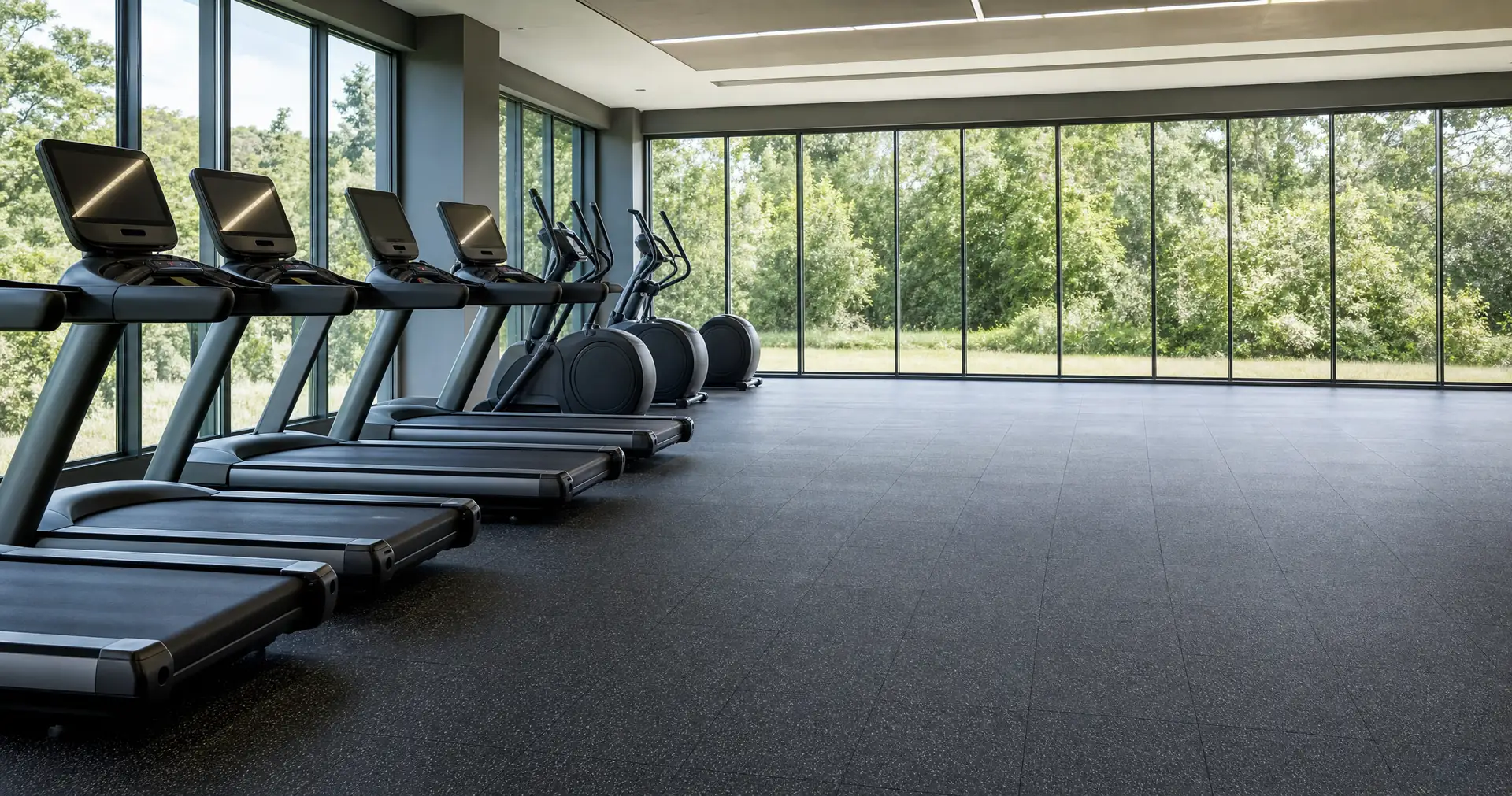
Gyms, studios, and PT operators borrow against a recurring-revenue model with high upfront equipment cost. Treadmills, racks, plate-loaded machines, and class technology drive the capex. Lenders commonly weight membership churn, lease length, and ACC compliance.
What you need to know about fitness and gym finance in NZ.
→Equipment is the largest single spend cardio and strength kit commonly $60K to $400K, financed via chattel mortgage on 4 to 6-year terms.
→Recurring revenue is a positive signal lenders typically weight direct-debit membership stability favourably once trading history is established.
→Fit-out is lease-tied flooring, plumbing, mirrors, and AV typically tied to lease term. Lenders want loan term inside lease term.
→ACC compliance and Exercise NZ standards matter PT registration, equipment safety, and incident handling all feed the lender review.
The landscape
Recurring revenue plus equipment-heavy capex.
New Zealand fitness has grown materially over the last decade, with Stats NZ Business Demography figures showing an expanded population of registered fitness and recreation businesses. The segment ranges from 24/7 access gym franchises through to boutique studios and independent PTs operating from rented space. Each profile carries a different finance footprint.
The structures that fit fitness most cleanly are chattel-mortgage equipment finance for the cardio and strength kit, a term loan for fit-outs and acquisitions, and a line of credit for marketing pushes around January peaks and quiet winter months. Lenders that play in this space include Heartland Bank, UDC Finance, Avanti Finance, Prospa, the major banks for property-secured operators, and a small number of equipment specialists with direct relationships to suppliers.
Recurring direct-debit membership revenue is widely viewed by NZ lenders as a positive cash-flow signal once trading history is established. The flip side is membership churn, which lenders typically ask about specifically: monthly attrition rate, average tenure, and the renewal pattern across January, March, and September promotional cycles. Operators with low churn and strong renewal data commonly attract a tighter indicative rate band.
Boutique studio fit-out
$80K to $250K
Box gym fit-out
$200K to $700K
Equipment package
$60K to $400K
Marketing working capital
$10K to $80K
Sub-segments
How NZ fitness operators borrow, by sub-segment.
Fitness is not one segment; it is several. Each sub-segment has its own typical loan amounts, common purposes, and equipment profile.
24/7 access gyms
Anytime Fitness, CityFitness, Snap Fitness, and independent 24/7 operators. Equipment-heavy with large cardio and strength floors. Access control technology and security camera kit add to capex. Franchise models commonly carry preferred-lender relationships.
·Loan amount: $150K to $600K
·Term: 5 to 7 years
Boutique studios
F45, BFT, reformer pilates, indoor cycling, hot yoga. Smaller footprint, equipment focused on the discipline (reformers, bikes, rowers, kettlebells). Class-booking technology and audio-visual systems are part of the capex.
·Loan amount: $80K to $250K
·Term: 4 to 6 years
CrossFit and functional fitness boxes
Squat racks, Olympic platforms, kettlebells, rowers, plyometric kit. Lower equipment cost than a box gym but higher rubber-matting and ventilation cost. Coach-led model with smaller membership volumes at higher per-member revenue.
·Loan amount: $60K to $180K
·Term: 4 to 5 years
Personal training studios
Single-trainer or small-team PT studios. Equipment lighter (functional kit, single rack, dumbbells, sled). Capex frequently combined with shared-space arrangements in larger gyms or commercial space subletting.
·Loan amount: $30K to $100K
·Term: 3 to 5 years
Recovery and wellness
Recovery-focused operators (cryotherapy, infrared sauna, massage, IV therapy). High-cost specialised equipment with long replacement cycles. Often an add-on revenue stream attached to a core gym or studio.
The bulk of NZ fitness lending volume falls into six common purposes. Each has a typical structure that fits.
01
Initial equipment package
Cardio (treadmills, bikes, rowers), strength (racks, machines, dumbbells), functional kit. Largest single spend most fitness businesses face. Chattel mortgage on a 4 to 6-year term aligned to commercial-grade equipment life.
02
Fit-out and renovation
Rubber flooring, mirrors, plumbing for showers, AV and sound, climate control, signage. Term loan against personal property or, where lease length supports it, an unsecured fit-out loan.
03
Equipment refresh and upgrades
Replacing ageing cardio, adding new strength lines, upgrading class-booking technology. Smaller-ticket chattel mortgage with shorter terms aligned to the replacement cycle.
04
Marketing and member acquisition
January push, March re-engagement, September peak. Line of credit suits the recurring promotional cycle. Repaid out of the membership uplift.
05
Acquisition of an existing gym
Buying a going concern with established membership base. Vendor finance commonly part of the structure. Verified membership data, churn rate, and equipment age drive the lender review.
06
Second site expansion
Capacity for proven demand once first site is profitable and trading history is established. Larger amounts, often bank-led where property security is on the table. Existing site profitability is the strongest approval lever.
Eligibility quirks
What fitness lenders ask that other industries don't.
Beyond the standard NZBN, trading history, and turnover questions, NZ fitness lenders commonly ask about membership data, lease, ACC compliance, and equipment supplier relationships.
Membership data and churn
Lenders commonly ask for active member count, monthly direct-debit revenue, and the average tenure or churn rate. Operators with low churn and strong renewal data commonly attract a tighter indicative rate band.
Lease length and exclusivity
A 6-year fit-out loan against a 3-year lease is a hard sell. Lenders typically want loan term to fit inside the remaining lease (plus any options), and may ask about exclusivity clauses where the landlord has multiple gym tenants.
ACC and Exercise NZ standards
Personal trainer registration with Exercise NZ (REPs), ACC registered provider status where applicable, and equipment safety certification all feed the lender review. Lapsed registration weakens the application.
Operator and trainer experience
First-time gym operator + new concept is the highest-risk profile. Prior experience in the segment (either as operator or as a senior trainer) commonly tightens the indicative rate band.
Capex by sub-segment and region
Indicative gym and studio capex bands by NZ region.
Auckland and Wellington fit-out costs commonly run 15-30% above regional NZ pricing for the same brief. The bands below are observed across NZ fitness applications in 2026.
Sub-segment
Auckland
Wellington / Christchurch
Regional NZ
Single-trainer PT studio
$40K to $90K
$35K to $80K
$30K to $70K
Boutique reformer or cycling studio
$160K to $260K
$140K to $230K
$110K to $190K
CrossFit / functional box
$110K to $200K
$95K to $170K
$75K to $140K
24/7 access gym (small)
$280K to $480K
$240K to $420K
$200K to $360K
Box gym (1500 to 2500 sqm)
$500K to $900K
$420K to $780K
$340K to $640K
Recovery / wellness add-on
$120K to $280K
$100K to $240K
$80K to $200K
Indicative bands only. Actual cost depends on equipment specification, building condition, and consenting timeline. Premium concepts can run materially higher.
Worked scenarios
Three NZ fitness finance scenarios.
Real-world structures across boutique studio, 24/7 access gym, and CrossFit box, illustrating how the regional cost profile and operator experience shift the offered rate.
Boutique studio
Auckland reformer pilates studio
A Ponsonby-based reformer pilates operator opening their first site. New 5-year lease secured. Total project $180K ex-GST: $90K reformer kit (12 reformers plus accessories), $50K fit-out (mirrored studio, sprung floor), $40K AV and booking technology.
Structure: $90K chattel mortgage on the reformer kit at indicative 11.5% over 5 years + $90K unsecured term loan at indicative 14% over 4 years for fit-out and AV. Combined indicative weekly ~$865. Operator has 8 years senior-instructor experience, which tightened both rate bands.
Indicative figures
Total project
$180,000
Equipment finance
$90K @ 11.5%
Fit-out term loan
$90K @ 14%
Combined weekly
~$865
GST claim (indicative)
~$23,500
24/7 access gym
Wellington 24/7 access gym
A Petone-based 24/7 access gym franchise opening their second site in central Wellington. 1800 sqm box, full cardio and strength floor, recovery zone. Total project $560K ex-GST. Operator owns franchise rights and has 4 years trading at the first site.
Structure: $300K chattel mortgage on equipment at indicative 10.5% over 6 years + $260K secured term loan at indicative 11% over 6 years for fit-out, secured against assets in both sites. Indicative weekly ~$1,775. Existing site profitability and franchise track record materially tightened the rate.
Indicative figures
Total project
$560,000
Equipment finance
$300K @ 10.5%
Fit-out term loan
$260K @ 11%
Combined weekly
~$1,775
Term
6 / 6 years
CrossFit
Christchurch CrossFit box
A 6-year-old Christchurch CrossFit box upgrading equipment and adding a recovery zone. Existing operation profitable with 180 active members and stable churn. Total project $140K ex-GST: $80K new equipment (racks, plates, rowers, sled), $60K recovery zone (sauna, ice bath, massage chair).
Structure: $140K chattel mortgage at indicative 11% across 5 years (asset life and existing trading history aligned). Owner-operator coach with 8 years trading and Exercise NZ REPs registration tightened the rate. Indicative weekly ~$700. GST claim of around $21,000 typically claimable in the next return, subject to the accountant's confirmation.
Indicative figures
Asset value
$140,000
Term
5 years
Indicative rate
11% p.a.
Weekly indicative
~$700
GST claim (indicative)
~$21,000
Structure × purpose
Which loan structure fits which fitness purpose.
No single structure suits every fitness purpose. The matrix below maps the four common structures to the most common purposes.
Feature
Equipment finance
Term loan
Line of credit
Operating lease
Cardio and strength equipment
Best fit
Possible (combined)
No
Possible (refresh cycle)
Full fit-out (flooring, mirrors, AV)
Equipment portion only
Best fit
No (size, term)
No
Marketing and member acquisition
No
Marginal (term too long)
Best fit
No
Equipment refresh (every 5 to 7 years)
Best fit
Possible
No
Best fit (no residual)
Acquire existing gym
Equipment portion
Best fit (with vendor finance)
No
No
Class booking technology
Best fit
Possible
Possible (subscription)
Possible
Regulatory framing
Fitness-specific regulatory and tax items lenders weigh.
Fitness operators sit under several NZ regulatory frameworks that lenders commonly verify before disbursing. Personal trainers and group fitness instructors are widely registered with Exercise New Zealand under the Register of Exercise Professionals (REPs). Registration is voluntary but widely treated as the industry standard, and lapsed registration weakens an application. ACC interactions matter for two reasons: clinical exercise and rehab providers may be ACC registered providers under specific contracts (ActivePlus, Escalated Care Pathway), and all fitness operators are exposed to ACC employer levies and incident reporting under the Health and Safety at Work Act 2015.
Equipment safety certification adds a layer most other industries do not face. Commercial-grade cardio and strength equipment is typically supplied with manufacturer compliance documentation (CE, EN957). Lenders financing equipment commonly ask the supplier directly for compliance evidence as a settlement condition, alongside PPSR registration on the financed assets.
IRD depreciation rates relevant to fitness vary by category. Commercial gym equipment commonly depreciates at 13% diminishing value, with audio-visual and computer equipment faster at 30% to 40%, and signage at 18%. Building improvements such as plumbing modifications and mirrored walls typically attach to the building structure and depreciate at 0% under post-2011 IRD treatment, while loose chattels separated from the structure can depreciate independently. The accountant's confirmation is the standard last step on the depreciation schedule and the diminishing-value vs straight-line election. GST on equipment purchases is typically claimable in the next return after settlement under chattel mortgage, subject to the accountant's confirmation that the operator is GST-registered and the asset qualifies.
Membership contract structure is also part of the lender review. Direct-debit memberships under the Direct Debit Authority framework provide recurring revenue, but lender reviews typically ask about the cancellation policy, the lock-in period, and the consumer-law exposure under the Consumer Guarantees Act 1993 where contracts are effectively standard-form. Operators using third-party payment processors (Debitsuccess, Ezypay) commonly attach those statements to the application.
Lenders to know
NZ lenders that fund fitness and gyms well.
Fitness is supported by a mix of asset finance specialists (for equipment), alternative SME lenders (for fit-out and working capital), and the major banks (for property-secured larger projects).
Consumer-law framing referenced for membership contract structure.
FAQ
Fitness and gyms finance, NZ small-business questions answered
How do New Zealand gyms commonly finance an equipment package?
A typical NZ gym equipment package runs $80,000 to $400,000 depending on size and specification. Operators commonly fund this through chattel mortgage against the new equipment, with terms of 4 to 6 years aligned to commercial-grade equipment life. Heartland Bank, UDC Finance, and major-bank asset finance arms are typical lenders. Some operators use equipment supplier finance offers from Life Fitness, Technogym, or Precor as an alternative path.
How do NZ lenders view recurring direct-debit membership revenue?
Recurring direct-debit membership revenue is widely viewed by NZ lenders as a positive cash-flow signal once trading history is established. Lenders typically ask for active member count, monthly direct-debit revenue, average tenure, and churn rate. Operators with low churn and strong renewal data across the January, March, and September promotional cycles commonly attract a tighter indicative rate band, subject to the lender's assessment.
What eligibility questions do gym lenders ask that other industries do not?
Beyond the standard NZBN, trading history, and turnover questions, NZ gym lenders commonly ask about active member count, monthly direct-debit revenue, churn rate, lease length and exclusivity, Exercise NZ REPs registration of trainers, and equipment safety certification. Acquisition financing also asks about the prior owner's reason for selling, the verified membership data, and the equipment age profile.
Can a brand-new NZ gym operator get an unsecured loan?
Unsecured loans for a brand-new gym with no trading history are difficult to obtain in the NZ market. The capex profile combined with no track record typically pushes lenders toward a chattel-mortgage structure on the equipment portion, plus a secured fit-out loan against personal property or a director's guarantee. Established gym operators with at least 12 months trading history can often access unsecured working capital products, subject to the lender's credit assessment.
What rate range applies to NZ gym finance in 2026?
Indicative rates on gym finance commonly sit in the 8% to 18% per annum band depending on structure and operator profile. Asset-secured chattel mortgages on equipment sit at the lower end. Unsecured term loans for fit-out sit in the middle band. Working capital for newer operators sits at the upper end. Final rate is set by the lender after assessment.
Is GST claimable on a gym equipment purchase?
A GST-registered fitness business can typically claim the GST component on equipment purchases as input tax in the relevant GST return, subject to the accountant's confirmation. Where the equipment is acquired under chattel mortgage, the full GST is typically claimable upfront. Where it is acquired under operating lease, GST is typically claimed across the rental payments. The structure choice affects cash-flow timing more than total cost.
How does franchise gym finance differ from independent?
Franchise applications (Anytime Fitness, CityFitness, Snap Fitness, F45, BFT) commonly carry a more favourable lender posture because the franchisor brand reduces the concept risk. Some franchisors maintain preferred-lender relationships that streamline applications. Trade-offs include franchise fees and royalties reducing margins, and the franchisor's contract typically restricting equipment, suppliers, and design choices, all of which feed the application review.
How does lease length affect a gym fit-out loan?
Lease length is one of the strongest constraints on gym fit-out finance. A 6-year fit-out loan against a 3-year lease is widely considered a hard sell. Lenders typically want the loan term to fit inside the remaining lease (plus any contracted renewal options). Operators with long-dated leases (8+ years remaining) commonly access longer loan terms and tighter rate bands than those with short-dated leases.
Can I refinance my gym loan to a better rate after trading?
Often yes, particularly after 12 to 24 months of clean trading and stable membership data where the financial profile has strengthened. Refinancing is commonly used to consolidate multiple gym loans (equipment + fit-out + working capital) into a single facility, or to move from alternative-lender pricing to major-bank pricing. Early-repayment fees on the original loan are the main consideration.
What deposit do NZ gym lenders typically require?
For equipment finance, deposits commonly run 0% to 20% of the asset value depending on lender and operator profile. New operators often face deposit requirements of 15% or more on equipment. Established operators with multi-year trading history can commonly access zero-deposit asset finance on standard equipment categories. Fit-out finance typically carries a higher deposit (20% to 30%) for new operators.
How does Exercise NZ REPs registration affect finance?
Personal trainer and group fitness instructor registration with Exercise New Zealand under the REPs framework is voluntary but widely treated as the industry standard. Lenders commonly ask about REPs registration of the head trainer and key staff. Lapsed or absent registration weakens the application; current registration supports the operator-experience portion of the lender review.
What is operating lease and when does it suit a gym?
Operating lease is a structure where the gym pays rental for equipment without taking ownership at the end. Common across cardio equipment (treadmills, bikes) where the operator wants to refresh on a 4 to 5-year cycle without managing a residual value. Cash-flow simpler than chattel mortgage but no GST claimed upfront and no asset on the balance sheet. The right structure depends on the operator's priorities, subject to the accountant's confirmation on the tax position.
Can I finance recovery and wellness equipment separately?
Yes, NZ specialist lenders commonly run dedicated equipment finance against recovery zone kit (cryotherapy chambers, infrared sauna, ice baths, massage technology). The structure is typically a chattel mortgage with the equipment as security, on a 5 to 7-year term aligned to specialist equipment life. This can keep the core gym equipment financing separate and allow the recovery zone to be added as an incremental investment after initial trading is established.
Indicative content only. Not personalised financial advice.
A business loan is a commitment that runs for months or years, and repayments come out of the same operating cash flow as everything else. Before committing, it is worth modelling the weekly and monthly cost against the business's working-capital position, which is what this site is built to help with. Borrowing at a level that stays comfortable through a quiet quarter, not just a strong one, is widely regarded as the safer frame.
What this site is
A calculator and information tool. Not a lender, not a broker, not a registered financial adviser. Nothing here is personalised financial advice.
What the figures show
Modelled estimates based on the inputs you enter. Not a quote. Not an offer of credit. Not a guarantee of approval, rate, or fees.
What the lender decides
Final rates, fees, and approval are set by the lender after a CCCFA-appropriate assessment of the applicant's circumstances and credit decision.
Commercial disclosure
Businessloans.org.nz earns a commission from Prospa when a visitor applies through this site and their application is approved. The commission is paid by Prospa, not by the borrower, and it does not influence the rate Prospa offers. Full disclosure on the partner page.
Tax, GST, and accountant framing
Tax-treatment statements (GST claim timing, interest deductibility, depreciation rates) are general in nature and subject to your accountant's confirmation on the specific business position. For material amounts, professional advice from a registered financial adviser or chartered accountant is widely regarded as the safer frame.