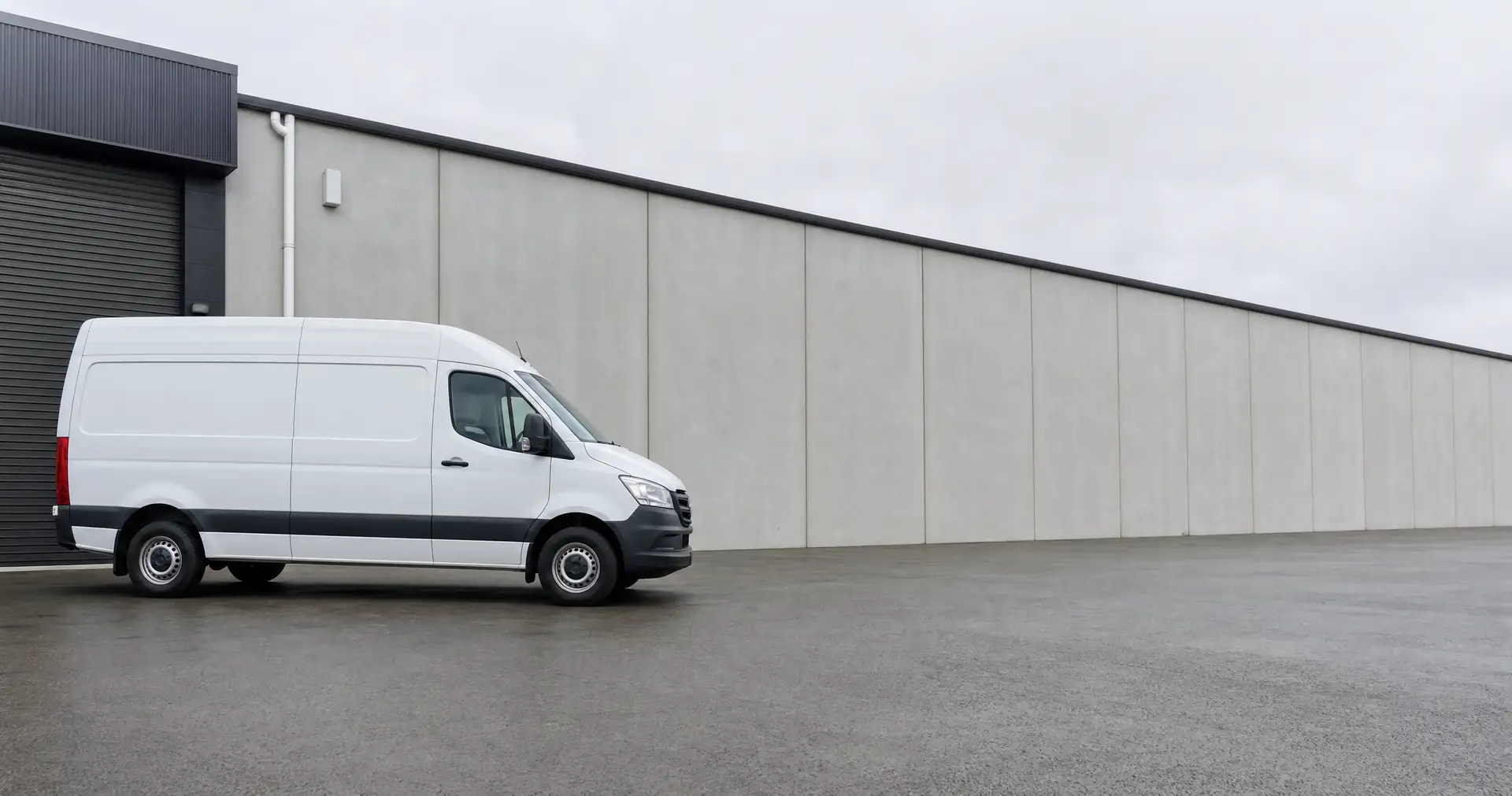
Van finance for New Zealand delivery, courier, and mobile trades .
Van finance in NZ centres on the Toyota Hiace, Ford Transit, Mercedes-Benz Sprinter, Renault Master, Mercedes-Benz Vito and LDV Deliver 9 pool that dominates the NZ delivery, courier and mobile-trades market. Most operators fund through a chattel mortgage on a 4 to 5 year term, often with shelving, racking and signage bundled at settlement.
→New van commonly $30K to $80K Toyota Hiace LWB, Ford Transit Custom and Transit Long, Mercedes-Benz Sprinter MWB and LWB, Renault Master and Master Pro, LDV Deliver 9 dominate the NZ delivery and courier pool. EV variants (LDV eDeliver 7, Ford E-Transit) sit at the upper band.
→Used 3 to 7 year van commonly $15K to $50K Used Hiace and Transit variants retain solid residual value because of courier and last-mile demand. Larger Sprinter and Master variants sit higher; used LDV Deliver 9 stock has expanded as the model ages into the secondary market.
→Internal fitout is commonly bundled into the chattel mortgage Plywood lining, shelving and racking systems, drawer kits, vinyl signage, dashcams and reverse cameras commonly added to the chattel mortgage at settlement rather than financed separately. Adds $4K to $15K to the loan depending on spec.
→GST and IRD depreciation typically apply as for any business motor vehicle Full GST typically claimable upfront in the next GST return on chattel mortgage; IRD motor vehicle depreciation rates apply, subject to the accountant's confirmation. RUC applies to diesel variants; Class 1 licence sufficient for vans below 6,000 kg.
The landscape
Vans sit at the centre of NZ delivery, courier and mobile-trades work.
Motor Industry Association (MIA) registration data shows the Toyota Hiace and Ford Transit leading the NZ commercial van pool across recent years, with the Mercedes-Benz Sprinter and Renault Master covering the larger-payload market and the LDV Deliver 9 covering the value tier. Stats NZ retail trade data has shown online retail share materially above pre-2020 levels, holding the courier and last-mile delivery segment finance-active. Mobile trades businesses (mobile electricians, mobile plumbers, mobile pet groomers, mobile coffee, mobile bike repair) have become a noticeable second use case alongside the traditional courier and delivery base.
Two structures dominate van finance. A chattel mortgage gives the operator legal title from settlement, with the lender registering a security interest on the Personal Property Securities Register (PPSR) and the operator typically claiming the full GST upfront in the next GST return. Hire purchase carries similar GST timing but legal title transfers on final payment; finance lease and operating lease are more common at the multi-van fleet tier where Custom Fleet, FleetPartners, Toyota Fleet Management or Eroad-fitted full-service leases simplify rotation.
Internal van fitout is the distinctive cost line that separates van finance from ute finance. Plywood lining ($1,000 to $2,500), modular shelving and racking ($3,000 to $8,000 depending on spec), drawer and bin systems ($1,500 to $4,000), vinyl wrap and signage ($2,500 to $6,000), and telematics, dashcam and reverse-camera kit ($1,500 to $3,500) commonly add $4,000 to $15,000 to the loan above the bare vehicle price. Lenders such as UDC Finance and Heartland Bank commonly bundle the fitout into the chattel mortgage at settlement against the same security interest on the vehicle.
New van band
$30K to $80K
Used van band (3-7 yr)
$15K to $50K
Common deposit
0 to 20%
Common term
4 to 5 years
Van finance scenarios
Four common NZ van finance scenarios.
Most van applications fall into one of four patterns. Each pattern has a typical loan amount, structure, and lender pool.
Owner-driver courier with NZ Couriers, PBT or CourierPost
New owner-driver entering or scaling a NZ Couriers, PBT, or CourierPost parcel run. Used Hiace or Transit Long. Vinyl wrap, scanner kit, dashcam bundled. Chattel mortgage on a 4 to 5 year term.
·Loan amount: $30K to $60K
·Term: 4 to 5 years
Mobile electrician or plumber with full van fitout
Mobile sparkie or plumber buying a new Transit or LDV Deliver 9 with full plywood lining, modular shelving, drawers and inverter setup. Fitout typically $8K to $15K of the total project.
·Loan amount: $50K to $75K
·Term: 5 years
Small last-mile delivery fleet (3 to 8 vans)
Established last-mile or food delivery operator adding capacity for a Foodstuffs, Countdown, or pharmacy distribution contract. Mix of Hiace, Transit, and LDV. Existing trading data tightens the rate band.
·Loan amount: $200K to $600K
·Term: 4 to 5 years
EV van for low-running-cost metro routes
LDV eDeliver 7, Ford E-Transit, or Renault Kangoo E-Tech for predominantly metro routes with overnight depot charging. Higher purchase price offset by lower running costs and tighter PHEV / EV operating cost over the term.
·Loan amount: $65K to $95K
·Term: 5 years
What van finance funds
Six common NZ van finance loan purposes.
Van finance volume falls into six common purposes. Each has a typical structure that fits.
Courier and last-mile parcel vans
Toyota Hiace LWB, Ford Transit Long, LDV Deliver 9. Most common single-vehicle finance request from NZ owner-driver couriers and last-mile delivery operators. Chattel mortgage on a 4-5 year term.
Mobile-trades fitted-out vans
Mobile electrician, mobile plumber, mobile mechanic, mobile coffee, mobile pet grooming. Plywood lining, shelving, drawer systems and inverter setups commonly fitted before first job. Chattel mortgage on a 4-5 year term.
Refrigerated and chilled delivery vans
Refrigerated body upgrades on Hiace, Transit, Sprinter, or Master for chilled grocery, pharmacy, or food distribution contracts. Reefer body adds $25K to $50K to the bare van price.
EV and PHEV delivery vans
LDV eDeliver 7, Ford E-Transit, Renault Kangoo E-Tech. Lower running cost across the term; depot charging or overnight home charging required to make the use case work. Chattel mortgage on a 5 year term.
Internal fitout and signage
Plywood lining, modular shelving and racking, drawer and bin systems, vinyl wrap and signage, dashcams, reverse cameras, telematics. $4K to $15K commonly bundled into the chattel mortgage at settlement.
Trade-in, refinance, and fleet rotation
Refinance into a newer used van at end of the chattel mortgage term, or restructure across 3+ vans when scaling fleet. Existing trading data and trade-in credit materially tighten the rate band.
Tax, GST, and depreciation
How GST, IRD depreciation, and Road User Charges typically work on a NZ delivery van.
A GST-registered NZ courier, delivery, or mobile-trades operator can typically claim the GST component on a van as input tax in the relevant GST return, subject to the accountant's confirmation. Where the van is acquired under chattel mortgage, the full GST is typically claimable upfront in the next GST return after settlement, including the GST component on bundled fitout (shelving, racking, signage, dashcam). Where the van is acquired under finance lease or operating lease, GST is typically claimed across the rental payments. IRD publishes motor vehicle depreciation rates under the Determination DEP1 schedule, with light commercial vehicle categories sitting at commonly 30% diminishing-value or 21% straight-line on the GST-exclusive cost base, subject to the accountant's confirmation. Road User Charges (RUC) under the Road User Charges Act 2012 apply to diesel variants administered by NZTA and are paid in advance per 1,000 km block; petrol variants pay road-use cost through fuel excise duty rather than RUC. Refrigerated body upgrades commonly carry separate depreciation classes from the cab/chassis. The accountant is the right person to confirm structure choice, depreciation election, and FBT treatment on the specific business position.
Van finance bands by model and condition
Indicative NZ van finance bands.
Van pricing varies by model, body length, height, age, and dealer. The bands below are observed across the NZ delivery and mobile-trades van finance pool in 2026.
Vehicle category
Used (3-7 yr)
New
Common term
Toyota Hiace LWB
$22K to $42K
$50K to $68K
4 to 5 years
Ford Transit Custom and Transit Long
$20K to $40K
$48K to $72K
4 to 5 years
Mercedes-Benz Sprinter MWB and LWB
$28K to $50K
$72K to $95K
5 years
Renault Master, Master Pro
$22K to $42K
$58K to $78K
5 years
Mercedes-Benz Vito
$25K to $45K
$58K to $75K
4 to 5 years
LDV Deliver 9 (value tier)
$18K to $35K
$42K to $58K
4 to 5 years
EV van (LDV eDeliver 7, Ford E-Transit)
Limited used stock
$70K to $95K
5 years
Refrigerated body upgrade
$15K to $35K
$25K to $50K
5 years
Indicative bands only. Actual price depends on age, kilometres, body length, height, fitout, and dealer. Final rate, fee, and approval decisions are made by the lender after assessment.
Chattel mortgage vs finance lease vs operating lease
How a van under chattel mortgage compares to finance lease and operating lease.
The structure choice tracks fleet size, end-of-term plan, and preference for ownership. Most NZ owner-drivers and small fleets default to chattel mortgage; larger last-mile fleets often blend chattel mortgage and full-service operating lease.
Feature
Chattel mortgage
Finance lease
Operating lease (Custom Fleet, FleetPartners, Toyota Fleet Management)
Legal ownership
Operator owns from settlement
Lessor retains; option to buy at end
Lessor retains throughout
GST upfront claim
Yes, full GST in next return
No, claimed across rental payments
No, claimed across rental payments
IRD depreciation
Operator depreciates the asset
Lessor depreciates; operator claims rentals
No depreciation; rental is operating expense
Maintenance responsibility
Operator
Operator (typically)
Often included in lease (full-service)
End-of-term
Sell, trade, or keep
Pay residual to take title or return
Return to lessor
PPSR position
Lender registers security interest
Lessor retains title; PPSR commonly registered
Lessor retains title
Typical use case
Owner-drivers and small NZ delivery and mobile-trades businesses
Operators preferring residual flexibility
Mid to large last-mile fleets with planned rotation
How it works
A typical NZ van finance application.
Most van finance applications close within 5 to 10 business days for owner-drivers and small businesses with clean trading data. Established operators with multi-year trading and existing facility relationships move faster.
01
Day 1 to 3
Define the vehicle and fitout
A typical van finance request combines a chattel mortgage on the vehicle with bundled financing of the internal fitout (plywood lining, shelving, racking, drawers, signage, dashcam). Defining components upfront tightens the application and lets the lender size the loan correctly to cover the bare van plus fitout in a single facility.
Documents commonly required
·Dealer quote or sale agreement
·Fitout quote (shelving, racking, signage)
·Insurance quote
02
Day 1 to 7
Submit application with NZ delivery / trades documents
Standard application packs include NZBN, business owner ID, the last 6 months of business bank statements, and (for couriers) the contractor agreement with NZ Couriers, PBT, CourierPost, Foodstuffs distribution, or other head operator. Established mobile-trades businesses typically provide the last 1 to 2 years of financial statements.
Documents commonly required
·NZBN, business owner ID
·Last 6 months business bank statements
·Contractor agreement (couriers and last-mile)
·Last 1-2 years financial statements (where available)
·Driver licence (Class 1 for vans below 6,000 kg)
·Insurance quote
·Trade-in vehicle details (where applicable)
03
Day 3 to 10
Lender assessment and offer
Lenders assess against three things: the security position on the vehicle (LVR after deposit and any trade-in), the trading data or contractor agreement supporting the asset use, and the credit profile of the borrower and any guarantor. Offers commonly come back with conditions: deposit size, additional security, fitout milestones, or insurance requirements.
04
Week 1 to 2
Settle, fit out, register PPSR, take delivery
The lender pays the dealer directly at settlement. A security interest is registered against the vehicle on the Personal Property Securities Register (PPSR) under the Personal Property Securities Act 1999. Internal fitout typically scheduled in the days following collection and completed before the first run. Comprehensive motor vehicle insurance bound before delivery.
A broker familiar with the NZ courier and mobile-trades van pool commonly tightens the indicative rate band and reduces the documentation cycle versus a direct application to a generic SME lender.
Worked scenarios
Three NZ van finance scenarios.
Real-world structures across owner-driver courier entry, mobile electrician fitout, and small last-mile fleet expansion. Each illustrates how vehicle choice, fitout spec, and trading history shift the offered rate.
New owner-driver entering a NZ Couriers parcel run
Auckland NZ Couriers Hiace owner-driver entry
A new owner-driver entering a NZ Couriers parcel run on the North Shore. Total project $52,000 ex-GST: $43,000 used 2022 Toyota Hiace ZR Long Wheelbase, $4,000 vinyl wrap and signage, $3,500 hand-held scanner, dashcam and two-way radio, $1,500 first-quarter motor vehicle and public liability insurance. 12% deposit ($5,200) from personal savings.
Structure agreed with a transport-experienced broker: chattel mortgage on the vehicle and signage ($46,800 after deposit, 5-year term, indicative 9-12% p.a. on the inputs shown). Contractor agreement signed with NZ Couriers; first parcel run scheduled for week 3 after settlement. UDC Finance funded the chattel mortgage based on the contractor agreement and the principal's prior delivery employment history.
PPSR security interest registered against the Hiace at settlement. Comprehensive motor vehicle insurance bound before the first run. Vinyl wrap and signage applied in the week following collection, scanner kit installed by the contractor head office, dashcam and two-way radio fitted before first run.
Indicative figures
Total project
$52,000
Vehicle (used Hiace)
$43,000
Chattel mortgage after deposit
$46,800
Indicative rate
9-12% p.a.
Established mobile sparkie buying a new fully fitted-out van
Wellington mobile electrician Transit fitout
A Wellington mobile electrician with 5 years of trading replacing an aging fitted-out van with a new 2026 Ford Transit Custom Long. Total project $74,000 ex-GST: $58,000 vehicle, $11,000 plywood lining, modular shelving, drawer system and inverter setup, $3,000 vinyl wrap and signage, $2,000 dashcam and reverse camera kit. Trade-in credit of $14,000 on the outgoing 2018 Transit.
Structure agreed with the existing facility lender: chattel mortgage on the vehicle and full fitout ($60,000 after trade-in, 5-year term, indicative 8-10% p.a. on the inputs shown). 5 years of trading and an existing facility relationship drove lender confidence and tightened the indicative rate band against single-vehicle pricing for newer operators.
PPSR security interest registered against the Transit at settlement. Comprehensive motor vehicle insurance bound before delivery. Plywood lining, shelving and drawer system fitted in the 5 days following collection at a Wellington fitout specialist. Vinyl wrap and signage applied in the same week. Outgoing 2018 Transit collected by the dealer at trade-in.
Indicative figures
Total project
$74,000
Trade-in credit
$14,000
Chattel mortgage after trade-in
$60,000
Indicative rate
8-10% p.a.
Established last-mile delivery operator scaling for new contract
Christchurch last-mile fleet expansion to 6 vans
A Christchurch last-mile delivery operator with 4 vans and 6 years of trading adding 2 vans to support a new Foodstuffs distribution subcontract. Total project $145,000 ex-GST: 2 new LDV Deliver 9 vans at $52,000 each, $25,000 fitout across both vans (plywood lining, modular shelving, dashcam, telematics), $16,000 signage and livery on the existing 4-van fleet refresh.
Existing fleet trading data and the new Foodstuffs subcontract drove lender confidence. Chattel mortgages on the 2 new vans ($104,000 combined, 5-year term, indicative 8-10% p.a. on the inputs shown). Existing working-capital line on the original 4 vans extended from $35,000 to $60,000 to cover the larger diesel and RUC spend across 6 vans. Heartland Bank funded the chattel mortgages.
PPSR security interest registered against each new van at settlement. Comprehensive motor vehicle insurance updated to cover the expanded fleet. Internal fitout completed in the 10 days following collection. Both new vans in service within 3 weeks of settlement.
Indicative figures
Total project
$145,000
New chattel mortgages
$104,000
Working-capital line uplift
$25,000
Trading history at fleet
6 years
NZ van finance lenders
Lenders that fund NZ van finance well.
Several NZ lenders carry deep familiarity with the courier, last-mile delivery, and mobile-trades van pool. The shortlist below is editorial.
NZ new vehicle registration trends for light commercial vans including Hiace, Transit, Sprinter, Master, Vito, and LDV Deliver 9.
FAQ
Van finance, NZ small-business questions answered
How much does a new delivery van cost in NZ in 2026?
A new NZ delivery van commonly runs $42,000 to $80,000 ex-GST depending on model, body length, height, and dealer. Toyota Hiace LWB and Ford Transit Custom and Transit Long sit around $48,000 to $72,000. Mercedes-Benz Sprinter and Vito sit higher, with Sprinter LWB commonly $72,000 to $95,000. Renault Master sits around $58,000 to $78,000. LDV Deliver 9 covers the value tier from around $42,000. EV variants (LDV eDeliver 7, Ford E-Transit) commonly sit at $70,000 to $95,000.
How much does a used van cost in NZ in 2026?
A used 3 to 7 year old NZ delivery van commonly runs $18,000 to $50,000 ex-GST depending on model, body length, kilometres, and condition. Toyota Hiace LWB and Ford Transit Long sit at the upper end of the courier secondary market, commonly $20,000 to $42,000 because of strong courier and last-mile demand for the format. Mercedes-Benz Sprinter sits higher again, commonly $28,000 to $50,000 used. LDV Deliver 9 used stock has expanded as the model ages into the secondary market and sits commonly $18,000 to $35,000.
Can internal van fitout be financed alongside the vehicle?
Yes. NZ chattel mortgage finance commonly bundles plywood lining, modular shelving and racking, drawer systems, vinyl wrap and signage, dashcams, reverse cameras, and telematics into the loan at settlement, alongside the bare vehicle. The bundled package is funded under the same chattel mortgage rather than a separate small-ticket facility, which simplifies documentation and allows the GST on the fitout components to be claimed alongside the vehicle GST in the next GST return, subject to the accountant's confirmation.
Can I claim GST on a van financed under chattel mortgage?
A GST-registered NZ courier, delivery, or mobile-trades operator can typically claim the full GST component on a van acquired under chattel mortgage as input tax in the next GST return after settlement, subject to the accountant's confirmation. The GST component is calculated on the GST-inclusive purchase price as funded by the lender, including bundled fitout. Where the van is acquired under finance lease or operating lease, GST is typically claimed across the rental payments rather than upfront. The structure choice affects cash-flow timing more than total cost over the life of the loan.
What IRD depreciation rate applies to a NZ delivery van?
IRD publishes motor vehicle depreciation rates under the Determination DEP1 schedule, with light commercial vehicle categories sitting at commonly 30% diminishing-value or 21% straight-line on the GST-exclusive cost base, subject to the accountant's confirmation. Internal fitout components (shelving, racking, drawer system) commonly depreciate at the same rate as the van when bundled at settlement. Refrigerated body upgrades commonly carry a separate depreciation class from the cab/chassis. The accountant is the right person to confirm asset class and election on the specific business setup.
Does a delivery van pay Road User Charges (RUC) in NZ?
Diesel delivery vans pay Road User Charges (RUC) under the Road User Charges Act 2012, administered by NZTA. RUC is paid in advance per 1,000 km block at a rate set by vehicle weight category. Petrol delivery vans do not pay RUC because petrol road-use cost is collected through fuel excise duty. Hybrid vans pay RUC based on the powertrain configuration; pure-electric light commercials (LDV eDeliver 7, Ford E-Transit) currently sit within the EV RUC framework following recent NZTA changes. NZTA publishes the current RUC rates and exemptions in full.
What licence is required to drive a delivery van in NZ?
A standard Class 1 driver licence covers vans and light commercial vehicles up to 6,000 kg gross laden weight in NZ, per NZTA driver licence classes under the Land Transport Act 1998. Most NZ delivery vans (Hiace, Transit, Sprinter MWB, Vito, Master, LDV Deliver 9) sit well below this threshold, between 2,800 and 3,500 kg gross laden weight. The Mercedes-Benz Sprinter LWB heavy-duty variant and the larger Renault Master Pro can approach the threshold once loaded; Class 2 only kicks in above 6,000 kg.
What rate range applies to NZ van finance in 2026?
Indicative rates on NZ van finance commonly sit in the 8% to 14% per annum band depending on structure, security, and operator profile. Chattel-mortgage finance secured by a new or near-new van for an established mobile-trades or last-mile delivery business sits at the lower end (commonly 8-10%). Used van finance and applications from new owner-drivers sit in the middle (commonly 10-12%). Higher-tolerance lenders covering thinner trading history sit at the upper end (commonly 12-14%). Final rate is set by the lender after assessment.
What deposit is required to finance a delivery van in NZ?
NZ van finance commonly accepts deposits in the 0 to 20% range. 0% deposit chattel mortgage on near-new dealer-stock vans is widely available for established mobile-trades businesses and last-mile fleets with clean trading data. Used vans and applications from new owner-drivers commonly attract 10 to 20% deposit requirements to reduce the loan-to-value ratio at settlement. Trade-in credit on an existing van can substitute for a cash deposit. Final deposit position is set by the lender after assessment.
Can a refrigerated van be financed in NZ?
Yes. Refrigerated vans (commonly used for chilled grocery, pharmacy, and food distribution contracts) are financeable through the same chattel-mortgage and asset-finance pool as standard delivery vans. The refrigerated body adds materially to the vehicle cost (commonly $25,000 to $50,000 above the equivalent dry-body van), and lenders sometimes split the finance into a chattel mortgage on the cab/chassis and asset finance on the refrigerated body. Operators contracting on chilled freight runs commonly present the contract alongside the application to support the finance proposal.
What happens to a financed van if the delivery business closes?
Where the van is financed under chattel mortgage and the delivery business closes before the loan is repaid, the lender typically has a security interest registered on the Personal Property Securities Register (PPSR) and can take possession of the vehicle to recover the outstanding balance. Any shortfall between resale value and balance owing typically falls to the borrower and any personal guarantor. NZ delivery vans typically retain 45-65% of value at the 3 to 5 year point depending on model, kilometres, and condition; high-kilometre courier vans can sit at the lower end of this band.
How does the contractor agreement with NZ Couriers, PBT, or CourierPost affect a van loan?
NZ courier and delivery van lenders commonly ask for the contractor agreement and 6 to 12 months of contractor statements as part of the application pack for owner-drivers. The contractor agreement sets the run scope, payment cycle (commonly weekly), and any vehicle age, signage, or uniform requirements. Lenders use the contractor statements to confirm income flow and to assess whether the proposed loan repayment fits within the operator's after-cost contractor income. New owner-drivers in their first weeks face a tighter application because contractor statement history is limited; specialist lenders such as Avanti Finance or Bizcap commonly fund this tier where mainstream lenders defer.
Can an EV delivery van be financed in NZ?
Yes. Electric vans (LDV eDeliver 7, Ford E-Transit, Renault Kangoo E-Tech) are financeable through the same chattel-mortgage pool as diesel and petrol vans, on 4 to 5 year terms. The higher purchase price (commonly $70,000 to $95,000 new) is partly offset by lower running cost, particularly on metro routes with overnight depot or home charging. EV-specific considerations include charging infrastructure at the depot or home, range fit to the route pattern, and the EV RUC framework following recent NZTA changes. The accountant is the right person to confirm depreciation and FBT treatment on the specific business setup.
Can an established delivery operator refinance into better van finance pricing?
Yes. Established delivery and mobile-trades operators with 18 to 36 months of clean trading data commonly refinance from alternative-lender pricing (12-14%) into bank-tier or specialist asset-finance pricing (8-10%) once trading history is built. Refinancing is also commonly used at end of the original chattel mortgage term to roll into a newer used van, or to consolidate across 3+ vans when scaling fleet. Early-repayment fees on the existing loans and the resale value position on the existing vehicles are the main considerations. The refinance application typically requires 12 months of bank statements, financial statements where available, and current driver licence and (for couriers) contractor statements.
Indicative content only. Not personalised financial advice.
A business loan is a commitment that runs for months or years, and repayments come out of the same operating cash flow as everything else. Before committing, it is worth modelling the weekly and monthly cost against the business's working-capital position, which is what this site is built to help with. Borrowing at a level that stays comfortable through a quiet quarter, not just a strong one, is widely regarded as the safer frame.
What this site is
A calculator and information tool. Not a lender, not a broker, not a registered financial adviser. Nothing here is personalised financial advice.
What the figures show
Modelled estimates based on the inputs you enter. Not a quote. Not an offer of credit. Not a guarantee of approval, rate, or fees.
What the lender decides
Final rates, fees, and approval are set by the lender after a CCCFA-appropriate assessment of the applicant's circumstances and credit decision.
Commercial disclosure
Businessloans.org.nz earns a commission from Prospa when a visitor applies through this site and their application is approved. The commission is paid by Prospa, not by the borrower, and it does not influence the rate Prospa offers. Full disclosure on the partner page.
Tax, GST, and accountant framing
Tax-treatment statements (GST claim timing, interest deductibility, depreciation rates) are general in nature and subject to your accountant's confirmation on the specific business position. For material amounts, professional advice from a registered financial adviser or chartered accountant is widely regarded as the safer frame.