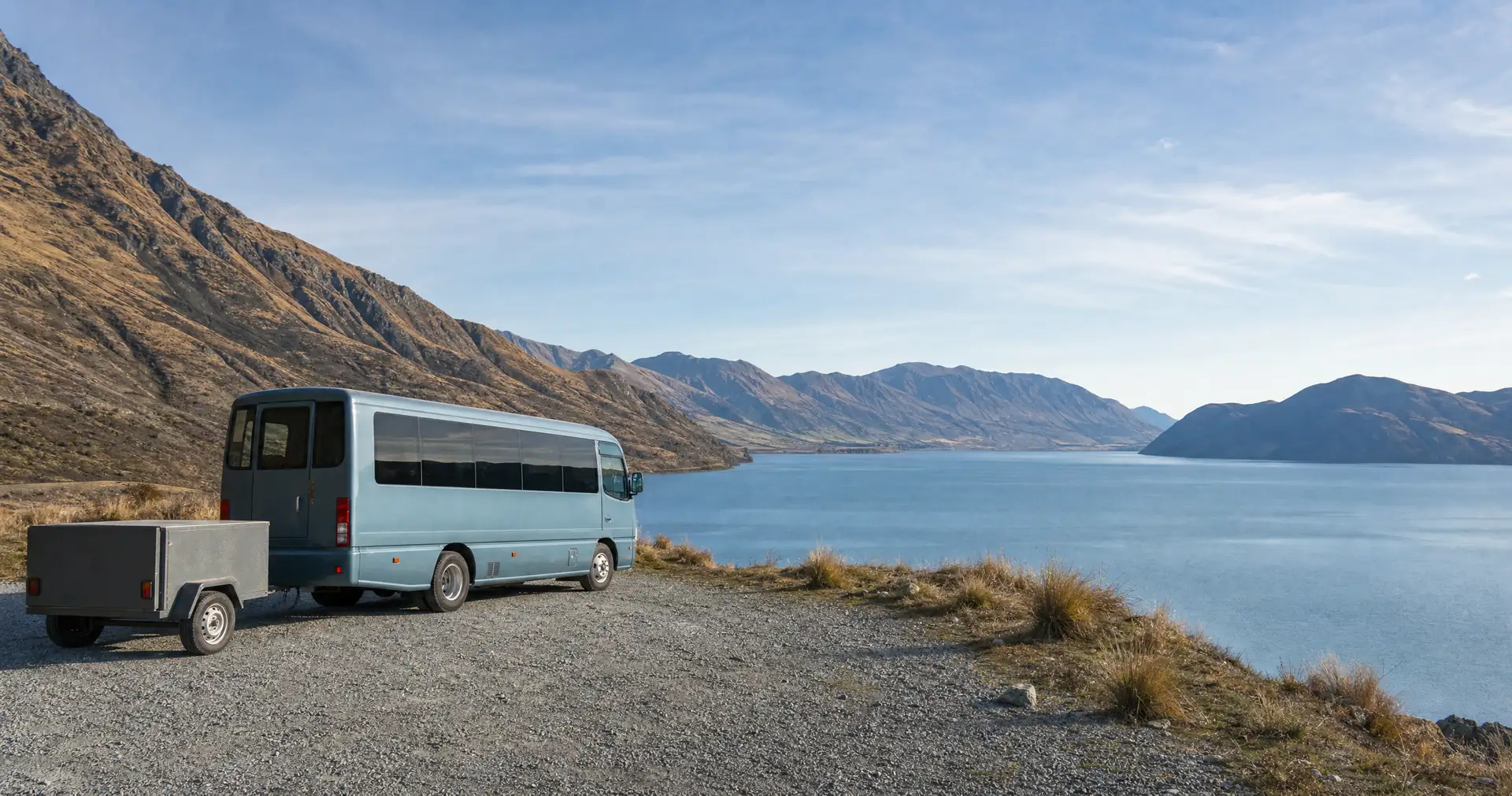
Holiday park and camping loans for New Zealand land, cabins, and amenities .
NZ holiday park finance is land-heavy. Going-concern park acquisitions sit between $2M and $8M for typical 60 to 200 site properties, layered with cabin and amenity capex, council resource consent compliance under the Resource Management Act 1991, and a regulatory overlay from local freedom-camping bylaws.
What you need to know about NZ holiday park and camping finance.
→Going-concern holiday park acquisition commonly $2M to $8M Typical 60 to 200 site holiday parks across NZ regional and coastal markets. Most of the value sits in the land. Resort-coast parks (Coromandel, Bay of Plenty, Tasman) sit at the upper end.
→Cabin capex commonly $45K to $140K per unit New cabins (basic, kitchen unit, ensuite unit, motel-style unit) range widely on spec. Cabin rotation across the park drives capex through the operating life of the business.
→Holiday Parks New Zealand (HAPNZ) frames the sector HAPNZ is the industry body for the NZ holiday park sector. Most established parks are HAPNZ members. The Tourism New Zealand Qualmark grading scheme also covers holiday parks.
→RMA, district plan, and freedom-camping bylaws apply Resource Management Act 1991 consents under the relevant district plan govern the land use. Local freedom-camping bylaws (under the Self-Contained Motor Vehicles and Camping Act 2023) shape competing demand from self-contained vehicle camping outside parks.
The landscape
NZ holiday park finance is land-heavy, with cabin and amenity capex layered on top.
New Zealand's holiday park sector spans coastal, lakeside, riverside, and bush settings, with strong concentration on the Coromandel Peninsula, Bay of Plenty, Tasman and Marlborough top of the South Island, the lakes districts (Taupo, Rotorua, Wanaka, Te Anau), and the West Coast. MBIE Tourism, the Stats NZ Tourism Satellite Account, and Holiday Parks New Zealand (HAPNZ) together publish sector context. The sector serves a mix of domestic family holiday demand (strong over December to February school holidays), international visitors (commonly weighted to campervan and budget-traveller use), and increasingly the longer-stay cabin market for retirees and remote workers.
The finance pattern is land-heavy. A going-concern holiday park acquisition commonly funds through a commercial property loan over 15 to 25 years, with most of the loan supported by the land value rather than the trading goodwill. Loan-to-value ratios on going-concern holiday parks commonly sit at 50 to 65 percent on the property, reflecting both the larger land area and the comparatively thinner trading margins (per-site revenues are lower than per-room motel revenues). Major-bank lenders (ANZ, BNZ, ASB, Westpac) and specialist commercial property lenders dominate the going-concern acquisition pool.
Cabin and amenity capex sits as a recurring layer on top of the property loan. Cabins (basic units through to motel-style ensuite cabins) commonly run $45K to $140K each on a NZ-built spec, financed through asset-finance chattel mortgages over 7 to 10 year terms. Amenity block refurbishment (showers, toilets, kitchen, laundry) is a periodic large-ticket project commonly running $150K to $700K, funded through term loans staged across off-peak months. Resource Management Act 1991 consents under the relevant district plan govern any expansion of cabin numbers or significant new amenity infrastructure.
Going-concern acquisition
$2M to $8M
New cabin (per unit)
$45K to $140K
Amenity block refurbishment
$150K to $700K
Property loan term
15 to 25 years
Holiday park and camping scenarios
Four common NZ holiday park and camping finance scenarios.
Most holiday park applications fall into one of four patterns. Each pattern has a typical loan amount, structure, and lender pool.
Going-concern holiday park acquisition
First-time or established operator acquiring an existing 60 to 200 site holiday park in a NZ coastal or lakes district. Total project commonly $2.5M to $8M including land, buildings, cabins, plant, and working-capital float. Commercial property loan over 15 to 25 years.
·Loan amount: $1.5M to $5.2M
·Term: 15 to 25 years
Cabin rotation and new cabin add
Established park rotating ageing cabins out of service and adding new ensuite or motel-style units. Commonly 2 to 6 cabins per project. Asset finance against the cabins, often through specialist NZ cabin builders. Resource consent for expansion checked against district plan.
·Loan amount: $90K to $700K
·Term: 7 to 10 years
Amenity block refurbishment or replacement
Established park refurbishing or replacing an ageing amenity block (showers, toilets, kitchen, laundry). Project staged across off-peak winter months. Term loan, often staged against builder progress payments.
·Loan amount: $150K to $700K
·Term: 7 to 10 years
Working capital for winter shoulder
Operator drawing on a revolving facility to smooth the gap between strong summer-peak takings and quiet winter-shoulder months. Repaid out of summer trading. Common across South Island and resort-coast parks with sharp seasonal patterns.
·Limit: $60K to $250K
·Structure: Revolving line of credit
What holiday park operators borrow for
Six common NZ holiday park and camping loan purposes.
Holiday park lending volume falls into six common purposes. Each has a typical structure that fits.
Going-concern park purchase
Acquisition of a trading holiday park including land, buildings, cabins, amenity blocks, plant, and goodwill. Commercial property loan over 15 to 25 years, commonly major-bank or specialist commercial lender.
New cabins and cabin rotation
Basic cabins, kitchen cabins, ensuite cabins, motel-style cabins. NZ-built (Eden Cabins, NZ Modular Buildings, Cabinco and similar specialists). Asset finance over 7 to 10 year terms against each cabin.
Amenity block refurbishment
Showers, toilets, kitchen, laundry, BBQ shelters, playground equipment. Term loan staged against builder progress payments. Commonly timed across May to September off-peak months.
Power, water, and wastewater infrastructure
Power upgrades to support EV-camper charging, water bore or tank capacity, wastewater treatment compliance under regional council rules. Term loan or asset finance against the infrastructure spend.
Resource consent and district plan compliance
Costs of resource consent applications (cabin expansion, amenity block, wastewater), council fees, expert reports. Commonly funded by working-capital draw or term loan attached to the related capex project.
Working capital for winter shoulder
Revolving facility covering operating cost in the May to September quiet period. Line of credit suits the recurring pattern better than a term loan, repaid each summer.
Tax, GST, and depreciation
How GST, depreciation, and resource consent costs typically work for NZ holiday parks.
A GST-registered holiday park operator can typically claim the GST component on the property purchase (where applicable), cabins, amenity block refurbishment, infrastructure spend, and ongoing operating costs as input tax in the relevant GST return, subject to the accountant's confirmation. Going-concern holiday park acquisitions are commonly structured as a zero-rated supply of a going concern under the Goods and Services Tax Act 1985, which avoids the GST cash-flow timing impact on the purchase. Cabins acquired under chattel mortgage are typically depreciable under IRD asset-class rates as a relocatable building or a cabin chattel depending on the build specification. Commercial buildings depreciate at 0% for income tax purposes since the 2024 changes; site infrastructure, fitout, and chattels continue to depreciate. Resource consent application costs (council fees, planner reports, ecological assessments) typically capitalise into the related capex project. The accountant is the right person to confirm structure, GST treatment, and depreciation schedule on the specific business position.
Holiday park finance bands
Indicative NZ holiday park and camping finance bands.
Park acquisition and capex pricing varies by region, site count, land area, and consent profile. The bands below are observed across the NZ holiday park finance pool in 2026.
Project type
Typical band
Common structure
Common term
60 to 100 site coastal park acquisition
$2M to $4.5M
Commercial property loan
15 to 20 years
100 to 200 site resort park acquisition
$4.5M to $8M
Commercial property loan
15 to 25 years
New basic cabin (per unit)
$45K to $70K
Asset finance / chattel mortgage
7 to 10 years
New ensuite or motel-style cabin (per unit)
$90K to $140K
Asset finance / chattel mortgage
7 to 10 years
Amenity block refurbishment or replacement
$150K to $700K
Term loan, often staged
7 to 10 years
Working capital for winter shoulder
$60K to $250K
Revolving line of credit
Open-ended
Indicative bands only. Actual price depends on region, site count, land area, consent status, and condition. Final rate, fee, and approval decisions are made by the lender after assessment.
Park acquisition vs cabin add vs amenity refurbishment
Going-concern park acquisition vs cabin rotation finance vs amenity block refurbishment.
The structure choice tracks project type, asset classification, and council consent overlay. A park acquisition sits in commercial property finance; cabin additions sit in asset finance; amenity block work sits in term-loan finance with potential building consent or resource consent overlay.
Feature
Going-concern park acquisition
Cabin rotation or new cabin add
Amenity block refurbishment
Typical loan amount
$1.5M to $5.2M property loan
$90K to $700K asset finance
$150K to $700K term loan
Asset classification
Land, buildings, cabins, goodwill
Cabins as relocatable building chattels
Amenity block as fitout or building work
Lender pool
Major banks and specialist commercial lenders
Asset-finance specialists (UDC, Heartland) and major banks
Same lender as main property loan, or specialist
GST upfront treatment
Often zero-rated as going concern
GST claimable on cabin purchase
GST claimable on refurbishment
Consent overlay
Existing land use commonly consented
New cabins may require resource consent for site density
Building consent required; resource consent if footprint changes
Typical loan term
15 to 25 years
7 to 10 years
7 to 10 years
How it works
A typical NZ holiday park and camping finance application.
Going-concern park applications carry a property valuation, business trading review, resource consent check, and going-concern GST treatment step. Established operators with multi-year trading move faster than first-time park buyers.
01
Day 1 to 14
Define the project and structure
A typical park acquisition combines a commercial property loan on the land and buildings with asset finance on the cabins (where separately financeable) and a working-capital line for the winter shoulder. Cabin and amenity-block projects on an existing park sit as separate term loans on top of the main property loan, often staged across off-peak winter months.
Documents commonly required
·Sale and purchase agreement
·Trading accounts (last 2 to 3 years for going-concern)
·Cabin or amenity block scope and quotes (where applicable)
02
Day 7 to 28
Submit application with park-specific documents
Beyond the standard SME application pack, holiday park lenders ask for trading accounts, occupancy and revenue history by site type (powered, non-powered, cabin), the resource consent register and conditions on the property, district plan zoning information, and any current freedom-camping bylaw context affecting the local market. Holiday Parks New Zealand (HAPNZ) membership is sometimes referenced in the operator profile.
Documents commonly required
·NZBN, business owner ID
·Last 2 to 3 years business financial statements (going-concern)
·Last 12 months bank statements
·Trading accounts and occupancy history by site type
·Resource consent register and conditions
·District plan zoning report
·Property valuation (commissioned by lender)
·Building Warrant of Fitness (BWOF) status on amenity blocks
·LIM report covering land use and natural hazards
·Public liability and property insurance quotes
03
Day 21 to 56
Lender assessment and offer
Lenders assess against four things: the property security position (LVR after deposit, going-concern valuation supporting both land and trading goodwill), the trading data (occupancy by site type, average length of stay, revenue mix), the operator profile (prior accommodation or hospitality experience), and any consent or bylaw factors that could affect the operating model. Offers commonly come back with conditions: deposit size (commonly 35 to 50 percent on going-concern parks), additional security, or covenants tied to trading performance through the first summer.
04
Week 6 onward
Settle, register security, transfer trade
Property loan settles directly to the vendor on settlement date. The lender registers a mortgage on the certificate of title and a security interest on the Personal Property Securities Register (PPSR) for cabins, plant, and goodwill. Booking platform accounts (where used) and HAPNZ membership commonly transfer to the new operator entity. Resource consent register noted on the new operator records. Insurance covers bound before settlement.
A commercial finance broker familiar with NZ holiday park and lifestyle property transactions commonly tightens the indicative rate band by knowing which lenders accept land-heavy security profiles with comparatively thin trading goodwill.
Worked scenarios
Three NZ holiday park and camping finance scenarios.
Real-world structures across going-concern park acquisition, cabin rotation, and amenity block refurbishment. Each illustrates how land area, trading mix, and resource consent profile shift the offered rate.
Established hospitality operator acquiring a Coromandel coastal park
Coromandel 110-site coastal holiday park acquisition
An established hospitality operator (prior motel ownership) acquiring an established 110-site Coromandel coastal holiday park from a retiring vendor. Going-concern purchase price $4.6M including land, buildings, 22 cabins, amenity block, and trading goodwill. Total project $4.95M ex-GST including a $350K working-capital float for the winter shoulder. Vendor and purchaser both GST-registered; the sale structured as a zero-rated going concern under the Goods and Services Tax Act 1985.
Structure agreed with the lender: commercial property loan on the land, buildings, and cabin chattels ($2.76M after a 40% deposit, 22-year term, indicative 8-10% p.a.), working-capital line of credit ($200K limit, drawn to $150K at settlement). Existing 14-year trading history at the park, Qualmark 4-Star grading, and strong summer-peak occupancy supported the application. Prior motel-operator track-record on the purchaser side materially supported the lender comfort.
Property valuation commissioned by BNZ business banking (the lender) at $4.7M on a going-concern basis. Mortgage registered on the certificate of title and PPSR security registered against the cabins, plant, and goodwill at settlement. Holiday Parks New Zealand (HAPNZ) membership transferred at settlement. Resource consent register reviewed for any unresolved conditions; none identified. First trading day under the new operator within 3 weeks.
Indicative figures
Going-concern purchase
$4.6M
Total project
$4.95M
Property loan after deposit
$2.76M
Indicative rate
8-10% p.a.
Established Tasman park rotating older cabins out and adding new units
Tasman cabin rotation, 4 new ensuite cabins
An established 90-site Tasman holiday park rotating 4 older basic cabins out of service and adding 4 new ensuite cabins to lift average per-cabin nightly revenue. Total project $480,000 ex-GST: 4 ensuite cabins from a NZ specialist builder at $115,000 each, $20,000 site preparation, water and power connections per cabin. Resource consent under the Resource Management Act 1991 confirmed for the existing cabin density at the park; no new consent required for the like-for-like replacement.
Structure agreed with the existing asset-finance lender: chattel mortgage on the 4 cabins ($432,000 after 10% deposit, 8-year term, indicative 9-11% p.a.), small unsecured term loan for the site preparation ($48,000, 5-year term, indicative 11-13% p.a.). UDC Finance funded the chattel mortgage on the cabins. Cabins delivered and installed across May to August (Tasman off-peak months); first paid bookings in September.
Old cabins removed by the cabin builder under a trade-in arrangement. PPSR security registered against the new cabins at delivery. Building consent obtained from Tasman District Council for the cabin foundations and water connection work. Cabin builder contracted for a 5-year warranty on the structural elements.
Indicative figures
Total project
$480,000
Per-cabin cost
$115,000
Chattel mortgage on cabins
$432,000
Indicative blended rate
9-11% p.a.
Established Wanaka holiday park replacing an end-of-life amenity block
Wanaka amenity block replacement
An established 140-site Wanaka holiday park replacing an end-of-life amenity block (showers, toilets, kitchen, laundry) with a new build of higher capacity to support increased peak-season demand. Total project $620,000 ex-GST: $530,000 building works (NZ commercial builder), $60,000 commercial kitchen and laundry equipment, $30,000 furniture, fittings, and finishes.
Structure agreed with the existing property-loan lender: term loan of $620,000 on a 10-year term, indicative 9-11% p.a., drawn in 4 stages across the 7-month build programme to align with builder progress payments. Existing 18-year trading and a 4-Star Plus Qualmark grading already in place supported the application.
Resource consent under the Resource Management Act 1991 obtained from Queenstown Lakes District Council for the amenity block footprint (a small footprint expansion versus the demolished block). Building consent obtained for the new build. Project scheduled May to November (Wanaka shoulder and off-peak months) with project commissioning ahead of December summer-peak demand. PPSR security registered against the new commercial kitchen and laundry equipment at first drawdown.
Indicative figures
Total project
$620,000
Building works
$530,000
Term loan
$620,000
Indicative rate
9-11% p.a.
NZ holiday park and camping lenders
Lenders that fund NZ holiday parks and camping operators well.
Several NZ lenders carry deep familiarity with the holiday park and camping segment. The shortlist below is editorial.
Health and Safety at Work Act 2015 framework for accommodation and tourism operators.
FAQ
Holiday park and camping loans, NZ small-business questions answered
How much does a NZ holiday park cost to buy in 2026?
A typical 60 to 200 site NZ holiday park going-concern purchase commonly runs $2M to $8M depending on region, site count, land area, cabin stock, and trading performance. Coastal and lakes-district parks in markets such as Coromandel, Bay of Plenty, Tasman, Marlborough, Taupo, Rotorua, and Wanaka commonly sit at the upper end of this band. Regional and rural parks in less-visited markets sit at the lower end. Larger resort-coast parks with 200+ sites and significant cabin stock can run above $8M. Most of the value commonly sits in the land rather than the trading goodwill.
What loan-to-value ratio is typical on a NZ holiday park acquisition?
NZ holiday park going-concern acquisitions commonly attract loan-to-value ratios of 50 to 65 percent on the property security, lower than typical motel LVRs because the per-site trading margin is thinner and the security profile is land-heavy with comparatively limited building improvement. First-time park buyers with no prior accommodation operator experience typically face the lower end of this band. The deposit of 35 to 50 percent commonly comes from existing equity, prior business sale proceeds, or family loan support. Lenders commonly assess serviceability against 2 to 3 years of trading accounts and detailed occupancy data by site type.
How does the going-concern GST treatment work on a holiday park sale?
NZ holiday park business sales are commonly structured as a zero-rated supply of a going concern under the Goods and Services Tax Act 1985, where both vendor and purchaser are GST-registered, the business is supplied as a continuing operation, and the going-concern treatment is recorded in the sale and purchase agreement. Zero-rating avoids the GST cash-flow impact on the purchase price (no GST charged at settlement, no input tax claim required). The accountant is the right person to confirm whether the going-concern treatment applies to the specific transaction and whether any chattels or non-going-concern components require separate GST treatment.
What is Holiday Parks New Zealand and is membership required?
Holiday Parks New Zealand (HAPNZ) is the industry body representing the NZ holiday park sector. HAPNZ publishes industry context, runs operator training, manages the Holiday Parks of New Zealand booking platform and consumer marketing, and provides member services across advocacy, sustainability, and supplier programmes. HAPNZ membership is voluntary, not a regulatory requirement to operate a holiday park in NZ. Most established parks are HAPNZ members because of the booking platform exposure and the operator network. Going-concern park sales commonly transfer the existing HAPNZ membership to the new operator at settlement.
How does the Resource Management Act 1991 affect holiday park finance?
The Resource Management Act 1991 (RMA), administered through district plans by territorial authorities, governs land use including holiday park operation. Existing parks commonly hold an established land use under the relevant district plan zoning (commonly Rural, Rural Lifestyle, Tourism, or specific Holiday Park zoning). New cabins, amenity blocks, wastewater infrastructure, and any change in site density commonly require resource consent. Lenders commonly want confirmation of the resource consent register and any outstanding conditions before settling a property loan. The accountant and a planner familiar with the local district plan are the right people to confirm position. The Ministry for the Environment publishes the RMA framework in full.
What is the freedom-camping regulation overlay?
The Self-Contained Motor Vehicles and Camping Act 2023 sets the national framework for freedom camping in NZ, with local territorial authority bylaws specifying where self-contained vehicles can stay overnight outside paid camping grounds. The 2023 Act tightened the self-contained certification requirements (a fixed toilet became mandatory for self-contained certification). Freedom-camping demand commonly competes with paid holiday park sites in popular coastal and lakes-district markets, and lenders commonly want to understand the local bylaw position when assessing trading projections. MBIE publishes guidance on the freedom-camping framework.
What rate range applies to NZ holiday park finance in 2026?
Indicative rates on holiday park finance commonly sit in the 7% to 12% per annum band depending on structure, security, and operator profile. Commercial property loans on going-concern park acquisitions for established operators with strong trading sit at the lower end (commonly 7-9%). Cabin asset finance and amenity-block term loans sit in the middle (commonly 9-11%). Working-capital lines for the winter shoulder sit at the upper end (commonly 10-12%). Final rate is set by the lender after assessment. First-time park buyers without prior accommodation operator experience commonly face the upper end of the property loan band.
Can GST be claimed on cabin purchases?
A GST-registered holiday park operator can typically claim the GST component on new cabin purchases as input tax in the relevant GST return, subject to the accountant's confirmation. Where the cabin is acquired under chattel mortgage, the full GST is typically claimable upfront in the next GST return after settlement. Where it is acquired under finance lease, GST is typically claimed across the rental payments. Cabins acquired second-hand from a non-GST-registered seller may not carry a GST input claim. The accountant is the right person to confirm GST treatment and timing on the specific cabin acquisition.
How does the Health and Safety at Work Act 2015 apply to holiday parks?
The Health and Safety at Work Act 2015 places duties on holiday park operators as a Person Conducting a Business or Undertaking (PCBU) to manage risks to workers and guests. Common holiday park focus areas include playground equipment safety, swimming pool and spa fencing under the Building Act 2004 and Pool Safety Standards, electrical compliance across cabins and powered sites, fire safety in amenity blocks and Building Warrant of Fitness (BWOF), legionella management on hot water systems, water safety where sites are near rivers or beaches, and slip and trip risk management in amenity blocks. WorkSafe NZ publishes guidance on the framework. The PCBU duties extend to contractors carrying out work on the property.
What council consents commonly apply to a holiday park expansion?
Holiday park expansion commonly requires resource consent under the Resource Management Act 1991 administered by the territorial authority, building consent under the Building Act 2004 for any new amenity block or cabin foundations, and (for some parks) regional council consents for wastewater discharge, water take, and stormwater management. Cabin density increases beyond the existing consented site count commonly trigger a fresh resource consent process, including assessments of effects on traffic, wastewater, and nearby properties. Application timelines commonly run 3 to 12 months depending on complexity and any notification requirements. The accountant and a planner are the right people to confirm scope and timeline for the specific project.
How does seasonality affect serviceability on a NZ holiday park loan?
NZ holiday park cash flow runs sharply unevenly across the year, with peak occupancy concentrated in summer (mid-December to early February) and quiet winter shoulders in most regional and resort markets. The summer peak commonly delivers a large share of annual revenue across a 6 to 8 week window. Lenders commonly assess serviceability across a full annual cycle and stress-test against weak shoulder-season performance. Working-capital lines are commonly sized to cover 4 to 6 months of operating cost in the winter shoulder. Trading accounts presented on a 12-month rolling basis and broken down by site type (powered, non-powered, cabin) commonly support the application better than peak-season-only data.
What lenders specialise in NZ holiday park and camping finance?
BNZ, ANZ, ASB, and Westpac business banking all maintain commercial property and tourism teams with holiday park and lifestyle property expertise. Heartland Bank carries a specialist holiday park and rural commercial property finance proposition. UDC Finance and other asset-finance specialists fund cabin acquisitions and amenity-block kitchen and laundry equipment under chattel mortgage. Specialist commercial lenders and non-bank finance companies cover going-concern acquisitions where major-bank serviceability calculations are tighter on the land-heavy security profile. A commercial finance broker familiar with the holiday park segment commonly tightens the indicative rate band.
Can a holiday park be refinanced into better pricing once trading is established?
Yes. Holiday park operators with 18 to 36 months of clean trading accounts under their ownership commonly refinance into tighter pricing as occupancy stabilises, equity builds in the property, and operator track-record builds. Refinancing is also commonly used to consolidate multiple loans (property loan, cabin asset finance, amenity-block term loan, working-capital line) into a single facility, or to release equity to fund a cabin rotation programme or amenity-block refurbishment. Early-repayment fees on the original loans, the property revaluation position, and the consent profile are the main considerations. Major-bank refinance commonly becomes accessible after 2 to 3 years of established trading.
What documents are needed for a going-concern holiday park acquisition application?
Going-concern holiday park acquisition applications commonly require the sale and purchase agreement, last 2 to 3 years of business financial statements from the vendor, last 12 months of bank statements, occupancy and revenue data broken down by site type (powered, non-powered, cabin), the resource consent register and conditions, district plan zoning report, a property valuation commissioned by the lender, BWOF status on amenity blocks, LIM report covering land use and natural hazards, and public liability and property insurance quotes. Operator CV and any prior accommodation, hospitality, or property operator experience commonly form part of the application.
How do new cabins get financed and depreciated?
New cabins are commonly financed under chattel mortgage over 7 to 10 year terms, with the full GST typically claimable upfront in the next GST return after the cabin acquisition (where the operator is GST-registered). Cabin depreciation typically uses IRD asset-class rates as a relocatable building or a cabin chattel depending on the build specification (a relocatable cabin sitting on piles or skids commonly depreciates as a chattel; a more permanent cabin foundation commonly depreciates as a building improvement at a different rate). NZ specialist cabin builders such as Eden Cabins, NZ Modular Buildings, and others commonly deliver cabins ready to install, with site work (foundations, water and power connections) handled separately. The accountant is the right person to confirm depreciation treatment on the specific cabin specification.
Indicative content only. Not personalised financial advice.
A business loan is a commitment that runs for months or years, and repayments come out of the same operating cash flow as everything else. Before committing, it is worth modelling the weekly and monthly cost against the business's working-capital position, which is what this site is built to help with. Borrowing at a level that stays comfortable through a quiet quarter, not just a strong one, is widely regarded as the safer frame.
What this site is
A calculator and information tool. Not a lender, not a broker, not a registered financial adviser. Nothing here is personalised financial advice.
What the figures show
Modelled estimates based on the inputs you enter. Not a quote. Not an offer of credit. Not a guarantee of approval, rate, or fees.
What the lender decides
Final rates, fees, and approval are set by the lender after a CCCFA-appropriate assessment of the applicant's circumstances and credit decision.
Commercial disclosure
Businessloans.org.nz earns a commission from Prospa when a visitor applies through this site and their application is approved. The commission is paid by Prospa, not by the borrower, and it does not influence the rate Prospa offers. Full disclosure on the partner page.
Tax, GST, and accountant framing
Tax-treatment statements (GST claim timing, interest deductibility, depreciation rates) are general in nature and subject to your accountant's confirmation on the specific business position. For material amounts, professional advice from a registered financial adviser or chartered accountant is widely regarded as the safer frame.